
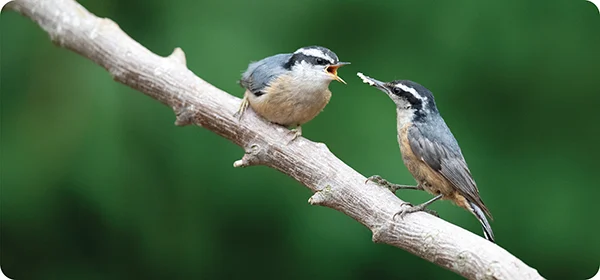
The arrival of spring and summer brings a profound seasonal shift to backyards across North America, marked most notably by the sights, sounds, and vibrant activities of a new generation of fledgling birds. For millions of homeowners and amateur ornithologists, the appearance of young bluebirds, chickadees, goldfinches, and woodpeckers at backyard feeders signals a peak period of wildlife observation. Beyond the aesthetic and emotional appeal of watching clumsy fledglings navigate their environment, wildlife biologists and avian conservation experts emphasize that backyard interventions—such as supplemental feeding, nesting boxes, and habitat management—play a measurable role in the survival and reproductive success of local bird populations.
The phenomenon of seasonal nesting is a critical phase in the annual life cycle of migratory and resident backyard birds. Driven by increasing daylight hours and warming temperatures, breeding pairs establish territories, construct nests, lay eggs, and rear young during a compressed window of the year. Historically, this reproductive push has been entirely dependent on wild food sources, such as emerging insects, native seeds, and budding vegetation. However, urbanization, habitat fragmentation, and climate variability have increasingly placed stress on natural foraging grounds. In response, backyard conservation has evolved from a passive hobby into an active ecological support system, with millions of households deploying bird feeders and nesting infrastructure to assist local fauna.
Scientific research increasingly demonstrates that the presence of reliable, high-calorie food sources in residential areas alters avian reproductive behavior in significant ways. According to field studies conducted by ornithological researchers, breeding birds with consistent access to supplemental feeders frequently initiate egg-laying significantly earlier in the season compared to populations relying strictly on natural foraging. This chronological advantage is paramount to avian demography. Earlier broods encounter less intense competition for resources from peer cohorts, experience lower population densities of certain nest predators during critical developmental phases, and ultimately demonstrate higher rates of survival and fledging success than later-season broods.
The physiological demands placed on breeding females are exceptionally high, requiring immense expenditures of energy for egg production, incubation, and foraging. Supplemental feeding mitigates these pressures significantly. When food is readily accessible near nesting territories, breeding females spend markedly less time ranging over wide areas to secure daily sustenance. This conservation of energy and time enables females to dedicate greater focus to selecting optimal nesting sites and constructing structurally superior nests that offer better insulation and protection against environmental hazards. Furthermore, parents with minimized foraging commutes retain heightened vigilance over their territories, allowing them to allocate more time to defending active nests, eggs, and altricial young against avian and mammalian predators.
Nutritional abundance during the nestling and fledgling stages yields immediate developmental benefits for growing broods. Observational and dietary studies indicate that when parent birds have unhindered access to abundant feeder resources, they can efficiently supplement their young’s diets while simultaneously dedicating time to hunt for specialized natural prey, such as protein-rich caterpillars and soft-bodied insects essential for rapid growth. This dual-provisioning strategy delivers superior nutrition, which has been shown to reduce aggressive competition among nest siblings—a common behavior when food is scarce—and accelerate overall skeletal and muscular growth rates. Consequently, fledglings emerge from the nest heavier, stronger, and better equipped to handle the physical demands of independent flight and foraging.

While supplemental nutrition serves as a cornerstone of backyard avian support, ornithological experts stress that food alone is insufficient to guarantee nesting success. The architectural provision of properly designed and securely installed nesting boxes represents an equally vital intervention. Natural tree cavities—the traditional nesting sites for many cavity-nesting species such as bluebirds, tree swallows, and various woodpeckers—have grown increasingly scarce due to modern landscaping practices that remove dead, dying, or standing timber. Providing artificial nest boxes helps bridge this ecological deficit. Moreover, well-constructed boxes offer critical thermal protection and moisture barriers, significantly improving survival rates for nestlings during sudden periods of unseasonable cold, heavy rain, and damp weather that frequently characterize the spring transition.
Habitat quality at the micro-level—specifically within the boundaries of individual residential yards—further dictates whether visiting bird species can successfully establish and raise families. Landscaping trends that favor immaculately manicured lawns, sterile turfgrass, and the systematic removal of fallen leaves, dead brush, and native flora often inadvertently create biological deserts for local wildlife. Conservation organizations, including Wild Birds Unlimited (WBU) Inc., advocate for habitat diversification through conservation landscaping practices. By allowing yards to retain a degree of structural complexity—such as leaving brush piles, avoiding chemical pesticide applications, and intentionally planting native trees, shrubs, and perennial wildflowers—homeowners can reintroduce the foundational ecosystem services required by breeding birds. Native plants support specialized insect populations that serve as the primary dietary foundation for nestlings, while also supplying organic materials necessary for nest construction.
Nutritional targeting has also advanced significantly within the specialty wild bird feeding industry, moving far beyond generic seed mixes to address the precise biological demands of breeding seasons. Specialized formulations, such as high-protein and high-calcium blends designed for nesting families—typified by products like WBU’s Nesting SuperBlend and specialized suet formulas like Bark Butter—provide essential macronutrients that may be deficient in urban and suburban landscapes. These specialized foods typically incorporate high concentrations of sunflower chips, peanuts, mealworms, calcium supplements, and tree nuts. Calcium, in particular, is a critical dietary requirement for egg-shell formation in breeding females and skeletal development in growing nestlings. Providing these resources during the pre-nesting, nesting, and post-fledging phases ensures that birds have immediate access to bioavailable nutrients when physiological demands peak.
The broader ecological implications of backyard bird feeding and habitat enhancement extend well beyond the boundaries of individual properties. Collectively, millions of residential yards function as a vast, decentralized network of green corridors and stopover habitats that help buffer migratory and resident bird populations against the pressures of habitat loss and climate change. Ornithologists note that while backyard provisioning cannot entirely replace natural ecosystems, it acts as a crucial supplemental safety net that stabilizes local populations of common cavity nesters and songbirds. As urban sprawl continues to fragment contiguous forests and grasslands, the role of the private citizen in wildlife conservation becomes increasingly indispensable.
Industry leaders and wildlife advocates emphasize that the relationship between humans and backyard birds fosters a deeper psychological and educational connection to the natural world. Programs, podcasts, and educational initiatives managed by organizations like Wild Birds Unlimited—such as their ongoing Nature Centered podcast series—strive to inform the public on seasonal avian behaviors, ethical feeding practices, and habitat stewardship. By understanding the biological timing of spring migrations, territorial defense, and the demanding weeks of fledgling care, participants transform passive observation into active environmental stewardship. Ultimately, the presence of thriving bird families in a residential yard serves as a direct indicator of a healthy, functioning local ecosystem, offering both immediate aesthetic rewards and long-term ecological benefits.
