
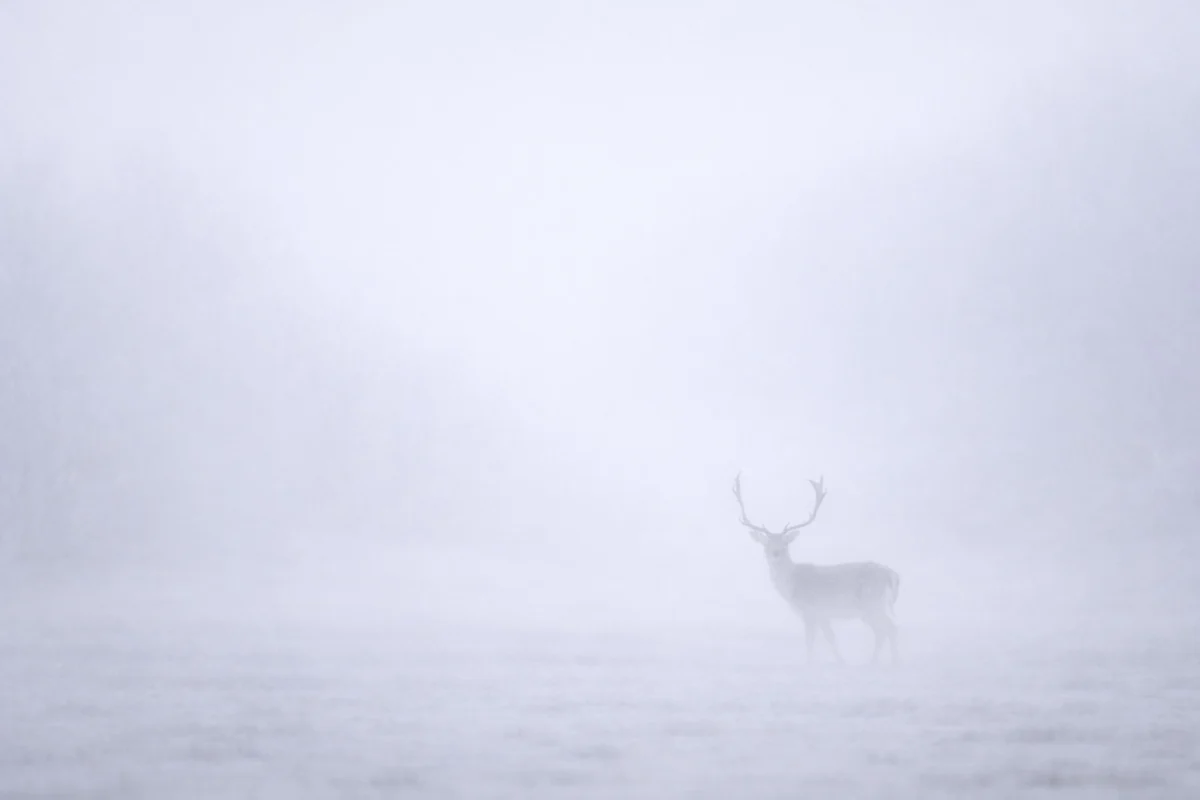
The realm of nature photography frequently conjures vivid imagery of sprawling landscapes, intricate wildlife close-ups, or dramatic natural phenomena. However, one artist, whose distinctive work is gaining recognition on platforms like the Nature Photographers Network, presents a compelling counter-narrative through a profoundly minimalist approach. This photographer’s unique style consciously embraces vast negative space, renders subjects subtly small within the frame, and cultivates an overwhelming sense of quietude, effectively transforming the act of observation into a meditative practice. Far from being merely an aesthetic preference, this artistic direction is deeply rooted in a personal philosophy that prioritizes balance, presence, and an authentic, often solitary, connection with the natural world.
The Organic Evolution of a Unique Perspective
The genesis of this photographer’s signature vision was not the result of a conscious decision or a sudden epiphany. As the artist themselves recounts, it emerged organically from the very inception of their photographic journey. Even during the initial stages of mastering camera functions and developing an eye for composition, an intrinsic inclination towards stepping back began to manifest. This subconscious urge led to subjects occupying smaller proportions of the frame, intentionally allowing ample space to permeate the composition. This nascent approach was, in retrospect, an unconscious quest for quiet—a visual silence that would ultimately become a defining characteristic of their work.
Early in their artistic development, the photographer found themselves drawn irresistibly to simplicity. Busy backgrounds and visual clutter felt overwhelming, fostering a natural preference for calm, uncluttered scenes imbued with a palpable sense of airiness. The subsequent discovery of high-key and low-key photography techniques, which manipulate light and shadow to create stark, often ethereal images, resonated profoundly. Rather than perceiving these as mere technical skills to be acquired, the artist describes this encounter as a moment of profound recognition, affirming an inherent artistic sensibility already present within them. High-key photography, characterized by predominantly bright tones and minimal shadows, and low-key photography, which emphasizes dark tones and deep shadows, became instrumental tools in distilling the essence of a scene, stripping away the extraneous to reveal core emotion and form.

Nature’s Embrace: Finding Solace in Stillness
Central to the photographer’s creative process is a deep emotional and psychological connection to specific natural environments, particularly those shrouded in fog or blanketed by snowfall. These atmospheric conditions are not merely settings but profound catalysts for an internal transformation. When immersed in such environments, the artist describes a deep slowing of their inner world; thoughts soften, and the surrounding world takes on a gentle, almost ethereal quality. These moments are characterized by a profound, quiet happiness, often accompanied by unbidden waves of gratitude and a powerful sense of belonging.
"I am alone then, but never lonely," the photographer reflects on these experiences, emphasizing a crucial aspect of their creative process. Nature, in these contemplative settings, provides a sanctuary where self-explanation and the relentless pace of modern life are rendered irrelevant. In this stillness, unburdened by external expectations, the artist articulates a profound sense of being understood, held by nature without question. This reciprocal relationship between the artist and the environment is not merely aesthetic; it forms a fundamental pillar of their well-being and creative output, providing a necessary counterpoint to the intensity of their inner world.
The Power of Pause: A Counter-Narrative to Modern Haste
The photographer candidly acknowledges their intense experience of the world, noting a heightened sensitivity to details, moods, and subtle shifts in light and energy. This rich, complex inner landscape, while beautiful, can also be overwhelming. Nature, particularly when approached through a minimalist lens, offers a vital counterpoint, providing a crucial sense of balance. The expansive openness captured in their images mirrors and fosters an internal spaciousness, creating equilibrium between the artist’s inner and outer worlds.

This deliberate embrace of slowness stands in stark contrast to the prevailing human tendency to move rapidly through life, even within natural settings. The artist observes how many people traverse natural landscapes quickly, rarely pausing long enough for the subtle intricacies of the environment to reveal themselves. However, nature, they assert, responds differently to sustained attention. When one chooses to remain in a single location without urgency or expectation, a transformation occurs. Imperceptible shifts in light, fleeting movements at the periphery of vision, and previously unseen details slowly come into focus. This heightened perception is not due to a sudden arrival of new elements but to the viewer’s prolonged engagement, allowing them to truly see.
This intentional way of looking—inviting slowness, attention, and presence—is deeply transformative. Once experienced, the artist suggests, it becomes difficult to revert to a fast-paced mode of observation. This profound shift in perception is what elevates minimalism beyond a mere photographic aesthetic to a fundamental necessity for the artist, integrating their artistic output with their personal well-being.
Minimalism as a Path to Depth, Not Emptiness
For this photographer, the emptiness that appears on the surface of their minimalist images is anything but vacant. It reflects a deep-seated need for calm and serves as a canvas for profound meaning. Silence, in their artistic lexicon, is never empty; it is pregnant with possibility and feeling. Minimalism, therefore, becomes a deliberate act of creating space for emotional resonance and internal quietude.
The deliberate use of white in their compositions is conceptualized as "breathing room," offering visual relief and inviting contemplation. Conversely, darkness provides "rest," allowing for introspection and a quiet intensity. High-key and low-key techniques are employed not to strip away meaning, but to soften the visual noise of the world, revealing only what is truly essential and making ample room for its inherent significance. This is a purposeful reduction, designed to amplify, not diminish, the subject’s emotional impact.

The photographer emphasizes that this distinctive approach is not a transient phase or a mere stylistic preference; it is a steadfast direction. The choice for simplicity stems from a desire to remain intimately connected to the feeling experienced in the moment of capture. Distance in their compositions is a conscious decision to grant space—both to the subject, allowing it to exist autonomously within its environment, and to the artist themselves, creating mental and emotional latitude. Restraint is employed to keep the image open, inviting diverse interpretations and personal engagement from the viewer. Importantly, this minimalist philosophy is not an post-production application; it is integral to the entire photographic process, beginning the moment the artist stands in nature, dictating how long they stay and how much they choose to leave untouched.
The Artist’s Ethos: Authenticity Over Acclaim
The photographer’s artistic motivation is unequivocally internal, driven by personal conviction rather than external validation. Their work is not crafted to please an audience, chase trends, or meet external expectations. Only images that evoke a visceral, emotional response are shared; those that fail to resonate internally remain private, regardless of their technical perfection. This commitment to authenticity ensures that each publicly presented image carries a genuine emotional narrative, uncompromised by commercial or social pressures.
Technical mastery, while quietly present and foundational to their craft, never dictates the creative process. Instead, the moment itself, and the artist’s immediate physical and emotional response to it, serves as the primary guide. A split-second intuition often determines whether an image holds intrinsic value. If a shot does not feel true to the artist’s experience, it is abandoned. Conversely, if it resonates, it is trusted implicitly, even if it diverges from conventional photographic rules. Photography, for this artist, transcends a mere craft; it is a profound space for self-discovery and unadulterated expression. It is a realm where one can "disappear without losing myself," free from the pressure to perform or explain, where feeling alone is sufficient.
Beyond Labels: The Essence of Presence

When queried about the specific themes of their photographs, the artist often finds a concise answer elusive. They clarify that their work is not primarily about the specific animals or landscapes depicted, nor is it a conceptual exploration of minimalism for its own sake. Instead, the overarching theme is "presence"—the act of being fully immersed and receptive in a moment that demands nothing in return.
Encounters with wildlife in snowy or misty conditions are frequently brief and delicate. A fox standing silently, a deer materializing and then fading into the atmospheric haze—these moments are characterized by fragility and weightlessness. The photographer’s response is to honor this delicacy: to refrain from disturbance, to step back, and to afford ample space. Distance, in this context, becomes an integral part of the narrative, emphasizing the fleeting and often dreamlike quality of these interactions. The true allure, for the artist, lies not in the encounter itself, but in the enduring feeling it leaves behind, a subtle echo of the interaction.
The Voice of Stillness and the Invitation to Contemplate
The photographer firmly believes in the inherent power of stillness, the strength found in softness, and the profound value of restraint—of choosing less to convey more. This philosophy positions minimalism not as a void, but as a rich invitation. It creates an open space within the image, encouraging viewers to pause, reflect, and imbue the artwork with their own experiences and interpretations. There is no need for explicit explanation or resolution; the image simply is, and in its being, it invites.
The ultimate aim of this artistic endeavor is not to impress but to invite. If a viewer experiences even a momentary pause when encountering their work, the image has achieved its purpose. The invitation is into quietude, into spaciousness, and into a moment where the incessant demands of the world recede, allowing for a profound sense of peace. "This is why I photograph," the artist concludes. "Not to show what nature looks like. But to share how it feels when silence is enough."

Broader Implications and Contextual Significance
This deeply personal yet universally resonant approach to nature photography aligns with several contemporary cultural movements, including the growing emphasis on mindfulness, slow living, and the therapeutic benefits of nature immersion. In an era dominated by rapid information consumption and visually saturated media, the photographer’s work serves as a powerful counter-narrative, advocating for deliberate observation and emotional engagement.
Alignment with Mindfulness and Slow Living: The photographer’s emphasis on pausing, presence, and finding solace in nature mirrors the global surge in mindfulness practices and the slow living movement. These philosophies encourage individuals to disengage from constant stimulation, embrace quiet reflection, and cultivate a deeper appreciation for the present moment. The act of photographing in this minimalist style, therefore, becomes a tangible expression of these principles, offering viewers a visual pathway to experience similar states of calm and contemplation.
Therapeutic Aspects of Nature: Scientific research consistently highlights the positive impact of nature exposure on mental and physical well-being. Studies by institutions such as the University of Exeter and the Japanese Ministry of Forestry have demonstrated that spending time in natural environments can reduce stress, improve mood, and enhance cognitive function. The photographer’s description of nature as a balancing force for their intense inner world and a source of feeling "understood" echoes these findings, suggesting that their art not only captures nature but also embodies its healing potential.
Minimalism in Art and Design: While the photographer stresses that their minimalism is born from an internal necessity rather than an external trend, their work contributes to a long-standing tradition of minimalism across various artistic disciplines. From the abstract expressionism of the mid-20th century to contemporary architectural design, minimalism has sought to strip away non-essential elements to highlight form, texture, and inherent meaning. In photography, this often translates to stark compositions, negative space, and a focus on essential lines and shapes, amplifying the subject’s presence and impact, as seen in the photographer’s snow-laden landscapes and solitary wildlife figures. This artistic lineage underscores the timeless appeal and communicative power of reduction.

Ethical Wildlife Photography: The photographer’s practice of "stepping back" and "giving space" during wildlife encounters also aligns with principles of ethical wildlife photography. By maintaining distance and minimizing disturbance, the artist not only respects the animals’ natural behavior but also captures them in an unforced, authentic state. This approach contrasts with more intrusive methods that might prioritize close-up, dramatic shots over the welfare and naturalness of the subject, contributing to a broader discourse on responsible engagement with nature through the lens.
A Call for Deeper Connection: In a world increasingly dominated by digital imagery, often consumed at a glance, this photographer’s work challenges viewers to slow down. Their images are not designed for fleeting engagement but for sustained contemplation, fostering a deeper, more meaningful connection with the natural world. This artistic direction serves as a quiet protest against the superficiality of rapid visual consumption, inviting a return to profound appreciation and personal reflection, thereby enriching the viewer’s interaction with both art and nature.
The enduring impact of such a photographic philosophy lies in its ability to transcend the visual and touch the emotional core. By revealing "how it feels when silence is enough," the artist offers not just images, but an experience—an invitation to pause, breathe, and find one’s own sense of stillness within the vast, complex tapestry of existence. This artistic practice stands as a powerful testament to the idea that in an age of constant noise, true depth and meaning can often be found in the profound quietude of a carefully observed moment.
