
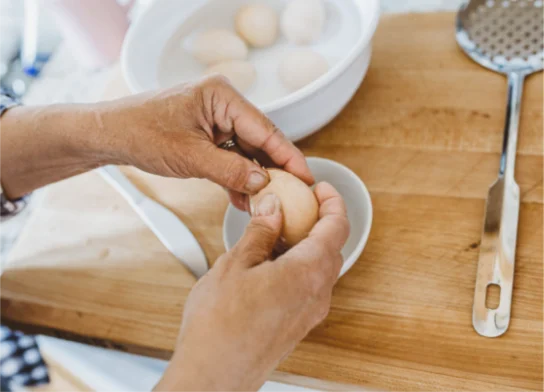
The long-standing culinary struggle of peeling farm-fresh eggs has reached a definitive resolution as culinary experts and home cooks alike pivot from traditional boiling methods toward the more efficient technique of steaming. While the hard-boiled egg remains a staple of global diets—valued for its protein content and versatility in dishes ranging from classic niçoise salads to deviled eggs—the difficulty of removing the shell from a freshly laid egg has historically frustrated chefs. Recent investigations into the chemical and physical properties of eggshells and membranes suggest that the application of intense steam, rather than submersion in boiling water, provides the most reliable results for a "perfect peel," regardless of the egg’s age.

The Biological Challenge of the Fresh Egg
To understand why steaming is superior, one must first examine the biological composition of a farm-fresh egg. Unlike store-bought eggs, which can be several weeks old by the time they reach the consumer, farm-fresh eggs possess a unique internal chemistry that makes them notoriously difficult to peel. The primary factor is the pH level of the egg white, or albumen. In a freshly laid egg, the albumen has a relatively low pH level, typically ranging between 7.6 and 7.9. At this acidity level, the proteins in the egg white bond strongly to the inner shell membrane during the cooking process.

As an egg ages, carbon dioxide escapes through the thousands of tiny pores in the shell, causing the pH of the albumen to rise. Within a few days or weeks, the pH can reach approximately 9.2. This increase in alkalinity weakens the bond between the membrane and the protein, which is why older eggs are traditionally easier to peel. However, relying on the aging process presents a culinary trade-off. As the egg sits, the air cell at the blunt end expands, and the internal structure begins to degrade, leading to a less symmetrical shape and a less vibrant flavor profile. For those prioritizing the superior taste and nutritional density of eggs collected within hours of being laid, finding a cooking method that bypasses the need for aging is essential.

A Chronology of Culinary Failures: The Myth of Additives
For decades, the search for the perfect peeling method led to the proliferation of various "kitchen hacks," most of which have been debunked by rigorous testing. A common recommendation found in mid-20th-century cookbooks involves adding salt or vinegar to the boiling water. While vinegar can soften the calcium carbonate of the shell, it rarely penetrates deep enough to affect the membrane bond without significantly altering the flavor or texture of the egg. Similarly, baking soda is often suggested to raise the pH of the water, but the shell acts as a highly effective barrier, rendering the additive largely ineffective during the brief window of cooking.

Other discarded methods include the "pinprick" technique, where a small hole is poked into the blunt end of the egg before cooking. While intended to prevent the shell from cracking and to reduce the pressure of the expanding air cell, this method is labor-intensive and provides inconsistent results regarding the ease of peeling. Temperature-based theories have also fluctuated, with some advocating for starting eggs in cold water and others insisting on a "hot start." While a hot start—dropping eggs into already boiling water—shocks the proteins and prevents some sticking, it increases the risk of the shell cracking due to thermal shock and does not offer the gentle, even heat distribution found in steaming.

The Steaming Protocol: A Technical Breakdown
The transition to steaming represents a shift toward precision heat management. By utilizing a steamer basket, bamboo steamer, or even a simple colander over a pot of boiling water, the cook introduces the egg to a consistent environment of 212°F (100°C) water vapor. This method offers several distinct advantages over submersion.

First, steaming is significantly gentler than boiling. In a boiling pot, eggs are subjected to the turbulence of bubbling water, which can cause them to knock against one another or the sides of the pot, leading to premature cracking and "weeping" whites. Steam surrounds the egg evenly, providing a stable temperature without physical agitation.

Second, the molecular size of water vapor allows for a more effective "shock" to the egg’s outer layers. When a cold or room-temperature egg is placed into a pre-heated steamer, the intense heat causes the outer proteins of the albumen to shrink and firm up almost instantly. This rapid coagulation pulls the egg white away from the membrane before it has the opportunity to form a permanent bond. This "thermal shock" is the critical mechanism that allows even eggs laid on the same day to be peeled with minimal effort.

Step-by-Step Methodology for Optimal Results
- Preparation: Bring approximately one to two inches of water to a boil in a large pot.
- Apparatus: Place a steamer basket or colander into the pot, ensuring the bottom of the basket does not touch the surface of the boiling water.
- Introduction: Carefully place farm-fresh eggs in a single layer within the basket.
- Duration: Cover the pot with a tight-fitting lid. For a standard large egg, 12 minutes of steaming is generally recommended for a fully set, hard-boiled result. Shorter durations (6–8 minutes) can be used for soft or medium-boiled "jammy" yolks.
- The Ice Bath: Immediately upon completion, use tongs to transfer the eggs into a bowl filled with ice and cold water. This stops the cooking process instantly through rapid cooling.
Thermal Dynamics and the Prevention of the Iron Sulfide Ring
An added benefit of the steaming and ice-bath combination is the elimination of the unappealing gray-green ring that often surrounds the yolk in traditional boiling. This discoloration is the result of a chemical reaction between iron in the yolk and sulfur in the white. When an egg is overheated or cooled too slowly, these elements react to form iron sulfide.

Because steaming provides a more controlled heat transfer than the erratic environment of boiling water, the risk of overcooking the exterior of the yolk before the center is set is greatly reduced. Furthermore, the mandatory ice bath serves a dual purpose: it shrinks the internal mass of the egg slightly, further aiding the peeling process, and it rapidly drops the internal temperature below the threshold where the iron-sulfide reaction occurs. The result is a vibrant, golden-yellow yolk and a pristine white exterior.

Data and Industry Trends: The Rise of the Backyard Flock
The shift toward steaming comes at a time of significant change in consumer behavior regarding egg consumption. According to data from the United States Department of Agriculture (USDA), per capita egg consumption has seen a steady increase over the last decade, with the average American consuming approximately 280 to 290 eggs per year. Concurrently, there has been a surge in "backyard poultry" ownership. Market research indicates that the number of households keeping chickens increased significantly between 2020 and 2023, driven by a desire for food security, organic options, and superior flavor.

This increase in home-grown egg production has directly contributed to the "peeling crisis," as more consumers are dealing with eggs that are hours old rather than weeks old. On digital platforms and culinary forums, "steaming" has become a trending topic, with Google Trends showing a marked increase in searches for "how to peel fresh eggs" and "steaming vs boiling eggs." Culinary influencers and poultry experts, such as Lisa Steele, have been instrumental in advocating for these older, "grandmother-approved" methods that have now been validated by modern food science.

Culinary Applications and Economic Impact
The implications of the steaming method extend beyond the home kitchen into the professional sphere. For catering companies and restaurants that produce deviled eggs or egg salads in high volumes, the "perfect peel" is not merely an aesthetic concern but an economic one. When egg whites tear during peeling, the product often becomes unusable for presentation-heavy dishes, leading to food waste and increased labor costs.

By adopting steaming, commercial kitchens can ensure a 95% to 100% success rate in shell removal, even when sourcing from local, high-quality farms. The use of modern appliances, such as the Instant Pot or industrial combi-ovens, has further streamlined this process. The Instant Pot, utilizing pressurized steam, follows the same scientific principles as the stovetop method, often referred to by enthusiasts as the "5-5-5 method" (5 minutes of pressure, 5 minutes of natural release, 5 minutes of ice bath).

Conclusion: A New Standard in Egg Preparation
The move from boiling to steaming represents a rare instance where traditional wisdom and modern scientific analysis converge perfectly. By understanding the pH-driven bond between the albumen and the membrane, and by utilizing the thermal efficiency of water vapor, the culinary community has effectively solved one of the most persistent problems in food preparation. As the preference for farm-fresh, locally sourced ingredients continues to grow, the steaming method will likely become the standard protocol, ensuring that the nutritional and flavor benefits of a fresh egg are never again overshadowed by the frustration of a stubborn shell. In the modern kitchen, the boiling pot is being set aside in favor of the steamer basket, marking a new era of precision and ease in egg cookery.
