
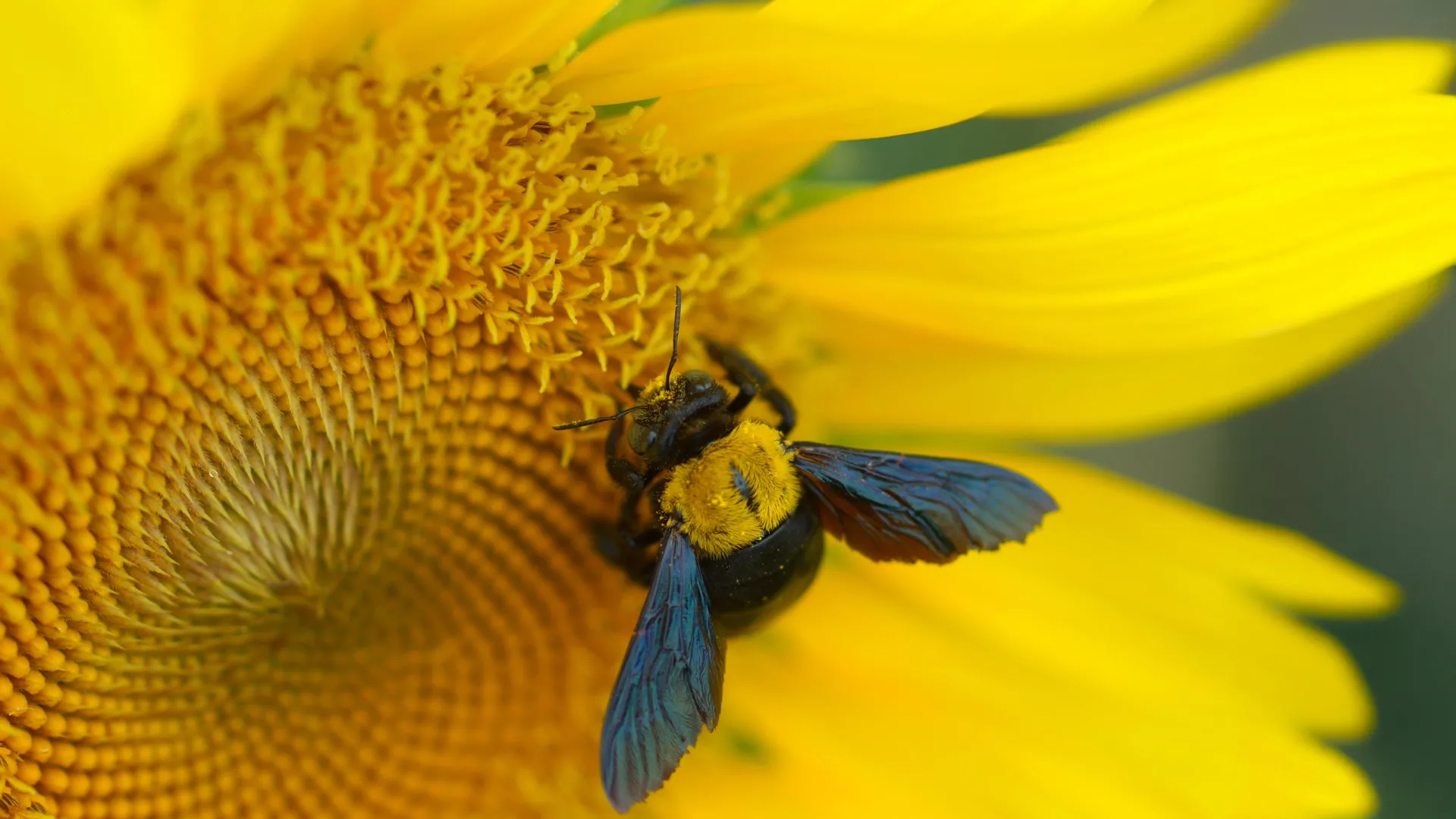
A groundbreaking study has unveiled a critical vulnerability among Australia’s diverse native bee populations, indicating that species which build their nests inside plant stems are confronting the most immediate and severe risks from escalating temperatures linked to climate change. In stark contrast, bees that burrow and nest underground appear to possess a significantly enhanced capacity to evade dangerous heat extremes, positioning them as comparatively more resilient in a rapidly warming environment. This pivotal research, published in the esteemed journal Nature Communications, casts a vital spotlight on the differential impacts of climate change across species based on their fundamental ecological behaviors.
The comprehensive investigation spanned 95 distinct native bee species found across the vast expanse of eastern mainland Australia, encompassing a wide array of climatic zones from the sweltering tropical north to the more temperate southern regions. This extensive geographical coverage allowed researchers to capture a nuanced understanding of how heat tolerance has evolved and how environmental pressures are now challenging these adaptations. A collaborative team of scientists, representing leading Australian institutions including Macquarie University, The University of Sydney, La Trobe University, Flinders University, University of Wollongong, Adelaide University, and The University of Queensland, meticulously explored the evolutionary trajectory of heat tolerance in various bee species and meticulously assessed their susceptibility to a warming climate. Their findings offer an invaluable framework for predicting which species are most imperiled and for developing targeted conservation interventions.
Unpacking the Critical Role of Nesting Habits in Heat Exposure
Australia boasts an extraordinary biodiversity, including approximately 1,700 recognized native bee species, each playing an indispensable role in the nation’s ecosystems. These intricate insects generally fall into one of three primary nesting categories, each with distinct implications for their exposure and resilience to environmental heat. The first category comprises bees that construct their intricate burrows directly in the ground, often utilizing soil or sand. The second group comprises those that utilize pre-existing cavities within wood, such as natural tree hollows, decaying logs, or fallen branches. The third, and now identified as most vulnerable, group consists of bees that nest inside the hollows of plant stems or leverage small, existing holes within twigs.
Dr. Carmen da Silva, the lead author of the study and a distinguished Research Fellow in the Pollinator Futures Research Centre at Macquarie University in Sydney, underscored the profound difference these nesting habits make in the face of extreme temperatures. "Bees that nest underground can effectively hide from extreme heat," Dr. da Silva explained. "As a result, they are not exposed to temperatures as high as those experienced by species living above ground, especially those that inhabit thin plant stems which provide very little insulation from the external heat." This fundamental difference in thermal buffering capacity is a key determinant of survival. The study’s findings compellingly indicate that "stem-nesting species appear to have the lowest capacity to escape unfavorable environmental temperatures and are likely to be the most impacted by anthropogenic climate change in the near term." This stark revelation positions nesting location not merely as a preference but as a critical factor influencing a bee species’ ability to cope with the escalating challenge of rising global temperatures.
The Broader Crisis: Climate Change and Global Pollinator Decline
This Australian study arrives amidst a growing global chorus of concern regarding pollinator decline, a phenomenon recognized by leading scientific bodies worldwide as a major threat to biodiversity and food security. The Intergovernmental Science-Policy Platform on Biodiversity and Ecosystem Services (IPBES) has repeatedly highlighted that one of the most significant drivers of biodiversity loss is climate change, alongside habitat destruction, pollution, invasive species, and unsustainable resource use. Bees, both native and introduced, are at the forefront of this crisis.
Over the past few decades, reports from various regions, including North America and Europe, have documented alarming declines in bee populations, with some species facing local extinctions. While the focus often falls on managed honeybee colonies due to their direct agricultural link, native bees, like those studied in Australia, are arguably even more critical for the health of natural ecosystems. They have co-evolved with native flora, developing specialized pollination relationships that are essential for the reproduction of countless plant species. The mechanisms through which climate change impacts pollinators are multifaceted: altered flowering times, increased frequency and intensity of extreme weather events (heatwaves, droughts, floods), shifts in geographical ranges of plants and pollinators, and increased susceptibility to diseases due to thermal stress. This new research adds a crucial dimension by pinpointing a specific behavioral trait—nesting habit—as a primary vulnerability factor, allowing for a more granular understanding of climate change impacts.
The Indispensable Role of Bees in Ecosystems and Agriculture
The survival of bee populations extends far beyond mere ecological interest; it is fundamental to the health of both natural ecosystems and the global agricultural sector. Dr. da Silva emphasized this critical interconnectedness: "Bees are critical in ecosystems all over the world because of their role as pollinators, and they’re under threat from warming and drying climates." She further elaborated on their dual importance, stating, "Bees sustain native ecosystems and play a crucial role in agricultural crop production – tropical native bees are vital pollinators for crops like macadamia nuts, avocados, mangos, and lychees."
Globally, insect pollination contributes an estimated US$235 billion to US$577 billion to global annual food production, according to various economic assessments. In Australia, the economic value of pollination services to agriculture alone is conservatively estimated to be in the billions of dollars annually. For instance, macadamia nuts, a significant export crop for Australia, are heavily reliant on native bee pollination. A reduction in bee numbers or their effective pollination capacity could have devastating economic consequences for these industries. Beyond economic metrics, native bees are key stone species in many ecosystems, facilitating the reproduction of native trees, shrubs, and wildflowers that form the basis of habitat and food sources for countless other organisms, from birds to mammals. Their decline would trigger cascading effects throughout food webs, potentially leading to widespread ecosystem instability and further biodiversity loss.
Tropical Bees: A Hotspot of Climate Risk
The research team also uncovered a discernible pattern directly correlated with geography, revealing that bee species inhabiting regions closer to the equator exhibited heightened vulnerability to climate change. Specifically, tropical bees were identified as facing the highest overall risk, a finding that adds another layer of complexity to climate vulnerability assessments. This geographical pattern is particularly concerning given that tropical regions are already experiencing some of the most pronounced effects of global warming, including more frequent and intense heatwaves.
Dr. Vanessa Kellermann, a Senior Lecturer in the Department of Ecology, Plant and Animal Sciences at La Trobe University and a senior author of the study, highlighted how these results challenge simplistic assumptions about species resilience. "Predicting which species will be vulnerable to climate change is one of the biggest challenges in ecology," Dr. Kellermann stated. She elaborated, "We found bee species with the highest heat tolerance were not necessarily the safest from warming, because many of them already live in extremely hot environments." This crucial insight underscores a phenomenon known as "thermal safety margins." Even species adapted to naturally high temperatures may have very little physiological capacity left to cope with additional warming. If they are already operating near their upper thermal limits, even a slight increase in average temperature or the occurrence of more extreme heat events can push them beyond their survivable threshold, leading to reproductive failure or mortality. This implies that conservation efforts in tropical zones, already biodiversity hotspots, require even greater urgency and precision.
Advancing Our Understanding of Native Bee Behavior and Ecology
Despite Australia’s rich native bee diversity and their ecological importance, there remains a significant knowledge gap regarding their precise behaviors, ecological requirements, and population dynamics. Studies such as this one are therefore becoming increasingly vital in an era of rapid environmental change. Dr. Ros Gloag, a co-senior author of the study and Senior Lecturer in Evolutionary Biology in the School of Life and Environmental Sciences at the University of Sydney, underscored this critical need for deeper understanding. "We still know so little about most of Australia’s amazing native bees," Dr. Gloag remarked. "This study helps us recognise that having a better understanding of native bee behavior is key to identifying the greatest threats to their wild populations."
A comprehensive understanding of native bee behavior includes not just nesting preferences but also foraging patterns, social structures (where applicable), reproductive cycles, and interactions with specific plant species. Such detailed ecological data is fundamental for designing effective conservation strategies. Without knowing the nuances of their lives, interventions might be misdirected or insufficient. For example, protecting specific plant species for nectar and pollen might be ineffective if their preferred nesting sites are simultaneously being destroyed or becoming thermally unsuitable. This research therefore serves as a clarion call for increased investment in baseline ecological research on Australia’s native invertebrates.
Implications for Conservation Strategies and Policy Development
The findings of this study carry profound implications for the development of effective conservation strategies and environmental policy, particularly in Australia. Recognizing that stem-nesting bees are uniquely vulnerable necessitates a targeted approach. Conservation efforts must move beyond generic pollinator protection to species- and behavior-specific interventions.
Potential conservation measures could include:
- Habitat Restoration and Management: Prioritizing the preservation and restoration of diverse plant communities that provide a variety of nesting opportunities. For stem-nesting bees, this might involve maintaining areas with dead or pithy stems of specific plant species. For ground-nesting bees, it would mean protecting undisturbed soil habitats, especially in sun-exposed, well-drained areas.
- Creation of "Cool Refuges": In urban and agricultural landscapes, creating microhabitats that offer thermal buffering, such as shaded areas, dense vegetation patches, or specific soil types, could provide critical refuges during extreme heat events.
- Sustainable Land Management: Encouraging agricultural practices that integrate native vegetation strips, reduce pesticide use, and manage landscapes to promote diverse nesting and foraging resources. Farmers could be incentivized to maintain natural areas adjacent to crops.
- Public Awareness and Citizen Science: Educating the public about the diversity and importance of native bees, and encouraging citizen science initiatives to monitor local bee populations and nesting sites, could significantly expand data collection and foster community-led conservation.
- Policy Integration: Government agencies, such as the Australian Department of Agriculture, Fisheries and Forestry, and the Department of Climate Change, Energy, the Environment and Water, should integrate these findings into biodiversity action plans and climate change adaptation strategies. This could involve updating environmental impact assessments to consider specific bee nesting habitats and promoting urban planning guidelines that account for pollinator needs.
- Research Investment: Continued funding for ecological research is paramount to fill remaining knowledge gaps, monitor population trends, and evaluate the effectiveness of conservation interventions.
The urgency of these actions is underscored by the accelerating pace of climate change. Australia, already susceptible to extreme weather events, is projected to experience even higher average temperatures and more frequent heatwaves in the coming decades. Protecting native bees is not just about preserving a single taxonomic group; it is about safeguarding the intricate web of life that sustains Australia’s unique ecosystems and underpins its agricultural productivity.
A Call to Action for Australia’s Biodiversity Future
In conclusion, the research by Dr. da Silva and her colleagues provides a critical roadmap for understanding and mitigating one of the most pressing threats to Australia’s native bee populations. By highlighting the acute vulnerability of stem-nesting species and the disproportionate risk faced by tropical bees, the study moves beyond broad statements about pollinator decline to offer actionable insights. It emphasizes that effective conservation in a warming world demands a deep understanding of species-specific ecology and behavior, moving beyond a one-size-fits-all approach.
The future resilience of Australia’s natural landscapes and its vital agricultural sectors hinges on a collective commitment to addressing climate change and implementing targeted conservation strategies. Protecting these small, yet indispensable, pollinators is an investment in the long-term ecological and economic health of the nation, requiring collaborative efforts from researchers, policymakers, land managers, and the wider community. As Dr. Gloag succinctly put it, recognizing and understanding the threats to native bee behavior is key. The time for such recognition and decisive action is now.
