
The U.S. House of Representatives recently advanced the legislative process for the nation’s foundational agricultural policy by passing the Farm, Food, and National Security Act of 2026, commonly referred to as the Farm Bill, at the close of April. This expansive legislation, critical to the fabric of American agriculture and conservation, includes substantial provisions for voluntary, science-based conservation programs that are strongly advocated by organizations such as the National Audubon Society. These programs are designed to empower farmers, ranchers, and forest landowners in their stewardship of working lands across the country. While the House bill establishes a robust framework, it simultaneously sets the stage for the Senate to consider and implement crucial improvements, ensuring the final legislation is adequately equipped to address the escalating demands placed upon agricultural communities and the nation’s vital natural resources.
The Enduring Significance of the Farm Bill
The Farm Bill is not merely a piece of agricultural legislation; it is a sprawling, multi-year omnibus bill that profoundly impacts nearly every American. Typically reauthorized every five years, it governs an array of programs ranging from farm subsidies and crop insurance to nutrition assistance, rural development, forestry, and, crucially, conservation. It represents the single largest federal investment in voluntary conservation efforts on private working lands, providing vital support for landowners dedicated to improving wildlife habitat, enhancing soil health, safeguarding water quality, and bolstering rural economies.
The bill’s scope extends far beyond the farm gate, encompassing a significant portion of the U.S. population through programs like the Supplemental Nutrition Assistance Program (SNAP), which often accounts for the largest share of the bill’s total spending. Its influence on national security, as indicated in its official title, stems from its role in ensuring a stable and secure food supply, supporting domestic agriculture, and fostering the economic resilience of rural areas. The "2026" in its title reflects the year it is intended to expire, signifying the forward-looking nature of its policy directives.
The urgency for a new Farm Bill is palpable. The previous 2018 Farm Bill expired in 2023, necessitating a temporary extension to prevent a lapse in critical programs and funding. Current investments and existing programs are increasingly outmatched by the accelerating pace of environmental challenges, including climate change impacts, biodiversity loss, and economic pressures on agricultural producers. This situation leaves working landowners with insufficient resources and tools to protect or restore vital ecosystems, such as grasslands and forests, which are essential habitats for numerous bird species and other wildlife.
Chronology of the 2026 Farm Bill Process
The journey to the 2026 Farm Bill has been a protracted and complex one. The 2018 Farm Bill, officially the Agriculture Improvement Act of 2018, was set to expire on September 30, 2023. As that deadline approached, political divisions and intense negotiations over various provisions, particularly funding levels for nutrition programs and conservation initiatives, prevented a timely reauthorization. Consequently, Congress passed a continuing resolution in November 2023, extending the provisions of the 2018 Farm Bill until September 30, 2024. This extension provided a temporary reprieve but underscored the pressing need for a comprehensive, long-term legislative solution.
Throughout late 2023 and early 2024, agricultural committees in both the House and Senate engaged in extensive hearings, stakeholder consultations, and drafting sessions. In the House, the Committee on Agriculture, led by Chairman Glenn "GT" Thompson (R-PA), took the lead in crafting the House version of the bill. After months of deliberation and markup sessions, which involved intense debate over proposed amendments and funding allocations, the House Committee on Agriculture approved its draft. The bill then moved to the full House for consideration.
The House floor debate, culminating in its passage at the end of April, was characterized by votes on numerous amendments and discussions on the balance between commodity programs, conservation, and nutrition. The successful passage of the bill by the House represents a significant legislative milestone, providing a concrete proposal for the Senate to consider. The next phase will involve the Senate Committee on Agriculture, Nutrition, and Forestry, led by Chairwoman Debbie Stabenow (D-MI), drafting and voting on its own version of the Farm Bill. Once the Senate passes its bill, a conference committee composed of members from both chambers will convene to reconcile differences between the two versions. The final reconciled bill must then be approved by both the House and Senate before being sent to the President for signature, ideally before the current extension expires.
House Bill’s Foundational Strengths: A Conservation Perspective
From the perspective of conservation advocates like the National Audubon Society, the House-passed Farm Bill contains several commendable provisions that lay a strong foundation for future conservation efforts.
One of the most significant strengths is the bill’s commitment to Robust USDA Conservation Funding. The legislation maintains the long-standing Farm Bill tradition of dedicating conservation funding within the Conservation Title, a crucial structural element that ensures these programs are prioritized. Critically, it preserves the historic investments in agricultural conservation originally provided by the Inflation Reduction Act (IRA) and subsequently made permanent by the "One Big Beautiful Bill Act" – a moniker often used to describe consolidated legislative efforts that ensure sustained funding for key initiatives. These funds are vital for scaling up conservation efforts in an era of unprecedented environmental challenges. Furthermore, the bill includes new authority for the Natural Resources Conservation Service (NRCS) to utilize expedited hiring procedures. This provision directly addresses a critical bottleneck: the limited capacity of field staff to deliver conservation programs effectively, which has often hindered program implementation and landowner access to technical assistance.
The bill also Preserves the Conservation Reserve Program (CRP), a cornerstone of voluntary conservation. The House bill reauthorizes CRP through 2031, providing long-term certainty for a program that pays landowners to restore and manage their lands for wildlife habitat and other conservation values. This reauthorization is essential for ensuring the program continues without interruption, allowing for the enrollment of new acres and providing fair compensation to producers for implementing conservation practices that benefit both the environment and their operations.
Beyond these headline provisions, the legislation introduces several subtle yet impactful Improvements to Conservation Implementation in Fields, Forests, and Rangelands. These "quiet improvements," while potentially "jargon-heavy and deep in the weeds" for the casual observer, are poised to significantly enhance the effectiveness and accessibility of popular conservation programs. For example, the bill would allow a broader range of partner organizations – including agricultural associations, academic institutions, non-profit organizations, and even for-profit businesses – to access Regional Conservation Partnership Program (RCPP) funding. This expansion enables these partners to provide direct technical support to landowners, leveraging diverse expertise and increasing outreach. The bill also seeks to shorten RCPP approval timelines and reduce paperwork burdens, thereby streamlining the application process and accelerating conservation project implementation. Updates to conservation practice standards are encouraged to integrate new science and technology, ensuring that programs remain cutting-edge and effective. Moreover, the USDA is encouraged to prioritize habitat connectivity across all conservation programs, a vital ecological principle that helps fragmented landscapes function as larger, more resilient ecosystems.
The House Farm Bill further Streamlines USDA’s Technical Service Provider (TSP) program, which is essential for connecting farmers with the expert guidance needed to plan and implement complex conservation strategies on their land. In forestry, a significant new Forest Conservation Easement Program is created, designed to provide funding for voluntary easements that protect private forestlands from conversion to non-forest uses, ensuring they remain productive and sustainable for generations while providing critical habitat.
Additionally, the bill contains a dedicated Forestry Title that covers key U.S. Forest Service programs supporting both public and private forest lands. These programs are instrumental in providing recreational, economic, and environmental benefits, including clean water supplies, reduced wildfire risk, and vibrant rural economies. Audubon has a strong interest in promoting bird-friendly forest management, which aligns with these broader benefits. The Forestry Title includes provisions such as updates to the Forest Inventory and Analysis (FIA) program, which will improve access to reliable scientific data crucial for informed forest management decisions. Reauthorizing the Joint Chiefs’ Landscape Restoration Program will promote continued collaboration between federal and state forestry agencies, non-governmental organizations, and private landowners, scaling up sustainable forest management across diverse land ownerships.
The Urgent Call for Habitat Protection: Data and Context
The need for robust conservation provisions within the Farm Bill is underscored by alarming trends in avian populations. Over the past 50 years, North America has witnessed a staggering decline of nearly 3 billion birds, with grassland and forest species among the hardest hit. The National Audubon Society highlights a 43% decline in grassland birds and a 17% decline in forest birds within this timeframe.
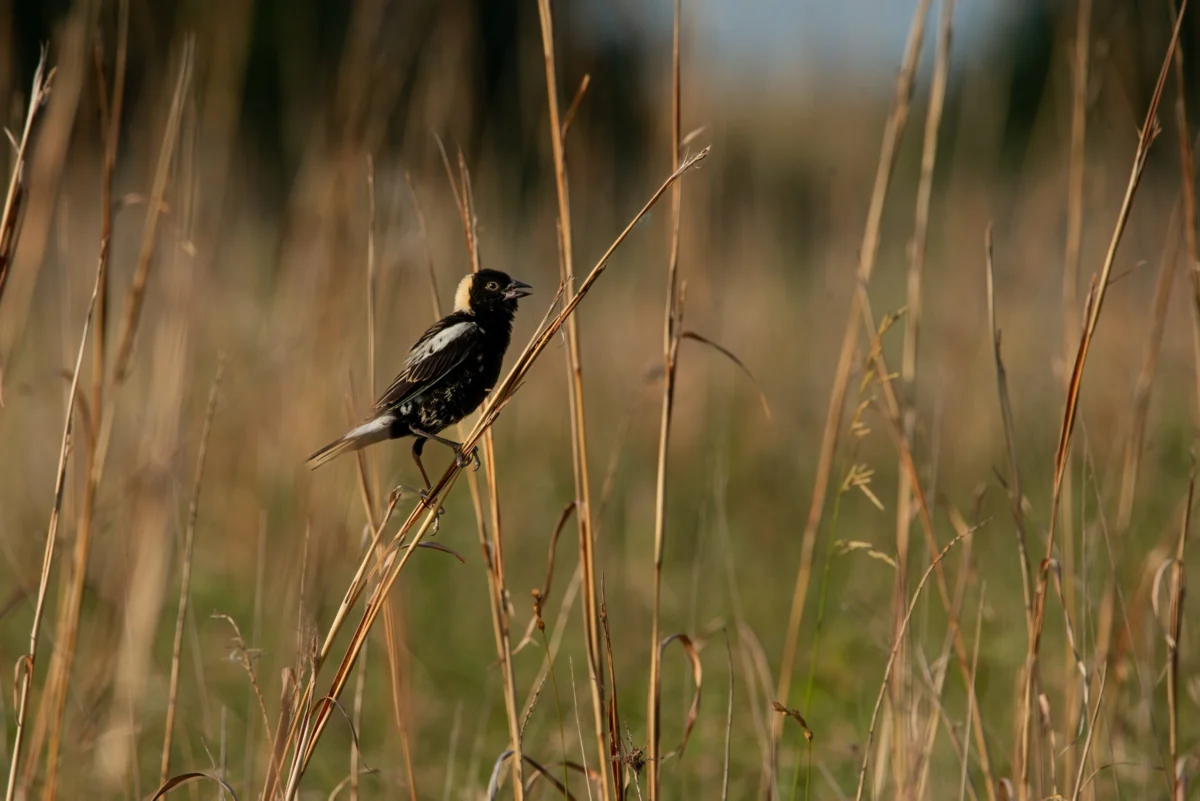
Grassland birds, such as the iconic Bobolink (featured in the article’s accompanying photo), Western Meadowlark, Grasshopper Sparrow, and Greater Prairie-Chicken, are experiencing some of the most precipitous declines. These species are highly dependent on expansive, healthy grassland ecosystems, which have been severely fragmented or converted to intensive agricultural production or urban development. The loss of these habitats is driven by factors like tillage, monoculture cropping, and overgrazing in some areas, while other grasslands face under-grazing and woody encroachment.
Forest birds, including species like the Wood Thrush, Eastern Whip-poor-will, and various warblers, are also under immense pressure from habitat degradation, climate change impacts, and unsustainable forest management practices. Their declines signal broader ecosystem health issues within forested landscapes.
Given that nearly half of all U.S. land is dedicated to agricultural production, the conservation and restoration programs embedded within the Farm Bill are not merely supplemental; they are absolutely critical to the recovery and long-term survival of these species. Private working lands represent the largest land base available for conservation efforts, making voluntary programs that support landowners in stewarding these lands indispensable. Furthermore, the increasing frequency and intensity of extreme weather events, driven by climate change, place additional stress on agricultural communities and natural resources, further increasing the demand for resilient landscapes and adaptive management strategies.
Senate’s Opportunity: Key Areas for Enhancement
While the House bill provides a strong foundation, the National Audubon Society and other conservation groups identify several key opportunities for the Senate to significantly strengthen the legislation, ensuring it becomes a truly "bird-friendly Farm Bill" that also benefits farmers and rural communities.
Modernizing CRP for Working Grasslands: A critical opportunity lies in evolving the Conservation Reserve Program (CRP) to better support perennial forage and integrate sustainable livestock grazing on working lands. While reauthorizing CRP through 2031 is a necessary step, the House bill missed a chance to make sorely needed updates to the program’s structure and incentives.
Increasing financial incentives for landowners to restore productive native pasture in grassland ecosystems can yield substantial conservation outcomes alongside tangible economic returns for producers. A successful model for this approach is North Dakota’s Conservation Forage Program (CFP), which has been replicated in South Dakota. Through CFP, Audubon and partner organizations like North Dakota Game and Fish, Ducks Unlimited, and Delta Waterfowl provide technical and financial assistance to landowners who wish to convert marginal croplands back into native grasslands suitable for their livestock operations. This approach offers a practical and economically viable grassland restoration option, establishing permanent cover, boosting soil health, protecting water quality, reducing erosion and nutrient loss, and enhancing wildlife habitat, all while helping landowners achieve their financial goals.
By scaling proven approaches like CFP, the Farm Bill can deliver "win-win" outcomes for ranchers, foster resilient working lands, and provide critical habitat for the birds that depend on them. Discussions are ongoing among Audubon, ranching groups, conservation organizations, and congressional champions regarding mechanisms to achieve this, whether through modernizing the Soil Health and Income Protection Program (SHIPP), adding a dedicated working lands component to CRP, or other innovative approaches that provide producers with opportunities to improve profitability while restoring vital habitat.
Strengthening CRP Through Bipartisan Legislation: The Senate also has the opportunity to incorporate two key bipartisan bills into its Farm Bill text, further enhancing CRP’s effectiveness. The CRP Improvement and Flexibility Act (H.R.5111 / S.2608), a top priority for Audubon, supports sustainable grazing practices by providing cost-share assistance for essential infrastructure like fencing or water distribution, and it increases the annual payment limitation to more appropriately compensate farmers for their conservation efforts. Additionally, the Pacific Flyway Habitat Enhancement Act (H.R. 1420) would expand the eligibility of lands for the Conservation Reserve Enhancement Program (CREP), a subprogram within CRP. This expansion would include at-risk or degraded wetlands crucial for migrating waterfowl, and it would incentivize farmers to manage working croplands in ways that best support wildlife habitat, particularly along the vital Pacific Flyway.
Empowering Small-Scale Foresters: To bolster the Farm Bill’s support for privately owned forests, which provide essential habitat for many migratory bird species, the Senate should include permanent authorization for the Forest Landowner Support Program (FLSP). Originally established in the Inflation Reduction Act, FLSP ensures that private forest landowners, particularly those with small acreage and underserved backgrounds, have consistent and reliable access to the technical and financial assistance needed to maintain healthy, working forests. This program provides critical tools, expertise, and partnerships for effective land management. For instance, FLSP has supported Audubon’s Bird-Friendly Maple Program, which incentivizes maple producers to manage their sugarbushes in a manner that supports bird habitat and overall forest health, demonstrating a clear synergy between economic activity and ecological well-being.
Broader Implications and Stakeholder Perspectives
The passage of a comprehensive Farm Bill holds significant implications across multiple sectors. For the agricultural sector, it provides crucial stability through commodity programs, risk management tools like crop insurance, and market access initiatives. The conservation programs not only benefit the environment but also enhance the long-term productivity and resilience of agricultural lands, offering economic benefits through improved soil health and water retention. Organizations representing farmers and ranchers generally support robust conservation funding and technical assistance, viewing them as essential tools for sustainable production.
The environmental community, largely aligned with Audubon’s priorities, sees the Farm Bill as a cornerstone for biodiversity conservation and climate resilience. A strong bill can fund efforts to sequester carbon in soils, improve water quality, protect endangered species, and restore critical habitats.
For rural communities, the Farm Bill is a lifeline. Beyond direct farm support, it funds rural development programs that create jobs, improve infrastructure, and enhance the quality of life. The conservation easements and forestry programs help maintain working landscapes that contribute to local economies and preserve natural amenities.
The legislation’s impact on food security is paramount. By supporting domestic agricultural production and providing nutrition assistance, it ensures a stable and accessible food supply for millions of Americans, mitigating hunger and food insecurity.
Politically, the Farm Bill has historically been a bipartisan effort, often requiring complex coalitions between urban and rural interests. While the current political climate can be challenging, the necessity of passing this legislation often compels lawmakers from across the aisle to find common ground. The ongoing negotiations in the Senate and the eventual conference committee will test this bipartisan spirit, with the outcome reflecting a delicate balance of competing priorities and regional needs. The U.S. Department of Agriculture (USDA) and its agencies, particularly NRCS and the Forest Service, will play a critical role in implementing the final bill, requiring adequate staffing and resources to ensure programs reach landowners effectively.
As consideration of the Farm Bill continues on Capitol Hill, sustained work is needed to strengthen and modernize critical conservation programs. The National Audubon Society and its allies urge the Senate to build on the momentum generated by the House, engaging in bipartisan negotiations crucial for successfully getting a comprehensive Farm Bill across the finish line. Audubon remains committed to engaging with lawmakers from across the country, advocating for policies that create the optimal conditions for birds, people, and the planet to thrive for generations to come.
