
LA QUINTA, CA – May 14, 2026 – A pivotal moment for California’s largest lake and its surrounding communities unfolded on Thursday with the inaugural board meeting of the new Salton Sea Conservancy. This significant event, marking the establishment of the first conservancy in California in over fifteen years, underscored a profound recognition by the state of the Salton Sea’s critical ecological and social importance. Convened in La Quinta by Joe Shea, Assistant Secretary for Salton Sea Policy at the California Natural Resources Agency (CNRA), the session served to introduce the Conservancy’s board members to the public, delineate its foundational budget and operational structure, and emphasize the indispensable role of robust community engagement in all forthcoming endeavors.
The meeting’s atmosphere was one of cautious optimism, reflecting both the urgency of the Salton Sea’s environmental crisis and the fresh resolve brought by this new institutional framework. Camila Bautista, Audubon California’s Salton Sea & Deserts Program Manager and the CNRA’s appointee to the Conservancy Board, articulated this sentiment. "I left the meeting hopeful for accelerated progress and strengthened partnerships, optimistic about the commitment of our diverse board, and excited to tackle the challenges ahead," Bautista stated. Echoing Assistant Secretary Shea’s opening remarks, she added, "As Joe said at the start, the Salton Sea can’t wait. It’s too important for the communities and wildlife that depend on it." This statement encapsulates the pressing need for immediate and sustained action, acknowledging decades of environmental degradation and the growing humanitarian concerns in the region.
The Genesis of a New Era: The Salton Sea Conservancy
The establishment of the Salton Sea Conservancy represents a significant legislative and environmental victory. It was formally signed into law in September 2024 through the passage of Senate Bill 583, a landmark piece of legislation championed by various environmental groups, community advocates, and state officials. This legislative action culminated years of advocacy and growing awareness of the Salton Sea’s precarious state. The Conservancy’s initial funding is secured through an allocation from Proposition 4, a climate bond overwhelmingly approved by California voters in 2024. This voter-approved funding mechanism signals a broad public mandate for environmental protection and climate resilience initiatives across the state, with the Salton Sea standing as a primary beneficiary.
According to the CNRA, the Salton Sea Conservancy is unique in its dual, critical mandate. Its first main function is to ensure the ongoing operations and maintenance of projects constructed under the comprehensive Salton Sea Management Plan (SSMP). This addresses a critical historical challenge: the long-term sustainability and upkeep of restoration efforts. Without dedicated resources for maintenance, even successfully completed projects risk falling into disrepair, negating their intended environmental and health benefits. The second, equally vital function is the acquisition and holding of land and water rights. This strategic capability is essential for implementing large-scale habitat restoration, dust suppression, and water management projects, providing the Conservancy with the necessary legal and physical control over the resources vital for the Sea’s revitalization.
A Deeper Dive into the Salton Sea Crisis: Background and Urgency
To fully appreciate the significance of the Salton Sea Conservancy, it is crucial to understand the historical context and the severe environmental and public health challenges that necessitate such an intervention. The Salton Sea, California’s largest lake, is an endorheic rift lake located in the Colorado Desert of Southern California. Formed between 1905 and 1907 when the Colorado River breached an irrigation canal, it became a vital agricultural drainage reservoir. For decades, it thrived as a popular tourist destination, boasting resorts and recreational activities. However, its lack of an outlet, coupled with agricultural runoff containing pesticides and fertilizers, led to increasing salinity and pollution.
The crisis intensified dramatically with the implementation of the Quantification Settlement Agreement (QSA) in 2003. This agreement reallocated Colorado River water, diverting significant agricultural runoff away from the Salton Sea to urban areas, primarily San Diego. As inflows decreased, the Sea began to recede rapidly, exposing vast expanses of playa—the dry lakebed. This exposed playa, laden with decades of accumulated agricultural chemicals and dust, became a significant source of airborne particulate matter (PM10), posing severe public health risks to surrounding communities. These communities, predominantly low-income and Latino, already suffer from some of the highest asthma rates in California.
Ecologically, the Salton Sea is a critical stopover point along the Pacific Flyway, supporting an estimated 90% of California’s entire population of federally endangered Yuma clapper rails and hosting more than 400 species of migratory birds, including significant populations of American White Pelicans, Eared Grebes, and various shorebirds. The receding waters and increasing salinity have devastated fish populations, particularly the tilapia, which form the base of the food web for many bird species. The large-scale die-offs of fish and birds are stark indicators of the ecosystem’s collapse, threatening a biodiversity hotspot of international importance.
Previous efforts to address the Salton Sea crisis, notably the Salton Sea Management Program (SSMP) initiated in 2017, have faced numerous hurdles, including insufficient funding, bureaucratic complexities, and the sheer scale of the environmental challenge. While the SSMP has aimed to construct habitat and dust suppression projects, the long-term vision and sustained commitment required a more robust, dedicated entity—a role the new Conservancy is designed to fill.
Community Engagement: The Cornerstone of Sustainable Restoration
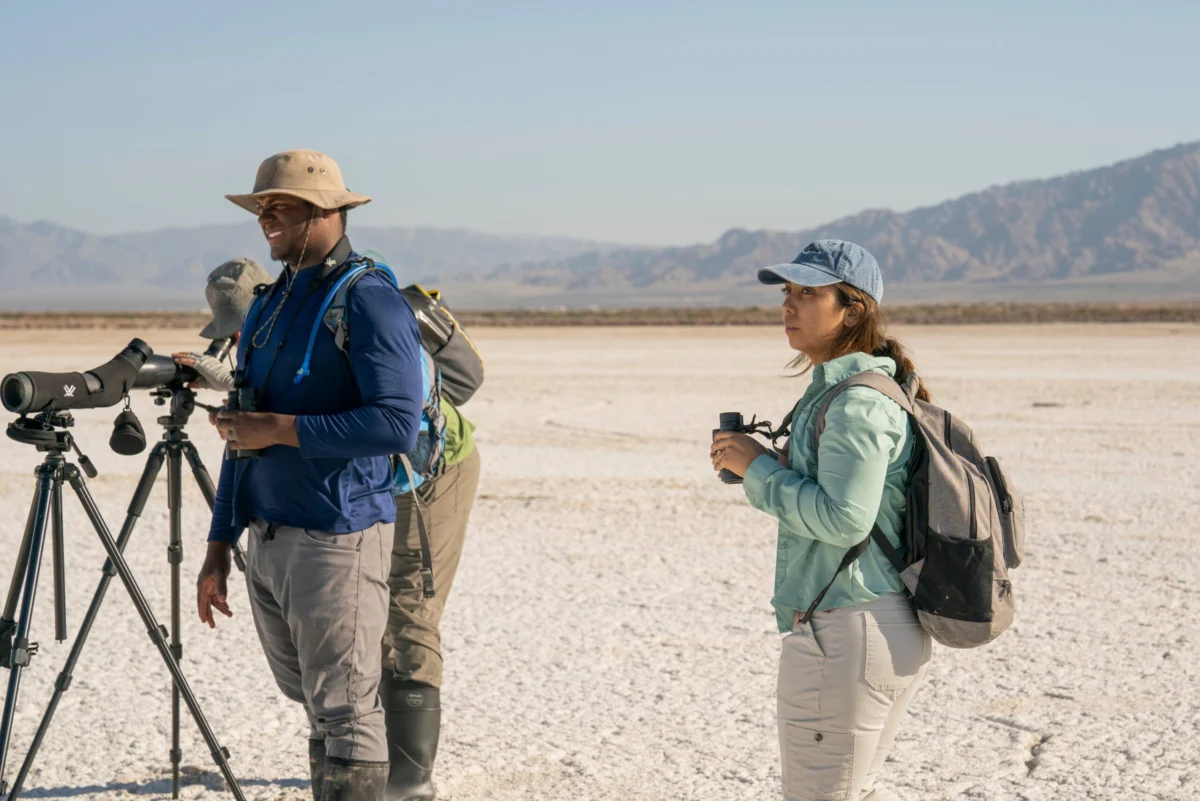
A recurring theme throughout the Conservancy’s inaugural meeting, and a point of particular emphasis for Audubon California, was the critical importance of integrating local communities into the planning and implementation processes. Camila Bautista, leveraging her extensive experience on the ground, presented compelling evidence for the need for intentional and consistent community engagement. She highlighted Audubon’s practical efforts, including a comprehensive on-the-ground survey for the Salton Sea Public Access Community Study. This study was designed to directly solicit input from residents regarding access to the Sea, desired recreational opportunities, and priorities for restoration.
Bautista also detailed community-centered planning meetings conducted for the Bombay Beach Wetland Enhancement Project. This project, focused on creating vital wetland habitats, exemplifies how local knowledge and priorities can shape more effective and socially equitable conservation outcomes. Furthermore, her team’s numerous education and leadership programs have been instrumental in empowering residents, particularly youth, to understand the complex issues facing the Salton Sea and to envision their active role in its future.
"For this to really succeed, we need our communities to see themselves reflected in this work, and to feel empowered to participate," Bautista asserted. "So much of my work has been bringing people to experience the Salton Sea and see it through a different lens – helping them understand the issues, but also envision what it can be and how they can be a part of that future." This perspective is crucial, as environmental justice advocates have long argued that historically marginalized communities disproportionately bear the brunt of environmental degradation and are often excluded from decision-making processes regarding their own environments. The Conservancy’s commitment to prioritizing community voices is a promising step towards rectifying these historical imbalances.
Collaborative Support and Broader Implications
The launch of the Salton Sea Conservancy has been met with widespread support from a diverse coalition of stakeholders. The Salton Sea Partnership, a long-standing alliance of leading conservation and community groups including Audubon, which has dedicated over a decade to protecting public and ecological health in the region, expressed strong endorsement. Michael Cohen, Senior Fellow with the Pacific Institute, a prominent member of the Partnership, and a tireless Salton Sea advocate, underscored the historical significance.
"The Salton Sea Conservancy’s first meeting is another important step toward ensuring a long-term state commitment to revitalize the Salton Sea ecosystem and protect the people in the region," Cohen remarked. He extended special thanks to Senator Alex Padilla and Governor Gavin Newsom and his staff for their instrumental roles in promoting the inter-agency coordination and local representation deemed essential for the region’s health. The bipartisan support for the Conservancy, evidenced by its legislative passage and funding, signals a broad recognition across California’s political spectrum of the crisis’s urgency and the need for a unified approach.
The Conservancy’s formation is not merely a symbolic gesture but represents a strategic shift in California’s approach to large-scale environmental challenges. By establishing a dedicated entity with specific powers for operations, maintenance, and land/water acquisition, the state aims to overcome the fragmentation and short-term focus that have hampered past efforts. This structure is designed to foster greater accountability, streamline decision-making, and ensure a consistent, long-term commitment that transcends political cycles.
The Road Ahead: Challenges and Opportunities
While the Conservancy’s inaugural meeting marks a hopeful beginning, the path forward is fraught with challenges. The scale of environmental remediation required at the Salton Sea is monumental, demanding sustained financial investment, innovative engineering solutions, and delicate negotiation among diverse stakeholders including agricultural interests, energy developers (geothermal resources are abundant in the region), tribal nations, and local communities.
The immediate priorities for the Conservancy will include establishing its full operational capacity, recruiting key staff, and developing a detailed strategic plan for implementing its mandate. This plan will need to integrate seamlessly with existing SSMP projects while also identifying new opportunities for large-scale restoration and dust mitigation. The acquisition of land and water rights will be a complex process, requiring careful legal and financial planning to secure the necessary resources without disrupting existing agreements.
Furthermore, maintaining the momentum of community engagement, as championed by Audubon California, will be crucial. The Conservancy must build trust with local residents, ensuring their concerns are heard and addressed, and that the benefits of restoration efforts are equitably distributed. This includes providing opportunities for local employment in construction and maintenance, and ensuring that new recreational and ecological amenities are accessible to all.
The success of the Salton Sea Conservancy will serve as a critical test case for California’s ability to tackle complex, long-term environmental challenges. Its model, if successful, could potentially inform approaches to other large-scale ecological restoration projects across the state and beyond. By focusing on dedicated governance, sustainable funding, and inclusive community engagement, California is demonstrating a renewed commitment to transforming one of its most significant environmental liabilities into a symbol of resilience and hope for both wildlife and people. The journey ahead is long and arduous, but with the Conservancy now formally underway, a tangible framework for a healthier Salton Sea future has finally been laid.
