
Managing the intricate water levels within the vast wetlands of the Great Lakes region is proving to be a critical determinant in the survival of many secretive marsh bird species, whose populations have faced steep declines due to extensive habitat loss and unprecedented hydrological instability. These elusive birds, often heard but rarely seen, are highly specialized indicators of wetland health, with each species possessing unique requirements for water depth, vegetation structure, and open water ratios to successfully nest, forage, and evade predators. The delicate balance of these aquatic ecosystems, essential for the biodiversity of the entire Great Lakes basin, is increasingly threatened by historical human development and the accelerating impacts of climate change, necessitating innovative and adaptive conservation strategies to ensure their long-term viability.
The Secretive Lives of Marsh Birds and Their Habitat Imperatives
Marsh birds, characterized by their cryptic coloration and preference for dense wetland vegetation, are among the most difficult avian species to monitor and study. Their reclusive nature makes precise population counts challenging, yet consistent observations indicate significant declines across their ranges. These species, including the Marsh Wren, American Bittern, Pied-billed Grebe, Least Bittern, Sora, and Virginia Rail, are intrinsically linked to the specific hydrological conditions of their wetland habitats.
For instance, the diminutive Marsh Wren (Cistothorus palustris) requires robust emergent vegetation, such as cattails and bulrushes, that cluster densely in shallow marshes. These sturdy plant structures provide the crucial anchor points for their intricately woven, globular nests, often suspended just above the water line. A deviation from optimal shallow water levels can either drown nests during high water events or expose them to terrestrial predators during prolonged dry spells.
The American Bittern (Botaurus lentiginosus), a master of camouflage known for its "stake-driving" call, necessitates a mosaic of open water and dense emergent vegetation for both concealment and hunting. This species wades stealthily through shallow water, patiently waiting to ambush fish, amphibians, and large insects. Too much open water reduces cover, while overly dense vegetation impedes hunting. Similarly, the even more elusive Least Bittern (Ixobrychus exilis), North America’s smallest heron, relies on extremely dense stands of reeds and cattails in very shallow water for nesting and foraging, often building its nest just inches above the water surface.
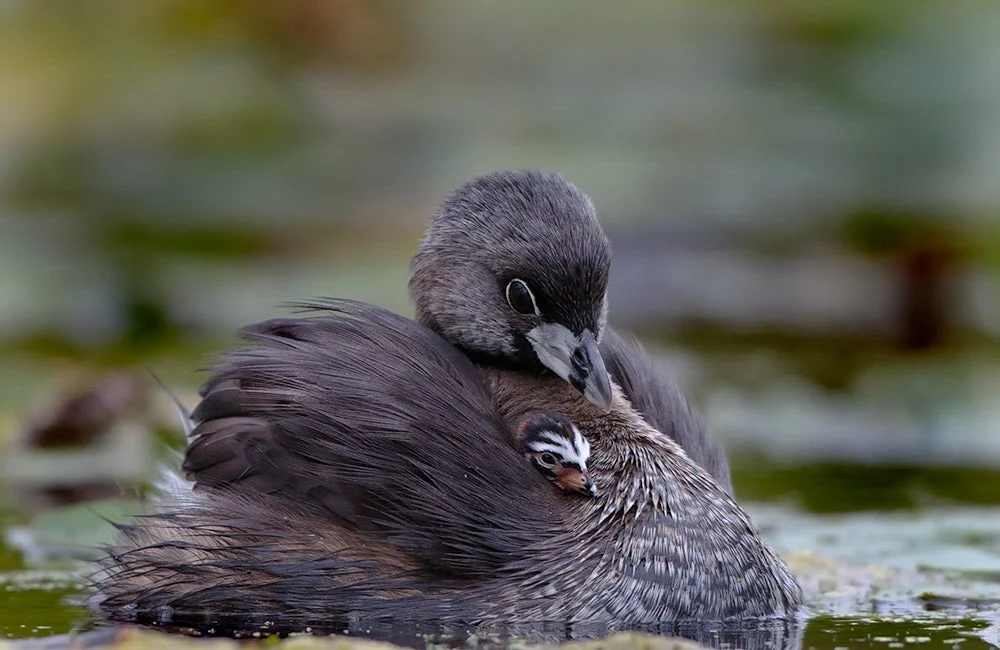
Pied-billed Grebes (Podilymbus podiceps), characterized by their distinctive bill and habit of diving for food, require expanses of open water for foraging on fish and aquatic invertebrates, interspersed with emergent vegetation for nesting and cover. Their floating nests, often anchored to submerged vegetation, are highly vulnerable to fluctuating water levels. Optimal conditions involve stable water depths that allow for successful incubation without either stranding the nest or submerging it. The Sora (Porzana carolina) and Virginia Rail (Rallus limicola), two other common but secretive marsh birds, thrive in shallow, heavily vegetated marshes, utilizing a mix of open mudflats and dense cover for feeding and nesting. These birds are particularly sensitive to changes in water depth that can affect their access to invertebrate prey and expose their nests to predation.
A healthy, biodiverse marsh ecosystem that supports a full spectrum of marsh bird species typically exhibits a hydrological gradient, often conceptualized as three distinct zones:
- Open Water Zone: Deeper areas with minimal emergent vegetation, crucial for diving birds like grebes and for fish populations.
- Emergent Vegetation Zone: Moderate depths dominated by plants like cattails, bulrushes, and sedges, providing nesting and foraging grounds for bitterns, rails, and wrens.
- Wet Meadow/Shallow Marsh Zone: Periodically inundated areas with grasses and sedges, supporting a variety of invertebrates and providing critical transition habitat.
Maintaining the dynamic equilibrium between these zones is paramount for the overall ecological integrity of wetland habitats and the diverse life they sustain.
The Unfolding Crisis: Historical Wetland Loss in the Great Lakes
The precarious situation of marsh birds is inextricably linked to the precipitous decline of wetland habitats across the Great Lakes region. Historically, the Great Lakes basin boasted vast expanses of wetlands, acting as the kidneys of the landscape, filtering water, controlling floods, and supporting an unparalleled array of biodiversity. However, since European settlement, these vital ecosystems have been systematically drained, filled, and altered to accommodate agricultural expansion, urban development, and industrial growth.
Data from the U.S. Fish and Wildlife Service indicates that over half of the original wetlands in the contiguous United States have been lost. The Great Lakes states, in particular, have suffered some of the most dramatic losses. For instance, Ohio has lost an estimated 90% of its original wetlands, Indiana approximately 87%, and Illinois around 85%. Michigan, Wisconsin, and Pennsylvania have also experienced significant reductions, albeit slightly less severe. This widespread destruction has fragmented remaining habitats, isolating bird populations and severely curtailing their ability to thrive. The sheer scale of this historical alteration has left fragmented remnants struggling to perform their ecological functions, exacerbating the vulnerability of species dependent on them.
Beyond the direct loss of habitat, the remaining wetlands often suffer from degraded water quality due to agricultural runoff, industrial pollution, and urban stormwater discharge. Invasive species, such as common reed (Phragmites australis) and hybrid cattail (Typha × glauca), further compound the problem by forming dense monocultures that outcompete native plants, reduce biodiversity, and alter hydrological regimes, rendering habitats unsuitable for many native marsh bird species. The cumulative effect of these stressors has pushed many marsh bird populations to the brink, with some species experiencing declines exceeding 70% in recent decades.
Climate Change and Hydrological Volatility in the Great Lakes
Adding a complex layer of threat to already vulnerable wetland ecosystems is the escalating impact of climate change, manifesting as increased hydrological volatility across the Great Lakes basin. Wetlands, by their very nature, are sensitive to water level fluctuations, but the rapid and extreme swings observed in recent years are unprecedented in their speed and magnitude, overwhelming the natural adaptive capacities of these systems.
Over the last decade, the Great Lakes have experienced dramatic shifts from record low water levels to historic highs in remarkably short periods. In 2013-2014, for example, Lakes Michigan and Huron reached near-historic lows, creating vast expanses of dry lakebed and shrinking critical wetland habitats. This period saw increased stress on marsh birds as foraging grounds dried up and nesting sites became more exposed to land-based predators. Just a few years later, by 2020, water levels across all the Great Lakes surged to all-time highs, driven by a combination of increased precipitation, reduced evaporation, and altered ice cover dynamics. These extreme high-water events inundated vast stretches of coastal wetlands, washing away nests, drowning young, and killing off essential native plant communities that cannot tolerate prolonged submersion. The destruction of emergent vegetation during these high-water periods leaves long-lasting scars on the wetland ecosystem, requiring years for recovery.
More recently, between 2021 and 2026, the region has experienced periods of "flash droughts" within the watershed. These intense, rapidly developing dry spells, interspersed with heavy rainfall events, create a whipsaw effect on water levels, making it incredibly difficult for wetland ecosystems to adapt. Such rapid changes prevent birds from successfully completing breeding cycles; a nest initiated during stable conditions might be flooded or desiccated within weeks, leading to widespread reproductive failure.
Scientists attribute these rapid fluctuations to an amplified hydrologic cycle driven by climate change. Warmer air holds more moisture, leading to more intense precipitation events, while warmer temperatures also increase evaporation rates, particularly during dry periods. The loss of consistent winter ice cover on the lakes further contributes to increased evaporation, especially in the early winter. This instability poses a profound challenge to conservation efforts, as management strategies must become increasingly flexible and responsive to unpredictable environmental conditions. The traditional understanding of average water levels is becoming obsolete, replaced by a need to manage for extremes and rapid transitions.
A Coordinated Conservation Response: Targeted Restoration and Adaptive Management
In response to these dire circumstances, a dedicated consortium of scientists, researchers, and conservationists has intensified efforts to restore and protect critical marsh bird habitats across the Great Lakes. This collaborative endeavor brings together non-profit organizations, academic institutions, and government agencies, including the U.S. Fish and Wildlife Service, state departments of natural resources, and organizations like Audubon Great Lakes. Their strategy involves identifying and prioritizing twelve nearshore regions of the Great Lakes that exhibit significant ecological potential and are crucial for the long-term survival of marsh birds. These "priority regions" are selected based on factors such as existing biodiversity, potential for connectivity, historical wetland extent, and the presence of rare or endangered species.
The overarching approach is one of adaptive management, a systematic process for continually improving management policies and practices by learning from the outcomes of implemented programs. This means conservationists do not simply apply a fixed solution but rather implement actions, monitor their effects, and then adjust future actions based on the lessons learned. For marsh bird conservation, this involves understanding the specific and often nuanced needs of different species and then implementing targeted solutions that can be modified over time. Assessing how high or low water is in a marsh and then proactively adjusting it to meet the diverse needs of marsh birds is a cornerstone of this adaptive strategy. The goal is not to create a static environment but rather to restore the natural hydrological dynamism in a controlled manner, fostering a resilient ecosystem that can better withstand the pressures of a changing climate.
Technological Solutions: Water Control Structures and Advanced Sensing
A key component of this adaptive management strategy is the deployment of sophisticated water control structures and advanced water level sensors. These tools allow land managers to actively manipulate and monitor wetland hydrology, effectively restoring a degree of control over systems that have lost their natural ability to fill and drain due to historical alterations like ditching, tiling, and road construction.
Water control structures are engineered systems, typically constructed from durable materials like concrete, that function much like a gate or dam within a wetland. By adding or removing individual boards within the structure’s channels, land managers can precisely raise or lower water levels across specific areas of a marsh. This capability is invaluable for several ecological purposes:
- Encouraging Native Plant Establishment: Controlled drawdowns (lowering water levels) can expose wetland soils, stimulating the germination of dormant native seed banks. This allows desirable plants like sedges and smartweeds to establish, which are crucial food sources and cover for marsh birds, and can help to outcompete invasive species.
- Invasive Species Management: Raising water levels can drown out terrestrial invasive plants, while drawdowns can facilitate mechanical removal or herbicide application in dry conditions. For example, controlling invasive Phragmites often involves a combination of water level manipulation, herbicide treatment, and prescribed burns.
- Optimizing Breeding Conditions: Water levels can be adjusted to create ideal conditions for nesting success. For instance, maintaining stable, shallow water during the breeding season can protect nests from terrestrial predators while preventing inundation.
- Enhancing Foraging Habitat: Manipulating water depths can concentrate aquatic prey species, making them more accessible for foraging birds.
To inform these management decisions, tall, pole-like devices known as water level sensors are strategically placed within the wetlands. These sensors are equipped with data loggers that continuously record water depth, and sometimes temperature, at regular intervals. Each spring, after the winter thaw, field teams visit these sensors to deploy or reactivate the recording devices. Throughout the critical spring and summer breeding season, and into the fall migration period, data from these sensors is collected and analyzed. This real-time and historical data provides invaluable insights into hydrological trends, allowing managers to make informed decisions about when and how to adjust water levels using the control structures. The ability to monitor water levels remotely and accurately is transforming wetland management from a reactive to a proactive science, enabling targeted interventions that maximize benefits for marsh bird populations.
Case Study: The Calumet Region’s Resurgence
One of the most compelling examples of this conservation approach is unfolding in the Calumet region, a unique and historically significant area straddling the Illinois-Indiana border, specifically on Chicago’s southeast side. Once an industrial powerhouse and a site of heavy pollution, the Calumet region is also home to an astonishing array of resilient natural areas, making it a critical focus for urban conservation. Its mosaic of prairies, oak savannas, and wetlands represents a vital ecological corridor within a dense urban landscape.
In this priority region, conservation efforts have concentrated on restoring degraded wetlands to support thriving marsh bird populations. As part of this initiative, water level sensors have been strategically placed at six different restoration sites. These sites include prominent natural areas such as Big Marsh Park and Powderhorn Lake Forest Preserve.
Big Marsh Park, a former industrial dumping ground transformed into a world-class ecological park, exemplifies the success of this restoration model. Through extensive remediation and habitat creation, including the installation of water control structures, the park now supports diverse wetland habitats. Water level sensors here provide crucial data to manage the hydrology of its various marsh cells, creating optimal conditions for species like the Least Bittern and Marsh Wren. Powderhorn Lake Forest Preserve, a larger, more established natural area, also benefits from these interventions, with sensors helping to manage water levels to maintain its significant marsh and open water habitats, which are vital for a range of waterfowl and marsh birds.
The work in the Calumet region demonstrates that even in highly urbanized and historically impacted landscapes, significant ecological restoration is possible. By understanding the intricate relationship between water levels and marsh bird ecology, and by employing modern tools, these efforts are not only bringing back bird populations but also enhancing the overall ecological health and recreational value of urban green spaces for local communities.
Broader Ecological and Socioeconomic Implications
The success of water level management for marsh birds extends far beyond the avian realm, yielding a cascade of ecological and socioeconomic benefits. Healthy wetlands, managed for optimal water levels, serve as critical nurseries for numerous fish species, amphibians, and a vast array of aquatic invertebrates, which form the base of the food web. They also provide essential habitat for migrating waterfowl and other water-dependent wildlife, bolstering overall biodiversity.
Furthermore, these revitalized wetlands provide invaluable ecosystem services that directly benefit human communities. They act as natural sponges, absorbing excess stormwater runoff and mitigating the impacts of floods, a service becoming increasingly vital in an era of more extreme weather events. Wetlands are highly effective natural water filters, removing pollutants and improving water quality in the Great Lakes, which serve as a drinking water source for millions. They also play a significant role in carbon sequestration, helping to mitigate climate change by storing atmospheric carbon.
From a socioeconomic perspective, thriving wetlands contribute to ecotourism, birdwatching, and other recreational activities, generating economic benefits for local communities. The presence of healthy natural areas can also enhance property values and improve the quality of life for residents. The investment in wetland restoration and adaptive management is, therefore, an investment in both ecological resilience and community well-being.
Persistent Challenges and the Path Forward
Despite the innovative approaches and successes achieved, the path forward for marsh bird conservation in the Great Lakes remains fraught with challenges. The relentless pressure of climate change and its unpredictable hydrological impacts will continue to test the adaptability of both ecosystems and management strategies. Securing sustained funding for long-term monitoring, maintenance of water control structures, and ongoing restoration efforts is crucial but often difficult to guarantee. The persistent threat of invasive species, requiring continuous management and vigilance, also presents an ongoing battle.
However, the dedication of the scientific and conservation community, coupled with the development of sophisticated tools and adaptive management frameworks, offers a hopeful trajectory. The understanding that water is the lifeblood of wetlands, and that its careful management is paramount for the survival of its most secretive inhabitants, is driving a new era of proactive and informed conservation. By continuing to learn, innovate, and collaborate, the Great Lakes region can ensure that the evocative calls of its marsh birds will continue to echo across its revitalized wetlands for generations to come.
