
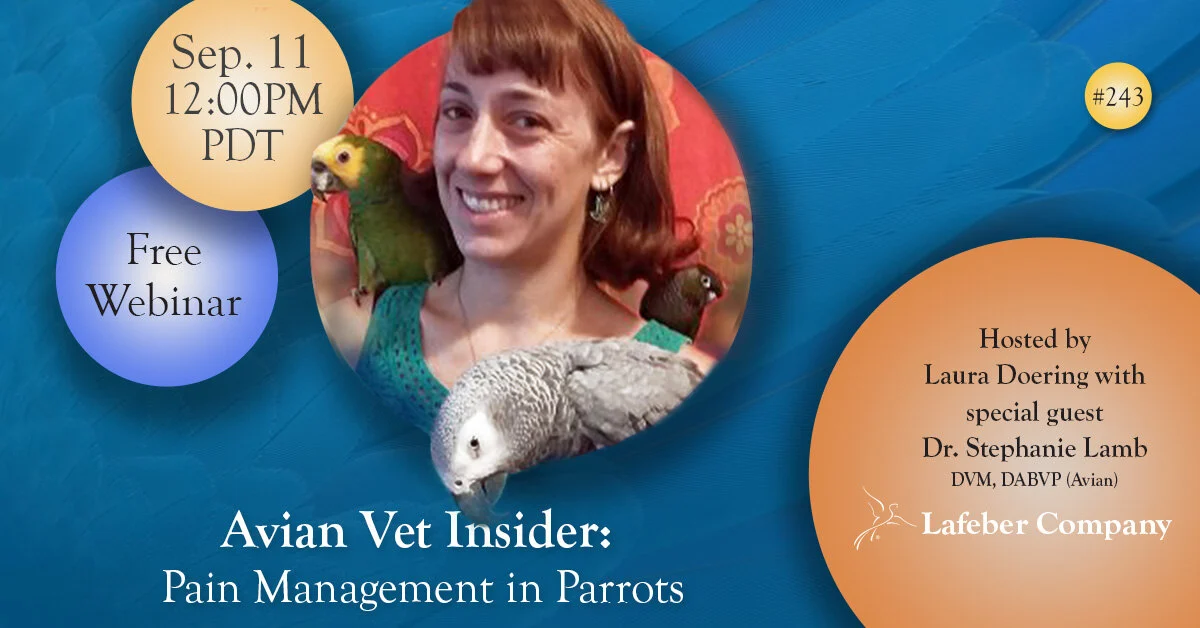
As September marks Animal Pain Awareness Month, a critical dialogue regarding the health and longevity of avian companions is set to take place on Friday, September 11, 2026. The upcoming webinar, titled "Avian Vet Insider — Pain Management in Parrots," will feature expert insight from Dr. Lamb, who is scheduled to lead a comprehensive discussion on the diagnostic and therapeutic challenges associated with pain in pet birds. The session is slated for 12:00 p.m. PDT and serves as an educational resource for bird owners, veterinary technicians, and avian enthusiasts seeking to improve their understanding of pain recognition and management.
The Challenge of Pain Recognition in Avian Species
Recognizing pain in psittacine species remains one of the most significant challenges in modern veterinary medicine. Unlike mammals, which often exhibit clear behavioral cues such as vocalizing, limping, or localized swelling, birds are biologically predisposed to mask signs of illness or injury. In the wild, displaying vulnerability can make a bird a primary target for predators; consequently, pet birds often hide their discomfort until a condition has reached an advanced stage.
Dr. Lamb’s presentation will focus on decoding these subtle behavioral markers. Often, owners may misinterpret signs of pain as simple behavioral issues or mild changes in temperament. Clinical indicators that the webinar aims to address include changes in posture, reduced activity levels, shifts in vocalization patterns, self-mutilation or feather plucking, and alterations in appetite or fecal consistency. By teaching owners how to identify these "silent" indicators, the session aims to promote early intervention, which is frequently the deciding factor in successful medical outcomes for exotic species.
Timeline and Educational Scope
The webinar is structured as a professional, research-based deep dive into avian pharmacology and holistic care. Following the opening overview on recognizing discomfort, the session will move into a technical analysis of current pain management protocols.
- 12:00 p.m. – 12:15 p.m. PDT: Introduction to Animal Pain Awareness Month and the biological context of pain in parrots.
- 12:15 p.m. – 12:45 p.m. PDT: Diagnostic strategies for identifying sub-clinical signs of discomfort in a home environment.
- 12:45 p.m. – 1:15 p.m. PDT: Clinical pharmacology: An examination of common analgesics, including non-steroidal anti-inflammatory drugs (NSAIDs) and opioids used in avian medicine.
- 1:15 p.m. – 1:45 p.m. PDT: Alternative and integrative therapies, including physical modalities and environmental modifications.
- 1:45 p.m. – 2:00 p.m. PDT: Q&A session addressing common owner concerns.
Supporting Data and Pharmacological Context
The field of avian pain management has evolved substantially over the past two decades. Historically, there was a pervasive, albeit inaccurate, belief that birds did not require the same level of analgesic support as mammals. Contemporary veterinary research has soundly debunked this, demonstrating that avian neurological pathways for pain are highly developed.
Current data suggests that pain management is not merely a comfort measure but a physiological necessity that prevents secondary health complications. Chronic pain in parrots often leads to high cortisol levels, which suppresses the immune system, leading to secondary opportunistic infections or chronic stress-related conditions like feather destructive behavior. The webinar will provide clarity on the usage of medications such as meloxicam or butorphanol, which are frequently utilized in avian clinical settings. Understanding the mechanism of action, appropriate dosing, and the risks associated with these drugs is essential for owners who may be tasked with administering them at home under veterinary guidance.

Broader Impact on Avian Welfare
The implications of this webinar extend beyond individual bird health; it reflects a broader movement within the veterinary community to prioritize "Quality of Life" (QoL) metrics in exotic animal care. As life expectancy for many parrot species continues to increase due to better nutritional standards and improved veterinary knowledge, the prevalence of age-related conditions—such as osteoarthritis, pododermatitis (bumblefoot), and systemic inflammatory diseases—has risen.
Dr. Lamb’s discussion on alternative therapies is particularly relevant in this context. Integrative medicine, including the use of targeted physical therapy, nutritional supplementation (such as omega-3 fatty acids), and environmental enrichment that minimizes physical strain, represents the future of chronic pain management in birds. By providing owners with a toolkit of non-pharmacological interventions, the webinar aims to reduce the reliance on long-term systemic medications, which can have varying side effects on a bird’s kidneys and liver.
Professional Standards and Regulatory Considerations
The webinar is designed to bridge the gap between clinical veterinary practice and home-based care. While the information presented will be of high professional standard, it is important to note that all pharmacological interventions discussed must be managed under the direct supervision of a licensed veterinarian.
The inclusion of the time zone converter in the event announcement underscores the international nature of the avian pet community. With a global audience, the event organizers have acknowledged that standardizing care protocols is a logistical necessity. By utilizing the Zoom platform, the webinar enables real-time interaction, allowing participants to query experts about specific symptoms or treatment challenges they have encountered with their own avian companions.
Conclusion and Registration
As Animal Pain Awareness Month draws attention to the silent suffering often endured by exotic pets, this webinar serves as a timely intervention. The content scheduled for September 11, 2026, is essential for any owner or professional committed to the ethical treatment of birds.
The necessity of early recognition cannot be overstated. When owners are empowered with the knowledge to distinguish between normal activity and signs of pain, the veterinary profession gains a more reliable partner in the diagnostic process. Participants are encouraged to register through the official link provided by the organizers to ensure access to the live session and any supplemental materials that may be distributed following the presentation. By fostering a deeper understanding of avian physiology and the complexities of pain, this webinar represents a significant step forward in the specialized field of avian welfare, ensuring that these complex, long-lived companions receive the standard of care required to maintain their health and comfort throughout their lives.
Registration for the event remains open, and organizers recommend that participants test their connection and local time zone alignment well in advance of the start time to ensure a seamless experience. As the medical community continues to refine its approach to avian anesthesia, surgery, and chronic condition management, events like the Avian Vet Insider series remain vital for translating cutting-edge research into actionable advice for the public.
