
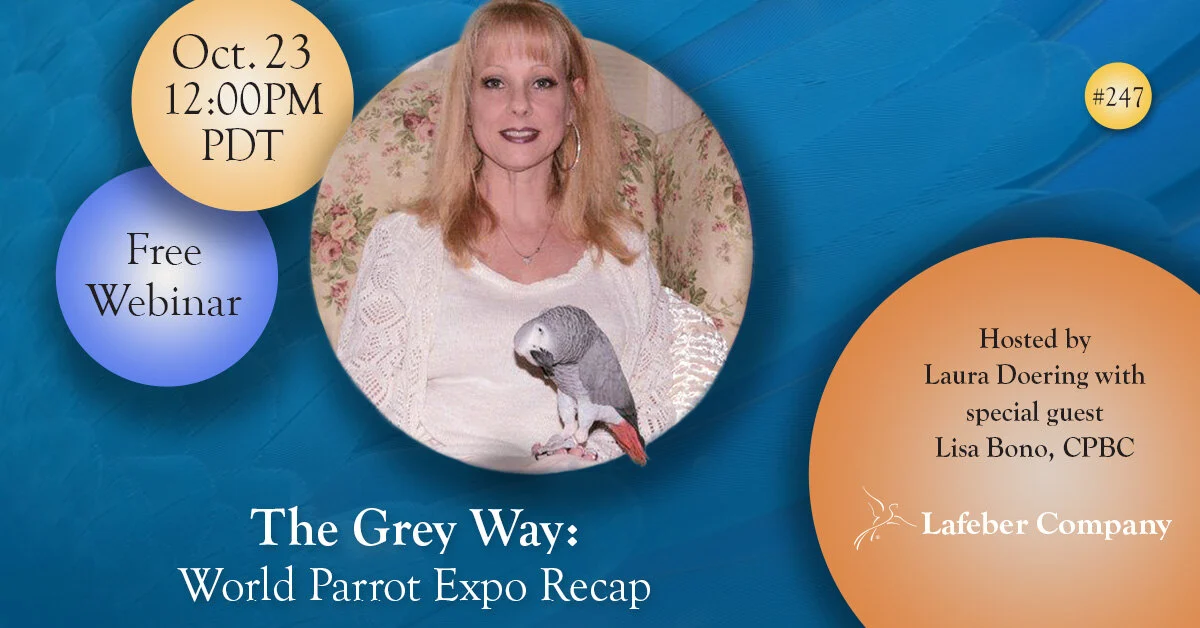
The international avian community is preparing for a pivotal follow-up discussion as Lisa Bono, a Certified Parrot Behavior Consultant (CPBC), hosts an exclusive webinar on Friday, October 23, 2026, at 12:00 p.m. PDT. This session is designed to synthesize the complex, multifaceted takeaways from the recent World Parrot Expo held in Auburn, Washington. As the field of psittacine husbandry evolves, this recap serves as a crucial bridge between the high-level academic discourse presented at the expo and the practical application of these findings in home and clinical environments.
The World Parrot Expo has long been established as a cornerstone event for avian professionals, including veterinarians, conservationists, and specialized behaviorists. By bringing together diverse stakeholders, the event functions as a catalyst for innovation in parrot care, addressing the unique physiological and psychological challenges inherent in keeping these highly intelligent, long-lived species.
Chronology of the World Parrot Expo
The World Parrot Expo, held in the Pacific Northwest, serves as an annual or biennial pilgrimage for those dedicated to the welfare of the Psittaciformes order. The 2026 iteration, which took place earlier this fall, featured a multi-day itinerary focused on the intersection of modern science and traditional husbandry.
The schedule was divided into several thematic pillars:
- Behavioral Science: Modern approaches to operant conditioning and the mitigation of common behavioral issues such as feather destructive behavior and screeching.
- Avian Medicine: Advances in diagnostic technology, specifically regarding avian infectious diseases and preventative care protocols.
- Nutritional Standards: Evidence-based dietary management aimed at preventing obesity and nutritional deficiencies common in captive populations.
- Conservation and Ethics: Discussions surrounding the ethical implications of the pet trade and the role of private keepers in the preservation of endangered species.
The upcoming webinar, facilitated by Bono, will provide a curated overview of these sessions, allowing those who were unable to attend in person to access the key findings that defined the event.
The Evolution of Avian Care and Supporting Data
To understand the significance of the upcoming recap, one must look at the current landscape of avian welfare. Data from the Association of Avian Veterinarians (AAV) and various international welfare organizations suggests that the primary cause of mortality in captive parrots remains preventable conditions related to malnutrition and environmental stress.
Recent industry reports indicate a shift in the pet parrot demographic. With parrots living significantly longer due to improved medical interventions—some species, such as Macaws and Cockatoos, capable of living 50 to 80 years—the burden of long-term care has become a focal point of professional discussion. The World Parrot Expo highlighted that nearly 65% of domestic bird owners are now seeking specialized, behavioral-based training, a marked increase from the 30% reported in the previous decade.
Furthermore, nutrition remains a volatile subject. Recent clinical studies presented at the expo indicated that commercial pelleted diets, while superior to seed-only diets, often lack the phytochemical diversity required for optimal endocrine health. The experts at the expo advocated for a move toward "enriched dietary landscapes," which integrate fresh, seasonal produce alongside formulated base diets to mirror the complex foraging patterns observed in the wild.
Expert Perspectives and Theoretical Implications
Lisa Bono’s role as a CPBC is instrumental in translating the dense, technical information provided by veterinary speakers into actionable steps for the average bird owner. Her recap will specifically analyze the shift in behavioral theory, moving away from outdated "dominance-based" training models toward a cooperative, trust-based model of interaction.
Inference from the expo’s keynote presentations suggests that the industry is moving toward a more transparent, standardized model of care. Professionals are increasingly emphasizing the "Five Domains" of animal welfare—nutrition, environment, health, behavior, and mental state—as the primary framework for assessment. This shift has profound implications for how rescue organizations, breeders, and private owners interact. By standardizing these metrics, the avian community aims to reduce the rate of "rehoming," a persistent issue where parrots are passed between households due to the owner’s inability to manage complex behavioral needs.
Broader Impact on the Avian Industry
The implications of the knowledge shared at the World Parrot Expo extend beyond the individual bird-owner relationship. The gathering has reinforced the necessity for better collaboration between avian veterinarians and certified behaviorists. Historically, these two disciplines have operated in silos, but the recent expo fostered a consensus that physical health is inextricably linked to psychological stability.
The upcoming webinar will likely address the following critical areas:
- The "Invisible" Illnesses: How chronic stress manifests as physiological symptoms, often misdiagnosed as purely medical issues.
- Environmental Enrichment Protocols: New standards for cage architecture and sensory stimulation that go beyond basic toy rotation.
- Conservation Advocacy: How the captive pet community can act as a secondary population for threatened species, provided that husbandry practices are aligned with conservation geneticists’ recommendations.
Practical Applications for Attendees
For those attending the webinar on October 23, the focus will be on distilling the "noise" of the expo into specific, daily routines. Bono is expected to provide a framework for setting realistic goals for parrot owners, emphasizing that incremental changes—such as micro-adjustments to light cycles or the introduction of novel, safe foraging opportunities—can lead to significant improvements in a parrot’s quality of life.
The webinar will also address the technological advancements showcased at the expo, including remote monitoring tools that allow owners to observe their birds during the day to identify stressors or early signs of illness that might otherwise go unnoticed.
A Call for Informed Advocacy
As the avian community looks toward the end of 2026, the insights from the World Parrot Expo represent a vital recalibration of standards. The transition toward evidence-based care is not merely an academic exercise; it is a necessity driven by the increasing longevity of captive parrots and the high standard of welfare required to sustain them.
The October 23 event is expected to serve as a comprehensive roadmap for those navigating the complexities of bird ownership. By focusing on the intersection of biology, psychology, and practical husbandry, Lisa Bono will facilitate a deeper understanding of what it means to be a modern steward of these complex animals.
Participants are encouraged to verify their local start times via the provided time zone converter, as the global nature of the avian community ensures that the audience will be joining from various international regions. As the industry continues to professionalize, webinars of this nature represent the standard for information dissemination, ensuring that the findings from major expos remain accessible to the broader public, thereby elevating the standard of care for parrots worldwide.
In summary, the recap is not just a review of past events, but a forward-looking seminar designed to arm owners and professionals with the data-driven insights necessary to improve the lives of the millions of parrots currently in human care. The emphasis on behavior, integrated health, and conservation signals a mature phase for the avian community, one where the focus has shifted from simple maintenance to the pursuit of thriving, mentally stimulated, and physically healthy companions.
