

Woodpeckers have long captivated backyard bird enthusiasts and ornithologists alike with their distinct appearance, energetic foraging habits, and remarkable physiological endurance. While these birds are celebrated fixtures at backyard feeding stations across North America, their daily survival depends on a suite of highly specialized evolutionary adaptations. Often described as living a life of perpetual hard labor, woodpeckers routinely subject their bodies to extreme mechanical forces that would prove fatal or severely debilitating to nearly any other vertebrate species.
Recent insights shared by wildlife experts, including educational initiatives from organizations like Wild Birds Unlimited (WBU), continue to highlight the biomechanical marvels that enable these birds to thrive in punishing arboreal environments. Understanding the biology of woodpeckers not only sheds light on avian evolution but also offers valuable lessons for backyard conservationists looking to safely attract these resilient species to residential habitats.
Biomechanics of High-Impact Foraging
The defining characteristic of most woodpecker species is their relentless drilling, drumming, and excavating into dense tree bark to uncover insects, create nesting cavities, and communicate with potential mates. During intense excavation activities, a woodpecker’s head can strike a wooden surface at velocities reaching up to 13 miles per hour. This rapid deceleration generates an impact force of approximately 10 Gs.
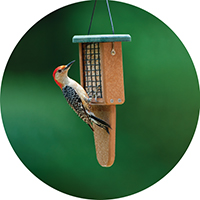
To put these figures into perspective, a human brain is roughly three times more likely than a woodpecker’s to suffer a concussion under identical impact conditions. For most other bird species, generating 10 Gs of force against a rigid surface would result in immediate, catastrophic brain trauma, retinal detachment, and structural skull fractures. Yet, woodpeckers execute these strikes thousands of times per day without suffering apparent neurological decline.
Ornithologists and biomechanical engineers have dedicated decades of research to uncovering how these birds mitigate such extreme physical trauma. The prevailing scientific consensus points to a specialized skeletal architecture that functions as a natural shock-absorption system.
Specialized Skull Structure and Shock Absorption
The resilience of the woodpecker begins with its unique cranial anatomy. Unlike the rigid, fused skulls typical of many other birds, a woodpecker’s skull incorporates a lightweight, spongy, air-filled bone matrix. This porous structure is structurally reinforced by an intricate meshwork of bony support struts that dissipate kinetic energy away from the brain cavity rather than allowing it to concentrate in a single focal point.
Furthermore, the anatomical relationship between the woodpecker’s brain and its skull plays a crucial role in preventing injury. The brain of a woodpecker is exceptionally small relative to its overall body and skull mass. Because the cranial cavity offers very little empty space, the brain has virtually no room to rattle around or slam against the interior bone walls during high-velocity impacts. This tight spatial containment significantly reduces the shear forces that typically cause concussions and traumatic brain injuries in larger-brained animals.

Additional structural adaptations include the hyoid bone—a specialized apparatus that originates near the base of the beak, wraps entirely around the back of the skull, and anchors near the nostril cavity. This muscular and bony sling functions similarly to a safety belt, wrapping around the braincase and further stabilizing the skull during the deceleration phase of each strike.
Self-Sharpening Bills and Continuous Regeneration
A logical question frequently raised by observers is why a woodpecker’s bill does not wear down to a blunt stub after thousands of forceful impacts against hardwoods like oak, maple, and pine. The reality is that the bill does experience continuous friction and material loss. However, evolutionary biology has equipped woodpeckers with a cellular regeneration mechanism that offsets this structural wear.
Specialized epidermal cells located at the tip of the bill are responsible for continuous tissue growth, constantly replacing the microscopic material lost during excavation. This dynamic regeneration ensures that the chisel-pointed bill remains consistently strong, resilient, and structurally sound. Moreover, the microscopic crystalline structure of the bill is arranged in a way that causes it to naturally self-sharpen with every subsequent blow, maintaining optimal cutting geometry throughout the bird’s life cycle.
Built-In Protective Equipment: Respiration and Vision
Excavating dense timber at high speeds inevitably generates a substantial cloud of wood chips, sawdust, and fine debris. Without specialized protective anatomy, this particulate matter would easily compromise the bird’s respiratory and visual systems.

To counter this hazard, woodpeckers have evolved natural equivalents of personal protective equipment:
- Respiratory Protection: Dense tufts of stiff, specialized feathers grow directly over both external nares (nostrils). These feather filters act as a biological dust mask, effectively blocking wood particles from entering the nasal cavity and respiratory tract during heavy drilling.
- Ocular Protection: To shield their delicate organs of sight, woodpeckers possess a highly specialized nictitating membrane—often referred to as a protective third eyelid. This translucent membrane snaps shut fractions of a second before each impact, physically deflecting flying wood chips and debris away from the eyeball while still allowing the bird to maintain a degree of visual awareness.
Backyard Conservation and Feeding Strategies
For wildlife enthusiasts seeking to observe these remarkable adaptations firsthand, residential bird-feeding stations provide an accessible viewing platform. Woodpeckers are regular visitors to backyards, provided the appropriate nutritional resources are made available to support their high-energy metabolisms.
According to avian feeding specialists, standard mixed seeds are often insufficient to attract a diverse array of woodpecker species. Instead, hobbyists can successfully draw species such as the Downy, Hairy, Red-bellied, and Pileated woodpecker by offering specialized high-fat and high-protein foods. Recommended provisions include:
- Suet Cakes and Mealworms: High-energy fat blocks that provide the concentrated caloric intake necessary for active foragers.
- No-Melt Dough and Bark Butter: Specialized spreads designed to adhere directly to trees or specialized feeders, mimicking natural bark-foraging conditions.
- Shelled Peanuts and TreeNutty Blends: Nutrient-dense tree nuts that appeal to larger woodpecker species.
- Woodpecker Seed Cylinders: Compressed seed formulations engineered specifically for clinging birds.
By supplying these nutrient-rich foods, bird watchers can safely support local populations while gaining an up-close perspective on some of the natural world’s most resilient and mechanically fascinating creatures. Ongoing educational resources, such as specialized nature podcasts and ornithological outreach programs, continue to expand public appreciation for the complex biological engineering embedded within backyard wildlife.
