

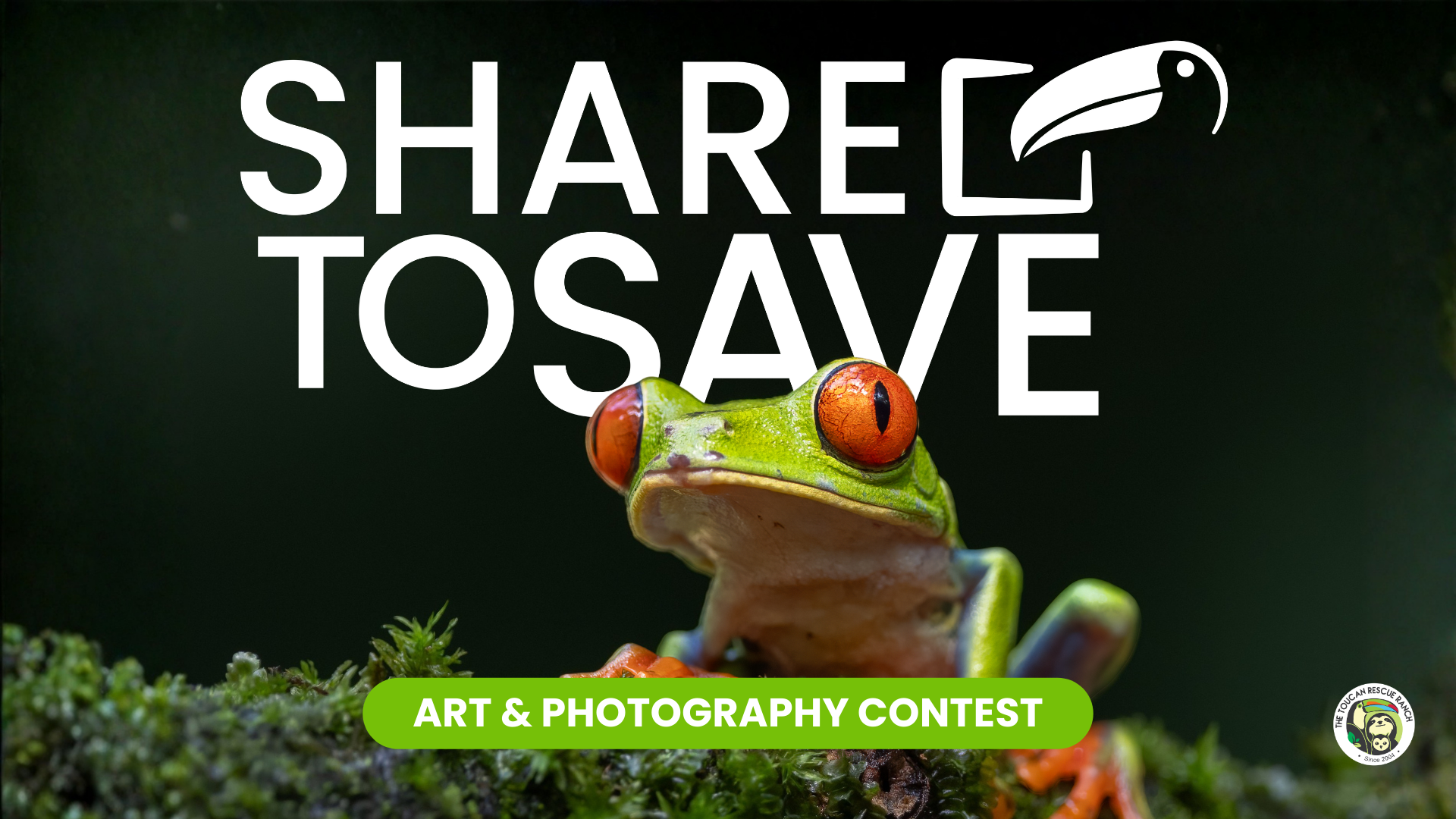
The Toucan Rescue Ranch, a prominent wildlife rescue and rehabilitation facility located in Costa Rica, has officially announced the launch of its rebranded flagship fundraising initiative, Share to Save. For half a decade, this global effort has mobilized photographers, digital artists, and nature enthusiasts under various banners such as #TRRShareYourShot, #CallForArtists, and #TunesForToucans. The transition to the Share to Save name marks a strategic effort to consolidate these creative streams into a single, cohesive movement dedicated to providing injured, orphaned, and displaced animals with a vital second chance at life in the wild.
The 2026 iteration of the program, themed Creatives for Conservation, seeks to bridge the gap between aesthetic expression and environmental action. By inviting global contributors to submit visual works inspired by the natural world, the organization aims to generate the significant financial resources required to maintain its high-standard medical and rehabilitation operations. Selected works will not only be featured across digital platforms but will also be showcased in a live gallery exhibition within Costa Rica. This exhibition strategy emphasizes local production; all pieces will be printed within the country to minimize the carbon footprint of international shipping, while ensuring that the original artists retain full ownership and copyright of their intellectual property.
The Financial Reality of Wildlife Conservation in Costa Rica
The necessity of the Share to Save initiative is underscored by the staggering operational costs associated with modern wildlife rescue. According to data released by the Toucan Rescue Ranch, the organization receives more than 500 animals annually. These patients arrive with a variety of traumas, ranging from electrocutions on uninsulated power lines and vehicle strikes to illegal pet trade confiscations and domestic animal attacks. The complexity of treating diverse species—including sloths, toucans, owls, and various wild cats—requires a sophisticated infrastructure.
Operational expenses for the Rescue Center, the Sanctuary, and the Release Site currently exceed $50,000 per month. These funds are allocated toward specialized veterinary equipment, high-quality nutrition tailored to specific species, the construction and maintenance of safe enclosures, and the labor-intensive process of rewilding animals that have spent months or years in recovery.
A critical point of concern for the conservation community is the lack of state funding for such facilities. Despite Costa Rica’s global reputation as a leader in environmental sustainability and biodiversity protection, the government’s National System of Conservation Areas (SINAC) does not provide direct financial subsidies to private wildlife rescue centers. Consequently, these institutions rely almost exclusively on the philanthropic contributions of international donors, eco-tourism revenue, and creative fundraising initiatives like Share to Save. The contest represents a democratization of conservation funding, allowing individuals to contribute through the medium of art and small-scale grassroots donations.
Evolution of a Movement: From Hashtags to Global Impact
The Share to Save initiative has evolved significantly since its inception five years ago. What began as a series of social media challenges intended to boost engagement has transformed into a sophisticated fundraising apparatus. The previous iterations—#TRRShareYourShot and #CallForArtists—successfully built a community of thousands of "artivists" (artist-activists) who used their platforms to highlight the plight of tropical fauna.
The rebranding to Share to Save reflects a more direct call to action. Organization officials state that the name change was necessary to emphasize the tangible outcome of participation: every shared image and every cast vote contributes directly to the survival of a living creature. The timeline of this evolution shows a steady increase in international participation, with submissions now arriving from every continent except Antarctica. This growth indicates a rising global consciousness regarding the interconnectedness of ecosystems and the role of the "global citizen" in protecting remote biodiversity hotspots.
The Voting Mechanism and Economic Impact
The Share to Save contest operates on a unique "Donation-as-a-Vote" model. To participate in the selection of the winners, supporters contribute $1 for every vote they wish to cast. This system serves a dual purpose: it engages the public in a democratic selection process while simultaneously acting as a micro-donation platform. There is no limit to the number of votes a supporter can purchase, and in many jurisdictions, these contributions are tax-deductible, providing an additional incentive for corporate and individual donors.
The economic implications of this model are significant. By leveraging the reach of social media and the talent of the global creative community, the Toucan Rescue Ranch can bypass traditional, high-overhead fundraising methods. The funds raised are immediately directed toward the purchase of medicines, the payment of specialized staff, and the expansion of release programs. Furthermore, the decision to print exhibition pieces locally in Costa Rica supports the domestic economy and strengthens ties with local businesses, creating a holistic cycle of sustainability.
Profiles in Creativity: The Artists of Share to Save
The diversity of the submissions for the current cycle reflects the broad appeal of the Creatives for Conservation theme. The entries range from macro photography of insects to hand-sculpted clay figures and digital illustrations. Each piece is accompanied by an artist statement that provides context and highlights the emotional connection between the creator and the subject.
For instance, artist Cibele Manfredini’s work, Coexist, emphasizes the educational aspect of conservation, operating on the philosophy that "the more we know, the more we love." Similarly, photographer Felix Hinsch’s Unexpected Visitor captures a healthy sloth in a domestic setting, highlighting the thinning boundaries between human habitats and wildlife corridors.
The submissions also include highly specialized art forms. Mike Toppe contributed a hand-sculpted and hand-painted Golden Lion Marmoset, focusing on animal conservation awareness through tactile media. Meanwhile, Darren James Sturrock’s Highlands combines his passion for Costa Rican orchids and wildlife, illustrating the botanical complexity of the region. These artists serve as ambassadors, using their unique skill sets to translate scientific conservation needs into visual narratives that resonate with a general audience.
The theme of "fragility and resilience" is a recurring motif. Freddy’s photograph, Hanging on!, depicts an endemic salamander, symbolizing the precarious state of many forest-dwelling species. This is echoed in the work of Michaela Schwenk, whose piece Becoming Wild tells the story of "Bonnie," an orphaned sloth currently undergoing the rigorous process of rewilding—a core mission of the Toucan Rescue Ranch.
Scientific and Ecological Implications
The success of the Share to Save initiative has broader implications for the field of conservation psychology. Visual media has been proven to be a powerful tool in fostering empathy for "non-charismatic" megafauna and smaller, often overlooked species. By featuring bees, frogs, and vultures alongside popular animals like sloths and toucans, the contest educates the public on the importance of every niche within an ecosystem.
Isabelle Chico, one of the participating artists, noted the importance of "umbrella species" like the jaguar. Her work, Jaguar vs. Caiman, illustrates the raw power of top predators. From an ecological standpoint, protecting these large carnivores necessitates the protection of the entire habitat beneath them, thereby conserving thousands of other species of plants and animals. This "trickle-down" effect of conservation is a key message that the Toucan Rescue Ranch seeks to disseminate through the contest.
Furthermore, the initiative highlights the success of human-made interventions. Artist Katia Hougaard’s work, Protecting the Future of Sloths, specifically illustrates the use of wildlife bridges—rope structures designed to help arboreal animals cross roads without risking electrocution or collisions. These bridges are a primary project for the Ranch, and the art contest serves as a vital platform for explaining how donor funds are used to implement these practical solutions.
Analysis of Broader Impact
As the Share to Save initiative continues to grow, it serves as a blueprint for other non-governmental organizations (NGOs) worldwide. In an era where traditional grant funding is increasingly competitive and often restricted by bureaucratic requirements, the ability to generate unrestricted funds through creative community engagement is invaluable.
The initiative also fosters a sense of global stewardship. When an artist in Europe or a voter in Asia engages with the story of a specific rescued animal in Costa Rica, it breaks down geographical barriers and reinforces the idea that biodiversity loss is a global crisis requiring a global response.
The long-term impact of Share to Save extends beyond the immediate medical care of the animals. By archiving these works and stories, the Toucan Rescue Ranch is creating a cultural record of the current state of biodiversity and the human effort to preserve it. This record serves as both a warning and a source of hope for future generations of conservationists.
Conclusion and Future Outlook
The launch of Share to Save represents a critical juncture for the Toucan Rescue Ranch and the wider Costa Rican conservation community. As the monthly operational costs continue to rise alongside the number of animals in need, the success of such creative initiatives is no longer just beneficial—it is essential for survival.
The organization remains committed to its mission of healing, restoring, and releasing. With the support of the global creative community, the Ranch aims to ensure that the "second chance" offered to these animals is not a temporary reprieve, but a permanent return to the wild. As the contest progresses and the live gallery in Costa Rica prepares to open, the message remains clear: art is not merely an act of creativity, but a powerful bridge between humanity and the wild, capable of saving lives one share and one vote at a time.
