
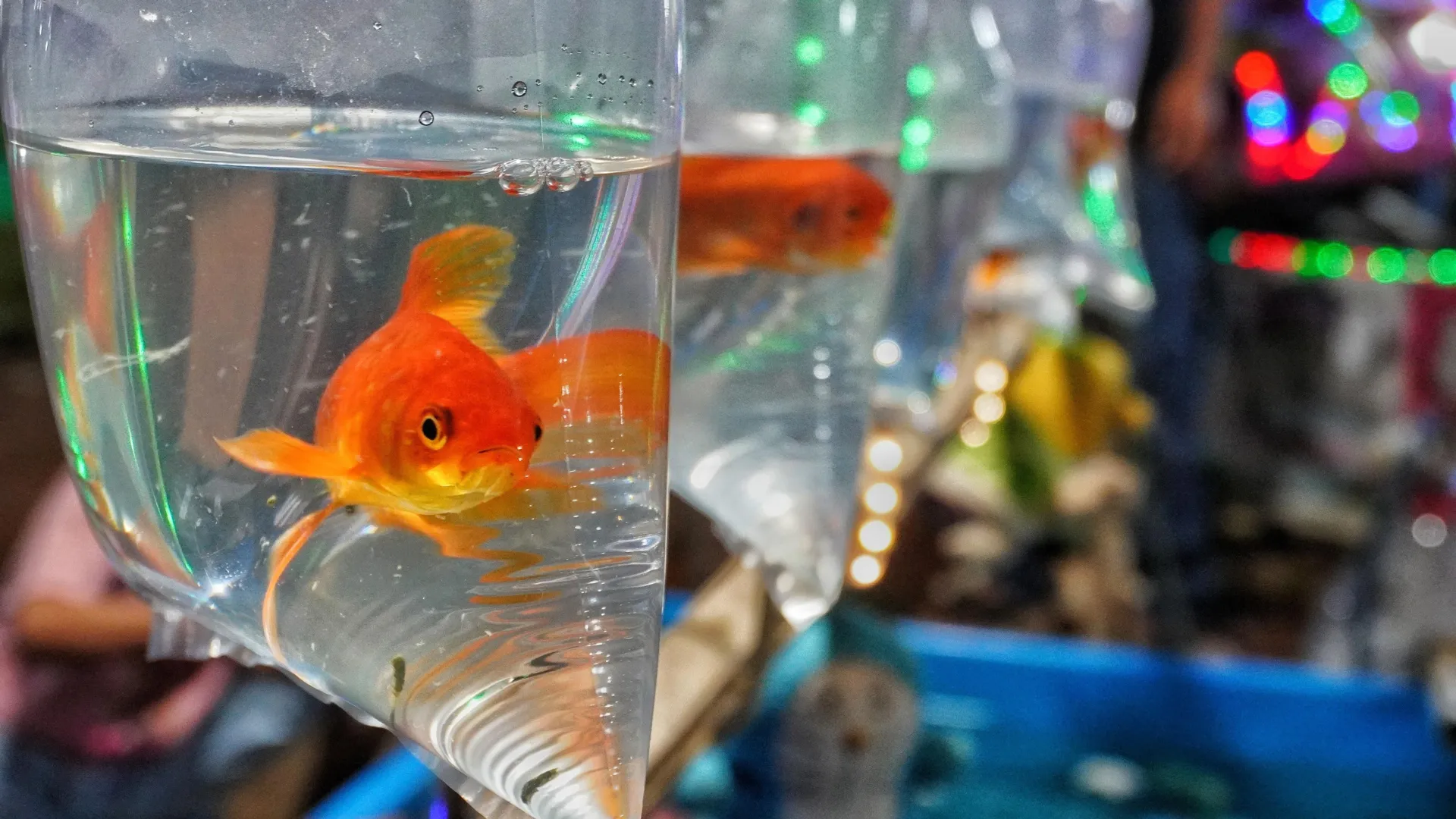
A groundbreaking peer-reviewed study conducted by researchers at The University of Toledo and the University of Missouri has unveiled compelling evidence that common household goldfish (Carassius auratus), when released or escaped into natural waterways, can inflict severe and lasting damage on freshwater ecosystems. Published in the esteemed Journal of Animal Ecology, this research represents a critical advancement in understanding the ecological risks posed by one of the world’s most ubiquitous ornamental fish. The findings issue an urgent warning to pet owners, natural resource managers, and policymakers alike: the seemingly innocuous goldfish, often perceived as a harmless pet, harbors the potential to become a formidable ecological adversary outside the confines of an aquarium.
The study provides some of the strongest experimental data to date, illustrating how invasive goldfish can dramatically alter the delicate balance of lake environments. Dr. William Hintz, associate professor in UToledo’s Department of Environmental Sciences and Lake Erie Center and lead investigator of the study, emphasized the profound implications. "It is critically important to inform the public that their pets can become pests that will harm freshwater ecosystems. The evidence is now clear – releasing a goldfish into the wild might be seen as an act of kindness, but it can turn into a major ecological threat," Dr. Hintz stated, underscoring the common misconception that often fuels these detrimental releases.
Goldfish Trigger Major Changes in Lake Ecosystems
The research, aptly titled "Invasive goldfish trigger a regime shift in experimental lake ecosystems of varying trophic state," employed a sophisticated methodology utilizing large outdoor freshwater mesocosms. These controlled experimental units were meticulously designed to mimic real-world lake conditions, allowing researchers to isolate and monitor the effects of goldfish introduction over time. The team deliberately examined two prevalent freshwater conditions: nutrient-poor (oligotrophic) waters, characterized by clear water and low productivity, and nutrient-rich (eutrophic) waters, often associated with higher algal growth and lower water clarity. In both environmental contexts, goldfish were found to cause substantial and widespread ecological disruption, fundamentally altering the physical, chemical, and biological characteristics of the simulated lakes.
Among the most significant and concerning findings, the study documented a cascade of negative impacts. Goldfish were observed to dramatically increase water turbidity by vigorously stirring up bottom sediments during their foraging activities. This increased murkiness reduces light penetration, hindering the growth of native aquatic plants crucial for habitat and oxygen production. Simultaneously, their feeding habits led to significant reductions in populations of zooplankton and aquatic invertebrates, which are vital components of the freshwater food web and serve as food sources for native fish and other aquatic organisms. Furthermore, the presence of goldfish was linked to altered nutrient cycling, specifically the release of phosphorus from sediments, which can exacerbate algal blooms, particularly in already nutrient-rich environments. These blooms can deplete oxygen levels when they decompose, leading to fish kills and further degrading water quality. The researchers also noted an increase in filamentous algal growth, further evidence of ecosystem imbalance.
Evidence Points Directly to Goldfish
To meticulously disentangle the specific effects of goldfish from the general impact of having more fish biomass, researchers employed both additive and substitutive experimental designs. This rigorous approach allowed them to discern whether observed changes were simply due to an increased number of fish or were uniquely attributable to the presence and behavior of goldfish. Their comprehensive analysis unequivocally showed that while some minor shifts in aquatic vegetation could be correlated with overall fish abundance, the most severe and pervasive ecological damage was directly and distinctly linked to the introduction of goldfish into the ecosystems. This methodological precision strengthens the study’s conclusions, providing robust evidence against alternative explanations.
A particularly alarming aspect of the findings was the documentation of what scientists refer to as a "regime shift." This term describes a critical point at which an ecosystem crosses a threshold and undergoes a rapid, profound reorganization, transforming into a fundamentally different and often degraded state. Such shifts are notoriously difficult and costly to reverse, often requiring extensive, long-term restoration efforts that may not fully succeed in returning the ecosystem to its original condition. The study demonstrated that invasive goldfish possess the capacity to act as a primary driver of these irreversible regime shifts, pushing stable freshwater environments into a state of ecological disarray.
Why Released Goldfish Become a Problem
The global pet trade, a colossal industry moving aquatic species across continents at unprecedented rates, has played a significant role in the widespread distribution of goldfish. Originating from East Asia, goldfish have been domesticated for centuries and are now among the most widely distributed ornamental fish globally. Their resilience, adaptability, and relatively low cost make them popular pets. However, this very hardiness becomes a major liability when they are introduced into natural environments.
When goldfish are released into ponds, rivers, or lakes – often under the misguided belief that it’s a humane act for a dying or unwanted pet – or escape during flooding events, they can rapidly establish invasive populations. Their ability to tolerate a wide range of water conditions, combined with their omnivorous diet and high reproductive rates, allows them to outcompete native species and quickly dominate new habitats. Rick Reylea, professor in the University of Missouri College of Agriculture, Food and Natural Resources, director of Mizzou’s Johnny Morris Institute of Fisheries, Wetlands and Aquatic Systems and co-author of the study, elaborated on their disruptive behavior. "If goldfish are released into the wild, they rapidly grow into very large fish that stir up lake sediments, consume large numbers of prey and compete with native fish," Reylea explained. This description paints a vivid picture of a species that, far from being a benign addition, actively remodels its environment to its own advantage, often at the expense of native flora and fauna.
A Broader Context: The Invasive Species Threat
The problem of invasive species is a global ecological and economic crisis. Invasive non-native species are now considered the second leading cause of biodiversity loss worldwide, after habitat destruction. They cost the global economy hundreds of billions of dollars annually in damages and control efforts. Goldfish join a growing list of aquatic invasive species, such as zebra mussels, Asian carp, and rusty crayfish, that wreak havoc on freshwater systems. Unlike some more obvious invaders, the threat posed by goldfish has often been underestimated due to their commonality as pets and their perceived harmlessness. This study serves as a powerful reminder that even familiar species can become significant threats when removed from their native range or controlled environments. The chronology of understanding invasive species has evolved significantly, from initial introductions often unnoticed, to a growing scientific recognition of their profound impacts, culminating in targeted research and policy efforts like those highlighted by this study.
Calls for Prevention and Public Awareness
In light of these findings, the researchers strongly advocate for goldfish to be reclassified and treated as a high-priority invasive species by natural resource agencies. They recommend a multi-pronged strategy focusing on prevention, early detection, and rapid control efforts to mitigate the establishment and spread of wild populations. Prevention, often the most cost-effective approach, involves educating the public and regulating the pet trade. Early detection strategies, such as environmental DNA (eDNA) surveillance, can identify new incursions before they become entrenched. Control efforts, ranging from targeted removal to habitat modification, become necessary once populations are established, though they are often resource-intensive and challenging.
Beyond agency-level action, the authors also stress the critical need for robust public education campaigns. These campaigns are vital to ensure that pet owners fully grasp the severe environmental consequences of releasing aquarium animals into natural waterways. The ingrained belief that releasing a pet is a humane act needs to be actively challenged and replaced with accurate information about ecological responsibility. Conservation groups and fisheries managers across North America and Europe have long struggled with the public perception of released pets, and this study provides undeniable scientific backing for their calls for greater public awareness. The economic implications are also substantial; managing invasive species can cost millions, diverting funds from other critical conservation initiatives.
Responsible Pet Ownership: Alternatives to Release
For individuals who find themselves unable to care for their goldfish, the researchers and conservationists strongly discourage release into the wild. Instead, they encourage pet owners to explore ethical and responsible alternatives. These include returning the fish to a reputable pet store, provided the store has a policy for accepting unwanted animals. Another viable option is finding another aquarium owner willing to adopt the fish, perhaps through local fishkeeping clubs or online communities. As a last resort, contacting local wildlife authorities, humane societies, or university extension offices for guidance on responsible surrender or humane euthanasia is recommended. These organizations can often provide resources or direct individuals to appropriate channels, ensuring the welfare of the pet without jeopardizing native ecosystems.
About the Study and Research Team
The seminal study, "Invasive goldfish trigger a regime shift in experimental lake ecosystems of varying trophic state," was co-authored by Dr. William Hintz of The University of Toledo, Hannah Barrett, and Dr. Rick Relyea of the University of Missouri. The research team conducted their meticulous work using custom-built outdoor freshwater mesocosms designed to precisely replicate realistic lake conditions, providing a controlled yet environmentally relevant setting for their experiments. The methodology combined both additive and substitutive experimental approaches across oligotrophic (nutrient-poor) and eutrophic (nutrient-rich) trophic states. This comprehensive design allowed for a thorough evaluation of the effects of goldfish (Carassius auratus) on a wide array of ecological parameters, including water quality, phytoplankton communities, invertebrate communities, filamentous algae growth, and the overall condition of native fish populations. The publication of these findings in the Journal of Animal Ecology signifies their peer-reviewed scientific rigor and their significant contribution to the field of invasion ecology.
In conclusion, this pivotal research definitively shifts the narrative surrounding goldfish from benign pet to potent invasive threat. It underscores the profound and often underestimated impact of human actions on natural ecosystems, even those stemming from seemingly small, well-intentioned acts. As global biodiversity continues to face unprecedented challenges, understanding and mitigating the threat of invasive species, including common aquarium inhabitants like the goldfish, becomes an increasingly urgent imperative for environmental protection and sustainable ecological management.
