

As severe droughts, intensifying wildfires, and relentless land degradation continue to afflict communities across every continent, global leaders, policymakers, scientists, and civil society representatives are preparing for a critical convergence in Ulaanbaatar, Mongolia. At the end of August 2026, the Mongolian capital will host the 17th Conference of the Parties (COP17) to the United Nations Convention to Combat Desertification (UNCCD). Operating under the guiding theme "Restoring Land, Restoring Hope," this high-stakes summit arrives at a pivotal juncture, with less than five years remaining for the international community to meet its ambitious target of achieving Land Degradation Neutrality (LDN) by 2030.
Amid this global backdrop, Wetlands International has announced that it will dispatch its largest delegation in history to the UNCCD COP17. Headed by Chief Executive Officer Coenraad Krijger, the organization aims to ensure that freshwater wetlands and peatlands—long overlooked in mainstream climate and environmental frameworks—take center stage in both national and global strategies designed to reverse desertification, mitigate drought, and restore compromised landscapes.

The Escalating Global Crisis of Land and Water Degradation
The urgency driving the Wetlands International delegation is underscored by a staggering accumulation of alarming environmental data. According to recent international assessments, up to 40% of the Earth’s land surface is already degraded. This widespread ecological decline directly threatens the livelihoods and food security of billions of people worldwide, imposing an estimated economic toll of US$900 billion annually in lost ecosystem services, diminished agricultural productivity, and disaster response expenditures.
Compounding this terrestrial crisis is the catastrophic loss of aquatic habitats. Since 1970, the planet has lost more than 22% of its remaining wetlands. This rapid disappearance of freshwater ecosystems has drastically exacerbated global water stress, heightened community vulnerability to extreme weather events, and weakened the natural buffers that traditionally shield populations from hydrological extremes.
Historically, the UNCCD has operated in the shadow of the other two major Rio Conventions—the United Nations Framework Convention on Climate Change (UNFCCC) and the Convention on Biological Diversity (CBD). However, as nations increasingly recognize the interconnected nature of the planetary crises, the UNCCD is attracting unprecedented political attention and urgency. Governments are actively seeking accelerated, integrated mechanisms to halt landscape deterioration before ecological tipping points are irreversibly breached.

A Chronology of Policy Momentum: From Riyadh to Ulaanbaatar
The groundwork for the heavy emphasis on water security and wetlands at COP17 has been laid through a series of progressive international milestones over recent years. The momentum builds directly upon the decisions enacted at UNCCD COP16, held in Riyadh, Saudi Arabia. During that summit, member states established groundbreaking mandates requiring the Convention to formally integrate comprehensive water management principles into its core operations. The Riyadh Action Agenda further cemented initiatives like the Freshwater Challenge as flagship frameworks for driving global action.
Furthermore, the upcoming deliberations in Ulaanbaatar will actively build upon the strategic resolutions adopted at COP15 of the Convention on Wetlands (Ramsar Convention), particularly its forceful global call to protect and restore freshwater ecosystems. By bridging these parallel multilateral frameworks, COP17 offers an indispensable platform to synchronize global governance across water, biodiversity, land, and climate domains ahead of upcoming CBD and UNFCCC conferences, as well as the landmark UN Water Conference.
Delegates at the Mongolian summit will represent 197 member countries, alongside international businesses, financial institutions, civil society organizations, Indigenous Peoples, pastoralists, and smallholder farmers. Together, they will negotiate policy frameworks and financial commitments designed to transform the 2030 LDN goals from aspirational targets into enforceable, on-the-ground realities.
Strategic Priorities and High-Level Engagement in Ulaanbaatar
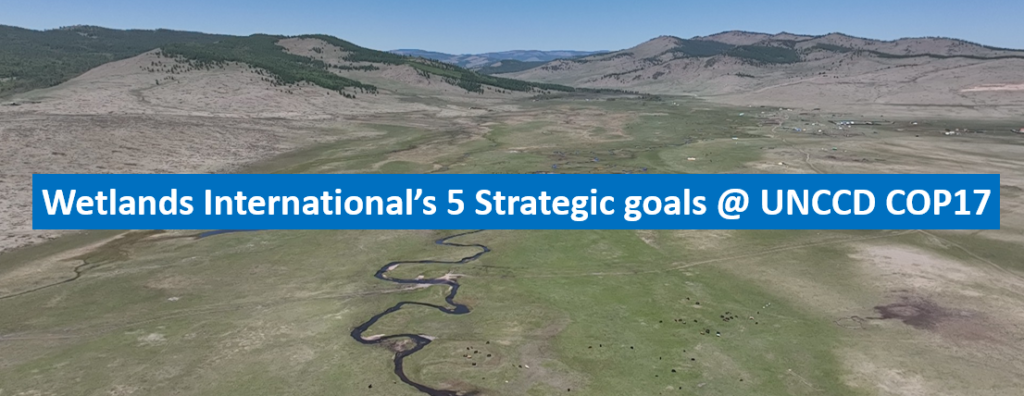
Working in close collaboration with national partners—including the Wildlife Science and Conservation Center of Mongolia (WSCC)—Wetlands International’s extensive delegation will deploy a multifaceted strategy at COP17. Their agenda focuses on rigorous policy advocacy, scientific knowledge sharing, and the co-hosting of several high-level thematic events designed to demonstrate how healthy wetlands function as natural infrastructure.
"Investing in protecting and restoring healthy wetlands is critical to mitigating the impact of droughts and reversing desertification," stated Coenraad Krijger, CEO of Wetlands International. "We see UNCCD as an important platform for advancing wetland action at national and global levels—wetland action that will benefit people and nature and turbocharge efforts to combat land degradation."
The organization’s official programming at the conference is structured around three core pillars, each addressing a critical dimension of land and water resilience:
-
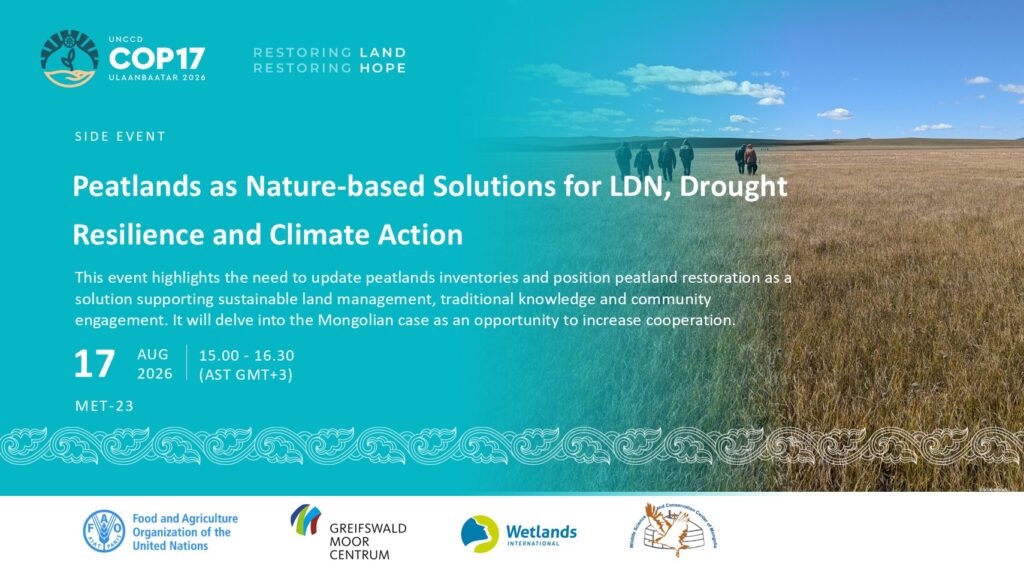
Peatlands as Nature-based Solutions for LDN, Drought Resilience, and Climate Action: This official side event will spotlight the indispensable role of healthy, wet peatlands in absorbing carbon, regulating local hydrological cycles, and enhancing regional resilience against prolonged droughts. Discussions will emphasize the urgent necessity for national governments to update and refine their domestic peatland inventories, providing the empirical baseline required for evidence-based decision-making. The session will also highlight the ongoing successes and lessons learned from the Mongolian Peatlands Initiative.
-
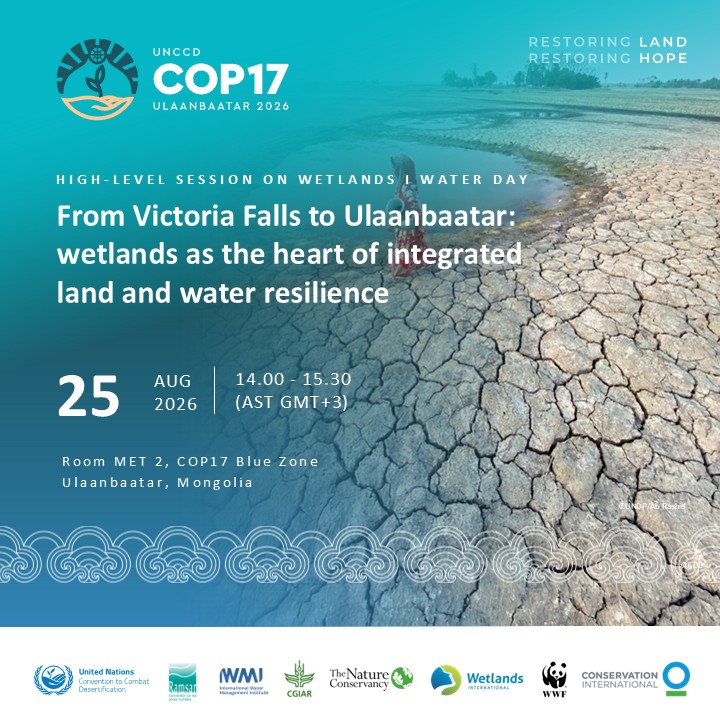
From Victoria Falls to Ulaanbaatar: Wetlands as the Heart of Integrated Land and Water Resilience: Serving as a premier High-Level Session, this gathering will connect historical wetland conservation milestones with current policy frameworks. It will position freshwater ecosystems as the foundational connecting thread across water, biodiversity, land, and climate governance. The session features a distinguished roster of speakers, including government ministers and high-level representatives from Armenia, Brazil, Türkiye, and Zimbabwe, alongside the Secretary-General of the Ramsar Convention and Wetlands International CEO Coenraad Krijger.
-
The Freshwater Challenge: Accelerating Drought Resilience for a Water Secure World: Capitalizing on the frameworks established by the UNCCD COP16 Riyadh Action Agenda, this side event will examine how the restoration of healthy freshwater ecosystems underpins both Land Degradation Neutrality and systemic drought resilience. Participants will explore practical mechanisms through which national governments can leverage the Freshwater Challenge to strengthen domestic policy strategies and foster robust synergies across the broader Rio Conventions and the UN Water Conference.
Analytical Implications: Why Wetlands Matter for Land Neutrality
From an analytical standpoint, the integration of wetland science into the UNCCD framework represents a long overdue paradigm shift. For decades, anti-desertification efforts focused heavily on tree-planting campaigns and dryland agricultural management, occasionally overlooking the hydrological systems that sustain those very landscapes.
Water and land are thermodynamically and ecologically inseparable. When freshwater wetlands, peatlands, and river floodplains are degraded or drained, regional water cycles are disrupted, groundwater tables drop, soils lose their moisture-retaining capacity, and landscapes become exponentially more susceptible to wind and water erosion. Conversely, restoring these aquatic and semi-aquatic habitats acts as a biological reset button. Healthy wetlands trap sediment, recharge aquifers, stabilize microclimates, and provide reliable moisture reserves during increasingly erratic dry seasons.
As the international community converges on Ulaanbaatar, the success of UNCCD COP17 will likely be measured by its ability to translate these ecological realities into binding financial investments and national policy commitments. With the 2030 deadline for Land Degradation Neutrality fast approaching, Wetlands International’s robust presence signals a decisive push to ensure that water, wetlands, and drylands are managed not as isolated sectors, but as a unified, life-sustaining system essential for global security and planetary health.
