

Woodpeckers have long captured the fascination of backyard bird watchers and ornithologists alike, standing out as some of the most resilient and specialized avian species in North America. Behind their familiar drumming cadence and loyal visits to residential feeding stations lies a complex array of biological adaptations that allow these birds to endure a physical existence defined by high-impact stress. While human engineering continues to study the physics of impact absorption, nature has already perfected a living blueprint in the form of the woodpecker’s skull, bill, and nervous system, enabling a lifestyle that would prove catastrophic to almost any other vertebrate.
The Physics of Avian Excavation and Impact Mechanics
The daily routine of a typical woodpecker involves a punishing regimen of wood excavation, drumming for territory, and foraging for subterranean insects. During these activities, a woodpecker’s head can strike a hard wooden surface at velocities reaching up to 13 miles per hour. The resulting kinetic force generates impacts of approximately 10 G-forces for smaller species, while larger counterparts such as the Pileated Woodpecker can experience even higher deceleration rates.
To put these figures into perspective, a fraction of this force is typically sufficient to induce severe concussions or traumatic brain injuries in most other birds. Human subjects, by comparison, possess brains that are roughly three times more susceptible to concussive injury under equivalent mechanical stress. Yet, woodpeckers execute thousands of these high-velocity strikes daily without exhibiting signs of neurological impairment.
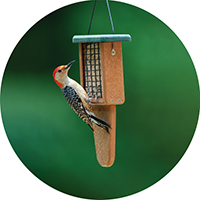
Ornithologists and biomechanical engineers have long sought to understand how these birds protect their central nervous systems. Research indicates that the secret lies in a multi-layered anatomical defense system. Unlike the rigid, fused cranial structures found in many mammals and birds, the woodpecker’s skull features a unique composition of lightweight, spongy, air-filled bone reinforced by a dense, plate-like meshwork of bony support struts. This internal architecture acts as a natural crumple zone, effectively dissipating kinetic energy away from the brain cavity.
Furthermore, the relative size of the avian brain plays a critical role. A woodpecker’s brain is remarkably compact in proportion to its cranial cavity, leaving minimal cerebrospinal fluid and empty space for the brain to rattle or slosh against the bone during deceleration. This snug anatomical fit prevents the shearing strains that typically cause concussions in larger-brained animals.
Self-Sharpening Mechanics and Protective Anatomy
Beyond cranial protection, the tools a woodpecker uses to interact with its environment must withstand continuous mechanical friction. A chisel-pointed bill striking dense timber at high speeds would ordinarily pulverize or wear down standard biological material within a remarkably short period.
To counteract this, woodpeckers possess specialized epidermal cells located at the tip of the bill that undergo continuous mitosis, constantly replacing keratin material lost to friction. This ongoing cellular regeneration ensures that the bill maintains its structural integrity and chisel point. Intriguingly, the microscopic structure of the bill causes it to undergo a self-sharpening process with every structural blow, optimizing its utility for drilling into seasoned hardwood.

The violent excavation process also generates a significant volume of airborne particulate matter, including wood chips, sawdust, and insect debris. To prevent respiratory complications, woodpeckers have evolved specialized morphological features that function similarly to personal protective equipment. Stiff, modified feathers grow densely over both external nares (nostrils), acting as an efficient particulate filter that allows the bird to breathe freely while blocking foreign debris.
Concurrently, the eyes are shielded by a nictitating membrane—a transparent or translucent third eyelid that sweeps horizontally across the eyeball. This membrane closes milliseconds before impact, clearing away dust and shielding the cornea from flying wood fragments without completely obstructing the bird’s vision while it works.
Backyard Habitat Integration and Supplementary Feeding
As suburban development continues to intersect with natural avian habitats, backyard bird enthusiasts play an increasingly vital role in supporting local bird populations. Organizations such as Wild Birds Unlimited (WBU) emphasize that attracting these specialized species requires targeted nutritional offerings that mimic their natural high-energy diet of insects, suet, and tree nuts.
Urban and suburban yards situated near mature timber can successfully draw a diverse array of woodpecker species—including Downy, Hairy, Red-bellied, and Pileated woodpeckers—by deploying specific food sources. Industry standards for backyard woodpecker attraction now highlight high-density energy blocks, including processed suet, no-melt nutritional doughs, specialized bark-butter formulations, and shelled peanuts. Additionally, manufactured seed cylinders specifically compressed for vertical clinging feeders allow these birds to feed in a posture that mirrors their natural behavior on the trunk of a tree.

Wildlife biologists note that supplemental feeding programs provide a stable caloric baseline, particularly during harsh winter months or periods of seasonal drought when natural insect larvae are less accessible beneath frozen or hardened tree bark. By maintaining reliable feeding stations, property owners not only support regional biodiversity but also gain unique opportunities for behavioral observation and wildlife photography.
Broader Ecological Implications and Ongoing Research
The study of woodpecker physiology extends far beyond the realm of ornithology, offering valuable insights for human engineering and safety equipment design. Aerospace engineers, automotive safety researchers, and helmet manufacturers frequently analyze avian impact-absorption mechanisms to develop advanced shock-mitigation materials. By reverse-engineering the spongy bone struts and cranial suspension systems found in woodpeckers, researchers hope to design better protective gear for contact sports, industrial labor, and military applications.
Ecologically, woodpeckers are classified as keystone species. The nesting and roosting cavities they excavate in mature trees are subsequently utilized by dozens of secondary cavity-nesting animals, including small owls, bluebirds, ducks, and various mammals, which lack the anatomical tools to carve their own dwellings. By removing wood-boring beetle larvae and carpenter ants, woodpeckers also regulate forest insect populations, acting as natural pest controllers.
As environmental pressures and habitat fragmentation continue to challenge migratory and resident bird populations, understanding the physiological resilience and ecological requirements of woodpeckers remains essential. Ongoing research into their genetic makeup, brain chemistry, and biomechanical tolerances promises to shed further light on one of nature’s most remarkable evolutionary success stories, reinforcing the importance of preserving the wooded ecosystems upon which these resilient birds depend.
