
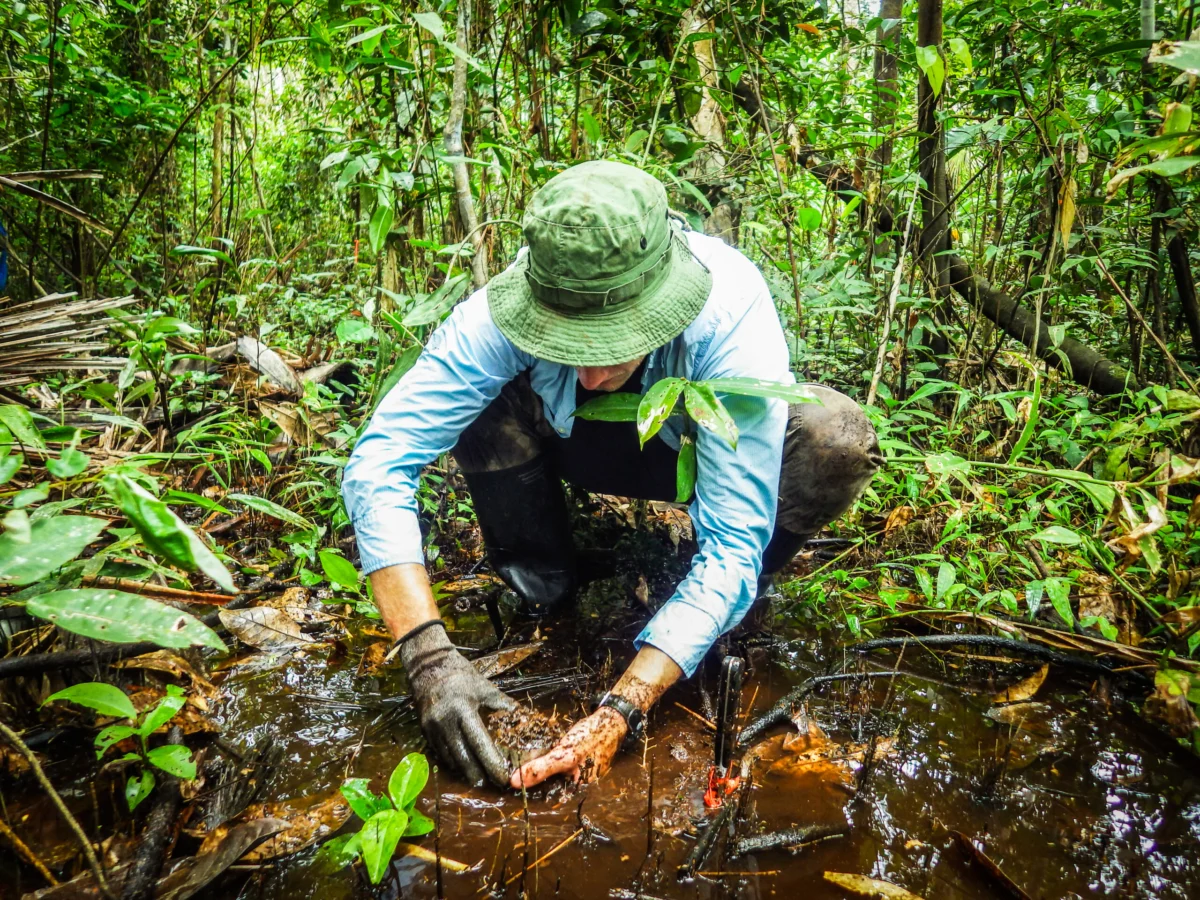
Brazil is taking pivotal steps toward becoming a Champion Country of the Peatland Breakthrough, a major international initiative launched during the United Nations Climate Change Conference (COP30) in Belém. This global framework is designed to drastically accelerate peatland conservation, drive large-scale restoration, and foster sustainable management practices worldwide. The movement inside South America’s largest nation gained significant traction following formal discussions within Brazil’s National Committee for Wetlands (CNZU), which recently issued a landmark recommendation urging the Ministry of the Environment (MMA) to formally endorse the Peatland Breakthrough and embrace a leadership role on the global stage.
This domestic policy push elevates peatlands from a largely overlooked landscape feature into a central pillar of Brazil’s national strategies for climate action, biodiversity preservation, and water security. Despite housing some of the most extensive and carbon-dense tropical peatlands on Earth, Brazil has historically left these critical ecosystems out of core environmental legislation, national greenhouse gas reporting inventories, and overarching climate policies. The CNZU recommendation marks a turning point, signaling that the nation is ready to align its vast natural wealth with international biodiversity and climate commitments.
The Road to Belém: Background and Chronology of the Initiative
The momentum driving Brazil’s recent wetland policy shift traces back to years of mounting scientific alarm and international advocacy, which culminated on the global stage at COP30 in Belém. For decades, tropical peatlands—vast waterlogged ecosystems characterized by the accumulation of partially decayed organic matter—were overshadowed by the intense global focus on tropical rainforests. However, international environmental organizations, including Wetlands International, the United Nations Environment Programme (UNEP), the Food and Agriculture Organization (FAO), and the Greifswald Mire Centre, recognized that protecting forests without safeguarding underlying and adjacent peatlands leaves a massive blind spot in global climate mitigation strategies.
In the lead-up to and during COP30, scientific exchanges between international peatland experts and Brazilian conservationists intensified. These dialogues highlighted the urgent vulnerability of Brazil’s expansive peat resources to agricultural encroachment, drainage, and fires. The culmination of these collaborative efforts was the launch of the Peatland Breakthrough, underpinned by a Science-based Framework for Global Peatland Targets and Guiding Principles.
Following the conference, domestic engagement accelerated rapidly. The National Committee for Wetlands (CNZU) convened to evaluate how Brazil could domesticate these international targets. By mid-2026, the committee finalized its formal recommendation advising the Ministry of the Environment to commit to the Peatland Breakthrough as a Champion Country, setting the stage for institutional integration that could redefine South American environmental policy.
Mapping Brazil’s Peatlands: Scale, Carbon Storage, and Ecological Value
Brazil is home to the world’s largest known expanse of tropical peatlands, spanning an estimated 226,000 square kilometers. These vital ecosystems are distributed across diverse and iconic Brazilian biomes, including the Amazon, the Cerrado, the Pantanal, the Atlantic Forest, the Pampa, and extensive coastal regions.
Globally, peatlands occupy a remarkably small footprint, covering just 3% to 4% of Earth’s total land surface. Despite their limited geographical area, they punch far above their weight in ecological terms, storing up to one-third of all global soil organic carbon. This staggering concentration means peatlands lock away roughly twice as much carbon as all the world’s living forest biomass combined.
In Brazil specifically, these ecosystems contain billions of metric tons of organic carbon. Beyond their unmatched capacity for carbon sequestration, Brazilian peatlands act as massive natural sponges. They play a non-negotiable role in regulating hydrological cycles, filtering water supplies, and mitigating the severity of both droughts and floods. Furthermore, they provide specialized habitats for a diverse array of endemic flora and fauna, making them biodiversity hotspots that are deeply intertwined with the ecological health of major river basins.
However, these carbon-rich sanctuaries are increasingly imperiled. Human-induced pressures—ranging from systematic drainage for agricultural expansion and cattle ranching to infrastructure development, hydrological disruptions, and increasingly severe climate-fueled fires—are transforming these natural carbon sinks into net carbon sources. When peatlands are drained or burned, centuries of accumulated carbon are rapidly oxidized and released into the atmosphere as carbon dioxide, accelerating global climate change.
Scientific Mobilization and the Push for Domestic Reform
As the threats to these ecosystems mount, a rapidly growing community of Brazilian scientists and researchers is mobilizing to demand structural policy changes. This academic push crystallized in an influential open letter signed by 53 prominent Brazilian researchers. The correspondence directly urges policymakers to designate peatlands as priority national ecosystems, establish a dedicated national peatland management program, and dramatically scale up mapping, monitoring, and remote-sensing efforts.
The scientific community emphasizes that existing environmental frameworks fail to capture the ecological reality of peatlands because they are frequently misclassified simply as conventional wetlands or forests. By integrating peatlands into national climate policies, Brazil can bridge significant gaps in its greenhouse gas inventories. Furthermore, researchers are calling for immediate investments in restoration and rewetting initiatives to heal damaged peatlands before their degradation becomes irreversible.

These domestic scientific demands align seamlessly with the international benchmarks outlined in the Peatland Breakthrough framework, creating a rare window of opportunity where local scientific consensus and global environmental diplomacy are moving in absolute synchronicity.
Official Responses and International Perspectives
The potential alignment between Brazil’s domestic environmental agenda and global peatland initiatives has elicited widespread praise from international conservation leaders and domestic regulatory bodies alike.
Eva Hernandez, Programme Head for Peatlands at Wetlands International, emphasized the global significance of Brazil’s prospective leadership. "Brazil is home to some of the world’s most extensive and carbon-rich tropical peatlands, part of the Amazon or the Cerrado regions," Hernandez stated. "The country has a unique opportunity to demonstrate how protecting these ecosystems can simultaneously advance climate change mitigation and adaptation, biodiversity conservation, water security, and sustainable development. Championing the Peatland Breakthrough would send a powerful signal: that peatlands belong at the heart of national and international climate agendas, as much as forests do. We look forward to working with Brazil to unlock the full potential of its peatlands for people, nature, and climate."
Echoing this sentiment, Dr. Franziska Tanneberger, director of the Greifswald Mire Centre, who participated directly in the National Committee for Wetlands discussions, noted the catalytic effect of the Belém climate summit. "This is great news for the global peatland community—catalysed by the climate conference COP30 in Belem, exchange with peatland scientists and conservationists in Brazil intensified and we are excited and very grateful for the country’s interest and commitment to join global peatland action," Tanneberger remarked.
From the perspective of Brazil’s federal environmental apparatus, the endorsement is viewed as a strategic operational upgrade. Dr. Suelma Ribeiro Silva of the Chico Mendes Institute for Biodiversity Conservation (ICMBio)—a federal agency operating under the Ministry of the Environment—highlighted the practical benefits of the framework.
"The recommendation issued by the National Committee for Wetlands reflects Brazil’s growing recognition of peatlands as strategic ecosystems for climate regulation, biodiversity conservation, and water security," Dr. Silva explained. "The Peatland Breakthrough provides an important opportunity to strengthen international cooperation, mobilize technical expertise, and support the development of national actions for the protection and restoration of Brazilian peatlands."
Should Brazil formalize its endorsement, it will join an elite group of nations—including Peru, Uganda, and Germany—that are already spearheading the implementation of the Peatland Breakthrough at the state level.
Implications of the Peatland Breakthrough and Global Targets
The Peatland Breakthrough is not merely a symbolic declaration; it is structured around rigorous, science-based targets designed to reverse decades of environmental degradation. The initiative is spearheaded by Wetlands International, UNEP, FAO, and the Greifswald Mire Centre, working in tandem with the Global Peatlands Initiative and the Convention on Wetlands, alongside expanding partnerships with entities like the Global Environment Centre, Landscape Finance Lab, RE-PEAT, and The Nature Conservancy.
To achieve its overarching mandate, the Peatland Breakthrough establishes clear global metrics: halting the loss and degradation of peatlands worldwide, initiating large-scale restoration of drained and damaged mires, and implementing sustainable management frameworks across all remaining intact peatland landscapes.
Successfully meeting these global targets carries monumental implications for the Earth’s climate system. If fully realized, global peatland conservation efforts will enable these ecosystems to reach net-zero emissions and transition back into a net greenhouse gas sink, removing billions of tons of carbon from the atmosphere and anchoring climate-resilient pathways.
However, analysts and organizers emphasize that ambition must be matched by capital. Meeting the objectives of the Peatland Breakthrough and fulfilling broader international climate commitments will require mobilizing at least $100 billion USD by 2030. This financing must be delivered through transparent, just, and accessible channels directly to peatland-rich nations. Furthermore, the initiative stresses that every country harboring peatlands must act immediately to map, monitor, and effectively manage these landscapes before irreversible ecological tipping points are breached.
For Brazil, stepping into the role of a Champion Country offers profound geopolitical and environmental dividends. It positions the nation not only as a steward of forest resources but as a comprehensive guardian of subterranean carbon stocks, reinforcing its credibility within multilateral climate negotiations and unlocking vital technical and financial support for domestic conservation frameworks.
