
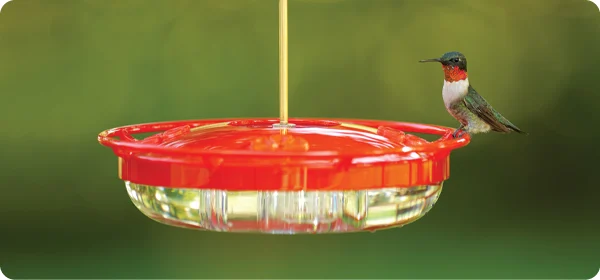
The arrival of spring across North America heralds one of the most anticipated events in the natural world: the annual migration of hummingbirds. For millions of backyard bird enthusiasts, the appearance of these microscopic dynamos marks a vibrant seasonal transition. Wildlife experts and ornithological organizations, including Wild Birds Unlimited (WBU), report that preparation for these avian visitors is already well underway, as conservationists and backyard naturalists ready their feeders and native gardens to welcome the travelers home.
The phenomenon of hummingbird migration is a marvel of evolutionary biology. Every year, countless hummingbirds embark on arduous migratory journeys spanning thousands of miles. For many species, this trek originates in the tropical forests of Central America and Mexico, stretching northward into the United States and Canada. Despite weighing no more than a few pennies—with many species tipping the scales at between two and four grams—these birds navigate vast geographic expanses, crossing the Gulf of Mexico in a non-stop, 20-hour flight that requires immense physiological endurance.
Ornithologists emphasize that this journey is timed precisely with the emergence of seasonal food sources. As warming temperatures coax native flowering plants into bloom, hummingbirds rely heavily on high-energy nectar to refuel. However, because weather patterns can fluctuate, the timing of their arrival often creates a window of eager anticipation for backyard observers who watch empty feeders waiting for the first sighting.
Geographic Variations in Migration and Breeding Timelines
The timeline of hummingbird activity varies significantly depending on latitude and geography. While eastern North America largely anticipates the arrival of the Ruby-throated Hummingbird, the western half of the continent plays host to a much more diverse array of species, including the Black-chinned, Rufous, and Broad-tailed hummingbirds.
For residents of the far western regions, such as parts of California, the Pacific Northwest, and the Southwest, the seasonal dynamic is notably different. Species such as Costa’s, Anna’s, and Allen’s hummingbirds do not always undertake long-range migrations to the tropics. In fact, many of these western populations are year-round residents or early-nesting species. By the time spring is officially underway in other parts of the country, western homeowners may already be observing mature nesting families, raising the prospect of witnessing newly fledged juveniles making their inaugural visits to backyard feeding stations.
Regardless of the region, wildlife biologists note that establishing a reliable habitat requires a dual approach: deploying properly maintained nectar feeders and cultivating a diverse landscape of native flowering plants. Native flora not only provides a supplemental energy source but also attracts the small insects that hummingbirds hunt to secure the vital proteins necessary for nesting and raising young.

Anatomy and Mechanics of Feeding
Observing hummingbirds at close range offers a unique window into avian physiology. Experts highlight several distinct behaviors and physical adaptations that make studying these birds a captivating experience. When multiple hummingbirds converge on a single food source, territorial displays become common. Observers frequently witness individuals fanning their tails, darting aggressively at competitors, and producing sharp chittering or squeaking vocalizations, all underscored by the characteristic, high-speed hum of wings beating upwards of 50 to 80 times per second.
A closer examination of a visiting hummingbird often reveals subtle details of its interactions with nature, such as a dusting of yellow pollen clinging to its forehead from the blossoms it has recently visited. Yet, the most remarkable physiological adaptation lies within the bird’s feeding mechanism. Contrary to popular misconception, hummingbirds do not feed by using their bills like a straw to suction liquid.
Instead, scientific studies of hummingbird tongues have revealed a specialized, forked, and open-grooved structure. When feeding, the hummingbird rapidly extends and retracts this tongue, lapping up nectar at rates of up to 12 times per second. The fluid is drawn into the grooves through capillary action, allowing the bird to consume substantial quantities of nectar efficiently.
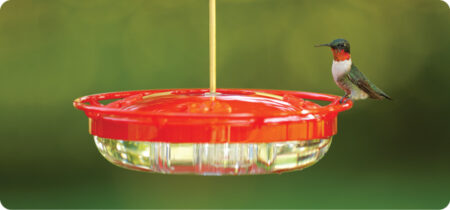
To give observers an unobstructed view of this biological mechanism, specialized equipment has been developed within the backyard bird-feeding industry. Products such as window-mounted nectar feeders featuring clear plastic bases allow naturalists to witness the rapid lapping action of the tongue in real time, transforming casual observation into an educational experience.
Broader Impact and Environmental Implications
Beyond the aesthetic pleasure they bring to millions of households, hummingbirds play a critical ecological role as pollinators. As they travel from flower to flower in search of nectar, pollen adheres to their feathers and bills, facilitating the cross-pollination of numerous native plant species. The health of hummingbird populations is thus intimately linked to the preservation of native ecosystems and migratory corridors.
Environmental organizations and conservation groups consistently stress the importance of habitat conservation, advocating for the reduction of pesticide use and the planting of regionally appropriate native vegetation. Urbanization, climate change, and habitat fragmentation pose ongoing challenges to migratory species, making backyard conservation efforts an increasingly vital safety net. Providing clean, reliable supplemental feeding stations helps mitigate some of the stresses placed on migrating birds as they navigate increasingly developed landscapes.

As the spring migration progresses and populations settle into their summer territories, public interest in backyard ornithology continues to peak. Educational resources, including dedicated nature podcasts and expert-led seminars, aim to deepen the public’s understanding of avian behavior. Industry stakeholders note that these initiatives not only foster a greater appreciation for wildlife but also encourage active stewardship of local natural environments.
Ultimately, the arrival of hummingbirds serves as a powerful reminder of the resilience of the natural world. From their grueling transcontinental flights to their intricate feeding mechanics, these birds captivate the human imagination, ensuring that the weeks of quiet anticipation are, unequivocally, well worth the wait.
