
The iconic annual migration of the eastern North Pacific gray whale, historically celebrated as one of the longest and most reliable mammalian journeys on Earth, is undergoing a profound and dangerous transformation. Spanning roughly 10,000 to 12,000 miles round-trip, these magnificent marine mammals typically travel between the nutrient-rich, icy feeding grounds of the Arctic and the sheltered, warm-water lagoons of Baja California, Mexico, where they mate and calve. However, as global climate change rapidly restructures marine ecosystems, warming Arctic waters are severely disrupting traditional food webs, particularly the benthic amphipods upon which gray whales rely.
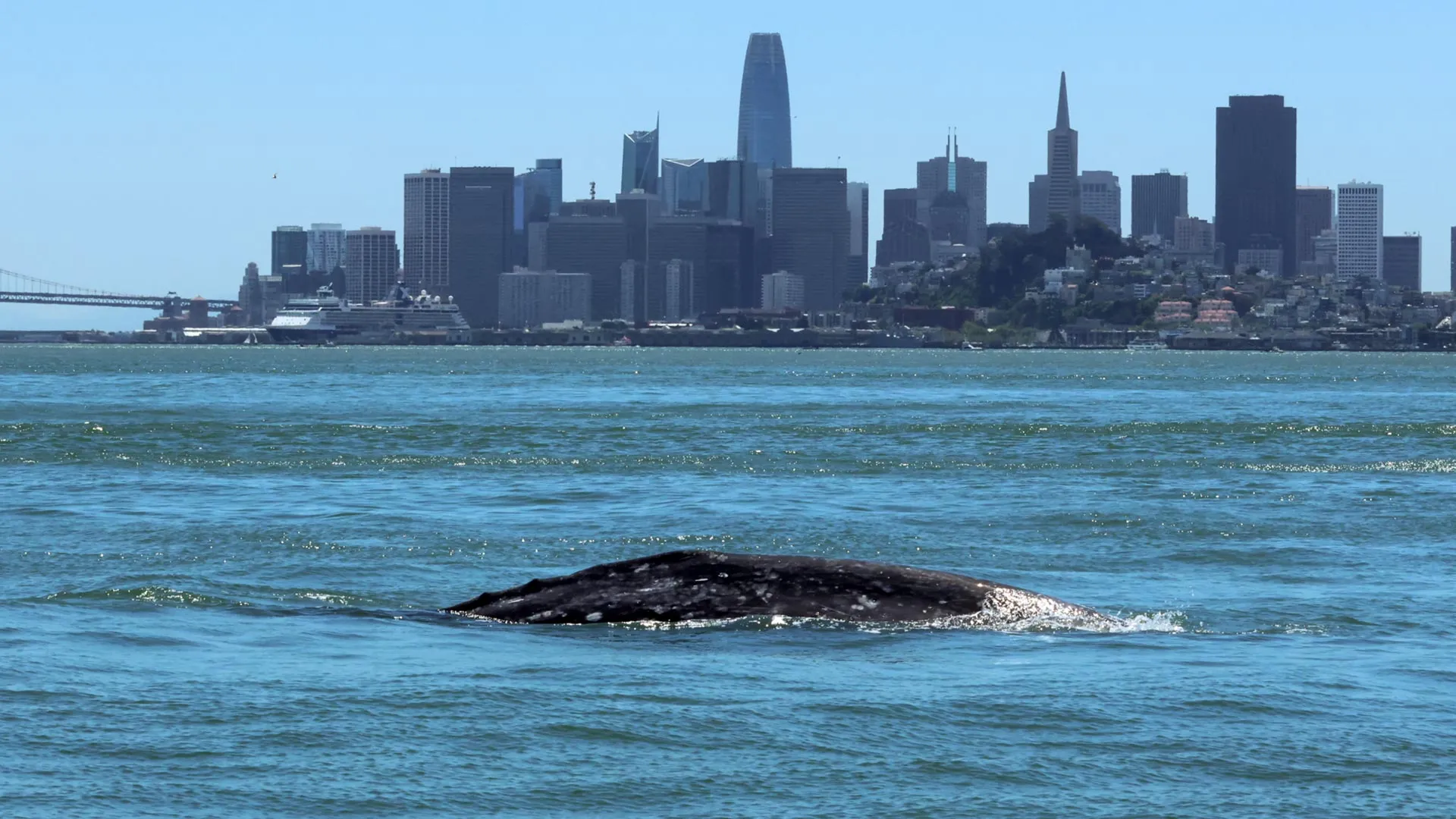
Compelled by hunger and shifting oceanographic conditions, an unprecedented number of gray whales have begun diverging from their historic migratory pathways. In recent years, significant numbers of these cetaceans have been documented entering unfamiliar, highly urbanized, and industrialized waters—most notably the San Francisco Bay. While this dynamic shift highlights the remarkable adaptability of the species, it has exposed them to catastrophic anthropogenic hazards. According to recent scientific findings published in the journal Frontiers in Marine Science, nearly 20 percent of the individual gray whales observed entering the Bay have failed to survive, with commercial and recreational vessel strikes serving as a primary driver of this localized mortality.
The intersection of changing wildlife behavior, heavy maritime commerce, and conservation biology has created a complex crisis. Researchers from academic institutions, non-profit marine organizations, and federal agencies are scrambling to understand the full scope of the phenomenon. Their findings paint a sobering picture of a marine population struggling to adapt to a changing planet while navigating a gauntlet of human-made obstacles.
A Geographic Bottleneck and Low-Profile Hazards
The physical geography of San Francisco Bay makes it a uniquely treacherous environment for large marine mammals. The primary gateway to the Bay is the Golden Gate Strait, a narrow and deep maritime bottleneck through which all ocean-going commercial ships, container vessels, tugboats, high-speed ferries, and recreational watercraft must pass. This exact thoroughfare also serves as the mandatory transit corridor for any gray whale entering or leaving the estuary.
Compounding this high-traffic density is the physiological profile of the gray whale itself. Unlike humpback or blue whales, which frequently display prominent blows, tail flukes, or dorsal ridges upon surfacing, gray whales possess a notoriously low profile relative to the water line. When they break the surface to breathe, they present a minimal visual target. This characteristic renders them exceptionally difficult for vessel operators to spot, particularly under the environmental conditions that frequently plague the San Francisco Bay area.
"Gray whales have a low profile to the water when they surface, and this makes them difficult to see in conditions like fog which are common to San Francisco Bay," explained Josephine Slaathaug of Sonoma State University, lead author of the newly published study in Frontiers in Marine Science. "Additionally, San Francisco Bay is a highly trafficked waterway, and the Golden Gate Strait serves as a bottleneck through which all traffic and whales must enter and exit."
Compounding the poor visibility are the constant hum and physical presence of intense commercial shipping. Large cargo vessels travel at speeds that leave little room for last-second evasive maneuvers, even if a spotter manages to sight a whale’s low-profile blow. When weakened or malnourished whales linger near the surface for longer periods to rest or forage, their vulnerability increases exponentially.
Climate Disruption in the Arctic and the Genesis of the Bay Grays
To comprehend why gray whales are detouring into San Francisco Bay, scientists must look thousands of miles to the north. Historically, gray whales undergo a period of intense hyperphagia—compulsive feeding—during the short Arctic summer, building up thick layers of blubber that sustain them throughout their grueling round-trip migration and the winter breeding season. In a normal cycle, these animals do not actively feed while migrating.
However, rapid warming in the Arctic has fundamentally altered benthic ecosystems. Reductions in sea ice cover, shifting water temperatures, and changes in ocean currents have dramatically impacted the abundance and distribution of amphipods and other bottom-dwelling crustaceans. Starved of their traditional caloric intake, gray whales are finding themselves in severe nutritional deficits long before completing their migratory cycle.
The National Oceanic and Atmospheric Administration (NOAA) has been closely monitoring the situation, noting that the eastern North Pacific gray whale population has declined by more than half since an Unusual Mortality Event (UME) was declared in 2016. During this same period, biological surveys have recorded a precipitous drop in the birth of calves, signaling a demographic crisis that affects both adult survival and reproductive success.
Prior to 2018, San Francisco Bay was rarely noted as a stopping point for migrating gray whales; it sat outside their standard transit routes. That dynamic shifted abruptly in the spring of 2018, when marine biologists and local residents began witnessing an unusual influx of gray whales lingering inside the Bay for days or even weeks at a time. This sudden behavioral shift coincided with a sharp spike in local strandings and whale carcasses washing ashore around the Bay Area, prompting an urgent multi-year scientific investigation to determine whether these animals were returning regular visitors or desperate, one-time arrivals.
A Comprehensive Tracking Effort (2018–2025)
To decode the mysteries of the "Bay Grays," a collaborative team of researchers initiated a rigorous monitoring and cataloging project. The study combined opportunistic sightings, extensive photographic contributions from whale-watching companies, citizen scientists, and local boaters between 2018 and 2023, followed by structured, systematic boat- and land-based surveys conducted from 2023 to 2025.
Researchers cross-referenced these photographic logs with comprehensive necropsy data collected from stranded whales throughout the greater San Francisco Bay region. Whale identification relied heavily on unique natural markings, including pigmentation patterns, scars, barnacle placements, and fluke shapes. However, scientists note a persistent methodological challenge: post-mortem tissue degradation and skin sloughing can cause these distinctive markings to fade quickly after death, suggesting that some mortality matches may have gone unrecorded.
Between 2018 and 2023, the catalog documented 114 individual gray whales entering the Bay. Significantly, only four of those individuals were observed in more than one calendar year. This exceptionally low rate of repeat visitation strongly indicates that most whales do not view San Francisco Bay as a dependable, recurring feeding habitat. Instead, scientists hypothesize that the Bay functions as an opportunistic emergency refuge—a shallow, muddy estuary where starving or nutritionally stressed individuals attempt to forage on alternative benthic organisms when their primary Arctic food sources fail. This pattern of utilizing nontraditional, urbanized habitats has also been documented in other regions along the Pacific coastline.
High Mortality: Ship Strikes and Starvation
Despite seeking refuge or alternative food sources within the protected waters of the Bay, a staggering number of these whales ultimately perish. Data gathered between 2018 and 2025 reveal that 70 gray whales were found dead along the shorelines and waters of the surrounding region.
Detailed forensic necropsies performed by marine mammal veterinarians and biologists established the cause of death for a significant subset of these animals. Out of the 70 stranded whales, 30 bore undeniable physical trauma—such as massive blunt-force fractures, propeller gouges, and deep hemorrhaging—confirming they had been struck and killed by vessels. Among the remaining carcasses where a definitive cause of death could be ascertained, severe malnutrition and emaciation were universally present. Out of 45 dead whales that could be individually identified through photographic matching, researchers successfully linked 21 directly to the Bay’s sighting catalog.
"At least 18% of the individuals identified in San Francisco Bay later died in the area," stated Bekah Lane of the Center for Coastal Studies, a co-author of the study. "Our broader analysis of local strandings both inside and outside San Francisco Bay found that over 40% of these whales died of trauma from vessels."
This high mortality rate underscores the acute danger posed by the intersection of weakened physiological states and high-density maritime traffic. Biologists point out a compounding vicious cycle: whales suffering from advanced starvation lack the energy reserves, stamina, and perhaps cognitive alertness required to successfully navigate away from oncoming cargo ships, high-speed ferries, and recreational boats.
The 2025 Surge and the Urgent Need for Mitigation
The crisis showed no signs of abating as research entered its final phases. During the single calendar year of 2025, an astonishing 36 gray whales were recorded entering San Francisco Bay, with several pods exceeding 10 individuals at a time. This dramatic uptick highlights that the environmental pressures driving whales into urban estuaries are intensifying rather than subsiding.
Scientists emphasize that urgent, proactive management measures are required to prevent further losses. Continued tracking, genetic sampling, and comprehensive necropsies remain vital for determining whether the scarcity of returning whales is driven purely by high mortality rates, and whether death is primarily a result of outright starvation, fatal vessel collisions, or a synergistic combination of both factors.
Potential preventive interventions under discussion by researchers, environmental advocates, and regulatory agencies include:
- Maritime Education: Implementing mandatory educational programs and outreach initiatives for commercial vessel operators, harbor pilots, and recreational boaters regarding seasonal whale presence and surfacing behaviors.
- Route Adjustments: Modifying commercial shipping lanes and ferry routes during peak migration and feeding windows to steer heavy traffic away from high-concentration whale areas.
- Speed Restrictions: Establishing mandatory, seasonal vessel speed limits (slow-down zones) in high-risk bottlenecks such as the Golden Gate Strait and approaches to the Bay.
"In San Francisco Bay, the biggest threat to these whales is vessel traffic," Lane reiterated. "Continued monitoring will help illuminate their distribution patterns and behaviors while within the Bay, which can impact risk. Route changes and speed restrictions have been found to significantly reduce vessel strike mortality to large whales, and an assessment of risk can help identify the most effective strategies to protect these animals."
Broader Implications for Marine Conservation
While the new study provides a critical empirical snapshot of how eastern North Pacific gray whales are reacting to shifting ocean conditions, researchers are quick to note that significant knowledge gaps remain. Daily behavioral tracking on a micro-scale is difficult to achieve, leaving scientists to piece together the broader narrative from intermittent sightings and tragic strandings.
"This study is our best analysis of the data we collected, but it’s important to consider that we do not have the full picture of each whale’s movements on a daily timescale," Slaathaug cautioned. "These results are an important piece of the larger puzzle of what is going on in the overall population as they attempt to adapt to climate change in real time."
Ultimately, the plight of the gray whales in San Francisco Bay serves as an acute bellwether for global marine ecosystems under siege by climate change. As warming waters force marine species out of their historic niches and into direct conflict with human industrial infrastructure, the survival of apex marine mammals will increasingly depend on proactive, adaptive management. Without coordinated international efforts to curb climate change paired with immediate, localized protections in high-traffic waterways like the San Francisco Bay, iconic marine species will continue to pay a heavy toll for the anthropogenic transformation of our oceans.
