
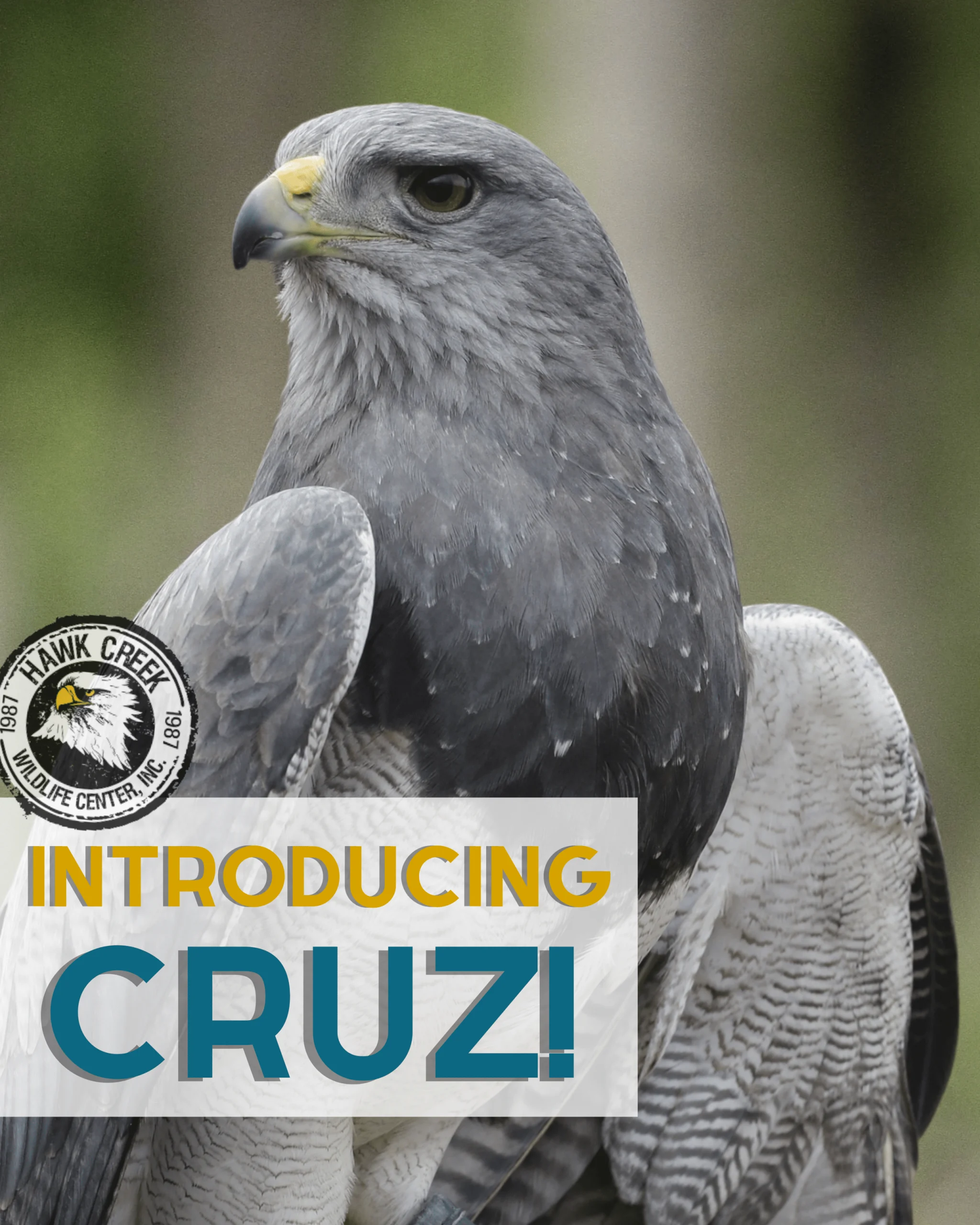
Hawk Creek Wildlife Center has officially announced the acquisition of a rare Black-chested Buzzard-eagle, a species native to the rugged, high-altitude regions of South America. Known scientifically as Geranoaetus melanoleucus, the bird has been given the name Cruz by the center’s staff. This addition marks a significant milestone in Hawk Creek’s ongoing efforts to promote global biodiversity and environmental education, as the center continues to facilitate rare encounters between the public and non-native raptor species that are seldom observed within the United States.
Species Profile and Ecological Significance
The Black-chested Buzzard-eagle is a formidable raptor characterized by its broad wingspan and distinct plumage. Despite its common name, it is technically a large hawk species belonging to the Accipitridae family. In its native habitat—which spans from the Andean mountains of Venezuela down to the southern reaches of Patagonia—it is known by several regional designations, including the Chilean Blue Eagle and the Patagonian Eagle.
The species occupies a vital niche in the high-altitude ecosystem. Ornithological research indicates that these birds are highly efficient hunters, spending the majority of their daylight hours soaring at significant altitudes to spot movement on the ground. Their primary diet consists of small mammals, including degus and, increasingly, invasive European hares. The presence of the species in South America provides a natural check on rodent populations, making them essential to the maintenance of healthy grasslands and scrublands.
However, the Black-chested Buzzard-eagle remains an understudied species in many parts of its range. Much of the current data regarding their nesting habits and migration patterns relies on localized observations. By integrating Cruz into their educational outreach, Hawk Creek aims to foster a greater understanding of the challenges these raptors face, particularly regarding habitat loss and the encroachment of agricultural development in the Andean regions.
A Strategic Partnership for Conservation
The arrival of Cruz is the direct result of a multi-year collaborative initiative between Hawk Creek and the Sia: The Comanche Ethno-Ornithological Initiative, based in Oklahoma. This partnership is designed to bridge the gap between captive wildlife management and global conservation efforts. By sharing resources, expertise, and biological data, both organizations have established a pipeline for the care and display of rare avian species.
This is not the first time the two organizations have worked together to bring international raptors to the public eye. Previous collaborative efforts have introduced the community to Jara, a Short-toed Snake Eagle, and Onyx, a Verreaux’s Eagle. These birds serve as "ambassador animals," a concept in zoological science where specific individuals are trained to be comfortable in human settings to help educate the public on the conservation status of their wild counterparts.
The partnership operates under a framework of rigorous ethical standards. According to industry experts, the transit and integration of these birds require meticulous planning, including specialized permits, environmental acclimation, and health assessments conducted by certified avian veterinarians. The goal is to ensure that the psychological and physical well-being of the birds is maintained while simultaneously providing an educational platform for the public.
The Role of William "Two-Raven" Voelker
Central to this initiative is the leadership of William "Two-Raven" Voelker, a global eagle conservationist and the director of the Comanche Ethno-Ornithological Initiative. Voelker has spent decades studying the intersection of indigenous knowledge and modern ornithological science. His work with Sia has been instrumental in preserving eagle populations by combining traditional ecological knowledge with scientific research.
In response to the arrival of Cruz, representatives from the Sia initiative noted that the inclusion of such birds in the U.S. education system is vital for global awareness. Voelker is scheduled to headline the upcoming Wild Earth event at Hawk Creek, set for May 13. During this presentation, he will provide insights into the nuances of eagle conservation, the history of the Comanche Ethno-Ornithological Initiative, and the specific ecological threats facing the raptor populations of the Southern Hemisphere.
Chronology of the Initiative
The development of the current program followed a deliberate timeline:
- 2018–2020: Initial discussions between Hawk Creek and the Sia initiative regarding the need for public education on non-North American raptors.
- 2021: Successful arrival and integration of the Short-toed Snake Eagle, Jara, marking the first major success of the collaboration.
- 2022: Expansion of the program to include the Verreaux’s Eagle, Onyx, which provided researchers with new opportunities to study the behavior of African raptor species in a controlled environment.
- 2023: Procurement and quarantine procedures for the Black-chested Buzzard-eagle, Cruz, involving international coordination and compliance with CITES (Convention on International Trade in Endangered Species) regulations.
- May 2023: Formal introduction of Cruz to the public and the announcement of the Wild Earth educational event.
Data-Driven Conservation Implications
The decision to display these birds is grounded in the "ambassador effect," a documented phenomenon in environmental psychology. Data from similar wildlife centers suggest that visitors who have a "close encounter" with a rare or exotic animal are statistically more likely to engage in conservation-oriented behavior, such as donating to habitat protection programs or supporting environmental legislation.
However, the logistics of housing a South American raptor in a North American climate present specific technical challenges. Hawk Creek has implemented advanced climate-controlled housing for Cruz to simulate the temperature fluctuations and humidity levels typical of the Andean foothills. Analysis of the bird’s feeding patterns and activity levels over the past few months shows a successful transition, with health metrics remaining within the optimal range for the species.
Broader Impact and Future Outlook
The broader impact of the Hawk Creek and Sia collaboration extends beyond the local community. By maintaining a healthy population of these species in captivity, the organizations are effectively creating a biological "insurance policy." While reintroduction is not the immediate goal for these specific birds, the genetic data collected and the behavioral studies conducted on them contribute to the global knowledge base.
Furthermore, the introduction of the Black-chested Buzzard-eagle serves as a reminder of the global nature of conservation. Many of the threats that affect eagles in the United States—such as pesticide runoff, habitat fragmentation, and collision with power lines—are universal. By studying a variety of species, conservationists can identify cross-species solutions that may be applied to raptors on every continent.
As the May 13 event approaches, anticipation among the local community and the ornithological community is high. The Wild Earth event is expected to draw experts from across the country, fostering a dialogue on how institutions like Hawk Creek can continue to evolve their mission. The integration of Cruz into their collection is a testament to the fact that, in an increasingly interconnected world, the preservation of biodiversity requires global cooperation, shared expertise, and a commitment to educating the next generation of conservationists.
In conclusion, the addition of the Black-chested Buzzard-eagle to the Hawk Creek program is not merely a public exhibition but a strategic move toward comprehensive conservation education. Through the expertise provided by the Sia initiative and the dedication of the Hawk Creek staff, the center continues to set a standard for how modern wildlife facilities can honor, protect, and advocate for the world’s most magnificent raptors. As Cruz takes his place among the other ambassador birds at the center, he serves as a living connection to the high skies of South America, reminding us that every bird, regardless of its origin, plays an integral role in the complex web of life.
