
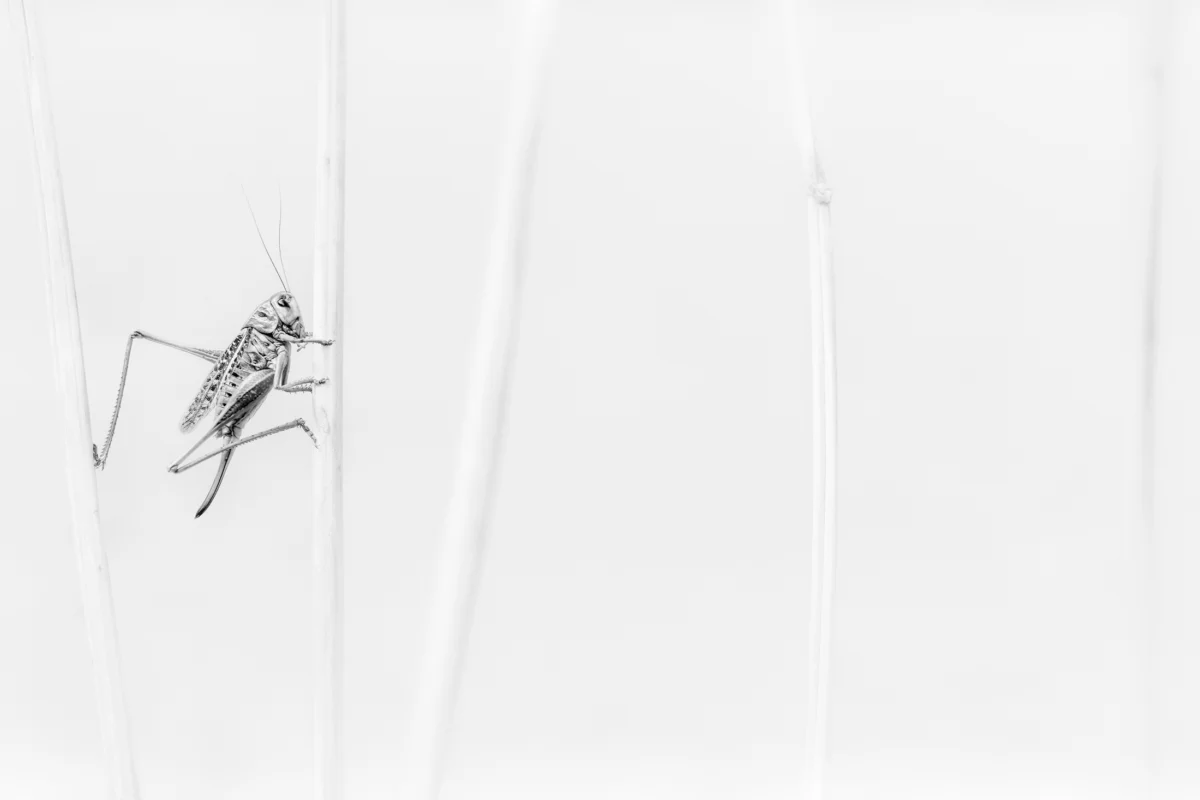
The intersection of macro photography and monochrome aesthetics has increasingly become a subject of critical discussion among contemporary natural history visual artists, challenging traditional paradigms that prioritize vibrant, hyper-saturated depictions of wildlife. In an era defined by advanced digital sensor technologies, instantaneous color grading software, and algorithmic image enhancement, a dedicated cohort of nature photographers is deliberately stripping away color to reveal the foundational architectural, textural, and behavioral complexities of arthropods. This intentional stylistic shift offers a rigorous examination of how the absence of color can refocus viewer perception, elevate structural contrast, and document insect behavior through a deeply interpretive artistic lens.

Background and Evolution of Arthropod Macro Photography
Arthropods—insects, arachnids, myriapods, and crustaceans—represent the most diverse group of organisms on Earth, comprising over 80% of all described animal species. Historically, scientific illustration and early natural history photography relied heavily on monochrome documentation due to technological limitations in film chemistry. However, as color film and digital sensors evolved during the latter half of the 20th century, nature photography shifted overwhelmingly toward polychromatic representation. The primary objective became the precise recording of iridescent scales, warning colorations (aposematism), and intricate camouflage.
In recent decades, however, macro photography has transcended pure scientific documentation to establish itself as a recognized fine-art discipline. Practitioners specializing in invertebrate subjects frequently operate within familiar ecosystems—gardens, local woodlands, and agrarian edges—making these subjects uniquely accessible. Long-term field observation has allowed contemporary macro photographers to record transient behavioral phenomena, such as ecdysis (molting), predation dynamics, and intricate defensive postures, that routinely escape casual human observation. The modern integration of monochrome processing into this workflow marks a philosophical departure from literal representation toward emotional and graphic expression.

The Aesthetic Rationale for Monochrome in Macro Imaging
The decision to convert or capture macro imagery in black and white is governed by specific optical and psychological principles. Color, while undeniably powerful, frequently acts as a visual distraction, drawing the viewer’s eye away from primary compositional anchors such as form, line, and texture. By eliminating chromatic data, photographers force an emphasis on tonal gradations, dramatic chiaroscuro lighting, and negative space.
Industry data and aesthetic analyses highlight several primary drivers for monochrome conversion in close-up photography:

- Distraction Reduction: Removing complex, chaotic background foliage colors isolates the primary subject.
- Textural Accentuation: Hard chitinous exoskeletons, compound eyes, and delicate wing venation exhibit heightened contrast when rendered in grayscale.
- Emotional Resonance: Tonal nuances—ranging from deep shadows to stark highlights—evoke psychological responses of mystery, drama, and solemnity.
- Post-Processing Precision: Monochrome digital workflows, particularly utilizing channel mixers in editing suites, afford photographers granular control over luminance values that surpass the limits of color grading.
Furthermore, technical challenges inherent to macro photography, such as high-ISO digital noise resulting from fast shutter speeds and narrow apertures, can be reinterpreted in monochrome. Rather than representing a technical defect, high-ISO grain frequently imparts an organic, atmospheric quality reminiscent of vintage documentary film stock.
Methodologies: In-Camera Monochromatic Vision Versus Post-Processing Conversion
The technical execution of black-and-white macro photography generally follows two distinct workflows, each requiring specialized cognitive and mechanical adaptations.

The In-Camera Monochrome Approach
Shooting with the camera profile locked to monochrome—or utilizing specialized digital sensors lacking color filter arrays—requires the photographer to visualize the scene entirely in tones of gray. Industry experts note that training the human brain to translate vibrant ecological colors (such as the bright yellow of a Papilio machaon swallowtail or the iridescent greens of a Mantis religiosa) into continuous scales of gray requires extensive field practice. This methodology fundamentally alters field awareness, heightening sensitivity to directional light, specular highlights, and surface textures before the shutter is ever released.
The Post-Processing Conversion Approach
Conversely, the majority of contemporary macro practitioners prefer capturing raw color files and executing conversions during post-production. This methodology preserves maximum dynamic range and permits selective luminance adjustments across specific color channels (e.g., darkening a red channel to make an arthropod’s carapace stand out against green foliage). Proponents argue that this dual-pathway approach provides maximum flexibility, allowing creators to evaluate whether an individual frame truly benefits from monochrome treatment or relies intrinsically on color for its narrative impact.

Minimalism, Abstraction, and Compositional Rigor
Within the framework of monochrome macro photography, minimalism serves as a critical compositional tool. By stripping away chromatic variation, photographers can distill complex natural environments into simplified graphic elements.
Geometric forms—such as the rigid symmetry of an orb-weaver spider’s web or the segmented anatomy of longhorn beetles (Morimus asper)—provide structural order. Conversely, irregular organic shapes introduce visual unpredictability. Depth of field management becomes paramount; utilizing extreme shallow focus isolates a singular anatomical feature—such as the pedipalps of an arachnid or the antennae of a moth—while allowing the surrounding environment to dissolve into an abstract wash of tonal gradients.

Compositional strategies in this discipline frequently challenge traditional rules of thumb. Rather than ensuring the subject dominates the center of the frame, monochrome macro artists leverage negative space and stark compositional asymmetry to evoke a sense of scale, solitude, and architectural wonder within a miniature universe.
Industry Implications and Cultural Reception
The resurgence of monochrome aesthetics in nature photography has sparked broader discourse among conservationists, scientific illustrators, and fine-art curators. While documentary photography demands strict adherence to empirical reality, artistic interpretation plays a vital role in fostering public empathy toward neglected taxa. Arthropods frequently suffer from cultural bias, often associated with fear or aversion. By presenting these organisms through dramatic, high-contrast monochrome imagery, artists reframe them as sculptural, sentient beings worthy of aesthetic appreciation and ecological protection.

Art historians and photography critics observe that monochrome macro portfolios challenge the contemporary saturation of digital media. In a visual landscape dominated by hyper-processed, technicolor imagery, black-and-white natural history photography demands a slower, more contemplative engagement from the observer. It invites audiences to look past superficial coloration and confront the intricate mechanics of life operating at a millimeter scale.
As digital editing tools continue to advance and sensor technology pushes the boundaries of low-light sensitivity, the intersection of macro photography and monochrome artistry will likely remain a vibrant frontier. Whether applied to study the predatory focus of a mantis, the delicate architecture of a dragonfly, or the imposing mandibles of a stag beetle (Lucanus cervus), black-and-white macro imaging demonstrates that the most profound visual truths are often revealed when color is stripped away entirely.
