
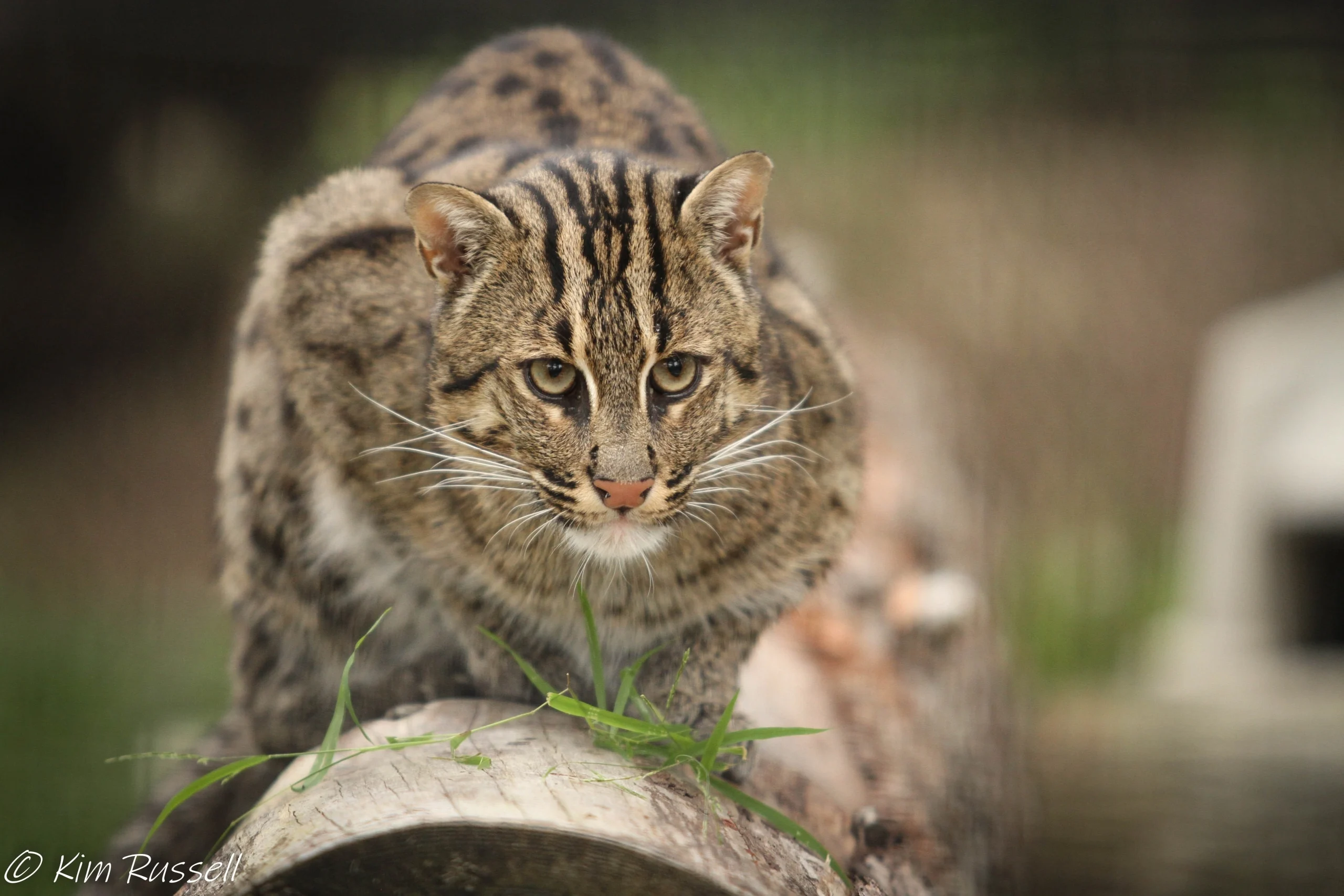
Each year on March 3, the international community observes World Wildlife Day, a United Nations-sanctioned event dedicated to celebrating the world’s wild fauna and flora while raising awareness of the myriad benefits that conservation provides to humanity. The theme for this year, Partnerships for Wildlife Conservation, serves as a poignant reminder that the survival of endangered species is rarely the result of a single entity’s efforts, but rather a complex, multi-layered collaborative process involving scientists, local landowners, non-profit organizations, and individual donors. Among the species currently benefiting from such collaborative frameworks is the fishing cat (Prionailurus viverrinus), a small wild cat species whose survival is increasingly tethered to the success of global conservation alliances.
The Plight of the Fishing Cat
The fishing cat is a medium-sized wild feline native to South and Southeast Asia. Unlike many of its felid relatives, the fishing cat is uniquely adapted to an aquatic lifestyle, possessing semi-webbed paws and a specialized physiology that allows it to hunt in wetlands, marshes, and mangroves. Despite these evolutionary advantages, the species is classified as "Vulnerable" on the International Union for Conservation of Nature (IUCN) Red List.
Data from the IUCN indicates that the fishing cat population is on a steady decline, primarily due to the rapid destruction of wetland ecosystems across Asia. As human populations expand, these critical habitats are being drained, converted into agricultural land, or polluted, effectively stripping the fishing cat of its hunting grounds and nesting sites. Furthermore, these cats frequently fall victim to retaliatory killings by local fish farmers who view the predators as a threat to their commercial stocks. Because they are notoriously elusive and nocturnal, they are among the most difficult small cats to study in the wild, leaving researchers with significant gaps in data regarding their precise population numbers and social behaviors.
River: The Ambassador of the Species
At the Hawk Creek Wildlife Center in New York, a six-year-old fishing cat named River has emerged as an unlikely, yet pivotal, player in the global effort to save her species. As an "ambassador animal," River’s role extends far beyond public exhibition. She serves as a living, breathing connection for thousands of people who might otherwise remain unaware of the fishing cat’s existence or the precarious state of their survival.
River’s presence allows researchers to conduct observational studies that would be impossible in the wild. During a recent visit to the center, the founder of the Fishing Cat Conservancy—a leading organization dedicated to the protection of the species—had the opportunity to document River’s movements and specific physical adaptations. By analyzing how River utilizes her specialized paws to manipulate water and capture prey, scientists can refine their understanding of the species’ foraging mechanics. These insights are then integrated into field manuals and conservation strategies aimed at protecting wild populations.
The Chronology of Conservation Partnerships
The evolution of fishing cat conservation can be viewed as a shift from passive observation to proactive, landscape-level intervention.
- 2008: The IUCN officially elevates the fishing cat from "Endangered" to "Vulnerable" following a re-evaluation of population trends, acknowledging that while the species is widespread, its localized numbers are collapsing.
- 2010s: Increased focus on the species leads to the formation of the Fishing Cat Conservancy, which emphasizes the necessity of protecting the "corridors" between fragmented wetland habitats.
- 2020: The COVID-19 pandemic impacts global conservation funding, prompting a pivot toward digital awareness campaigns and virtual partnerships between wildlife centers and research NGOs.
- 2023-2024: The current push for "Partnerships for Wildlife Conservation" highlights the success of the Hawk Creek model, where ambassador animals act as the bridge between captive research and wild habitat management.
Data-Driven Conservation Strategies
The challenges facing the fishing cat are emblematic of the broader crisis facing wetland-dependent species. According to the Ramsar Convention on Wetlands, the world has lost approximately 35% of its wetlands since 1970. For the fishing cat, this represents a direct loss of territory. The Fishing Cat Conservancy has responded by moving beyond mere observation and into active habitat creation.
Their current initiatives involve working directly with private landowners in the cat’s native range. By providing incentives for landowners to maintain natural, undisturbed wetland borders on their property, the Conservancy creates "micro-preserves." These areas serve as essential refuges for the cats, allowing them to traverse the landscape without entering human-heavy conflict zones. The data gathered from captive cats like River is used to inform these landowners about the specific types of vegetation and water quality that are most attractive to the cats, ensuring that the created preserves are biologically viable.
Official Responses and Institutional Perspectives
The collaboration between Hawk Creek Wildlife Center and the Fishing Cat Conservancy represents a model of institutional cooperation. Representatives from the Conservancy have noted that the ability to study a healthy, active individual in a controlled setting provides a "baseline of normalcy" for the species. Without this baseline, field researchers are often forced to rely on camera trap data, which can be inconsistent due to environmental factors.
"The partnership between our research initiatives and ambassador programs like those at Hawk Creek is essential," a spokesperson for the Fishing Cat Conservancy stated. "When we can translate the movements and biological needs of an animal like River into actionable policy for local landowners, we are effectively shortening the time between discovery and protection."
Broader Implications for Global Biodiversity
The implications of the fishing cat’s status extend to the health of the entire ecosystem. As an apex predator in its specific niche, the fishing cat serves as an "umbrella species." By protecting the wetlands required for the fishing cat to thrive, conservationists are simultaneously protecting hundreds of other species, including amphibians, water birds, and various plant species that depend on clean, unpolluted water.
Furthermore, the economic impact of preserving these wetlands cannot be overstated. Healthy wetlands provide natural filtration for water, flood mitigation for coastal communities, and carbon sequestration. Therefore, saving the fishing cat is not merely a matter of biological preservation; it is a critical component of climate resilience for the human populations living in the same regions.
Moving Forward: The Role of the Public
As World Wildlife Day continues to highlight the need for collective action, the path forward remains clear. The funding required for habitat acquisition, the installation of camera traps in dense mangroves, and the compensation programs for farmers who live alongside these cats requires consistent, long-term financial support.
Donations directed toward organizations like the Hawk Creek Wildlife Center and the Fishing Cat Conservancy are used to maintain the infrastructure of conservation. For the casual observer, contributing to these organizations on World Wildlife Day is more than a charitable gesture; it is a direct investment in the biological integrity of the Asian wetlands.
The success of the fishing cat recovery program will likely be determined in the next decade. If the current trajectory of habitat fragmentation continues, the species faces a high risk of localized extinction. However, through the integration of scientific research, public education via ambassadors like River, and the establishment of land-use partnerships, there is a viable path toward stabilization.
In conclusion, the story of the fishing cat is a testament to the power of the "Partnership" theme championed by this year’s World Wildlife Day. It is a reminder that conservation is not an abstract concept relegated to distant jungles; it is a granular, daily effort involving people, institutions, and the individual animals who serve as the face of the fight. By linking the captive care of animals like River with the wild survival of her species, conservationists are building a robust network capable of weathering the threats of the 21st century. For those interested in tracking the progress of these initiatives or supporting the efforts of the Fishing Cat Conservancy, detailed information is available through their digital platforms at fishcat.org. The future of the fishing cat, and the wetlands they call home, depends on the strength of these partnerships.
