
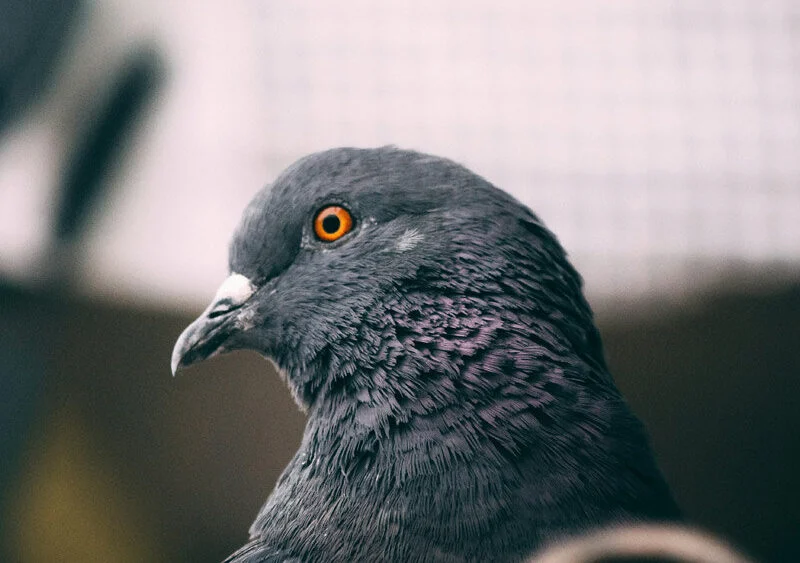
For centuries, the homing pigeon has been celebrated as an avian marvel, a biological courier capable of navigating vast, unfamiliar distances to return to a singular point of origin with uncanny precision. Throughout history, these birds have served as critical conduits for information, particularly during the high-stakes environment of warfare. From the ancient Persian Empire to the trench lines of World War I and the dense jungles of the Pacific theater in World War II, pigeons were relied upon when all other communication technologies failed. While their historical exploits are well-documented—with birds like Cher Ami saving the lives of nearly 200 soldiers in the Meuse-Argonne Offensive—the underlying physiological mechanisms that facilitate such extraordinary navigation have remained a subject of intense scientific debate. Recent findings published in the journal Science suggest that the answer to this age-old riddle may lie not in the brain or the eyes, but deep within the bird’s liver.
The Mechanisms of Avian Navigation
To understand the gravity of this discovery, one must first appreciate the complexity of avian orientation. Ornithologists and behavioral ecologists have long identified a multi-layered navigational toolkit utilized by migratory birds and homing pigeons alike. Under clear skies, pigeons are known to rely on a "solar compass," utilizing the sun’s position to maintain a heading, adjusting their flight path as the sun tracks across the sky throughout the day. When the sun is obscured, birds often switch to a backup system, utilizing celestial cues or landmarks—a process known as map-and-compass navigation.
Beyond these visual aids, pigeons demonstrate a sophisticated ability to perceive the Earth’s magnetic field, a phenomenon known as magnetoreception. For years, scientists hypothesized that this ability was tied to magnetite crystals located in the beak or specialized cells in the retina that allow birds to "see" magnetic fields. However, the discovery of superparamagnetic microphages within the liver adds a significant, and perhaps primary, layer to our understanding of how these animals survive in low-visibility conditions.
The Discovery: Iron-Oxide Nanoparticles
The recent study shifts the focus from the head to the torso. Researchers identified that the pigeon’s liver acts as a repository for superparamagnetic microphages—cells that sequester iron-oxide nanoparticles. These nanoparticles are absorbed by proteins within the bloodstream and transported to the liver, where they are ingested and stored.
The biological logic is compelling: because these iron-oxide particles become strongly magnetized when exposed to external magnetic fields, they function as a biological compass needle. These clusters are located in close proximity to hepatic nerve fibers, effectively creating a direct line of communication between the liver and the bird’s nervous system. This suggests that the liver is not merely an organ for metabolic filtration but a sensory hub that informs the bird of its orientation relative to the Earth’s geomagnetic poles.
Experimental Methodology and Chronology
The research team employed a rigorous experimental framework to validate the role of hepatic microphages. The study involved a cohort of 34 trained homing pigeons, all of which were conditioned to navigate a flight path spanning approximately 11.8 miles (19 kilometers).
The experiment was conducted during varying meteorological conditions, with a specific focus on overcast days when visual navigation cues—such as the sun—were unavailable. The birds were divided into two groups: a control group and an experimental group. In the experimental group, the researchers artificially depleted the hepatic microphages. To track their performance with high resolution, each pigeon was equipped with an internet-connected, GPS-enabled tracking device that provided real-time telemetry data.
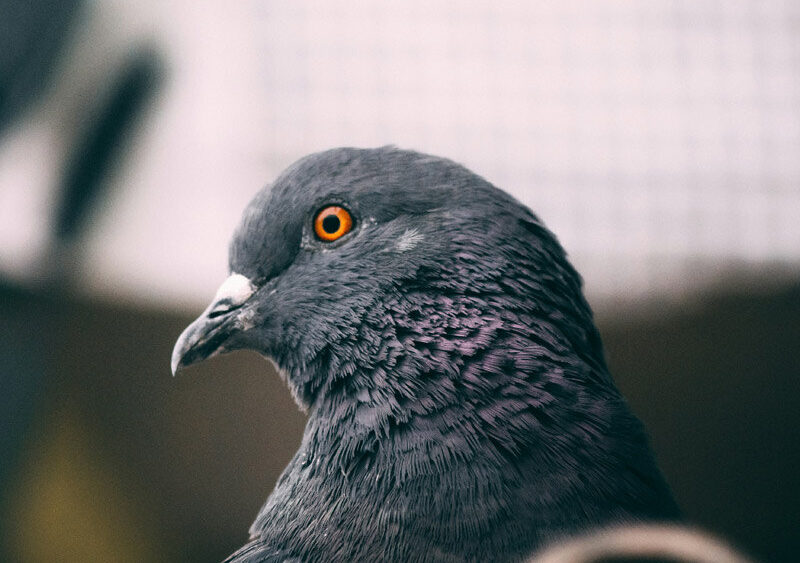
The results were statistically significant. Pigeons with intact microphages consistently successfully navigated the route, regardless of cloud cover. In stark contrast, the birds with depleted microphages failed to navigate home in every instance during overcast conditions. This clear-cut failure rate provides compelling evidence that the liver-based magnetic sensing system is not just an auxiliary tool, but a necessary survival mechanism when primary navigational cues are missing.
Chronology of Magnetoreception Research
The study published in Science is the culmination of decades of incremental progress in sensory biology.
- 1970s: Researchers first proposed that birds utilized the Earth’s magnetic field, a theory met with skepticism by the broader scientific community until behavioral tests confirmed the phenomenon.
- 1990s: The search for a "magnetic sensor" intensified, leading to the discovery of magnetite in various avian tissues, though the precise location and functionality remained elusive.
- 2010s: Advanced imaging technology allowed for a closer inspection of hepatic and neural tissues, shifting the focus toward the liver’s role in processing iron-oxide.
- 2023-2024: The current findings solidify the role of hepatic microphages, providing a concrete physiological basis for magnetoreception and opening new avenues for understanding how other migratory species navigate the globe.
Broader Implications for Ornithology and Technology
The implications of this research extend far beyond the pigeon coop. Understanding how birds navigate could have profound impacts on the field of biomimicry and aerospace engineering. If a small organ like a liver can house a sophisticated, highly sensitive magnetic compass that functions without a power source, it offers a blueprint for creating more resilient, compact, and energy-efficient navigation systems for autonomous drones and other robotic platforms.
Furthermore, this discovery forces a re-evaluation of current conservation efforts. As global climate patterns shift and urban environments become more saturated with artificial electromagnetic interference, migratory birds may face increasing challenges in relying on their internal compasses. If magnetic sensitivity is tied to metabolic processes like those occurring in the liver, environmental pollutants that affect bird health could indirectly sabotage their ability to migrate, potentially leading to population declines that were previously difficult to explain.
Expert Analysis and Future Directions
While the findings are robust, the scientific community emphasizes that this is likely one piece of a much larger, complex puzzle. Magnetoreception is rarely governed by a single sensory organ. Instead, it is likely an integrated system where the liver, the eyes, and the vestibular system work in concert to provide the bird with a high-fidelity internal map.
The researchers note that this study does not invalidate other theories of magnetoreception but rather supplements them. The "four theories" currently under investigation—involving the retina, the beak, the inner ear, and now the liver—may represent a multi-sensory approach that provides redundancy, ensuring the bird can navigate even if one system is compromised.
As research continues, the focus will likely shift toward the molecular pathways that allow these iron-oxide nanoparticles to interact with nerve fibers. Scientists are eager to determine if this mechanism is present in other migratory species, such as homing pigeons’ wild relatives or long-distance migratory songbirds. The question of whether these iron-oxide particles are ingested through diet or synthesized internally remains another critical area of inquiry.
For now, the humble homing pigeon continues to surprise us. The bird that once carried the weight of wartime correspondence on its wings is now carrying the secrets of planetary navigation within its liver. This discovery serves as a reminder that even in the age of satellite-based GPS, the most efficient and reliable navigational technology may well be the one that evolution has been refining for millions of years. As the scientific community continues to peel back the layers of avian physiology, we gain not only a better understanding of our winged companions but also a deeper appreciation for the intricate, invisible forces that govern life on Earth.
