
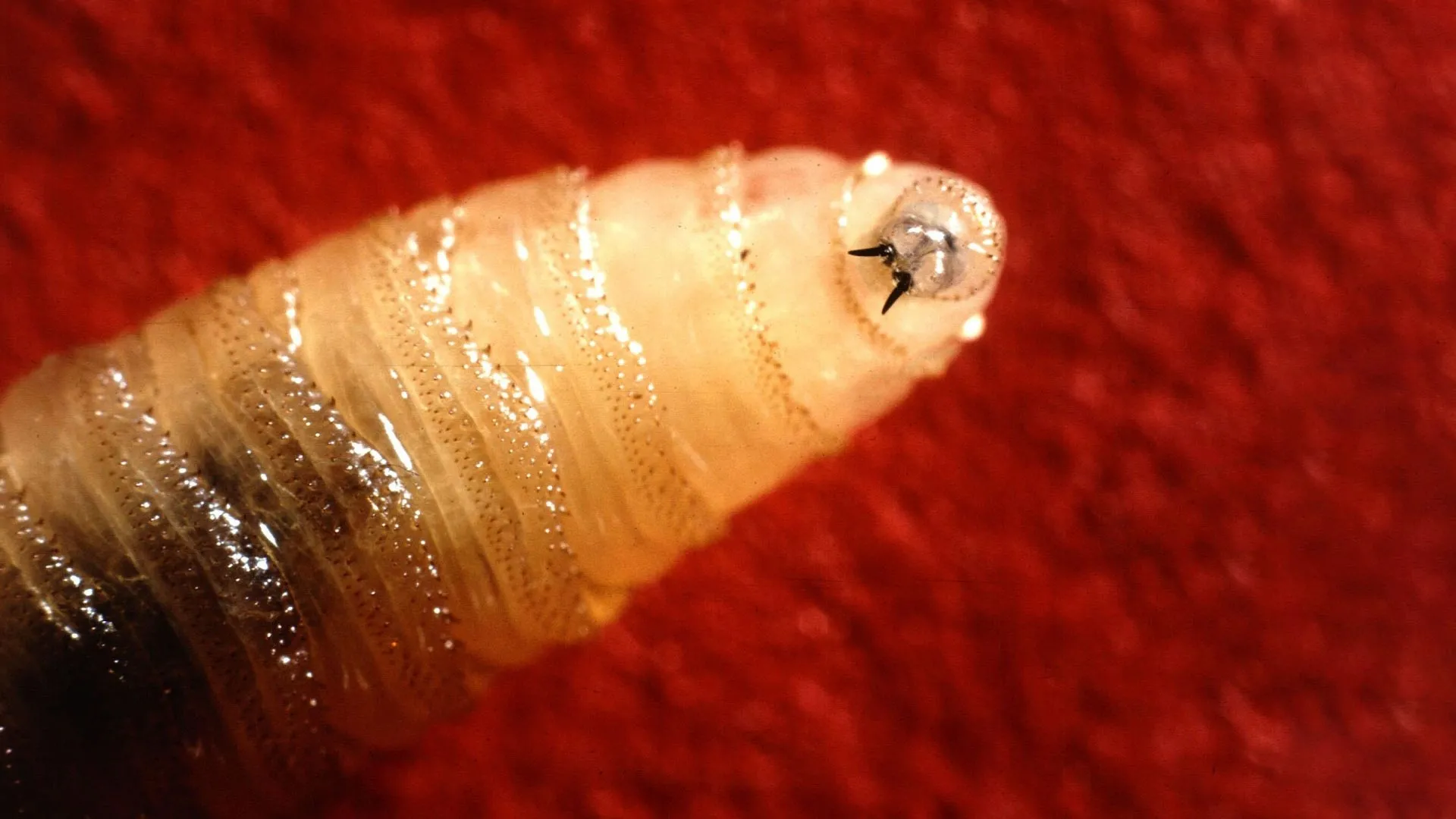
The historical specter of the New World screwworm has once again crossed into the United States, prompting urgent defensive maneuvers from agricultural agencies, scientific institutions, and public health officials. Decades after a monumental biological control campaign successfully pushed the parasitic insect’s range hundreds of miles south to Panama, the flesh-eating pest has reestablished a foothold in Texas and New Mexico. In response to this alarming northward migration, researchers at the University of California San Diego (UC San Diego) and the County of San Diego Health and Human Services Agency (HHSA) Public Health Services have engineered an advanced, real-time tracking tool. This innovative dashboard is designed to synthesize complex datasets, monitor environmental variables, and anticipate the parasite’s next moves before outbreaks spiral out of control.
Main Facts and the Current Threat Profile
The New World screwworm—scientifically known as Cochliomyia hominivorax—differs drastically from the benign or decomposing-matter-consuming flies commonly encountered in daily life. Female screwworm flies are obligate parasites that seek out open wounds, cuts, or natural body openings in warm-blooded animals to lay their eggs. Upon hatching, the ravenous larvae burrow directly into healthy, living tissue. As the maggots feed and mature, they create deep, expanding cavities that frequently become breeding grounds for severe secondary bacterial infections. Without immediate veterinary or medical intervention, heavy infestations can rapidly prove fatal to livestock, prized pets, and vulnerable wildlife populations.
While human infections remain exceedingly rare, they are entirely possible if a fly deposits eggs into an untreated human cut or mucosal membrane. Unlike respiratory pathogens such as influenza or COVID-19, the screwworm does not transmit from person to person. Nevertheless, an accidental infestation requires prompt physical removal of the larvae to prevent extensive localized tissue destruction. The current incursion into Texas and New Mexico has elevated threat levels across the American Southwest, endangering an agricultural sector that has spent generations operating free of endemic screwworm pressures.
A Historical Retrospective: The 1950s Eradication Campaign
To understand the gravity of the current situation, agricultural historians often look back to the mid-20th century. During the 1950s, New World screwworm infestations inflicted catastrophic economic losses on United States livestock producers. In the American Southwest alone, the parasitic fly was responsible for an estimated $50 million to $100 million in annual damages—a staggering sum at the time, representing the loss of countless cattle, sheep, and other economically vital livestock.
Faced with an economic and agricultural crisis, entomologists and government researchers devised one of the most successful biological control operations in human history: the sterile insect technique (SIT). Pioneered by scientists like Edward F. Knipling and Raymond C. Bushland, the strategy involved mass-rearing millions of male screwworm flies in laboratory facilities, sterilizing them using gamma radiation, and systematically releasing them into the wild over infested regions. Because female screwworm flies typically mate only once in their lifespans, mating with sterile males produced zero viable offspring. Over time, wild populations collapsed. Through persistent, decades-long coordinated efforts between the United States Department of Agriculture (USDA) and international partners, the pest was successfully eradicated from the U.S. mainland and its northern range was pushed deep into Central America, eventually establishing a biological barrier in Panama.
Chronology of Resurgence and Modern Spread
The complacency that followed decades of freedom from the pest was shattered in recent years as shifting climatic conditions and complex ecological factors enabled the parasite to breach historical containment zones.
- Pre-2023 Early Warnings: Agricultural entomologists began monitoring increasing screwworm densities and northward movements across parts of Central America and Mexico, recognizing that changing weather patterns could expand the fly’s viable habitat.
- 2023 Global and Regional Assessments: Public health and agricultural surveillance units explicitly forecasted that the New World screwworm would attempt a northward push toward the U.S. border, though the velocity of the subsequent migration surprised many field specialists.
- Late 2023 to 2024 Detections: The parasite successfully crossed back into the United States, with confirmed cases rapidly multiplying across Texas and New Mexico. The sudden uptick in animal infections caught local veterinary networks in a defensive posture.
- Mid-2024 Dashboard Development: Recognizing a dangerous gap in situational awareness, UC San Diego researchers collaborated with the County of San Diego HHSA to design and deploy a specialized predictive tracking dashboard.
- Present Day Operational Phase: Public health officials are utilizing the real-time tool to model threat trajectories, integrate multi-source media intelligence, and coordinate with federal programs deploying sterile insect releases and strict regional quarantines.
Supporting Data and Technological Innovation
The newly developed tracking dashboard represents a major leap forward in how regional health authorities monitor vector-borne and parasitic threats. Built under the auspices of Resilient Shield—a UC San Diego initiative and Centers for Disease Control and Prevention (CDC)-funded center belonging to the national Insight Net network—the tool bridges the gap between high-level academic modeling and boots-on-the-ground public health needs.
The dashboard functions by aggregating heterogeneous data streams into cohesive, regional risk profiles for individual counties across the United States. Key inputs include:
- Confirmed Laboratory Detections: Official reports from veterinary and agricultural authorities confirming active screwworm presence.
- Environmental and Climatic Conditions: Meteorological data tracking temperature, humidity, and rainfall patterns favorable to the survival and reproduction of adult flies and their larvae.
- Social Listening and News Media Integration: An innovative inclusion designed to capture early warnings before official laboratory confirmation workflows conclude.
Traditional public health reporting is frequently encumbered by bureaucratic delays. Culturing, identifying, and verifying parasitic specimens can consume days or even weeks. By parsing early media coverage and localized veterinary chatter, the UC San Diego dashboard grants health agencies a vital head start. As noted by Dr. Seema Shah, medical director of the Epidemiology and Immunization Services Branch for San Diego County’s Public Health Services, this media-mining capability allows officials to stay one step ahead of the biological curve rather than constantly reacting to past events.
Official Responses and Strategic Collaboration
The return of the screwworm has triggered a multi-layered defensive response uniting local, state, and federal entities. The USDA is spearheading the overarching eradication campaign, deploying a modernized version of the 1950s playbook. Current strategies combine traditional sterile insect releases with targeted pesticide applications and strict animal movement quarantines designed to halt the transit of infected livestock and pets.
Simultaneously, federal regulators are weighing approval for a genetically modified, all-male screwworm strain currently undergoing rigorous field testing. Concurrently, academic teams at UC San Diego are developing next-generation genetic tools to ensure long-term resilience against potential pesticide resistance or environmental adaptation by the fly.
At the regional level, medical and veterinary professionals are mobilizing to protect both animal and human populations. Dr. Emily Trumbull, a veterinarian and lead for the San Diego County Epidemiology Unit’s One Health Program, emphasizes the holistic nature of the response. Because the screwworm can parasitize any warm-blooded animal, local veterinarians serving livestock operations, domestic pet owners, and wildlife rehabilitation centers are serving as frontline sentinels. Their close coordination with the California Department of Food and Agriculture ensures that suspect cases are flagged, investigated, and contained instantly.
Furthermore, the operational framework of the Resilient Shield center has established a new paradigm for academic-government cooperation. Rather than researchers developing theoretical tools in an academic vacuum, public health agencies submit their most urgent, real-world problems directly to the center. This demand-driven model previously yielded successful tools like the Tijuana River Crisis Environmental Dashboard and pandemic-era influenza trackers, proving that open-source, modular engineering can rapidly adapt to shifting biological threats.
Broader Impact and Future Implications
The resurgence of the New World screwworm carries profound economic, ecological, and public health implications for the United States. Financially, an unchecked establishment of the pest would threaten billions of dollars in the U.S. cattle and livestock industries, driving up consumer meat prices, necessitating costly mandatory veterinary inspections, and triggering severe international trade restrictions on American agricultural exports.
Ecologically, the parasite poses a severe and largely unpredictable threat to native wildlife populations. Species ranging from white-tailed deer and elk to ground-nesting birds and endangered mammals can serve as hosts, potentially suffering high mortality rates in localized hotspots.
For human health systems, while the probability of widespread human infection remains low, the psychological and clinical burden on rural and veterinary health workers in affected zones will increase. Clinics must remain vigilant in diagnosing unusual skin lesions or persistent myiasis in patients who have spent time around livestock or pets in affected southern regions.
Ultimately, the deployment of the UC San Diego screwworm tracking dashboard highlights an evolving truth in modern epidemiology: pathogens and parasites are increasingly testing the boundaries of historical containment, accelerated by global trade, animal movement, and changing climates. By combining the historical wisdom of mid-century biological eradication techniques with cutting-edge data science, artificial intelligence preparedness, and inter-agency collaboration, public health officials are working tirelessly to ensure that the New World screwworm’s return to American soil remains a temporary incursion rather than a permanent ecological fixture.
