
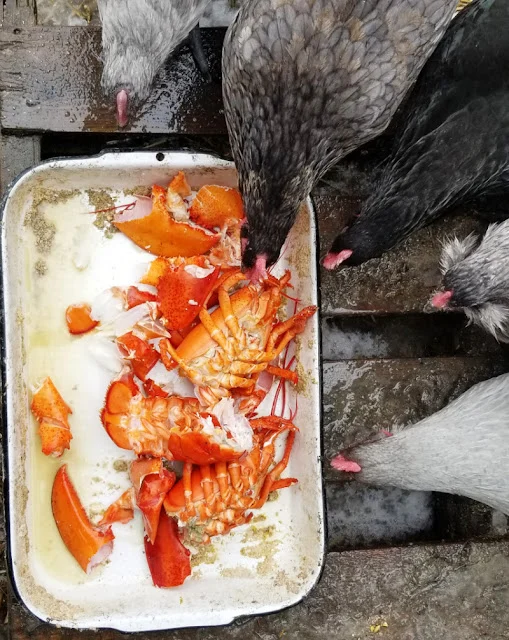
The integration of non-traditional feed sources into backyard poultry diets has long been a subject of interest for hobbyists and agricultural researchers alike. While standard commercial feeds provide a balanced nutritional foundation, supplemental feeding—often utilizing kitchen scraps—has become a standard practice for many domestic flock owners. Recent observations from coastal regions, particularly in Maine, have highlighted an unconventional addition to the poultry diet: lobster. Far from being a mere novelty, the inclusion of lobster meat and shells offers a unique profile of proteins, minerals, and enrichment opportunities for chickens, provided it is managed with strict attention to moderation and preparation.

The practice of feeding marine byproducts to poultry is rooted in historical agricultural methods where farm animals were utilized to process organic waste. In coastal Maine, where the lobster industry represents a cornerstone of the regional economy, the accessibility of this crustacean has created a unique opportunity for poultry owners. During the off-season, when the influx of tourism wanes, the price of live lobster and frozen tails often drops significantly, sometimes reaching price points comparable to or lower than conventional protein sources like beef or poultry-grade supplements.
Nutritional Profile and Dietary Implications
From a nutritional standpoint, lobster is classified as a lean, high-quality protein. A standard three-ounce serving contains approximately 19 grams of protein. While historical concerns regarding the cholesterol levels in shellfish have dominated public perception, current nutritional science distinguishes between dietary cholesterol and the serum cholesterol levels in humans and animals. Much like the lipids found in egg yolks, the cholesterol content in lobster is not a primary driver of adverse health outcomes when consumed as part of a varied diet.

For chickens, the nutritional value extends beyond the muscle meat. The exoskeleton of the lobster is composed primarily of chitin and calcium carbonate. When processed correctly—often by allowing the shells to dehydrate in the sun until they become brittle—these remains can be pulverized into a calcium-rich supplement. Calcium is an essential mineral for laying hens, as it is the primary component required for the formation of eggshells. Chronic calcium deficiency in a flock can lead to soft-shelled eggs and long-term skeletal issues. By repurposing lobster shells, keepers are effectively participating in a circular food system, turning biological waste into a functional dietary additive.
Chronology of Usage and Behavioral Enrichment
The adoption of lobster as a supplement has evolved over the past decade as backyard chicken keeping has moved from a rural necessity to a popular suburban and semi-rural lifestyle trend. Initial reports from small-scale farmers in New England began surfacing on social media platforms around the early 2010s, with anecdotal evidence suggesting that chickens exhibited a marked preference for the taste of lobster meat.

Beyond nutrition, the act of consuming lobster serves as a critical behavioral enrichment tool. Chickens are natural foragers; their behavior in the wild involves constant scratching and pecking to uncover protein sources such as insects, worms, and small larvae. Providing a discarded lobster shell—which may contain small, residual morsels of meat, tomalley, or roe—engages these innate behaviors. The mechanical challenge of extracting these remnants keeps the flock active and mentally stimulated, which is particularly beneficial during the winter months when foraging opportunities are limited by weather conditions.
Expert Perspectives and Safety Guidelines
While the practice is growing in popularity, agricultural experts emphasize that caution is necessary. Chickens are omnivores, but their digestive systems are not equipped to handle high levels of sodium, which is often prevalent in processed or cooked seafood if seasoned. Furthermore, the risk of mercury bioaccumulation—a common concern with marine life—means that lobster should never serve as a primary feed source.

"The key to any supplemental feeding program is variety and moderation," notes agricultural extension observers. "While lobster offers excellent protein and calcium, it must be viewed as an occasional treat rather than a staple. The salt content of cooked lobster, if prepared with butter or seasoning, must be avoided entirely to prevent renal strain in birds."
Furthermore, there is a clear distinction between the "meat" and the "shell." While the meat provides protein, the shells must be handled to avoid choking hazards. If offered in large, sharp fragments, the shells can pose a physical danger to the birds’ crops and digestive tracts. Proper preparation involves thorough drying—which sanitizes the material through UV exposure and heat—followed by crushing the shells into a manageable, meal-like consistency.

Broader Economic and Environmental Context
The use of lobster as feed also reflects a broader trend in sustainable agriculture: the reduction of food waste. In many coastal communities, the volume of lobster shells produced by restaurants and households is substantial. By diverting these materials to livestock, waste streams are reduced, and the environmental impact of the local food system is effectively mitigated.
Economically, this practice allows small-scale producers to lower their overhead costs. During the peak summer tourist season in New England, the price of lobster may spike, making it an impractical feed supplement. However, during the late autumn and winter months, local supply chains often see a surplus, allowing producers to access the byproduct at a reduced cost. This seasonal fluctuation means that the "lobster-fed" chicken phenomenon is a cyclical, rather than constant, element of the local poultry industry.

Analysis of Future Trends
As interest in regenerative agriculture and "farm-to-table" practices continues to rise, the trend of utilizing local, regional waste products for animal feed is expected to expand. Poultry keepers in other coastal regions are beginning to explore similar options, including the use of crab and shrimp shells as calcium sources.
However, the mainstream adoption of these practices requires more rigorous longitudinal studies. While the immediate health benefits of supplemental protein and calcium are well-documented, the long-term impact of marine-based additives on the taste and quality of the eggs produced by these hens remains a subject of ongoing consumer curiosity. Some producers claim that the diet contributes to richer egg yolk color and enhanced flavor profiles, though these claims remain largely anecdotal and await formal sensory analysis.

In conclusion, the practice of feeding lobster to chickens is a sound agricultural strategy when implemented with care. It provides a robust source of calcium and protein, encourages natural foraging behaviors, and supports the principles of waste reduction. For the backyard enthusiast, it represents a synthesis of regional availability and practical animal husbandry. As long as the primary diet remains a balanced, nutritionally complete commercial feed and the lobster is provided in moderation—free from harmful additives—it stands as a viable, enriching, and highly efficient supplement for a healthy, productive flock.
