
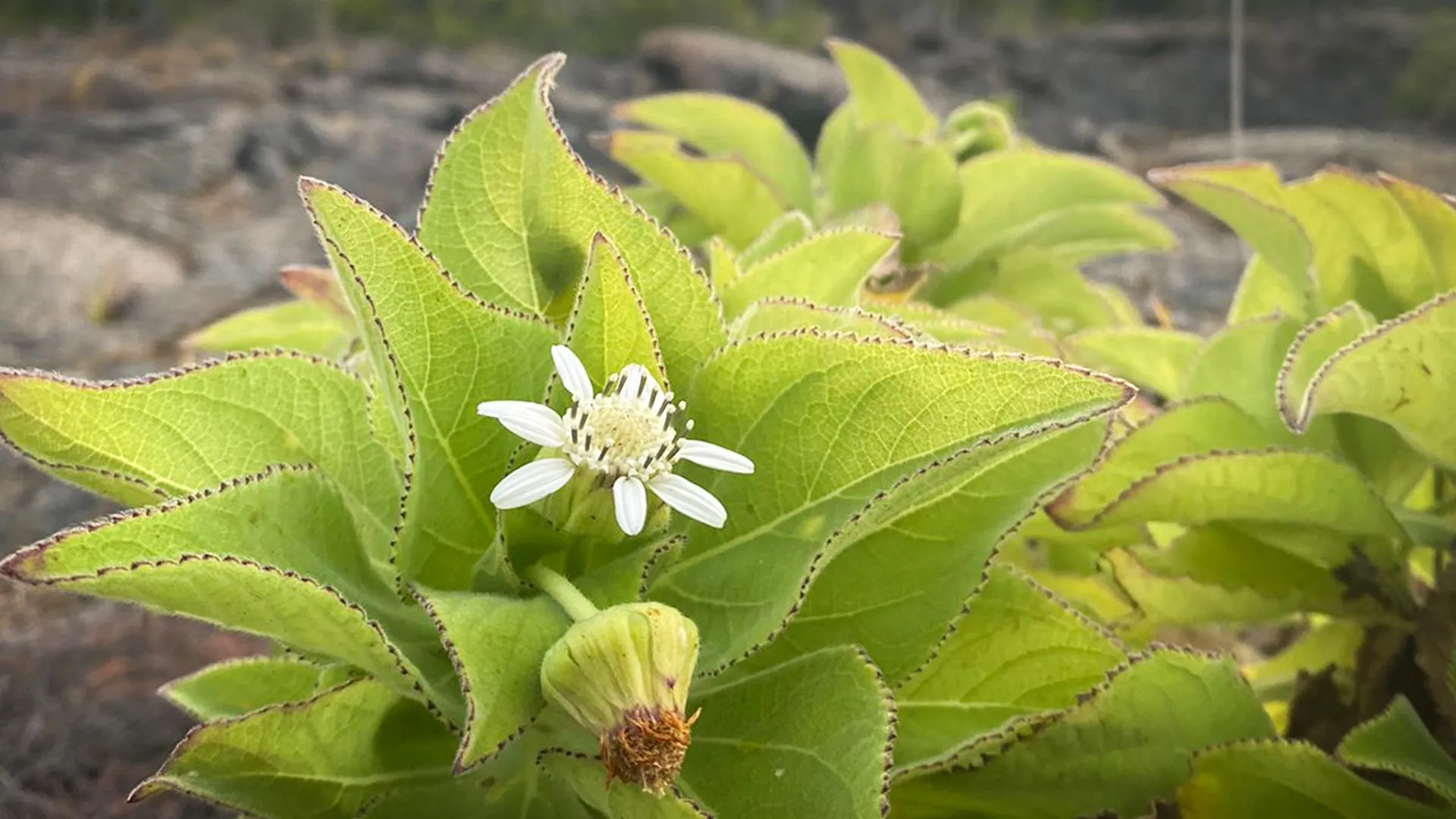
Nearly two centuries after Charles Darwin first stepped ashore on the Galápagos Archipelago aboard the HMS Beagle, the volcanic islands continue to serveas one of the world’s most vital natural laboratories for the study of evolution. While Darwin’s meticulous collection of finches ultimately provided the empirical bedrock for his revolutionary theory of natural selection—illustrating how populations gradually adapt to their surroundings as advantageous traits promote survival and reproduction—modern scientists are still unearthing profound biological truths from the isolated Pacific ecosystem. A comprehensive, multi-institutional international study has recently turned its attention away from the iconic birds and toward a distinct group of endemic plants known as Scalesia, or the Galápagos giant daisies. Published in the prestigious journal Nature Communications, the new research provides unprecedented resolution into the mechanisms of rapid adaptation and parallel evolution, demonstrating how complex physical traits can emerge independently across different lineages through entirely distinct genetic pathways.
The findings not only reshape our understanding of how plant genomes respond to intense ecological pressures but also carry immediate implications for modern conservation strategies across the archipelago. By sequencing the complete genomes of every known Scalesia species, the international research team has mapped out an intricate history of adaptive radiation—the rapid diversification of a single ancestral lineage into a multitude of forms tailored to disparate ecological niches. As scientists continue to decode the genetic architecture of these remarkable giant daisies, the Galápagos archipelago is once again proving that the evolutionary forces first documented in the 19th century remain active, dynamic, and endlessly creative.
A Historical Foundation: From Beagle Specimens to Modern Genomics
To fully appreciate the significance of the recent Scalesia study, one must look back to the formative months of 1835, when the HMS Beagle arrived in the Galápagos Islands. Among the scientific treasures Charles Darwin carried back to England were numerous biological specimens, including a confusing assortment of birds that he initially categorized into separate families of sparrows, woodpeckers, and finches, alongside a single tit. It was only after ornithologist John Gould examined the collection back in London that the true nature of the birds was revealed: they were all closely related ground and tree finches whose variations in beak morphology had evolved in response to diverse local food sources. This realization became a cornerstone of Darwin’s formulation of natural selection, published in 1835 in On the Origin of Species.
However, birds were not the sole focus of Darwin’s naturalist endeavors during his brief time in the archipelago. He also gathered a wide array of botanical specimens, seventy-eight of which were subsequently identified by taxonomists as species entirely new to science. Among these botanical discoveries were four distinct species of Scalesia. Despite these early collections, the intricate genetic machinery driving the rapid diversification of these plants remained hidden from science for nearly two centuries, awaiting the advent of high-throughput genomic sequencing technologies capable of parsing the complex evolutionary histories encrypted within their DNA.
Decoding the Scalesia Radiation: Chronology and Scope
The contemporary investigation into Scalesia represents a massive collaborative effort spanning numerous premier academic and research institutions worldwide. The research team features scientists from the Royal Botanic Gardens, Kew; the Norwegian University of Science and Technology’s (NTNU) University Museum; the University of California, Davis; the University of Copenhagen; the Charles Darwin Foundation in the Galápagos; the University of Georgia, Athens; the University of British Columbia; and several other global laboratories.
The genus Scalesia is broadly referred to as the Galápagos giant daisies, a colloquialism that belies their extraordinary morphological diversity. Unlike the diminutive herbaceous daisies common to mainland gardens, Scalesia species range dramatically in physical stature, from low-lying shrubs to towering woody trees capable of forming dense forests. This radiation occurred with startling evolutionary speed. Every extant species of Scalesia emerged during the past one million years following the colonization of the volcanic islands by an ancestral plant from mainland South America. In geological and evolutionary terms, one million years is an extraordinarily brief window for such profound phenotypic diversification to occur.
Despite their short evolutionary history, these plants successfully adapted to a remarkably heterogeneous array of microclimates across the Galápagos. Individual species have colonized environments as contrasting as the humid, mist-shrouded highland forests and the scorching, arid lowlands where water is scarce and solar radiation is intense. This ecological breadth made the genus an ideal candidate for investigating the genetic basis of parallel evolution and adaptive radiation.
Parallel Evolution and the Mystery of Leaf Morphology
One of the most striking physical variations observed across the Scalesia genus involves leaf morphology. While some species possess large, broad, and entire leaves, others display heavily lobed leaves featuring intricate, serrated edges. For decades, evolutionary biologists hypothesized that these complex leaf shapes served a critical adaptive function in arid environments. Specifically, scientists theorized that deeply lobed leaves could help plants survive hot and dry conditions by optimizing thermodynamic properties—enhancing heat dissipation and limiting water loss through transpiration.
Until recently, however, the underlying genetic mechanisms responsible for producing these leaf shapes remained entirely unknown. To resolve this mystery, the international research team sequenced the complete genomes of every recognized Scalesia species. The results of this genomic analysis yielded a surprising revelation: deeply lobed leaves did not evolve just once from a single ancestral mutation. Instead, this specialized leaf morphology evolved independently on multiple separate occasions across entirely different branches of the Scalesia family tree.
This discovery serves as a textbook demonstration of parallel evolution, a process whereby organisms independently develop similar phenotypic solutions to common environmental challenges, often despite possessing divergent underlying genetic architectures.
A Complex Genetic Network Replaces the "Master Gene" Hypothesis
Perhaps the most fascinating conclusion drawn from the genomic data is how this parallel evolution was achieved at a molecular level. Conventional biological models might predict that a dramatic physical trait like leaf lobing would be controlled by a single, highly conserved "master gene" that is repeatedly activated across different lineages. The research team found precisely the opposite.
"Even more surprising was that each time this trait evolved, it did so through different genes—even though all of them belong to the same biological system controlling leaf development," explains Vanessa Bieker, a researcher at the Royal Botanic Gardens, Kew, and the lead author of the publication.
Instead of relying on a single genetic switch, evolution in the Scalesia genus appears to operate by drawing upon an entire, interconnected network of genes. By tweaking different components of this broader genetic network across various lineages, nature managed to arrive at the same functional physical outcome—finely lobed leaves optimized for hot and dry climates—using entirely distinct molecular pathways.
Professor Michael D. Martin of the NTNU University Museum contextualizes the broader significance of these findings. "More than 150 years after Darwin’s work on the Galápagos transformed our understanding of life on Earth, these islands continue to reveal new biology," Martin notes. The discovery offers evolutionary biologists a far more nuanced, sophisticated picture of how complex phenotypes can repeatedly emerge in unrelated populations or within distinct branches of the same evolutionary lineage, underscoring what Bieker describes as "the flexibility and creativity of evolution."
Ongoing Speciation and Implications for Conservation Biology
Beyond uncovering the molecular secrets of leaf development, the genomic investigation revealed that the evolutionary narrative of Scalesia is far from complete. The genetic data demonstrates that populations within what are currently classified as single species display massive genetic divergence and have remained geographically and reproductively isolated from one another for extended periods of time.
This profound genetic isolation strongly suggests that new species are actively forming across the archipelago today. Numerous distinct Scalesia populations likely represent separate evolutionary lineages that have not yet been formally recognized or cataloged by taxonomists. This ongoing, active speciation highlights the Galápagos as an environment where the engine of evolution continues to turn at a measurable pace.
These insights carry immediate and profound consequences for conservation management. Traditional conservation frameworks often categorize species based on broad morphological classifications, treating geographically separated populations of the same nominal species as interchangeable units. However, the genetic evidence from the Scalesia study challenges this paradigm. Because isolated populations are following independent evolutionary trajectories and accumulating distinct genetic variations, the researchers argue that conservation practitioners must pivot toward managing each isolated population as an individual, distinct conservation unit.
Implementing this granular approach could fundamentally transform how environmental authorities protect the vulnerable and distinctive plant communities of the Galápagos Islands. Ensuring the survival of these nascent lineages requires safeguarding not just the overarching species, but the specific ecological niches and localized habitats that drive their divergence.
Broader Impact and Scientific Significance
The publication of the Scalesia genomic study in Nature Communications marks a significant milestone in modern evolutionary biology. By combining historical field collections dating back to the voyage of the HMS Beagle with cutting-edge, whole-genome sequencing technologies, contemporary researchers have bridged a nearly two-century gap in scientific inquiry.
The research provides an unusually detailed, empirical view of adaptive radiation in real time, illustrating the complex interplay between environmental pressure, genomic architecture, and phenotypic expression. As human-induced climate change and habitat fragmentation accelerate global pressures on fragile island ecosystems, understanding the speed, flexibility, and genetic mechanics of natural adaptation is more critical than ever.
The Galápagos giant daisies have demonstrated that nature’s evolutionary toolkit is vastly more complex and redundant than previously imagined, utilizing intricate networks of genes to repeatedly solve environmental challenges. As modern science continues to probe the living archives of the Galápagos Islands, Darwin’s historic journey serves not as a final chapter, but as the opening prologue to an ongoing story of discovery—one that continually redefines our comprehension of life’s boundless capacity to adapt, diversify, and endure.
