
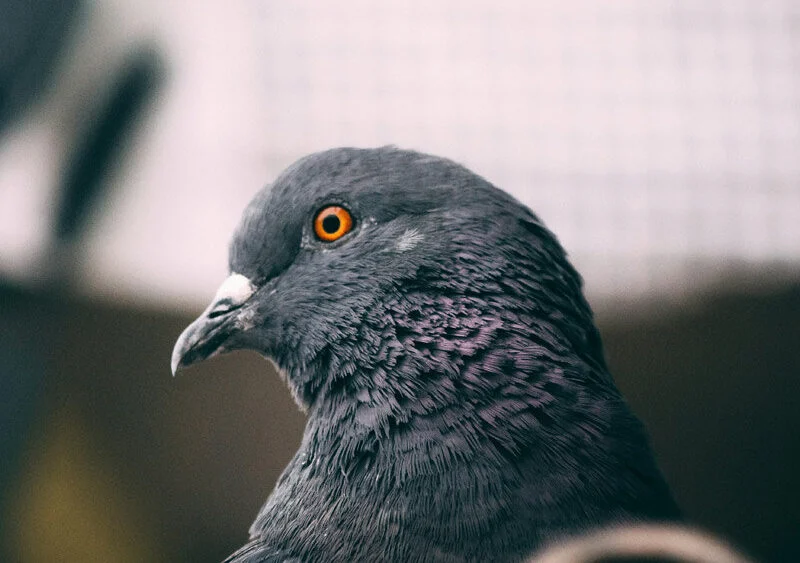
For centuries, the homing pigeon has served as an enigmatic marvel of the natural world. From the ancient Persian postal systems to the critical communications lines of the First and Second World Wars, these birds demonstrated an uncanny ability to traverse hundreds of miles of unfamiliar territory to return to their lofts with unerring precision. While historical accounts have frequently celebrated their bravery and reliability, the biological mechanisms facilitating this "avian GPS" have remained a subject of intense scientific debate. Recent findings published in the journal Science have now provided a breakthrough in understanding this phenomenon, pointing toward a previously overlooked internal compass located within the pigeon’s liver.
The Historical Context of Avian Navigation
The reliance on pigeons as messengers was not merely a matter of convenience; it was a strategic necessity. During the First World War, the U.S. Army Signal Corps utilized thousands of pigeons to transmit messages from the front lines, with birds such as "Cher Ami" becoming legendary for delivering life-saving information despite sustaining severe injuries. These feats were long attributed to a combination of visual landmarks and a keen, yet poorly understood, ability to sense the Earth’s magnetic field.
Historically, ornithologists and biologists have proposed four primary theories to explain avian magnetoreception: the light-dependent radical-pair mechanism in the eye, the magnetite-based receptor system in the beak, the involvement of the inner ear, and now, the discovery of superparamagnetic microphages in the liver. For decades, the consensus drifted toward the eye-based model, suggesting that birds could literally "see" magnetic fields. However, the limitation of this theory—namely, its reliance on light—failed to account for the pigeon’s success in navigating under heavy cloud cover or at night.
The Liver Hypothesis: A Biological Breakthrough
The recent study shifts the paradigm by focusing on the role of iron-oxide nanoparticles. Researchers have identified "superparamagnetic microphages" within the liver tissue, which appear to act as a sophisticated sensory organ. These cells are responsible for collecting iron-oxide nanoparticles, which are ingested through the bloodstream via specific proteins.
When these nanoparticles accumulate in the liver, they reside in close proximity to hepatic nerve fibers. In the presence of the Earth’s magnetic field, these magnetized microphages interact with the nervous system, providing the bird with a real-time orientation signal. This mechanism acts as an internal backup system, taking over when visual cues—such as the sun’s position or distinct landscape features—are obscured.
The implications of this are significant. If the liver serves as a magnetic sensor, it suggests that avian navigation is not a singular sensory process, but a multimodal system that integrates data from the eyes, the ears, and now, internal metabolic organs.
Chronology of the Experimental Process
To validate the hypothesis that liver-based microphages are essential for navigation, researchers conducted a controlled experiment involving 34 homing pigeons. The study was structured to isolate the variables of environmental visibility and microphage presence.
- Baseline Training Phase: All pigeons were trained to navigate a consistent 11.80-mile (19 km) flight path, ensuring they were familiar with the route and the return destination.
- Experimental Intervention: The researchers divided the cohort. One group was treated to deplete their hepatic microphages, while a control group remained biologically intact.
- Deployment Phase: The pigeons were released during overcast weather conditions, specifically chosen to neutralize the birds’ reliance on solar-based navigation.
- Tracking: Each bird was equipped with an internet-connected, lightweight telemetry device to record precise flight paths and velocity.
- Observation: The control group, possessing their full complement of microphages, successfully returned to their home lofts. Conversely, every pigeon with depleted microphages failed to navigate the route accurately, becoming disoriented upon release.
The data gathered from these devices provided a clear correlation: without the iron-oxide-rich cells in the liver, the pigeons lost their ability to orient themselves when visual cues were absent.
Supporting Data and Scientific Implications
The role of iron in biological navigation is not unique to birds. Magnetoreception has been studied in a variety of species, from bacteria to sea turtles. However, the concentration of iron-oxide nanoparticles in the pigeon’s liver represents a distinct evolutionary adaptation.
Superparamagnetism refers to a form of magnetism that occurs in small ferromagnetic or ferrimagnetic nanoparticles. When these particles are smaller than a certain size, they exhibit high magnetic susceptibility. In the pigeon, these nanoparticles become magnetized by the Earth’s field, and the proximity to the hepatic nerve fibers allows for a transduction of magnetic information into neural signals.
Data from the Science study suggest that the density of these microphages is not merely incidental but is a highly specialized biological feature. The depletion observed in the study was not lethal, but it effectively "blinded" the birds to the Earth’s magnetic orientation, proving that these cells are not just storage depots for iron, but functional sensory components.
Analysis: Why Navigation Matters
The discovery of the hepatic navigation system has broader implications for both ornithology and climate science. As climate patterns shift and global temperatures fluctuate, the reliance on magnetic navigation becomes increasingly critical for migratory species. If certain biological processes—such as the accumulation of iron-oxide nanoparticles—are dependent on specific environmental or dietary factors, any disruption to these factors could have cascading effects on migratory populations.
Furthermore, this study invites a re-evaluation of how human-generated electromagnetic fields might affect wildlife. If birds are indeed sensing the Earth’s magnetic field through internal organ structures, the proliferation of high-frequency radio waves, cellular infrastructure, and other urban electronic interference may inadvertently be disrupting the natural navigation channels of birds.
Official Perspectives and Future Research
While the scientific community has largely welcomed these findings, researchers emphasize that this is not the final word on avian navigation. The four major theories of magnetoreception are not necessarily mutually exclusive. It is highly probable that pigeons utilize a hierarchical sensory approach, prioritizing vision during clear weather and defaulting to the liver-based magnetic system when conditions become adverse.
"We are looking at a complex, layered sensory array," noted one lead researcher associated with the study. "The liver-based system provides a level of redundancy that allows these birds to be the most resilient navigators in the animal kingdom."
Future investigations are already being planned to map the exact neural pathways connecting the liver to the brain’s processing centers. Additionally, scientists hope to study whether other migratory birds, such as Arctic terns or monarch butterflies, possess similar hepatic mechanisms. If this system is ubiquitous in the animal world, it would represent a fundamental breakthrough in our understanding of how life interacts with the planet’s physical properties.
Conclusion: The Unsolved Puzzle
The transition from viewing pigeons as simple messengers to seeing them as biological machines equipped with iron-based sensors marks a significant advancement in behavioral biology. While we have known for decades that these birds could find their way home, the "how" remained a mystery locked away in the bird’s internal anatomy.
As we continue to analyze the data from the recent Science publication, the focus remains on the interplay between the environment and the bird’s internal systems. The next phase of research will likely explore how these microphages are formed and whether environmental pollutants—which often interfere with iron metabolism—could impair a bird’s sense of direction. For now, the pigeon remains a subject of intense study, a creature that navigates the globe by reading the invisible lines of the Earth, aided by a compass hidden within its very own liver. Through continued inquiry, we move closer to understanding the full breadth of the biological capabilities that allow these birds to thrive across the vast, often hostile, airways of our world.
