
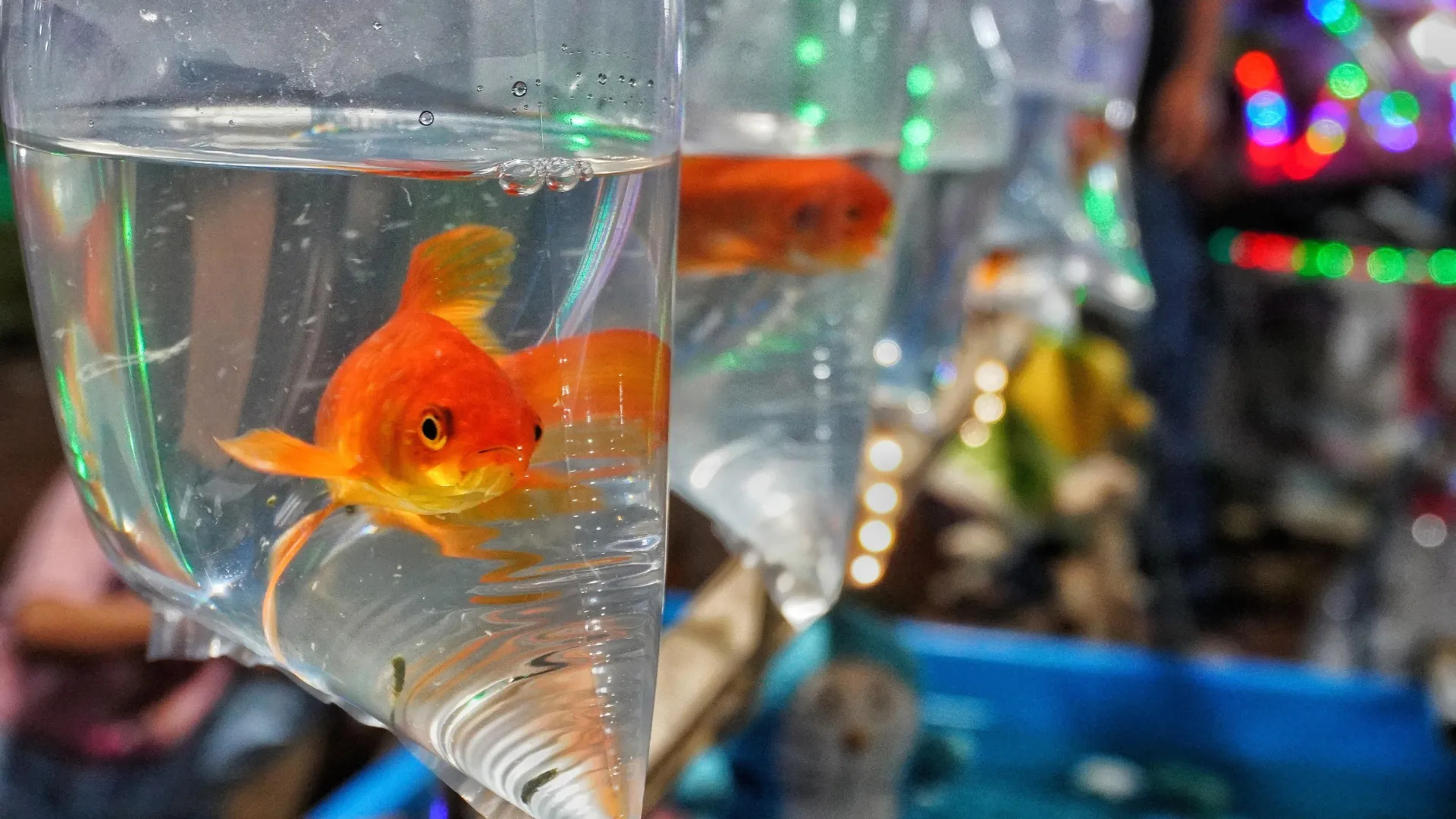
What often begins as a well-intentioned act of compassion or a simple household lifestyle change can quietly spiral into a full-scale environmental emergency. According to a comprehensive peer-reviewed study recently published in the Journal of Animal Ecology, the domestic goldfish (Carassius auratus), a staple of childhood pets and backyard garden ponds, poses a profound and previously underestimated threat to freshwater ecosystems. Conducted collaboratively by researchers at The University of Toledo and the University of Missouri, the research provides some of the most rigorous experimental evidence to date that these seemingly harmless ornamental fish can act as severe ecological disruptors capable of fundamentally altering lake environments.
The findings carry urgent implications for a diverse array of stakeholders, including everyday pet owners, municipal natural resource managers, state wildlife agencies, and environmental policymakers. While the global pet trade continues to distribute millions of ornamental fish across continents with minimal friction, the ecological consequences of these species entering the wild are becoming increasingly severe. The study serves as a stark reminder that when domestic pets cross the threshold into natural waterways, they frequently transition from beloved companions into aggressive invasive species.
Dr. William Hintz, an associate professor in UToledo’s Department of Environmental Sciences and Lake Erie Center, served as the lead investigator for the project. He emphasizes that public perception regarding the release of unwanted pets is dangerously misaligned with biological reality. "It is critically important to inform the public that their pets can become pests that will harm freshwater ecosystems," Dr. Hintz stated. "The evidence is now clear — releasing a goldfish into the wild might be seen as an act of kindness, but it can turn into a major ecological threat."
Replicating Nature: The Experimental Methodology
To understand how goldfish impact complex aquatic environments, the research team went beyond observational studies, which can often be clouded by confounding environmental variables. Instead, the scientists constructed large outdoor freshwater mesocosms—controlled experimental enclosures designed to accurately mimic real-world lake conditions. These mesocosms allowed the researchers to isolate variables and observe direct cause-and-effect relationships over extended periods.
The study, formally titled "Invasive goldfish trigger a regime shift in experimental lake ecosystems of varying trophic state," examined how goldfish affect two distinct types of freshwater environments: oligotrophic (nutrient-poor) waters and eutrophic (nutrient-rich) waters. By introducing Carassius auratus into these varying systems, the team was able to track subsequent shifts in water quality, phytoplankton growth, invertebrate populations, filamentous algae, and the overall physical condition of native fish species.
To ensure the validity of their conclusions, the researchers employed a combination of additive and substitutive experimental designs. This methodological rigor allowed them to successfully separate the specific impacts caused by goldfish from the general biological effects of simply having an increased overall abundance of fish within an ecosystem. While the data indicated that some minor fluctuations in aquatic vegetation could be correlated with total fish abundance, the severe, systemic ecological damage observed was directly tied to the presence of goldfish.
The Mechanism of Disruption: Why Goldfish Thrive and Destroy
Goldfish are members of the carp family (Cyprinidae), a lineage renowned for its resilience, adaptability, and capacity to thrive in degraded or highly variable environments. When pet owners flush unwanted goldfish down toilets, release them into local stormwater retention ponds, or dump them into municipal lakes, the fish frequently survive the transition. In many cases, natural events such as heavy seasonal rains and subsequent flooding allow captive fish to escape from backyard ponds into interconnected watershed systems.
Once established in the wild, goldfish do not merely survive; they flourish. Unrestrained by the physical boundaries of a glass aquarium or a small backyard pond, they can grow rapidly into surprisingly large, robust specimens. This physical transformation comes with severe ecological costs.
Dr. Rick Relyea, a professor in the University of Missouri College of Agriculture, Food and Natural Resources and director of Mizzou’s Johnny Morris Institute of Fisheries, Wetlands and Aquatic Systems, co-authored the study and detailed the physical mechanisms of the invasion. "If goldfish are released into the wild, they rapidly grow into very large fish that stir up lake sediments, consume large numbers of prey and compete with native fish," Dr. Relyea explained.
This bottom-feeding behavior—known scientifically as bioturbation—involves rooting through lakebed sediments in search of detritus, macroinvertebrates, and plant roots. As goldfish churn up the mud, they release buried nutrients like phosphorus and nitrogen back into the water column. This nutrient spike frequently triggers massive, unsightly algal blooms that block sunlight, deplete dissolved oxygen levels, and choke out native aquatic vegetation. Furthermore, the suspended sediment increases water turbidity, transforming clear lakes into murky, degraded environments that are hostile to native fish species dependent on sight for hunting and navigation.
Triggering a Dangerous Regime Shift
One of the most alarming insights generated by the study is the documentation of what aquatic scientists refer to as a "regime shift." In ecology, a regime shift occurs when an ecosystem absorbs stress up to a critical threshold, past which it rapidly reorganizes into a fundamentally different, and typically degraded, stable state.
Unlike minor, temporary environmental fluctuations that a healthy lake can easily self-correct, a regime shift represents a systemic structural collapse. For example, a clear-water, macrophyte-dominated lake can rapidly flip into a murky, phytoplankton-dominated state. Once an ecosystem crosses this critical threshold, restoring it to its original, healthy condition becomes exceptionally difficult, time-consuming, and cost-prohibitive for conservation agencies.
The researchers noted that goldfish are particularly adept at driving lakes toward these detrimental regime shifts across multiple types of aquatic environments. By simultaneously destabilizing the sediment, outcompeting native planktivorous and benthic fish for finite food resources, and altering nutrient cycles, a relatively small number of introduced goldfish can catalyze a cascade of ecological failures.
Historical Context and the Global Pet Trade
The findings published by the University of Toledo and the University of Missouri do not exist in a vacuum; rather, they contribute to a growing body of literature documenting the dark side of the global aquarium trade. For decades, the multi-million-dollar ornamental fish industry has facilitated the frictionless movement of aquatic species across oceans, borders, and regional watersheds.
While international trade in ornamental species is heavily monitored for specific high-profile pathogens and regulated species, the sheer volume of common pets sold makes tracking individual end-of-life disposal nearly impossible. Goldfish, which have been bred in captivity for over a thousand years originating from wild carp in ancient China, possess genetic traits that make them uniquely suited for survival across diverse global climates, ranging from cold temperate zones in North America and Europe to warmer subtropical regions.
In the past, instances of giant goldfish were often treated as isolated, quirky news items by local media outlets. Municipalities in places like Burnsville, Minnesota, and Boulder, Colorado, have previously made international headlines after discovering massive, football-sized goldfish inhabiting local stormwater ponds during routine management surveys. However, this new experimental study elevates these discoveries from regional oddities to documented indicators of widespread, systematic ecological threats.
Policy Implications and Calls for Prevention
In light of their findings, the study’s authors are advocating for a paradigm shift in how natural resource agencies and local governments approach aquatic invasive species. Rather than relying solely on reactive eradication programs—which are often exorbitantly expensive and rarely yield a 100% success rate—management strategies must pivot aggressively toward prevention and early detection.
Natural resource managers are being urged to implement stricter monitoring protocols around popular urban recreational lakes, stormwater retention basins, and waterways adjacent to residential neighborhoods where pet abandonment is statistically more prevalent. Additionally, policymakers are being called upon to support enhanced public education campaigns that clearly communicate the environmental consequences of releasing aquarium life into the wild.
Conservation organizations point out that many pet owners release animals out of a misplaced sense of empathy, believing that setting a fish "free" into a natural pond is kinder than euthanasia or keeping it in a confined space. Educational initiatives must dismantle this misconception, emphasizing that releasing a domestic animal is functionally equivalent to introducing a biological pollutant into a fragile system.
Actionable Alternatives for Pet Owners
To combat the root cause of the issue—pet abandonment—environmental agencies and pet industry representatives are promoting accessible, responsible alternatives for owners who can no longer care for their aquatic pets.
Key recommendations for pet owners include:
- Return to Retailers: Many local pet stores and specialty aquarium shops are willing to take back healthy fish or trade them for store credit.
- Private Adoption Networks: Utilizing local community groups, online aquarium hobbyist forums, and social media networks to find other responsible hobbyists willing to adopt unwanted fish.
- Consulting Wildlife Authorities: Reaching out to state departments of natural resources or local university extension offices for guidance on safe, legal surrender options.
- Humane Euthanasia: While emotionally difficult, veterinary medicine experts note that humane euthanasia is vastly preferable to allowing a non-native species to establish an invasive population that inflicts widespread suffering and mortality on native aquatic wildlife.
Broader Environmental Outlook
As climate change, habitat fragmentation, and pollution continue to exert unprecedented pressures on freshwater biodiversity globally, the introduction of resilient invasive species like Carassius auratus adds a preventable layer of stress to vulnerable ecosystems. Lakes and rivers provide essential ecosystem services, including drinking water supply, recreational spaces, commercial fisheries, and critical habitats for endangered endemic species. Protecting these vital resources requires vigilance from both policymakers and private citizens.
The research by Dr. Hintz, Hannah Barrett, and Dr. Relyea serves as an unmistakable warning. By bridging the gap between controlled scientific experimentation and real-world ecological management, the study provides the empirical foundation necessary to drive meaningful policy changes and public awareness campaigns. Ultimately, the message to the public is clear: keeping aquatic life contained within the home or responsibly rehoming unwanted pets is not just a matter of good pet husbandry—it is a critical act of environmental stewardship.
