
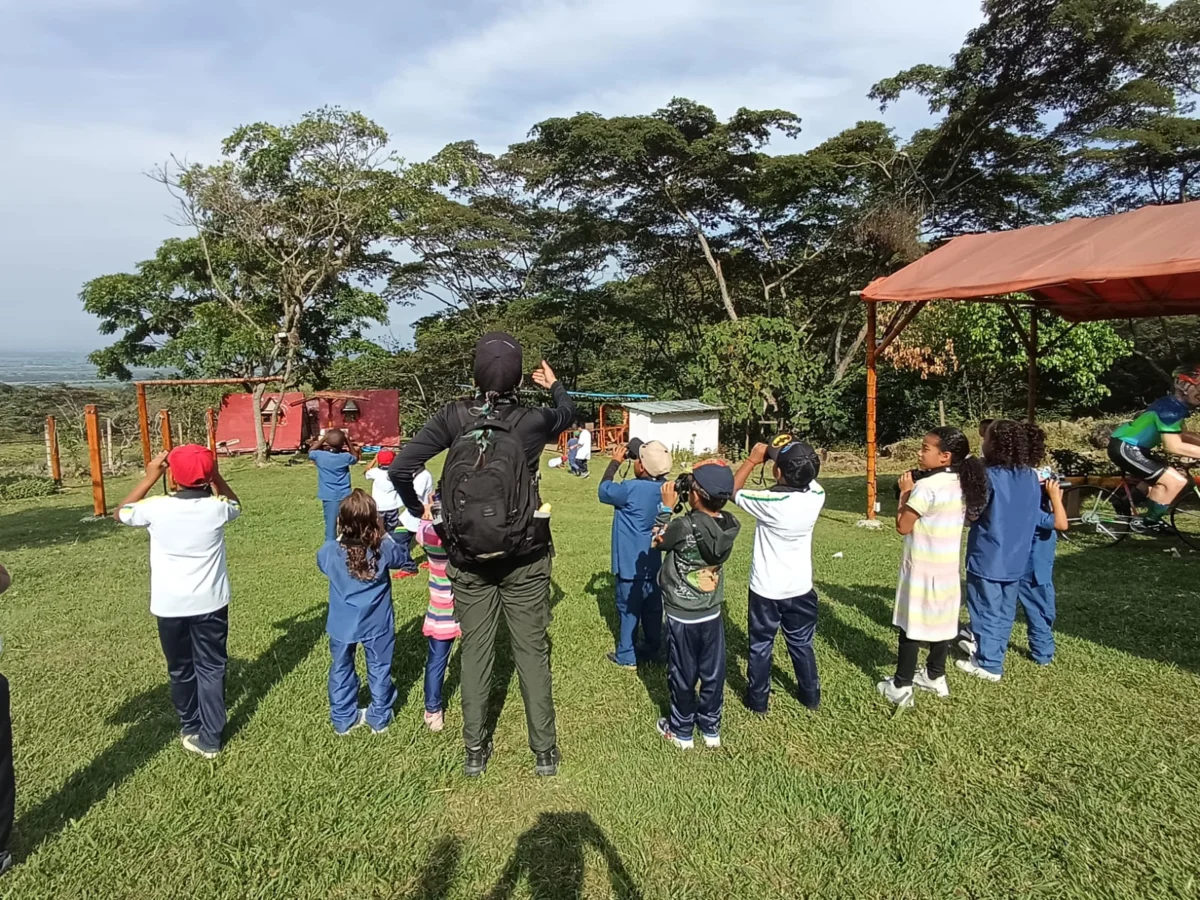
The intersection of ornithology and pedagogy has produced a transformative model in Colombia, where the National Audubon Society has successfully integrated bird conservation into the core academic curriculum of rural schools. By moving beyond traditional classroom instruction, the initiative—known as the Birds to Discover and Conserve curriculum—has bridged the gap between scientific literacy and community stewardship. This program, now expanding through 2026, serves as a blueprint for how migratory species can function as catalysts for international cooperation and local ecological restoration in regions historically impacted by rural conflict and social inequality.
A Foundation Built on Biodiversity and Resilience
Colombia remains one of the most biodiverse nations on the planet, hosting nearly 20% of the world’s bird species. Despite this wealth, many rural communities located in the Central Andes and Southwestern regions have faced systemic challenges, including limited educational resources, poverty, and the lingering effects of long-standing regional instability.
In 2021, Catalina Casas, the Field Conservation Manager for Audubon in Colombia, collaborated with community education advisor Ligia García and a cohort of dedicated educators to address these gaps. Recognizing that birds serve as powerful "ambassadors" for the environment, the team developed a multidisciplinary curriculum designed to align with the Colombian Ministry of Education’s rigorous academic standards. The program effectively weaves avian conservation into science, mathematics, social studies, language arts, and citizenship education, transforming the act of birdwatching into a rigorous academic exercise.
Chronology of the Initiative
The evolution of the project reflects a strategic, phased approach to educational development:
- 2021 (The Pilot Phase): The initial curriculum was launched across 20 rural schools. The pilot reached approximately 700 students, focusing on teacher-led instruction that combined theoretical knowledge with field-based observation.
- 2022–2025 (Refinement and Capacity Building): Participating educators refined the teaching guides and student workbooks based on real-world classroom feedback. This period emphasized a "train-the-trainer" model, ensuring that local teachers possessed the expertise to lead conservation efforts independently of external consultants.
- 2026 (Expansion and International Integration): Audubon renewed its engagement, scaling the program to include five additional schools. This phase introduced a cross-border virtual exchange component, connecting Colombian students with their counterparts in the United States to study the life cycles and migratory patterns of shared bird species.
The Pedagogy of Conservation
At the heart of the Birds to Discover and Conserve curriculum is the recognition that engagement must move from curiosity to active participation. Teachers are provided with comprehensive illustrated workbooks that encourage students to document local bird species, map their migratory routes, and understand the ecological requirements of these habitats.
Practical applications of the curriculum are diverse. Students have successfully implemented "bird-friendly gardens" on school grounds, which serve as living laboratories. These spaces provide critical stopover habitats for migratory birds while simultaneously allowing students to conduct community science—gathering data on local species populations and documenting traditional ecological knowledge. By recording local bird names, folklore, and cultural stories associated with specific species, the program honors indigenous and local heritage while reinforcing scientific literacy.
Bridging the Global Gap: The Virtual Exchange
The most significant expansion in 2026 was the launch of virtual exchange sessions between Colombian students and peers in the United States, including schools in Connecticut and Ohio. This initiative is grounded in the reality of migratory connectivity; birds like the Cerulean Warbler or the Swainson’s Hawk do not recognize national borders, and the program argues that human communities should not either.
During these sessions, students presented research on migration routes, discussing the threats birds face—such as habitat loss and climate change—at both ends of their journey. For the students, this exchange demystified the concept of "migration," transforming it from a abstract geographical phenomenon into a tangible, shared responsibility. By answering the prompt, "Why is our school a welcoming place for birds?", students gained a deeper understanding of how local conservation decisions in one hemisphere have profound impacts on the ecological health of the other.
Data-Driven Impact and Measurable Milestones
The project utilizes the Audubon "Flight Plan" to track success through measurable indicators. These include:
- Educator Capacity: The number of teachers who have achieved proficiency in bird identification and ecological monitoring.
- Student Engagement: Qualitative and quantitative assessments of student participation in school-led conservation festivals and documentation projects.
- Habitat Improvement: The square footage of restored, bird-friendly habitat created on school campuses.
Early data suggests that the program significantly increases student interest in STEM (Science, Technology, Engineering, and Mathematics) fields. By providing a concrete subject—local wildlife—students are more likely to engage with complex biological concepts. Furthermore, the program has bolstered the resilience of the participating rural schools, providing them with a sense of identity and mission that transcends the economic hardships of the region.
Official Perspectives: The Role of the Educator
The success of this curriculum is largely attributed to the "co-design" process. Educators were not merely recipients of a syllabus; they were architects of the program. María Gilma Cortés Castañeda, an instructor at the José A. Galán School, highlights the program’s role in changing the school environment.
"The materials and training have been invaluable in helping us develop engaging activities inside and outside the classroom," Castañeda noted. "The most rewarding part has been seeing how our students have embraced the project and now understand the important role birds play in healthy ecosystems."
Castañeda’s experience, mirrored by colleagues at institutions like La Selva and Providencia schools, underscores the shift in how rural schools are perceived. Rather than being isolated outposts, these schools have become hubs for environmental advocacy, involving families and community leaders in the conservation process.
Broader Implications and Future Trajectory
The implications of the Colombia-Audubon partnership extend far beyond avian biology. In the context of global environmental change, the program demonstrates how environmental education can foster social cohesion. In areas where rural conflict has disrupted traditional community structures, the shared project of protecting biodiversity provides a neutral, constructive focal point for community building.
Furthermore, the program offers a scalable model for other regions. By emphasizing low-cost, high-impact activities—such as bird-friendly landscaping and the documentation of local traditional knowledge—the curriculum can be adapted to other geographies facing similar challenges. The program’s longevity is secured by its focus on "teaching the teachers," ensuring that the knowledge base remains within the community rather than relying on a permanent, external presence.
Looking forward, the integration of technology and international partnership is expected to deepen. As students in both Colombia and the U.S. continue to monitor migratory birds, the data they collect will contribute to larger, global scientific databases, reinforcing the notion that young people have a direct role to play in the protection of global biodiversity.
Conclusion: A Lesson Without Borders
The Birds to Discover and Conserve curriculum serves as a profound reminder that education is most effective when it is situated in the reality of the student’s own environment. By connecting the local flora and fauna of the Colombian Andes to the broader, hemispheric reality of migratory flight, the program provides students with a sense of agency.
As the program moves past its initial pilot years and into a phase of established integration, it stands as a testament to the power of environmental education to foster empathy, scientific rigor, and global citizenship. In a world increasingly defined by fragmented landscapes and shifting climate realities, the lessons learned by these students—that nature connects us and that conservation is a collective, borderless duty—may be the most important takeaway of all. The collaboration between Audubon, local Colombian educators, and their U.S. counterparts continues to prove that when we look to the birds, we find the common language necessary to protect the future of our shared planet.
