
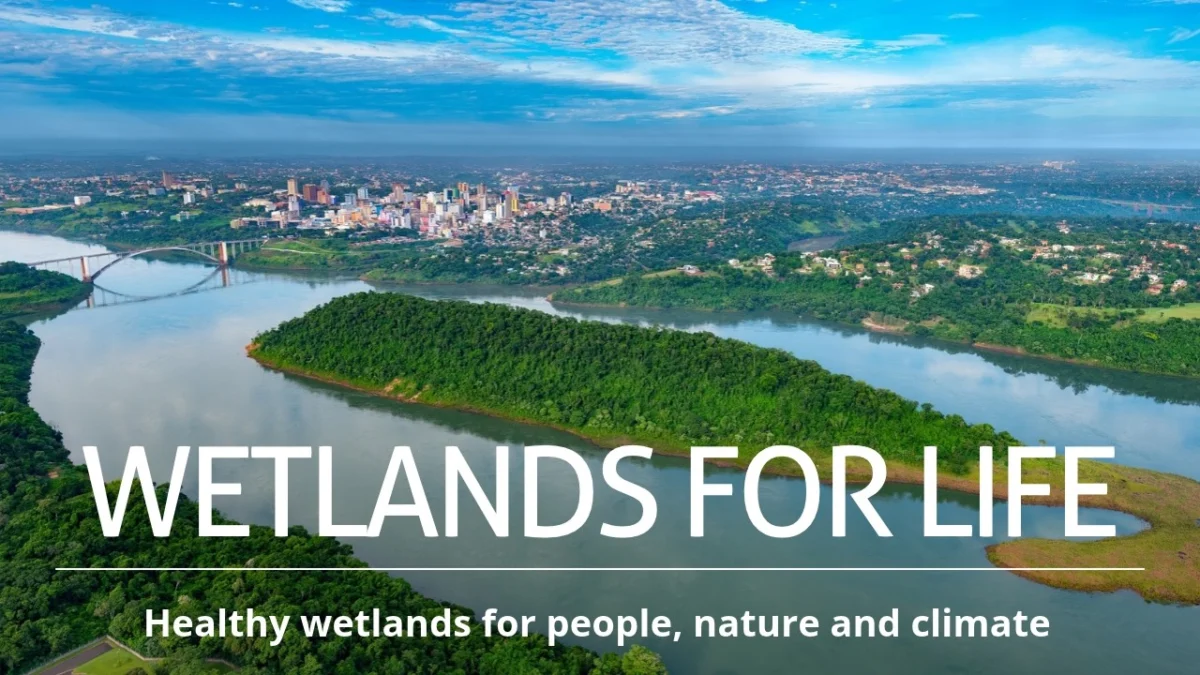
The international community faces a sobering reality regarding the trajectory of global climate change, as a landmark United Nations Environment Programme (UNEP) report warns that the critical 1.5°C global warming threshold is set to be breached within the next few years. Released amid mounting scientific consensus that immediate, near-term mitigation alone can no longer prevent temporary exceedance, the report—titled Limiting Overshoot—advocates for an "overshoot, peak, and decline" strategy. This approach seeks to minimize both the magnitude and the duration of the anticipated temperature spike. As world leaders grapple with the systemic risks of climate transition, environmental scientists and policy experts are increasingly shifting their focus toward natural climate solutions. Chief among these are the world’s wetlands, which conservation organizations argue must be elevated to the forefront of global mitigation and adaptation frameworks.
The publication of the UNEP report marks a critical juncture in contemporary climate policy, shifting the global discourse from pure prevention to managed recovery. For decades, international climate agreements, most notably the 2015 Paris Agreement, have treated the 1.5°C threshold as a strict boundary to be avoided at all costs. However, accelerating greenhouse gas emissions, despite decades of policy pledges, have made a temporary breach statistically unavoidable.
According to climate modelers, the world has already warmed by approximately 1.2°C to 1.3°C above pre-industrial levels. Even with aggressive decarbonization pathways, the momentum of historical emissions guarantees that global averages will cross the 1.5°C line, likely before the end of the decade. The Limiting Overshoot framework outlines how humanity must navigate this dangerous territory. It emphasizes that while an overshoot is now probable, its peak must be sharply truncated, and global temperatures must be actively driven back down below the threshold through a combination of aggressive emissions reductions, atmospheric carbon dioxide removal, and the large-scale restoration of Earth’s carbon-dense ecosystems.
The consequences of failing to rapidly reverse a temperature overshoot are catastrophic. Climate scientists emphasize that every fraction of a degree above 1.5°C triggers non-linear, exponential impacts across global systems. These include increasingly erratic and destructive weather patterns, systemic failures in global agriculture leading to widespread food insecurity, acute water shortages affecting billions of people, and an exponential rise in the number of climate refugees displaced by unlivable conditions or the submersion of low-lying coastal cities and island nations.
To mitigate these cascading disasters, humanity must utilize every available ecological tool to stabilize the climate system. While terrestrial afforestation—the planting of trees on non-forested land—has long dominated public imagination and corporate sustainability initiatives, scientific assessments demonstrate that wetlands offer vastly superior and faster carbon sequestration capabilities per unit area.

Healthy wetlands, which include peatlands, marshes, mangroves, and floodplains, function as some of the most efficient natural carbon sinks on the planet. Peatlands alone, though covering only a tiny fraction of the Earth’s land surface, store twice as much carbon as all the world’s forests combined. When these ecosystems are intact, they continuously draw down carbon dioxide from the atmosphere and lock it away safely in waterlogged, oxygen-poor soils for millennia.
However, when wetlands are drained, cleared, or degraded, they transition from being vital carbon sinks to massive net emitters of greenhouse gases, releasing centuries of accumulated carbon back into the atmosphere. Protecting and restoring these landscapes is therefore not merely a supplementary environmental goal, but a core pillar of any credible strategy to curtail the climate overshoot.
While mitigation focuses on halting the worsening of climate change, adaptation addresses the reality of impacts already locked into the Earth’s systems. The most severe and immediate manifestations of the climate crisis are experienced through water: catastrophic floods, prolonged droughts, devastating wildfires, violent storm surges, and unrelenting sea-level rise.
In this arena, healthy wetlands serve as frontline natural infrastructure for human communities and coastal cities. Functioning as natural sponges, thriving floodplains and marshes absorb excess rainwater during extreme precipitation events, significantly reducing peak flood heights and safeguarding downstream populations. Conversely, during periods of severe drought, these same ecosystems slowly release stored water, maintaining river flows and mitigating agricultural water stress.
Along coastlines, mangrove forests and salt marshes act as natural breakwaters. They attenuate wave energy, protect fragile shorelines from erosion, and buffer storm surges generated by intensifying tropical cyclones. Despite these invaluable ecosystem services, traditional engineering approaches have historically favored hard infrastructure—such as concrete sea walls, dams, and levees—which often prove costly, inflexible, and ultimately counterproductive in the face of accelerating climate volatility.
Despite their critical importance to global climate stability, human livelihoods, and biodiversity, wetlands remain among the most threatened and undervalued ecosystems on Earth. Decades of systemic neglect have left them vulnerable to a barrage of human pressures, including agricultural conversion, industrial pollution, urban expansion, and major hydrological disruptions such as dam construction and channel dredging.

Historical data underscores the scale of this ecological crisis. Since 1970, the planet has lost approximately 22% of its remaining wetlands. The destruction continues unabated today at an alarming rate, driven by competing economic demands for land and water resources. According to the 2025 Global Wetland Outlook, published under the Ramsar Convention, an estimated 25% of all surviving wetlands are currently classified as degraded.
This ongoing degradation creates a vicious feedback loop: as wetlands are destroyed, they release greenhouse gases that accelerate climate change, while simultaneously stripping vulnerable regions of the natural buffers they desperately need to survive intensifying climate impacts.
Addressing this existential challenge requires a fundamental paradigm shift in global conservation and economic planning. Policymakers and financial institutions must move beyond the narrow focus of traditional tree-planting campaigns and recognize that restoring wetlands yields superior returns for both climate mitigation and adaptation. Healthy wetlands must no longer be viewed as marginal, unproductive wastelands ripe for drainage and real estate development, but rather as critical strategic assets in the global fight for survival.
International environmental bodies, including Wetlands International, are urging national governments to integrate wetland conservation directly into their highest-level climate commitments. Specifically, countries are being called upon to embed robust wetland targets within their Nationally Determined Contributions (NDCs) under the Paris Agreement and their National Adaptation Plans (NAPs).
Furthermore, closing the funding gap for ecological restoration is paramount. Mobilizing large-scale public and private finance for wetland conservation is no longer an optional environmental expenditure, but an essential economic investment in planetary security. Global initiatives such as the Mangrove Breakthrough, the Freshwater Challenge, and the Peatland Breakthrough provide structured, collaborative pathways for governments, civil society organizations, and the private sector to accelerate action. These frameworks aim to align international funding streams with measurable restoration targets, ensuring that the protection of vital water-land interfaces scales up rapidly over the critical remainder of the decade.
As the international community prepares to navigate the uncharted waters of a post-1.5°C world, the mandate for action is clear. Protecting, restoring, and sustainably managing the world’s wetlands is an indispensable strategy for flattening the climate curve, safeguarding human settlements, and securing a viable future for generations to come.
