

Global conservation efforts have reached a significant historical milestone, according to data released in October 2026. After decades of relentless decline, the total global extent of mangrove forests is finally increasing. Spanning approximately 15 million hectares worldwide, these coastal wetlands serve as foundational pillars for climate resilience, biodiversity preservation, and local livelihoods. Annually, coastal wetlands absorb the brunt of extreme weather events, reducing flood impacts for nearly half a million people and preventing an estimated $2 billion in infrastructure damages. Beyond their role as natural sea defenses, they function as vital fish nurseries and highly efficient carbon sinks.
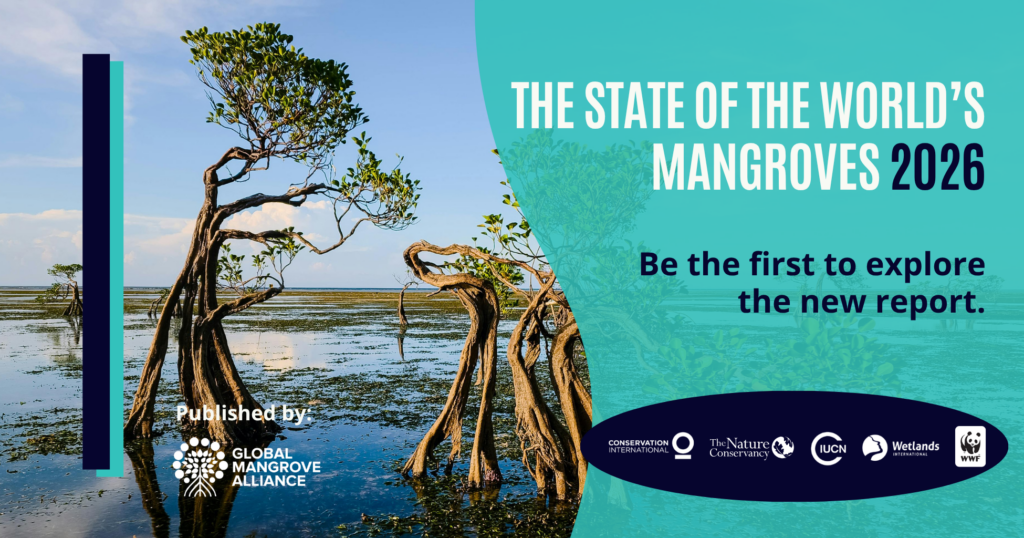
The findings are detailed in The State of the World’s Mangroves 2026, a comprehensive assessment grounded in the latest scientific methodologies and contributions from over 190 government bodies, academic researchers, community leaders, and practitioners across 30 countries. While the report offers a powerful narrative of hope and cooperative success, environmental scientists and policy experts emphasize that net gains do not signal the conclusion of conservation work. Rather, they mark a transition into a more sophisticated phase of global environmental management.
Decades of Decline Followed by a Modern Reversal
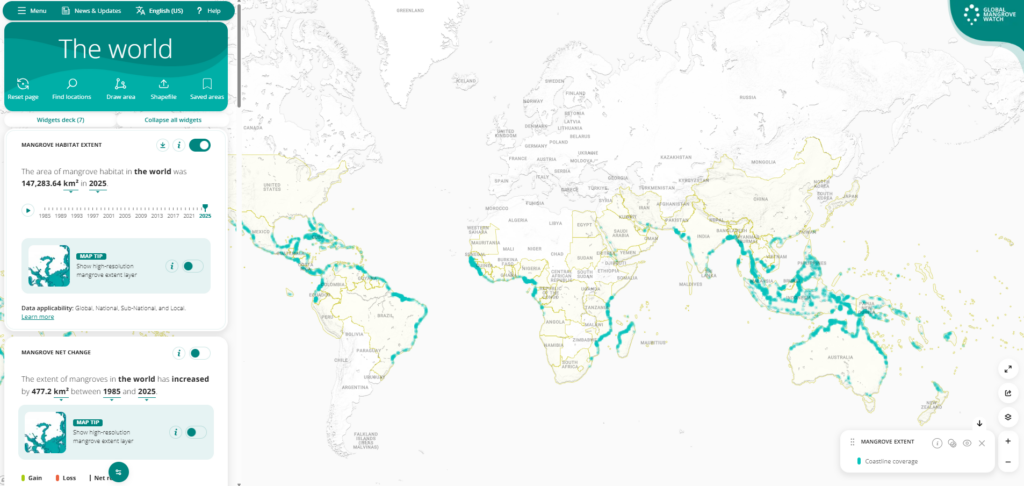
To understand the magnitude of the 2026 findings, experts look back at a four-decade timeline of satellite observation and ecological monitoring. Advanced mapping technology, spearheaded by Global Mangrove Watch version 4.1 in conjunction with studies published in Science Magazine, has tracked mangrove coverage continuously from 1985 to 2025.
For the first thirty years of this observation window, the overarching narrative was one of continuous loss. Driven by coastal development, aquaculture expansion, and timber harvesting, ancient mangrove forests vanished at an alarming rate across Southeast Asia, West Africa, and Latin America. However, around 2016, a critical inflection point occurred. The rate of destruction steadily slowed, ultimately reversing into a trend of net global gains over the past decade.
Despite this positive trajectory, scientists caution against viewing net gains as a direct ecological replacement for historical losses. Approximately 65 percent of new mangrove growth is occurring in areas where these trees have not previously grown. In many cases, these young ecosystems are colonizing fresh sediment deposited in coastal waters as a consequence of severe deforestation and soil erosion occurring miles inland. Consequently, while total area metrics are rising, the ecological value of these nascent forests differs significantly from the mature, multi-layered old-growth ecosystems that were lost over the past century. Experts note that it will take decades for these new forests to accumulate the complex biodiversity habitats, extensive root systems, and massive carbon-storage capacities characteristic of mature mangrove forests.
The Power of Collaborative Action Through the Global Mangrove Alliance
The reversal of the global mangrove trend is largely attributed to unprecedented levels of international cooperation. Organizations such as the Global Mangrove Alliance (GMA)—a coalition of over 100 member organizations including The Nature Conservancy, Conservation International, the International Union for Conservation of Nature (IUCN), Wetlands International, and WWF—have coordinated multi-sector strategies to stem the tide of degradation.
The 17 National Chapters of the GMA have emerged as structural blueprints for effective environmental governance. By bridging the gap between national policy frameworks and regional grassroots operations, these chapters facilitate the exchange of knowledge across borders and disciplines.
"As countries move from ambition to action on mangrove conservation and restoration, translating climate and biodiversity targets into effective national policies, investment pathways, technical capacity, measurable results, and local leadership is essential," stated Susanna Tol, Global Policy Officer for Deltas and Coasts at Wetlands International. Tol emphasized that the National Chapters are instrumental in turning international commitments into practical, localized execution.
Pieter van Eijk, Programme Head for Deltas and Coasts at Wetlands International, echoed this sentiment regarding the grassroots network. "Over the years, we built a community of thousands of people who work tirelessly to conserve and restore our mangroves," van Eijk noted. "This report provides an overview of their work and describes why it is so vital to scale up action for mangroves together."

Technological Innovation and Mapping Surveillance
The precision of modern conservation strategies relies heavily on remote sensing capabilities. The deployment of Global Mangrove Watch v4.1 has revolutionized how researchers and local authorities monitor coastlines.
"The unprecedented accuracy of the upgraded Global Mangrove Watch is transforming our understanding of mangroves at global and local levels—and revolutionizing our ability to protect and restore them," explained Lammert Hilarides, Global Mangrove Watch Programme Lead at Wetlands International. "With its unmatched data and unique alert system, this world-leading tool is now even more powerful, enabling relevant authorities, communities, and conservationists to plan mangrove activities more effectively and to react to illegal clearing as it happens—even in remote areas beyond the reach of routine surveillance."
This real-time visibility is vital because localized threats to mature forests remain pervasive. While overall numbers show improvement, specific regions continue to experience severe degradation driven by distinct socioeconomic and industrial pressures.
Persistent Threats to Mature Ecosystems
The 2026 report documents clear instances of ongoing mangrove loss, highlighting the diverse pressures facing coastal regions. In parts of Guinea, India, Bahrain, and Bali, direct land clearance for urban expansion poses a continuous threat. In Senegal, illegal cutting and unsustainable aquaculture practices are eroding local forest covers. Industrial activities have also left heavy footprints; ill-planned mining operations in Mozambique have effectively severed mangroves from their tidal ocean supply, while oil pollution continues to plague ecosystems in the Niger Delta of Nigeria.
Furthermore, insidious climate pressures compound these direct human impacts. While sea-level rise rarely destroys a mangrove forest on its own, it acts as a critical stress multiplier when combined with upstream hydrological disruptions, dam construction, and land subsidence. Without adequate sediment supply and natural space to migrate inland, trapped mangroves face existential risks.
Regional Case Studies and the 2030 Horizon
As the international community reaches the halfway point toward the Global Mangrove Alliance’s ambitious 2030 goals—which aim to halt further loss, double the area under effective protection, and restore half of all lost mangroves—regional case studies offer practical templates for success.
The 2026 report details community-led restoration initiatives across diverse geographies, including Ghana, Brazil, Mexico, Qatar, Tanzania, and the Philippines. These initiatives demonstrate that sustainable conservation cannot be imposed from the top down; it requires active stewardship, economic incentives, and traditional ecological knowledge from the communities that reside directly alongside these coastal forests.
Implications for Climate Policy and Economic Resilience
The release of The State of the World’s Mangroves 2026 arrives at a crucial juncture for global climate negotiations and biodiversity frameworks. As governments prepare to update their Nationally Determined Contributions (NDCs) under the Paris Agreement, the data underscores the cost-effectiveness of nature-based solutions.
Protecting and restoring blue carbon ecosystems like mangroves offers a dual benefit: it aggressively removes carbon dioxide from the atmosphere while simultaneously shielding vulnerable coastal populations from storm surges and rising sea levels. Economists point out that investing in mangrove rehabilitation is often exponentially cheaper than building and maintaining hard coastal infrastructure such as sea walls and dikes.
Ultimately, the 2026 report delivers a dual message of scientific validation and urgent caution. The turning tide proves that coordinated human intervention can successfully alter the fate of major global ecosystems. However, the ongoing destruction of old-growth forests demands immediate, targeted policy interventions to safeguard the mature carbon sinks and biodiversity hotspots that young forests will take decades to replicate. If nations can successfully pair high-tech monitoring with robust local community leadership, the global trajectory established over the past decade can serve as a foundation for a resilient, coastally secure future.
