
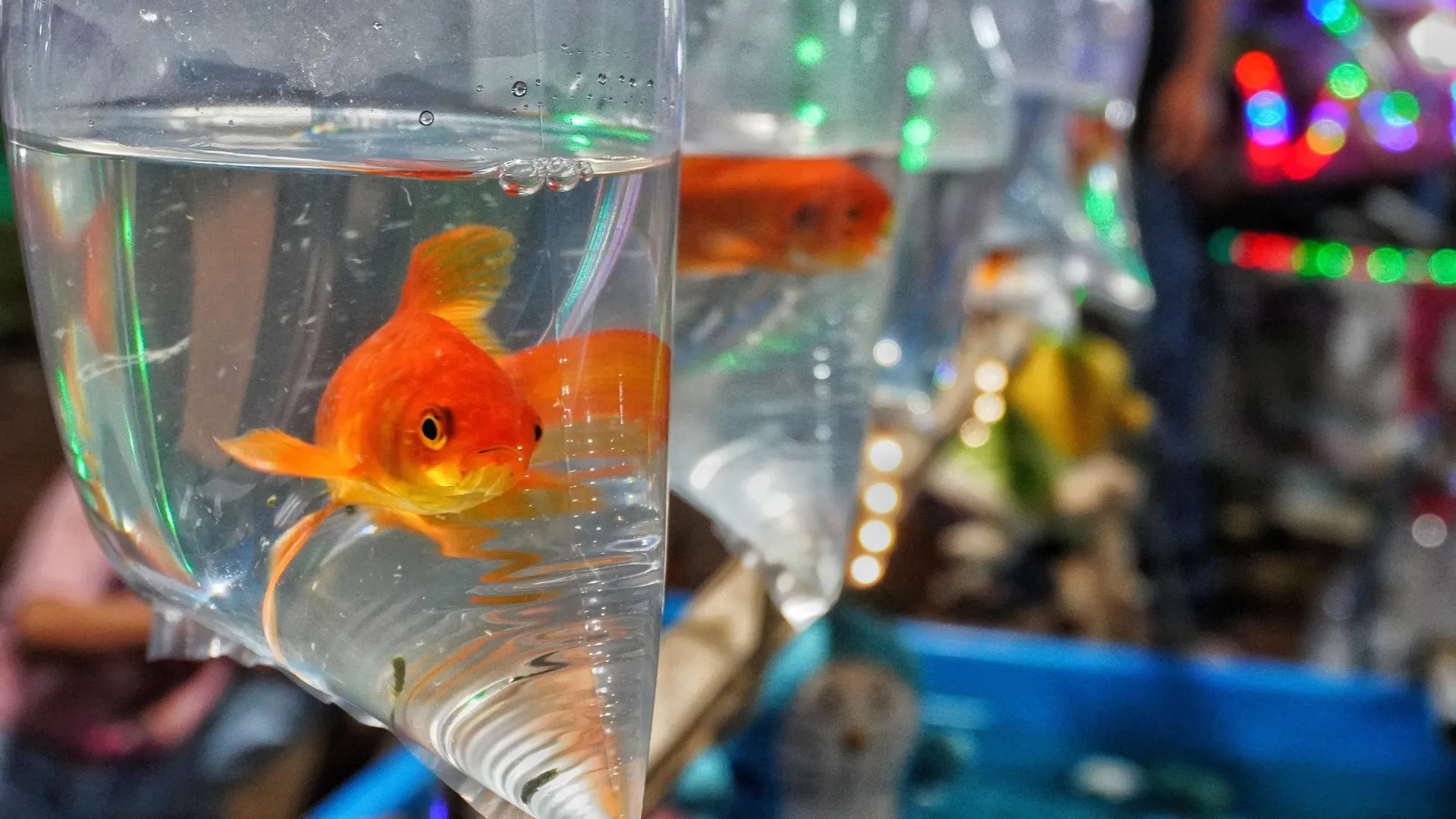
The humble goldfish, a ubiquitous fixture in domestic households and a starter pet for generations of children, harbors a surprisingly destructive ecological potential once introduced to the wild. According to a comprehensive peer-reviewed study recently published in the Journal of Animal Ecology, researchers from The University of Toledo and the University of Missouri have provided some of the most definitive experimental evidence to date that released or escaped goldfish can trigger catastrophic ecological shifts in freshwater environments. The findings present an urgent wake-up call to pet owners, conservationists, natural resource managers, and wildlife policymakers worldwide, challenging the long-held public perception that releasing an unwanted pet into a local pond or lake is a humane act of liberation.
Main Facts and Experimental Framework
The research, formally titled "Invasive goldfish trigger a regime shift in experimental lake ecosystems of varying trophic state," was spearheaded by Dr. William Hintz, an associate professor in the Department of Environmental Sciences and Lake Erie Center at The University of Toledo, alongside co-authors Hannah Barrett and Dr. Rick Relyea, a professor at the University of Missouri College of Agriculture, Food and Natural Resources and director of Mizzou’s Johnny Morris Institute of Fisheries, Wetlands and Aquatic Systems.
To evaluate the exact ecological fallout of introducing goldfish (Carassius auratus) into wild systems, the research team bypassed traditional observational field studies—which can often be clouded by confounding variables—and instead utilized large outdoor freshwater mesocosms. These massive, controlled experimental tanks were meticulously engineered to mimic the complex physical, chemical, and biological conditions of real-world lakes. By manipulating these environments, the scientists could isolate the specific impacts of goldfish from broader ecological fluctuations.
The experiment was strategically designed to test how goldfish interact with two distinct freshwater conditions: oligotrophic waters, which are characteristically nutrient-poor and clear, and eutrophic waters, which are nutrient-rich and often plagued by dense algal growth. Through a rigorous combination of additive and substitutive experimental designs, the researchers were able to definitively separate the baseline effects of general fish abundance from the specific, disproportionate damage inflicted directly by goldfish.
The analysis revealed an alarming conclusion: while some minor aquatic changes could be attributed to overall fish density, the most severe, systemic environmental degradation was directly tied to the presence of goldfish. In both nutrient-poor and nutrient-rich experimental lakes, the introduction of these resilient cyprinids initiated profound disruptions across multiple trophic levels, altering water quality, decimating invertebrate populations, stimulating filamentous algae growth, and negatively impacting the physical condition of native fish species.
The Chronology and Path of a Global Inundation
The global proliferation of goldfish as an invasive species is not a sudden modern phenomenon, but rather the cumulative result of centuries of selective breeding, international trade, and lax pet disposal practices. Originally native to East Asia, where they were domesticated from wild carp species over a thousand years ago, Carassius auratus has since become one of the most widely distributed ornamental fish on the planet. The international pet trade moves millions of aquatic organisms across continents annually, feeding a massive consumer demand that rarely comes with adequate consumer education regarding the end-of-life management of these animals.
Historically, the environmental dangers posed by goldfish were largely underestimated by the general public. For decades, natural resource agencies received sporadic reports of oversized goldfish caught in local waterways, but these incidents were frequently dismissed as isolated anomalies rather than systemic ecological threats. However, as urbanization encroached upon natural water bodies and climate change increased water temperatures, instances of surviving pet goldfish establishing self-sustaining, feral populations began to multiply exponentially.
In recent years, conservation biologists in North America, Europe, and Australia have documented alarming population explosions of feral goldfish in urban and suburban stormwater ponds, rivers, and interconnected lake systems. Notable incidents in regions such as Lake Tahoe, western Canada, and various Midwestern states highlighted fish growing to sizes comparable to dinner plates—weighing several pounds—vastly outgrowing their bowl-sized domestic reputations. These real-world observations served as the primary catalyst for the controlled mesocosm experiments conducted by the Toledo and Missouri research teams, bridging the gap between anecdotal field reports and hard scientific validation.
Mechanisms of Destruction: Why Goldfish Are Formidable Pests
Understanding why a domestic goldfish can transform into an ecological tyrant requires examining the species’ unique physiological adaptations and behavioral traits. Unlike many fragile aquarium species that struggle to survive outside temperature-controlled glass tanks, goldfish belong to the carp family, making them exceptionally hardy, adaptable, and resilient in harsh environmental conditions.
When an unwanted goldfish is dumped into a natural waterway, it does not gently fade into the local food web. Instead, it encounters an abundance of space and resources that can trigger rapid, exponential growth. "If goldfish are released into the wild, they rapidly grow into very large fish that stir up lake sediments, consume large numbers of prey and compete with native fish," explained Dr. Rick Relyea.
This benthic-feeding behavior—rooting around in the mud and sediment at the bottom of lakes and ponds—has cascading negative effects on the entire ecosystem. As goldfish forage for macroinvertebrates and plant matter, they continuously resuspend bottom sediments into the water column. This chronic bioturbation increases water turbidity, blocking sunlight from reaching submerged native aquatic plants. Consequently, native vegetation dies off, destroying critical spawning habitats and structural refuges for native fish and amphibians.
Furthermore, the suspended sediments release buried nutrients like phosphorus back into the water, frequently triggering massive, toxic algal blooms that choke out oxygen and degrade overall water quality. Compounding these physical disruptions, goldfish are prolific, opportunistic omnivores. They consume immense quantities of zooplankton, insect larvae, and organic detritus, directly starving native fish species of their primary food sources. Because they can tolerate low dissolved oxygen levels and extreme water temperature fluctuations that would kill sensitive native species, goldfish consistently outcompete local fauna, driving down regional biodiversity.
The Science of the "Regime Shift"
One of the most critical and alarming takeaways from the University of Toledo and University of Missouri study is the documentation of a "regime shift" triggered by invasive goldfish. In ecological terms, a regime shift occurs when an ecosystem is subjected to persistent stress, crossing a critical tipping point where it abruptly reorganizes from one stable state into a fundamentally different, and typically degraded, condition.
In the context of the experimental lakes, the introduction of goldfish pushed the aquatic environments past their ecological thresholds. Once a lake undergoes a regime shift—such as transitioning from a clear, plant-dominated state to a turbid, algae-dominated state—it loses its internal resilience. Natural recovery becomes virtually impossible without aggressive, highly expensive human intervention.
Restoring a degraded water body after a goldfish invasion requires labor-intensive mitigation strategies, including large-scale chemical treatments (such as piscicides like rotenone), complete draining of ponds, physical netting, and years of native species reintroduction and habitat reconstruction. For municipal governments and conservation authorities already facing tight budgetary constraints, managing invasive goldfish populations represents an immense, recurring financial burden.
Official Responses, Expert Warnings, and Stakeholder Reactions
The publication of the study has reverberated through environmental agencies, animal welfare organizations, and scientific communities across North America. Natural resource managers have long struggled with public outreach regarding invasive species, often finding themselves combating deeply ingrained cultural attitudes that view animal abandonment as an act of mercy.
Dr. William Hintz emphasized the urgency of shifting public perception through direct, unambiguous communication. "It is critically important to inform the public that their pets can become pests that will harm freshwater ecosystems. The evidence is now clear—releasing a goldfish into the wild might be seen as an act of kindness, but it can turn into a major ecological threat," Dr. Hintz stated.
Environmental protection agencies and departments of natural resources have increasingly categorized goldfish alongside other high-profile aquatic invasive species, such as zebra mussels, Asian carp, and round gobies. While these other species often receive substantial regulatory attention, goldfish have historically slipped through the cracks of public awareness due to their benign domestic image. Wildlife officials are now calling for a paradigm shift in how pet stores, aquarists, and municipal leaders approach the life cycle of ornamental fish.
The Call for Prevention, Education, and Humane Alternatives
In light of the empirical data generated by the study, the research team and allied conservationists have outlined a clear, multi-pronged approach to mitigating the goldfish invasion crisis. The primary emphasis must be placed on prevention, early detection, and rapid response before small-scale releases compound into established feral populations.
First and foremost, industry stakeholders and pet trade retailers bear a renewed responsibility to educate consumers at the point of sale. Many novice pet owners purchase goldfish without realizing that a common feeder or fancy goldfish can live for decades and grow significantly larger than its initial retail size, quickly outgrowing standard household aquariums. When owners find themselves unprepared for the space, time, and financial commitments required to properly house a mature fish, they frequently resort to illegal and environmentally damaging disposal methods.
To combat this, the researchers strongly advocate for robust public education campaigns that explicitly outline the legal and ecological consequences of releasing aquarium animals into local waterways. Furthermore, clear guidance on ethical alternatives must be widely disseminated. Pet owners who can no longer care for their goldfish are urged to pursue responsible relinquishment strategies:
- Returning the animal to a local pet store or aquarium shop for store credit or adoption.
- Reaching out to local aquarium societies, hobbyist clubs, or community networks to find another willing pet owner.
- Donating healthy fish to educational institutions, therapeutic care facilities, or public display aquariums.
- Consulting with local wildlife management authorities or state departments of natural resources for guidance on humane euthanasia options if the fish is sick or if rehoming proves impossible.
Broader Environmental Implications and Future Policy Directions
The implications of the Toledo-Missouri study extend far beyond the immediate management of freshwater lakes and ponds; they speak directly to the broader global crisis of biological invasions driven by the pet trade and commercial globalization. As international trade networks continue to facilitate the movement of flora and fauna across natural biogeographic boundaries, the baseline resilience of native ecosystems is placed under unprecedented strain.
Policymakers and environmental lawmakers are increasingly examining regulatory frameworks to tighten oversight on the importation and sale of potentially invasive ornamental species. Some jurisdictions have begun exploring mandatory consumer disclosures, restricted species lists, and heavier fines for the illegal release of non-native animals into public waterways. However, legislation alone cannot solve the crisis; enforcement is exceptionally difficult when individuals can release a fish into a secluded neighborhood pond with virtually zero oversight.
Consequently, scientific consensus strongly points toward community-level engagement and continuous public scientific literacy as the most effective long-term defenses. By dismantling the misconception that goldfish are harmless domestic trinkets and reframing them as potent ecological disruptors, conservationists hope to curb the initial wave of pet releases at the source.
As researchers continue to monitor the long-term trajectories of urban and rural water bodies impacted by feral fish populations, studies like the one published in the Journal of Animal Ecology provide the foundational data necessary to justify aggressive conservation interventions. The message from the scientific community is unequivocal: protecting freshwater biodiversity requires collective vigilance, starting inside the living room and extending all the way to the edges of our most treasured natural lakes and rivers.
