
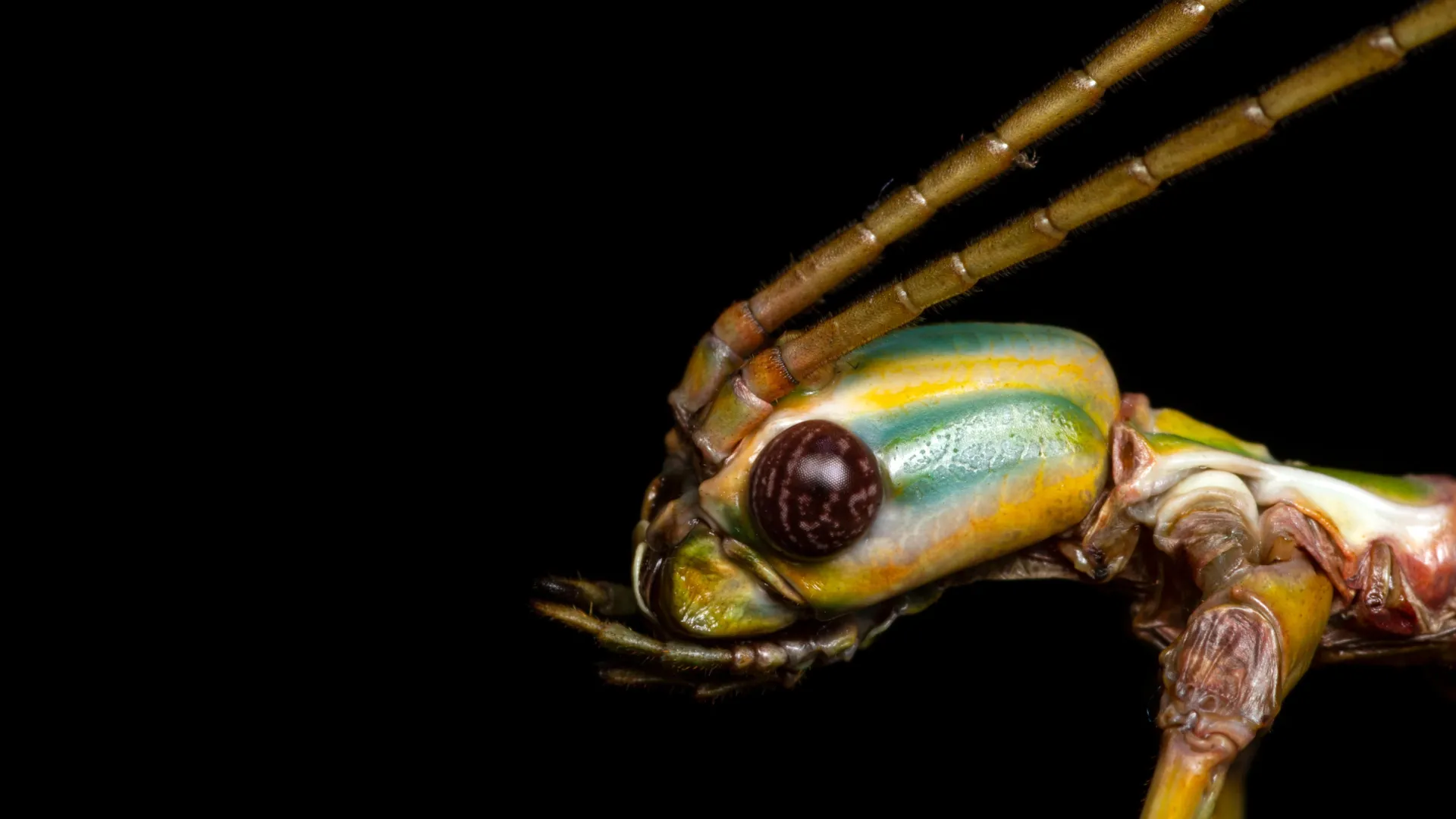
In a striking reminder of how much of the natural world remains scientifically undocumented, researchers at the University of Sydney have identified two previously unrecognized species of large stick insects in Australia, while simultaneously restoring a third species that had gone unrecognized by the scientific community for decades. Published in the peer-reviewed journal Austral Entomology, the findings fundamentally reshape the taxonomic understanding of the genus Anchiale, expanding a group previously thought to comprise just two species into a complex of five distinct lineages.
The breakthrough highlights a paradox in modern ecology: even as advanced genetic tools and citizen science platforms generate unprecedented volumes of data, profound biodiversity discoveries continue to be made in environments that have been studied, photographed, and traversed by humans for generations. The newly expanded classification spans a vast geographical arc, stretching from northern New South Wales, across coastal Queensland, and deep into the tropical ecosystems of northern Australia.
Taxonomic Detective Work and the Integration of Modern Science
The research initiative, spearheaded by Dr. Braxton Jones—a postdoctoral research associate in the Molecular Ecology, Evolution and Phylogenomics Laboratory and lead author of the study at the Aola Richards Sydney Insect Hub—relied on a multi-pronged methodological approach. Taxonomy, often likened to forensic detective work, required the research team to synthesize traditional morphology with cutting-edge genetic analysis.
To untangle the evolutionary relationships within Anchiale, the scientists examined physical museum specimens collected over generations, conducted extensive field surveys across eastern Australia, analyzed data from insects raised in captivity, and integrated thousands of community-contributed observations. Despite more than 1,000 citizen science records being submitted through digital repositories such as iNaturalist and the Atlas of Living Australia, these large, often conspicuous insects successfully concealed their true diversity from formal science until now.
By deploying DNA sequencing alongside physical examinations, the research team demonstrated that insects previously lumped together under broad taxonomic titles actually represented isolated, distinct evolutionary lineages. This integration of molecular phylogenetics with historical collections has become a gold standard in modern biosystematics, allowing researchers to correct historical misclassifications that persisted for half a century or more.
Unveiling Anchiale mabiensis and the Mystery of the Lidded Egg
Among the most significant discoveries of the project is the formal description of Anchiale mabiensis, a novel stick insect species native to the critically endangered Mabi rainforest situated on the Atherton Tablelands of tropical Queensland. The Mabi rainforest is an ecologically fragile ecosystem, having been heavily fragmented by historical land clearing. Finding a previously unknown, endemic insect species within such a heavily studied and threatened landscape underscores the urgent need for rigorous biological surveys before habitat loss outpaces scientific discovery.
Anchiale mabiensis presents a uniquely fascinating biological trait that immediately distinguished it from its regional counterparts: its eggs feature a distinct, structural lidlike mechanism. According to the research team, this specialized lid morphology has never been documented previously in any other stick insect species, nor within their closest phylogenetic relatives. While the evolutionary pressures and functional purpose of this lidded structure remain under investigation, entomologists suggest it may offer specialized protection against environmental desiccation, parasitoids, or fungal pathogens unique to the microclimate of the Atherton Tablelands leaf litter.
Alongside the description of A. mabiensis, the researchers identified a second entirely new species, and turned their attention to resolving historical taxonomic errors. One of the study’s most profound revelations involved a large stick insect that had been familiar to both professional entomologists and amateur insect hobbyists for generations. Through rigorous comparative DNA analysis and specimen review, the researchers proved that this familiar insect had been misidentified for decades. It has now been formally reclassified and recognized as a separate, valid species: Anchiale robusta.
Chronology of the Genus Revision
To understand the magnitude of the current revision, it is helpful to trace the taxonomic history of the genus Anchiale. For many years, Australian entomology recognized only a minimal number of species within this group, assuming that widespread geographic distribution equated to uniform, single species populations.
In recent years, the proliferation of digital biodiversity monitoring platforms transformed the baseline data available to researchers. Thousands of high-resolution photographs, accompanied by precise GPS coordinates uploaded by naturalists and hikers, flagged morphological variations and behavioral traits that did not neatly align with legacy taxonomic keys.
Recognizing these discrepancies, the University of Sydney research team initiated a comprehensive review of Australian Anchiale members. Over a multi-year period, the team gathered tissue samples from contemporary wild populations, sequenced their mitochondrial and nuclear DNA, cross-referenced these genetic markers with historical type specimens housed in national and international museums, and evaluated captive-bred lineages to observe life-cycle variations.
The culmination of this timeline was the realization that the genus Anchiale in Australia does not consist of two species, but rather five. Furthermore, the researchers have already flagged a potential sixth species from Cape York Peninsula. However, adhering to rigorous scientific standards, the team noted that additional specimens and comprehensive genetic material are required before formally describing the Cape York lineage, demonstrating the cautious and methodical pace of taxonomic validation.
Implications for Forestry, Agriculture, and Pest Management
Beyond the fundamental importance of mapping Earth’s biodiversity, the reclassification of the Anchiale genus carries direct practical implications for forestry, agriculture, and land management.
Historically, certain large Australian stick insects have occasionally experienced population booms—reaching plague-like densities—during which they strip the foliage from trees across wide swaths of native forest and managed timber plantations. Management strategies designed to mitigate these outbreaks rely heavily on accurate species identification. Because the recent study revealed that what was once considered a single plague-prone species actually encompasses multiple distinct entities with potentially divergent life histories, host-plant preferences, and geographic boundaries, land managers can now refine their monitoring protocols.
Understanding the specific ecological niches and physiological tolerances of individual species, such as A. robusta versus A. mabiensis, allows agricultural authorities and forestry departments to predict outbreak risks more accurately and deploy targeted, ecologically sensitive management strategies rather than broad, generalized interventions.
The Broader Crisis of Undocumented Biodiversity
The timing of this discovery aligns with a growing sense of urgency within the global scientific community regarding the twin crises of habitat destruction and species extinction. Australia is globally recognized as a megadiverse continent, housing thousands of endemic plants and animals found nowhere else on Earth. Yet, a vast proportion of this invertebrate fauna remains formally undescribed by science—a phenomenon colloquially known by biologists as the "taxonomic impediment."
Dr. Jones emphasized that the discovery of Anchiale mabiensis in the imperiled Mabi rainforest serves as a stark warning. As native vegetation continues to face pressures from agricultural expansion, urban development, and the escalating impacts of climate change, entire ecosystems risk disappearing before science has even cataloged their resident species.
"These findings demonstrate the importance of protecting threatened ecosystems and documenting Australia’s extraordinary biodiversity before we lose species without us having even discovered them," Dr. Jones stated.
The research also highlights the vital role of funding bodies in supporting foundational science. The project was made possible through financial backing from the Australian Biological Resources Study—administered via the National Taxonomy Research Grant of the Commonwealth Department of Climate Change, Energy, the Environment and Water—alongside a dedicated postgraduate scholarship provided by the Commonwealth Scientific and Industrial Research Organisation (CSIRO).
As taxonomists continue to pore over museum drawers and sequence the DNA of overlooked regional specimens, the research serves as a powerful reminder that the natural world still harbors astonishing secrets. Whether hidden in the canopies of endangered tropical rainforests or masquerading in plain sight as familiar backyard insects, Australia’s invertebrate fauna continues to challenge, surprise, and expand human knowledge.
