
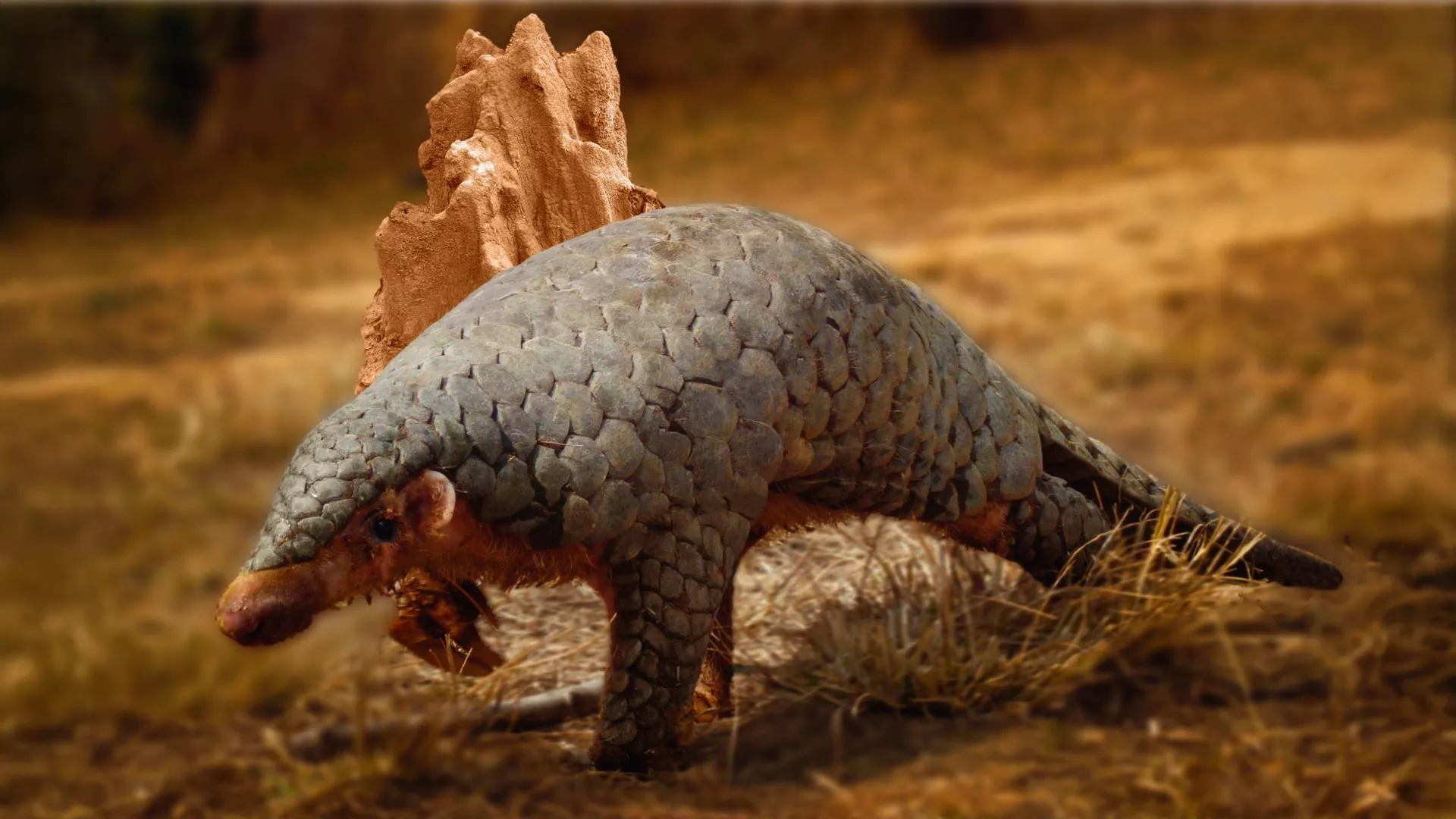
With their prehistoric appearance, elongated snouts, and overlapping keratin scales resembling giant pinecones, pangolins are among the most visually distinct mammals on Earth. Found exclusively across the tropical and subtropical regions of Africa and Asia, these solitary, nocturnal insectivores have roamed the planet for tens of millions of years. Today, however, their survival hangs in the balance. Despite their deep evolutionary roots and vital ecological roles—such as regulating ant and termite populations—pangolins face unprecedented threats from human activity. They are widely recognized as the most heavily trafficked mammals in the world, driven to the brink of extinction primarily by an illicit global trade fueled by demand for their scales in traditional medicine and their meat as a luxury delicacy.
Compounding this crisis is a historical lack of scientific clarity regarding their taxonomy. Conservation efforts have long been hampered by a fundamental question: how many distinct pangolin species actually exist, and where do their geographic boundaries lie? Without precise taxonomic definitions, law enforcement agencies and conservationists have struggled to accurately monitor populations or trace the origins of confiscated contraband.
Now, an international team of researchers has announced a major breakthrough that promises to reshape global conservation strategies. By combining cutting-edge paleogenomics with decades of ecological fieldwork and archival research, scientists have confirmed the existence of a distinct Asian pangolin species living in the rugged terrain of Nepal and Northern India. Designated scientifically as Manis aurita, this newly validated Himalayan native provides a critical missing link in the pangolin family tree and offers a potent new tool for wildlife forensics and anti-trafficking operations.
Untangling a Complex Taxonomic Puzzle
The path to identifying Manis aurita was neither straightforward nor swift. The research, published in the peer-reviewed journal Communications Biology, represents the culmination of more than five years of intensive investigation. The journey began in Nepal, where field researchers documented anomalies suggesting that the pangolins inhabiting the Himalayan foothills possessed distinct evolutionary and morphological traits that set them apart from known populations in China.
This discovery arrived against a backdrop of ongoing revisions within the pangolin taxonomy. In 2025, a separate research initiative demonstrated that animals historically grouped under the catch-all category of the "Chinese pangolin" (Manis pentadactyla) actually encompassed two distinct evolutionary lineages. While one group was confirmed to inhabit regions primarily within China, the other was identified across the Himalayan foothills spanning parts of Nepal, India, Bhutan, and Myanmar. Initially, the researchers of that 2025 study proposed the name Manis indoburmanica, or the Indo-Burmese pangolin, for this mountain-dwelling population.
However, formal zoological nomenclature operates under strict international codes governed by the principle of priority. When a single biological entity has been formally described and named multiple times throughout history, the earliest validly published name takes precedence. As an international consortium of scientists—including researchers from the Field Museum, Guangzhou University, the Nepal Engineering College, and the Guangdong Academy of Forestry—dug deeper into archival records, they encountered a forgotten designation: Manis aurita, a pangolin species originally described in 1836. Over subsequent decades, this historical taxon had been demoted and reclassified merely as a subspecies of the Chinese pangolin.
This historical oversight sparked a critical scientific riddle. Scientists needed to determine the exact evolutionary relationship between the newly proposed indoburmanica lineage and the long-dormant aurita designation. Were they fundamentally the same biological entity, and if so, what nomenclature legally applied?
Unlocking History: DNA from 1836
Resolving the taxonomic dilemma required technology capable of peering back nearly two centuries. The definitive breakthrough came from the Natural History Museum in London, where curators and geneticists successfully extracted and sequenced ancient DNA directly from a historical type specimen—a preserved pangolin collected in Nepal in 1836.
By comparing the genetic profile of this 190-year-old museum specimen with modern genetic samples gathered from Himalayan pangolin populations, the research team reached an inescapable conclusion. The modern Himalayan pangolin samples matched the genetic signature of the historical aurita specimen. Furthermore, the animals previously classified as Manis indoburmanica in 2025 were, in fact, members of the exact same species originally cataloged by Victorian-era naturalists as Manis aurita.
Under the rules of zoological nomenclature, the senior synonym takes precedence, formally restoring Manis aurita as the valid scientific name for the Himalayan pangolin.
"This taxonomic clarification provides a crucial scientific basis for combating illegal poaching and lays the groundwork for protecting this cryptic endangered species," noted Yan Hua, a co-corresponding author of the study and researcher at the Guangdong Academy of Forestry.
Morphologically and ecologically, Manis aurita stands apart from its lowland relative, the Chinese pangolin. According to Anderson Feijó, the Negaunee Assistant Curator of Mammals at the Field Museum and co-corresponding author of the study, the Himalayan pangolin features a noticeably larger overall body mass, an extended tail structure, and distinctively smaller external ears. Ironically, the specific epithet aurita—derived from Latin roots—was originally chosen by early naturalists to highlight features of the animal’s ear structure, a detail validated by modern comparative anatomy. Furthermore, the geographic ranges of the Chinese pangolin and Manis aurita are strictly allopatric, meaning their natural habitats do not overlap, providing clear geographic boundaries essential for targeted conservation planning.
A New Forensic Weapon Against Wildlife Trafficking
The implications of this taxonomic validation extend far beyond academic debates over nomenclature; they provide an immediate, practical upgrade to global wildlife enforcement. Pangolins are hunted relentlessly to supply black-market demand, driven largely by the unproven belief in traditional medicine systems that their keratin scales possess medicinal properties or act as aphrodisiacs.
Law enforcement agencies battling this illicit trade face severe logistical hurdles. Unlike ivory or rhino horn, which often retain recognizable physical characteristics, illegal pangolin shipments are typically intercepted in the form of massive sacks of loose, dried scales stripped from the animals.
"In the marketplaces, you basically only find pangolin scales, not the whole animals, which makes it hard to know which species are being hunted and where they are coming from," explains Feijó.
By mapping the precise genetic signatures and geographic boundaries of Manis aurita versus other Asian pangolin species, scientists have established a forensic baseline. Wildlife investigators can now analyze DNA extracted from confiscated scale shipments, accurately determine the specific species involved, and trace the material back to its geographic origin. This allows enforcement agencies to transition from reactive border seizures to proactive interdiction, targeting the specific regions and poaching networks driving the slaughter.
Moreover, a precise understanding of species boundaries is vital for captive breeding and reintroduction initiatives. In the past, well-intentioned conservationists risked ecological mismatches—such as releasing Chinese pangolins into Himalayan ecosystems where they did not naturally occur—due to a lack of taxonomic clarity. Defining the exact limits of each species’ native range ensures that future rewilding programs deploy the correct animals to the correct environments, maximizing their chances of survival.
The Indispensable Value of Museum Archives
The successful resolution of the pangolin family tree underscores a broader truth about modern conservation biology: natural history museums are not merely passive repositories of the past, but active archives of frontline data.
Because wild pangolins are exceptionally elusive, nocturnal, and heavily depleted across their natural ranges, gathering comprehensive, fresh field samples from every corner of their distribution is nearly impossible. By tapping into historical collections housed in institutions worldwide—such as the Natural History Museum in London and the Field Museum—researchers gained access to genetic material spanning centuries and geographic areas that can no longer be easily sampled today.
"Using museum collections allows us to have access to more individuals across the species’ range," emphasizes Feijó. "If you only rely on fresh material, since the animals are so rare to find in the wild, this greatly limits the information that you can gather. We used collections to have a more complete sampling of the species. It’s a big advantage to have this resource available as a repository of material that we can look back and keep learning from."
As conservationists race against the clock to protect the world’s remaining pangolin populations, the resurrection of Manis aurita serves as a powerful reminder of science’s capacity to correct past oversights. Backed by 190-year-old museum specimens and state-of-the-art genomics, humanity now possesses a sharper lens through which to view—and ultimately defend—one of the planet’s most vulnerable and enigmatic mammals.
