
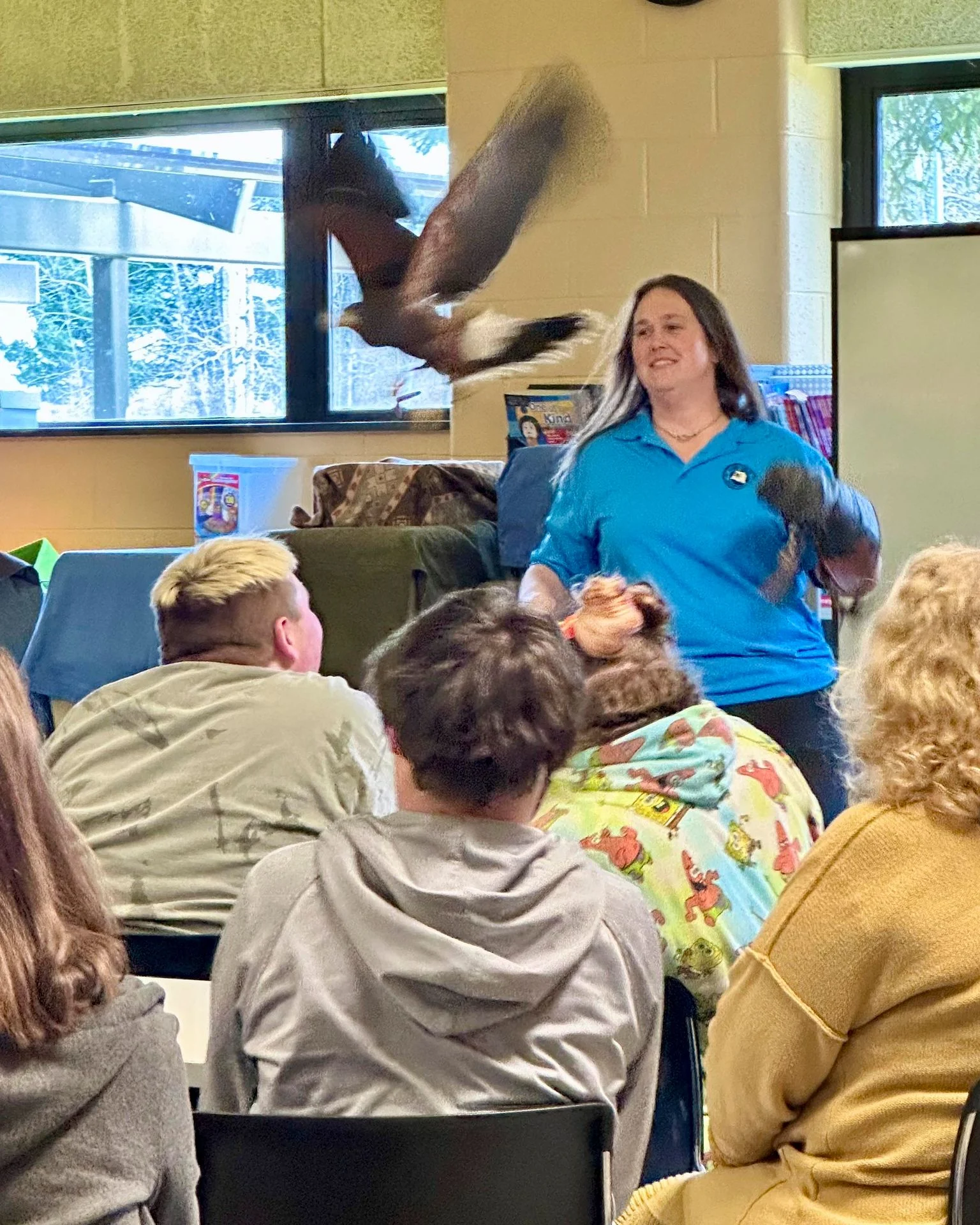
The Hewes Educational Center recently transformed into a living laboratory as the Hawk Creek Wildlife Center arrived to deliver an immersive, hands-on educational experience. By bridging the gap between textbook biology and the reality of the animal kingdom, the event provided students with a unique opportunity to interact with diverse species, ranging from majestic raptors to slithering reptiles. This visit is part of a broader, ongoing initiative by the Hawk Creek Wildlife Center to foster environmental stewardship and scientific literacy in the Western New York region, emphasizing the critical importance of biodiversity and ecosystem health.
The Objective of Experiential Wildlife Education
At the core of the Hawk Creek Wildlife Center’s mission is the belief that direct contact with wildlife—conducted ethically and safely—is a powerful catalyst for learning. Educational psychology research has long indicated that experiential learning, particularly when it involves living organisms, enhances memory retention and develops emotional empathy toward environmental issues.
For the students at Hewes, the visit was designed to move beyond traditional classroom instruction. Rather than merely viewing photographs or watching videos, students were able to witness the predatory instincts of raptors, the unique locomotive patterns of snakes, and the social behaviors of various mammals. This sensory engagement is essential for helping younger generations understand that animals are not static objects but complex individuals playing vital roles in their respective ecosystems.
A Chronology of the Interaction
The event unfolded through a meticulously planned presentation led by two expert wildlife naturalists. The session was structured to introduce species in a way that built upon the students’ foundational knowledge of biology.
The program began with a focus on local biodiversity, introducing students to species that can be found in their own backyards. The naturalists provided detailed briefings on the habitat requirements and dietary needs of each animal presented. As the program progressed, the complexity of the animals introduced increased, leading to the session’s climax.

One of the most significant moments occurred when a raptor was permitted to fly directly over the heads of the students. This maneuver, intended to demonstrate the silent, aerodynamic efficiency of birds of prey, left a lasting impression on those in attendance. The sheer scale and control of the bird served as a practical demonstration of evolutionary adaptation, illustrating how raptors have evolved to be apex hunters. The interactive nature of the demonstration allowed for a question-and-answer period, where students were encouraged to inquire about conservation status, environmental threats, and the daily care of the animals in the center’s charge.
Supporting Data on Wildlife Conservation Education
The work performed by the Hawk Creek Wildlife Center is situated within a larger, global context of wildlife conservation. According to the International Union for Conservation of Nature (IUCN), habitat loss and human-wildlife conflict remain two of the primary drivers of species decline. Programs that educate the public—specifically youth—about the realities of these threats are considered a frontline defense in conservation efforts.
Statistics from similar environmental education programs suggest that students who participate in interactive wildlife sessions are significantly more likely to pursue careers in STEM (Science, Technology, Engineering, and Mathematics) fields. Furthermore, these programs contribute to the "Nature Deficit Disorder" mitigation efforts, a term coined by Richard Louv to describe the negative consequences of children being separated from the natural world. By bringing the "wild" into the "school," organizations like Hawk Creek are instrumental in reversing this trend.
Official Perspective and Educational Impact
While the event was focused on student engagement, the underlying goals of the Hawk Creek Wildlife Center are deeply rooted in scientific advocacy. The center, which operates under stringent regulatory guidelines for the care of wildlife, ensures that every educational encounter serves a dual purpose: providing a high-quality educational experience for humans while ensuring the animal ambassadors are treated with the highest standards of welfare.
"Fostering compassion, saving species, and restoring balance" is more than a slogan for the organization; it is a framework for their outreach. By educating the youth at Hewes Educational Center, the center is essentially investing in future generations of voters, policymakers, and scientists who will be tasked with managing the planet’s resources. The naturalists involved emphasized that understanding an animal’s role in the food web is essential for grasping the concept of "balance"—a delicate state that, when disrupted by pollution or climate change, can lead to the collapse of local habitats.
Broader Implications for Regional Schools
The integration of wildlife presentations into the school curriculum has profound implications for regional educational policy. As schools face increasing pressure to standardize testing and focus on core academic subjects, the inclusion of elective, hands-on programs like those offered by Hawk Creek provides a necessary enrichment that keeps students engaged.

The implications of this visit extend beyond a single day of excitement. Educators at Hewes noted that such visits often lead to long-term classroom discussions about biology, geography, and environmental science. When a student observes the specific talons of a hawk or the texture of a snake’s scales, the abstract concepts of adaptation and survival become concrete. This, in turn, facilitates more sophisticated discussions about global challenges such as climate change, endangered species protection, and the legal frameworks that govern environmental protection.
Furthermore, these programs provide a professional development opportunity for teachers. Observing how wildlife experts translate complex biological data into accessible information for students allows teachers to refine their own pedagogical strategies for teaching science.
The Future of Wildlife Advocacy
As the Hawk Creek Wildlife Center continues its work, the model of "mobile education" remains a vital component of its operation. By traveling to schools, libraries, and community centers, the organization bypasses the logistical barriers that often prevent students from visiting wildlife refuges or zoos.
The success of the visit to Hewes Educational Center highlights the demand for such programs in the contemporary educational landscape. Looking forward, the center intends to expand its reach, incorporating new species and updated conservation data into its presentations to ensure that the information remains relevant to current ecological trends.
In an era where digital screens often mediate the experience of nature, the direct, unmediated encounter with a raptor or a reptile serves as a reminder of the fragility and beauty of the natural world. By the end of the session, the students at Hewes were not just observers; they were participants in a larger dialogue about the necessity of protecting the environment for the future. The partnership between the educational institution and the wildlife center stands as a testament to the power of collaborative learning and the enduring value of connecting youth with the wildlife that shares their world.
As society grapples with the complexities of ecological preservation, the lessons taught in that classroom—centered on compassion, science, and the restoration of balance—provide a blueprint for a more informed and environmentally conscious generation. The Hawk Creek Wildlife Center continues to prove that when you bring the wild into the classroom, you do more than just educate; you inspire the next generation to safeguard the future of the planet.
