
Human communication is a tapestry of thousands of languages and countless regional dialects, a complexity that often acts as a barrier to mutual understanding. Yet, when a person shouts in alarm or frantically waves their arms to signal an imminent threat, the message is frequently decoded instantly, regardless of the observer’s linguistic background. This phenomenon suggests that beneath the layers of learned vocabulary and grammatical structure, humans possess a primal, universal set of signals designed to convey danger. A landmark 2025 study involving a collaborative effort between Cornell University, the Doñana Biological Station in Seville, and other international research institutions has now revealed that a similar, potentially innate communication system exists within the avian world, allowing different species to share warning signals across vast geographical distances.
The Evolutionary Hypothesis of Interspecies Communication
Charles Darwin long theorized that communication among animals, particularly vocalizations used to alert others to danger, might be an innate trait that evolved over millions of years. While contemporary ornithology acknowledges that many bird species learn complex songs from their parents or neighboring cohorts, the 2025 research suggests that these learned vocalizations are layered upon a more primitive, hard-wired foundation. This "evolutionary bedrock" of communication allows birds that have never encountered one another—or perhaps never even shared a common ancestor in recent geological history—to recognize and react to specific alarm calls.
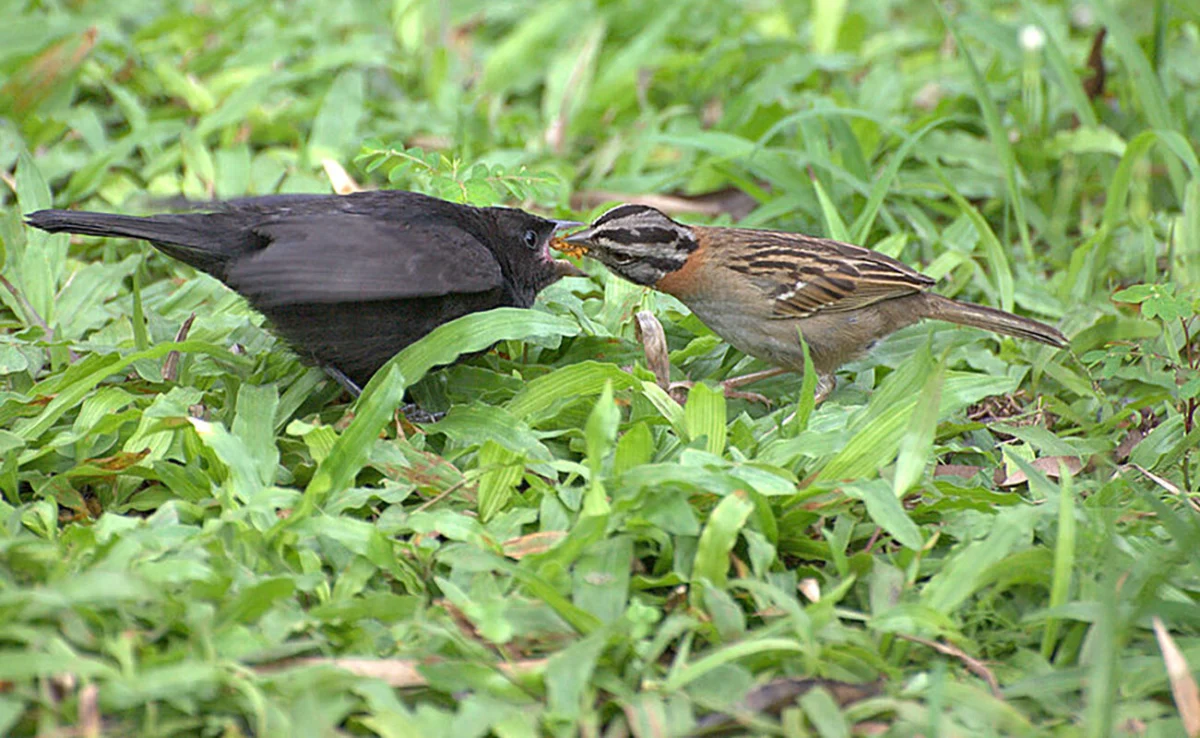
The study centered on the phenomenon of brood parasitism, a biological strategy that places immense evolutionary pressure on host species. Brood parasites, such as cowbirds or cuckoos, do not build their own nests or raise their own young. Instead, they deposit their eggs into the nests of unsuspecting "host" species. The host bird, often deceived, incubates the parasite’s egg as if it were its own. In many cases, the parasitic hatchling will systematically eject the host’s biological offspring from the nest, ensuring that the host’s resources are entirely diverted to the parasite. This brutal reproductive strategy creates a high-stakes environment where the ability to detect and warn of a parasite’s arrival is a matter of life and death for the host species’ lineage.
Chronology of the Research and Methodology
The investigation into these cross-species alarm calls spanned several years, requiring researchers to catalog vocalizations across 21 distinct bird species living on disparate continents. By observing these birds in their natural habitats—ranging from the forests of China to the landscapes of Australia and the grasslands of the United States—the team sought to determine if there was a common "whining" alarm call triggered by the presence of a brood parasite.
The researchers conducted a series of playback experiments. By broadcasting recorded alarm calls from a specific species to other species that had never been exposed to the caller, the team was able to measure behavioral responses. The results were striking: the recipient birds exhibited immediate defensive behaviors, such as increased vigilance or direct aggression toward the perceived threat, despite the call originating from a species they had never encountered. This consistency across continents confirms that the "whining" vocalization serves as a universal warning against brood parasites, independent of cultural or geographic learning.
Supporting Data and Statistical Findings
The study found that the acoustic structure of these warning calls was remarkably consistent. Despite the physical differences in the birds themselves—ranging from small songbirds to larger woodland species—the frequency and duration of the alarm calls remained within a narrow, recognizable range.
Data compiled by the research team indicated that over 90% of the host species tested showed an immediate physiological or behavioral response to the playbacks. This response rate held true even when the callers were native to different hemispheres. Such high correlation suggests that these signals are not accidental byproducts of general distress, but are specific, evolved mechanisms of defense. The research implies that the "language" of danger is perhaps one of the most stable traits in the avian evolutionary timeline, likely having been refined over millions of years to ensure that even a naive bird can instantly recognize a parasitic threat.

Expert Perspectives and Theoretical Implications
Dr. Elena Rodriguez, a lead researcher at the Doñana Biological Station, noted in a post-study briefing that the findings challenge the traditional view of bird song as a purely learned behavior. "We have long assumed that most avian communication is a result of imitation and social reinforcement," Rodriguez stated. "While that is certainly true for mating songs, our evidence points toward a ‘pre-programmed’ survival system. The brain of a bird, in this specific context, appears to have innate templates for identifying threats, which are activated the moment the bird hears that specific frequency."
The implications of this discovery are broad, touching upon the fields of evolutionary biology, ethology, and even linguistics. The researchers noted that there is a fascinating parallel between these bird vocalizations and the early stages of human cognitive development. Much like a human toddler, who can express hunger or pain through universal cries before ever learning a word, birds appear to rely on these innate "short phrases" to convey meaning in the absence of a shared dialect. This suggests that the biological machinery required for communication is more primitive and universal than previously understood.
Broader Impact on Conservation and Biodiversity
The ability of birds to communicate across species boundaries has significant consequences for conservation efforts. As human development and climate change alter the landscapes that these birds inhabit, the pressure from brood parasites may shift. Understanding how different species share information about threats allows conservationists to better predict how populations might adapt to environmental stressors.
Furthermore, this study provides a new lens through which to view the "arms race" between brood parasites and their hosts. If host birds are sharing a universal warning signal, the parasitic species are under constant, global evolutionary pressure to evolve more sophisticated camouflage or deceptive behaviors. This ongoing cycle of signal and counter-signal drives the biodiversity of avian vocalizations, creating a complex, invisible network of communication that researchers are only just beginning to map.
Looking Toward Future Studies
The 2025 study concludes that while the "whining" alarm call is a major breakthrough, it is likely only one component of a much larger, complex system of avian communication. Future research is expected to focus on whether other types of warnings—such as those for ground predators versus aerial predators—also follow a universal pattern. If such a "dictionary" of avian danger signals exists, it would represent one of the most significant discoveries in the history of animal behavior studies.
As of late 2026, the scientific community continues to analyze the implications of these findings. Peer reviews have largely corroborated the study’s methodology, with many experts in the field of ornithology calling for expanded research into the neurobiology of these vocalizations. Understanding the specific areas of the avian brain that process these universal signals could unlock new insights into the evolution of language itself, suggesting that the drive to communicate danger is a fundamental, perhaps even unavoidable, characteristic of complex life.
Ultimately, this research serves as a reminder that the natural world is far more interconnected than it appears. While humans may struggle to overcome the barriers created by our own complex languages, the avian world operates on a different, more ancient frequency—a testament to the enduring power of evolution to protect life by ensuring that the warning of a threat is never lost in translation.
