
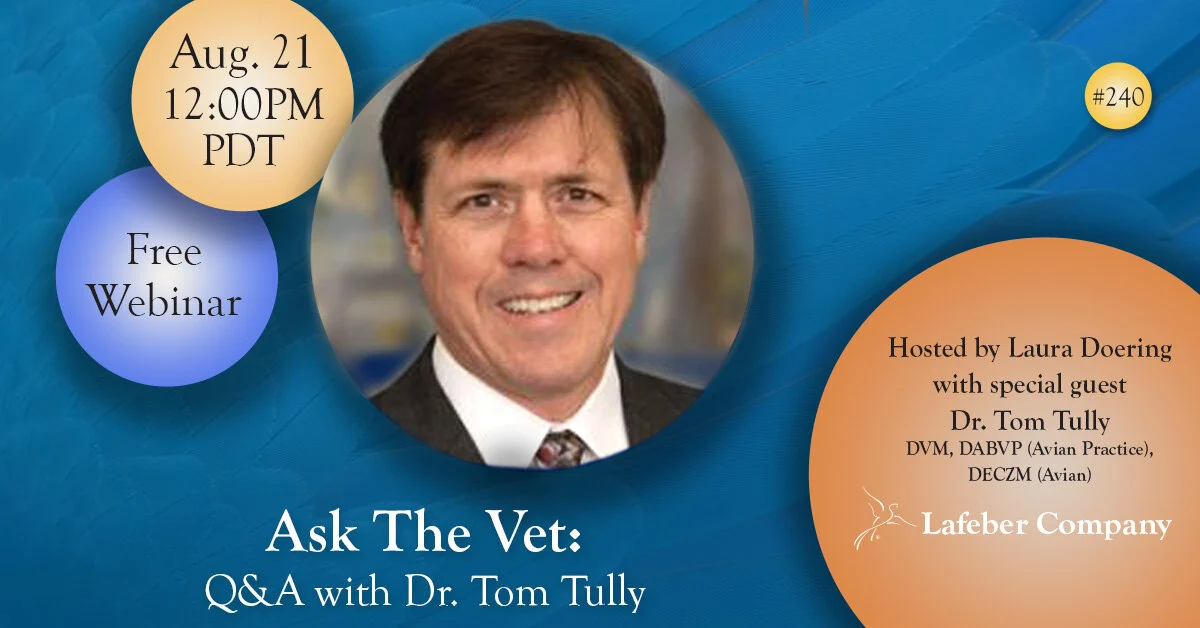
The landscape of avian veterinary care is evolving rapidly, necessitating a higher standard of informed ownership for those caring for pet birds. On Friday, August 21, 2026, at 12:00 p.m. PDT, the avian community will have the opportunity to participate in a live, interactive webinar titled "Ask The Vet With Dr. Tom Tully." Hosted by Laura Doering, the former editor of Bird Talk and Birds USA magazines, this session aims to bridge the gap between complex veterinary science and the practical, daily realities of bird stewardship. The event, which is free to the public, features Dr. Tom Tully, DVM, DABVP (Avian Practice), DECZM (Avian), a leading authority in the field, who will address inquiries regarding avian health, nutritional requirements, and behavioral management.
The Critical Role of Expert-Led Education
In the sphere of exotic pet care, birds represent a unique demographic that requires specialized knowledge often absent from general veterinary practice. Dr. Tully’s participation in this webinar underscores a broader initiative within the veterinary community to foster "educated bird ownership." According to Dr. Tully, the health outcomes for companion parrots are directly correlated with the owner’s ability to recognize early symptoms of illness, understand nutritional nuances, and provide an environment that supports physiological and psychological well-being.
By providing direct access to a board-certified specialist, the webinar serves as a vital resource for owners who may otherwise struggle to distinguish between behavioral issues—such as feather plucking or screaming—and underlying clinical pathologies. The pedagogical approach of the session is designed to empower owners to become better stewards of their animals, moving beyond anecdotal advice found on social media and into the realm of evidence-based care.
Professional Credentials and Veterinary Context
The significance of this event is amplified by the professional standing of its guest speaker. Dr. Tom Tully holds diplomate status with both the American Board of Veterinary Practitioners (ABVP) in Avian Practice and the European College of Zoological Medicine (ECZM) in Avian. This dual certification signifies an elite level of expertise in avian medicine, surgery, and pathology.
Veterinary professionals often note that the greatest challenge in treating avian patients is the "prey animal instinct," where birds mask symptoms of illness until they are in an advanced state of disease. By facilitating a dialogue between a specialist and the public, the webinar seeks to lower the barrier for seeking professional consultation. This initiative is part of a growing trend in digital veterinary outreach, where virtual platforms are utilized to disseminate critical health information to a global audience, circumventing geographical limitations that often prevent bird owners from accessing board-certified specialists.
Chronology of Avian Veterinary Advocacy
The effort to improve pet bird standards through public education is not a recent development. Historically, the avian pet industry has faced criticism regarding the husbandry of exotic species. Over the past three decades, organizations like the Association of Avian Veterinarians (AAV) have worked to standardize the care protocols for parrots, raptors, and other companion species.
- 1990s–2000s: The rise of specialized avian medicine journals and the growth of magazines like Bird Talk helped codify basic husbandry standards, such as the transition from seed-based diets to pellet-based nutrition.
- 2010s: The proliferation of high-speed internet allowed for the birth of specialized webinars and remote consultations, significantly expanding the reach of board-certified experts.
- 2020–2026: The post-pandemic era saw a surge in pet ownership, including a notable uptick in parrot adoptions. This created an urgent need for accessible, high-quality veterinary information, leading to the current iteration of interactive, expert-led webinars.
Nutritional and Behavioral Analysis
A primary focus of the upcoming session is the intersection of nutrition and disease. Research consistently indicates that malnutrition remains the leading cause of health issues in pet birds, including hypovitaminosis A, obesity, and metabolic bone disease. Many owners, despite their best intentions, fail to provide a balanced diet that meets the specific caloric and micronutrient requirements of their species.

During the webinar, participants are encouraged to address these complexities. Dr. Tully’s approach typically involves assessing the bird’s total environment—not just the food bowl—to determine the root cause of health complaints. For instance, a behavior that an owner labels as "aggression" may actually be a hormonal response triggered by seasonal lighting or poor sleep hygiene. By breaking down these complex systemic relationships, the webinar provides a holistic framework for owners to improve their bird’s quality of life.
The Economic and Ethical Implications of Care
The decision to host a free webinar carries broader implications for the welfare of the pet bird population. As the cost of veterinary care continues to rise, many owners delay or forgo professional help, potentially leading to preventable suffering. By providing a platform for free expert inquiry, the organizers are effectively lowering the cost of entry for baseline health assessments.
Furthermore, the ethical responsibility of bird ownership has come under increased scrutiny. Parrots, being highly intelligent, long-lived, and social creatures, are particularly susceptible to the consequences of inadequate care. The "stewardship model" promoted by Dr. Tully emphasizes that because these animals are often in captivity against their natural evolutionary trajectory, humans have a moral obligation to replicate their needs as closely as possible.
Supporting Data and Industry Trends
Data from recent surveys in the exotic pet industry indicate that approximately 30% of avian health issues are directly related to chronic stress caused by lack of stimulation or improper social interaction. Another 40% are attributed to dietary deficiencies. These statistics highlight the necessity of professional intervention. The webinar, by targeting the specific inquiries of the audience, addresses these data points directly.
Industry analysts suggest that the demand for specialized veterinary webinars has grown by nearly 15% annually since 2020. This indicates a shifting demographic of bird owners who are increasingly looking for scientific validation of their care methods. As owners become more knowledgeable, the overall standard of care within the industry rises, which in turn benefits the long-term health and lifespan of the avian population.
Preparing for the Webinar: A Participant’s Guide
To maximize the efficacy of the session on August 21, prospective participants should prepare specific questions regarding their birds’ health histories. Organizers suggest having the following information ready:
- The species, age, and sex of the bird.
- A detailed list of the bird’s current diet, including supplements.
- A timeline of any observed behavioral or physical changes.
- The current housing conditions, including cage size and daily light cycles.
Because of the high volume of inquiries anticipated, questions that are specific, evidence-based, and concise are more likely to receive a detailed response from Dr. Tully. The interactive nature of the Zoom webinar allows for real-time clarification, making it a distinct upgrade from static informational videos.
Conclusion: The Future of Avian Stewardship
The "Ask The Vet" series represents a fundamental shift in how veterinary knowledge is disseminated. By leveraging the expertise of practitioners like Dr. Tom Tully, the pet bird community is fostering a culture of accountability and precision. As the event approaches, the anticipated audience underscores the importance of accessible, expert-led guidance in the lives of companion animals. Through this collaborative effort, the organizers aim to ensure that pet birds not only survive but thrive in human care, guided by the best available scientific knowledge and a commitment to professional excellence. Registration remains open via the official webinar portal, providing a gateway for owners to engage directly with the forefront of avian medical science.
