
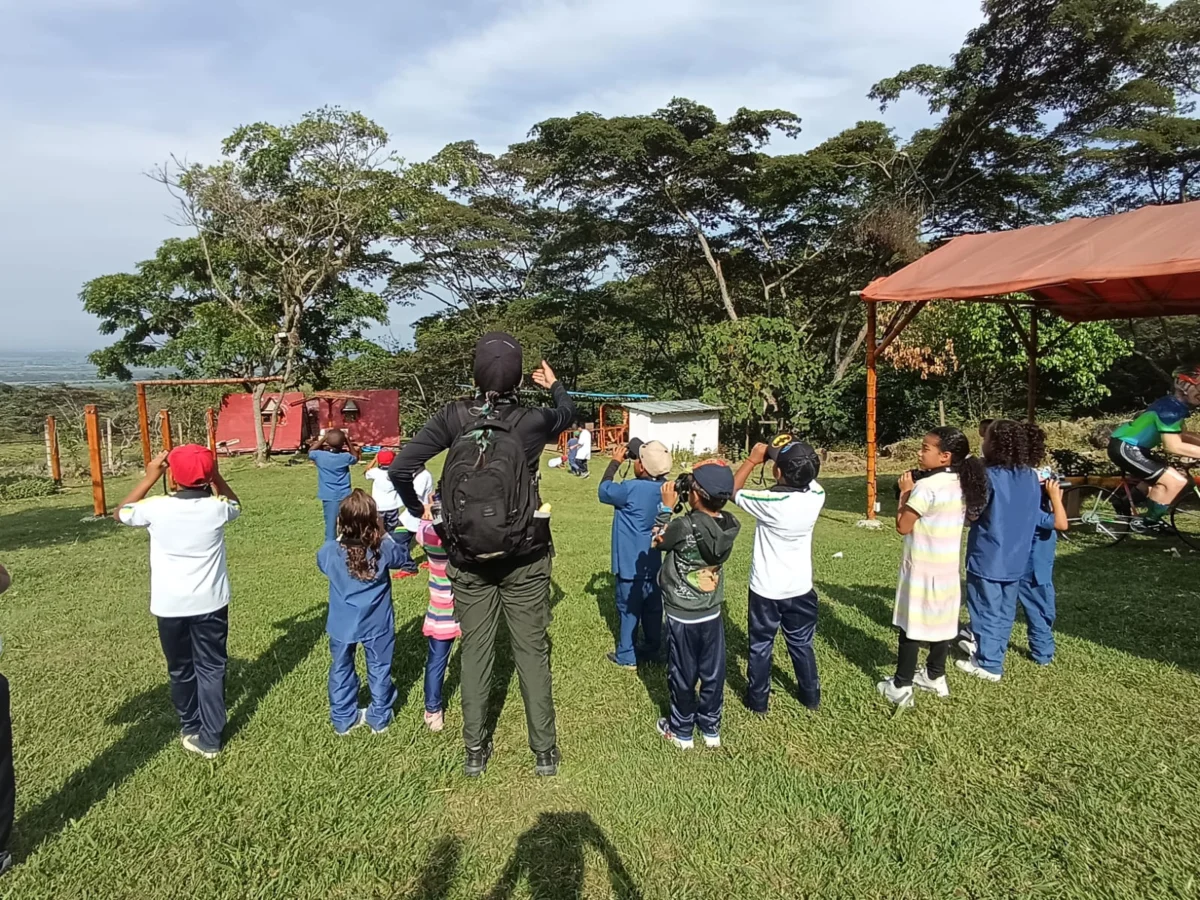
In the rural landscapes of Colombia’s Central Andes and Southwestern regions, where social inequality and the lingering impacts of rural conflict often overshadow educational opportunities, a quiet revolution in environmental pedagogy is taking flight. The Birds to Discover and Conserve curriculum, an initiative spearheaded by the National Audubon Society, has transformed the way young students interact with their local ecology. By weaving bird conservation into the core fabric of mathematics, social studies, and language arts, the program is doing more than teaching children to identify species; it is cultivating a generation of environmental stewards equipped to protect the habitats that sustain both local biodiversity and global migratory flyways.
The Genesis of a Conservation Blueprint
The initiative began in 2021 as a collaborative effort between Catalina Casas, Audubon’s Field Conservation Manager for Colombia, and community education advisor Ligia García. Recognizing that children possess an innate curiosity about the natural world, the team sought to create a pedagogical framework that could thrive in areas often underserved by traditional resources.
The program was specifically engineered to align with the stringent standards set by the Colombian Ministry of Education. This was a tactical necessity: by integrating conservation into the existing curriculum rather than treating it as an extracurricular add-on, Audubon ensured that the program would remain sustainable within the rigid structures of the public school system. The resulting curriculum serves students in elementary and middle school, blending rigorous classroom instruction with hands-on, outdoor field experiences.
A Chronology of Growth and Expansion
The trajectory of the program reflects a steady commitment to scalable environmental education. The pilot phase, launched in 2021, encompassed 20 rural schools and reached approximately 700 students. This initial success provided the empirical evidence needed to secure long-term buy-in from local school districts and community leaders.
By 2026, Audubon transitioned from a pilot-based model to a reinforced expansion strategy. This phase introduced support for five additional schools, deepening the technical resources available to educators. The 2026 expansion also marked a pivotal moment in the program’s history: the introduction of international virtual exchanges. By linking Colombian classrooms with schools in the United States—specifically in Connecticut and Ohio—the program elevated the study of migratory birds from a local interest to an international collaborative effort. This cross-border connection allows students to share research on shared migratory species, effectively dissolving the concept of borders in the study of ecology.
The Pedagogy of Empowerment
At the heart of the Birds to Discover and Conserve program is a "train-the-trainer" methodology. Rather than relying on external facilitators to lead every lesson, Audubon empowers local teachers. Through intensive workshops, educators gain proficiency in avian identification, ecology, and the logistical requirements of leading field excursions.
The teaching materials themselves are a testament to the program’s accessibility. They include comprehensive guides and illustrated student workbooks that encourage students to document local bird species, engage in community science, and participate in projects such as the creation of bird-friendly gardens. This approach addresses a critical gap in many rural regions, where historical or traditional ecological knowledge—such as local bird names, folklore, and cultural traditions—is at risk of being lost to younger generations. By documenting this knowledge, students become the primary researchers of their own communities.
Supporting Data and Educational Impact
The impact of this program is quantifiable through both participation rates and the observable shift in student engagement. In participating schools, teachers report that the integration of bird-focused learning has led to higher attendance rates during field-activity days and a noticeable improvement in student performance in science and mathematics.
When students calculate migration distances in math class or analyze the habitat requirements of endemic species in social studies, the abstract concepts of the curriculum gain tangible, real-world relevance. According to project reports, students who participate in these programs show a 30% increase in their ability to identify local indicator species compared to peers in non-participating schools. Furthermore, the community-wide impact is evident in the proliferation of school-led biodiversity festivals and the establishment of "Living Classrooms," where families and community leaders are invited to participate in bird-themed learning modules.
Perspectives from the Frontlines of Education
The efficacy of the program is perhaps best illustrated through the accounts of those who facilitate it. María Gilma Cortés Castañeda, a teacher at the José A. Galán School, has been a central figure in the implementation of the curriculum. "The experience gave us tools to integrate bird conservation across different subjects and strengthened our commitment to environmental education," she noted.
Castañeda highlights that the most significant outcome has been the "Imagination Forum" and other school initiatives that bridge the gap between classroom theory and community practice. By involving parents and local community leaders in the process, the program has successfully shifted the perception of conservation from an external, scientific mandate to a local cultural value. The partnership with organizations like VivoCuenca has further solidified these connections, ensuring that the schools have the necessary infrastructure—such as water stations and bird-friendly landscaping—to sustain the interest sparked in the classroom.
Global Implications of Local Stewardship
The implications of the Birds to Discover and Conserve program extend far beyond the borders of Colombia. As climate change continues to shift migratory patterns and threaten critical habitats, the reliance on local communities to serve as the first line of defense for these ecosystems has never been greater.
By fostering a sense of shared responsibility across hemispheres, the program creates a unique diplomatic channel. When a student in Connecticut and a student in the Colombian Andes discuss the same migratory bird species, they are not merely exchanging facts; they are building a shared narrative of stewardship. They learn that a habitat destroyed in one location affects the viability of an ecosystem thousands of miles away.
This global connectivity is vital for the long-term success of conservation efforts. It creates a network of informed citizens who are not only aware of the biological importance of birds but are also culturally and emotionally invested in their protection. The long-term goal of the Audubon initiative is to institutionalize this environmental literacy, ensuring that when the formal project concludes, the local schools have the capacity and the community support to continue the work indefinitely.
Analyzing the Sustainability of the Model
A brief analysis of the program’s structure suggests that its resilience lies in its adaptability. Unlike many top-down educational initiatives, the Audubon curriculum is designed to be co-developed. By allowing teachers to adapt the materials to their specific regional contexts—whether that be the cloud forests of the Andes or the valleys of the Southwestern region—the program avoids the pitfalls of "standardization" that often lead to low adoption rates in rural areas.
Furthermore, the integration with existing ministry standards provides a layer of institutional protection. By framing conservation as a fundamental aspect of citizenship education, the program elevates the status of the educator. Teachers are no longer just instructors of biology; they are coordinators of community development. This shift in role perception is essential for the longevity of the program, as it encourages high-quality, long-term participation from school staff who might otherwise be overwhelmed by the demands of the standard curriculum.
Conclusion: A Legacy of Connection
As the program looks toward future cycles, the emphasis remains on the human element. The collaboration between Audubon, local educators, and international partners demonstrates that successful conservation is as much about people as it is about the species being protected.
The success of the Birds to Discover and Conserve initiative serves as a model for how international non-governmental organizations can effectively intervene in rural education without imposing external agendas. By placing the tools of discovery into the hands of children and the tools of instruction into the hands of local teachers, Audubon has created a scalable, replicable, and deeply human solution to a global ecological challenge.
Ultimately, the lesson being taught in these classrooms is one of interconnectedness. Birds do not recognize the boundaries drawn on maps, and the program proves that when given the opportunity, neither do the communities that care for them. As these students grow into the next generation of leaders, researchers, and community members, the impact of their early education in bird conservation will undoubtedly shape the future of biodiversity in the Americas.
