
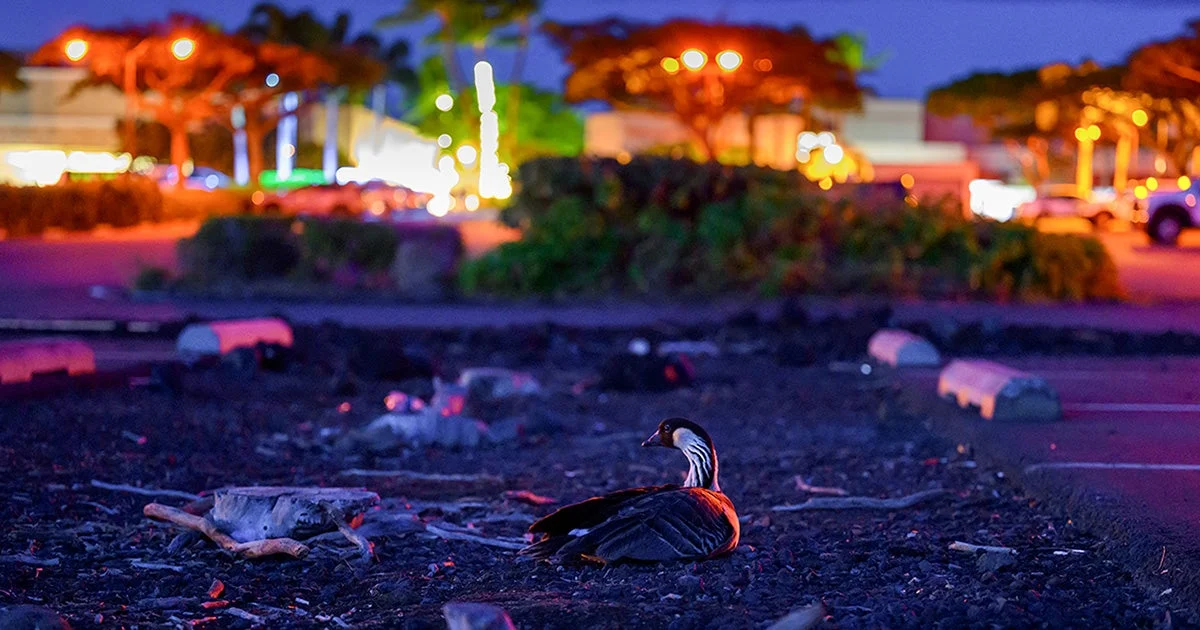
The nēnē, or Hawaiian goose (Branta sandvicensis), stands as a poignant symbol of both the catastrophic impact of human intervention on island ecosystems and the potential for restorative conservation. Once nearing the brink of extinction, this endemic species has transitioned from a remote volcanic inhabitant to a frequent visitor of modern human landscapes. However, as the world’s rarest goose adapts to the aesthetic sprawl of luxury golf courses, strip malls, and manicured resort lawns, it faces a new, multifaceted gauntlet of anthropogenic threats. Collisions with vehicles, predation by feral cat colonies, and the unintended consequences of human-altered habitats are now challenging the hard-won gains of decades of recovery, prompting a radical shift in how conservationists approach the survival of this iconic bird.
A Species at the Precipice: Historical Context and Population Trends
The narrative of the nēnē is a testament to the volatility of conservation success. By 1949, the species had been decimated by a combination of unregulated hunting, the introduction of non-native predators, and the conversion of its native habitat into agricultural land. At its lowest point, the wild population dwindled to a mere 30 individuals. Through the mid-20th century, intensive captive breeding and reintroduction programs spearheaded by state and federal agencies brought the population back from the abyss.
As of 2025, the estimated population of nēnē across the archipelago stands at approximately 4,323 birds. While this figure represents a significant recovery from the mid-century nadir, it masks a fragmented and uneven distribution. The island of Kauaʻi holds roughly 61 percent of the total population, benefiting significantly from the absence of a meaningful mongoose population. Conversely, other islands have seen stagnating or declining numbers. The nēnē population on Oʻahu has been extirpated entirely, and populations on Maui and Molokaʻi have struggled since 2019. Even on the Big Island of Hawaiʻi, where conservation efforts are most concentrated, the species faces recurring threats that have caused localized population dips over the past decade.
The Modern Gauntlet: Infrastructure and Invasive Predators
The nēnē’s shift toward human-altered landscapes—often referred to as "synanthropic" behavior—was initially viewed as a curiosity, but biologists now recognize it as a dangerous trap. The birds frequently nest near golf course water hazards or in the shrubbery surrounding retail centers, placing them in direct conflict with high-traffic areas.
The threats are diverse and lethal. Speeding vehicles represent a primary cause of adult mortality, particularly during the breeding season when the birds move between nesting sites and feeding grounds. Beyond the physical impact of traffic, the birds are subject to the dangers of predation by non-native species. The small Indian mongoose, introduced in the late 19th century to control rat populations in sugarcane fields, remains a persistent threat to ground-nesting birds. Because mongooses are diurnal and rats are nocturnal, the invasive predator failed to control the rodent population but succeeded in devastating native avian life.
Furthermore, the proliferation of feral cat colonies has emerged as a significant, albeit politically sensitive, issue. These colonies are often maintained by local residents who provide consistent food, which inadvertently draws nēnē toward the stations. The birds, opportunistic feeders, have begun consuming cat food, leading them into dangerous proximity to the colonies. This exposure creates a trifecta of risks: predation by cats, exposure to the parasite Toxoplasma gondii—which can cause fatal encephalitis in geese and contribute to maladaptive, risk-taking behavior—and the increased likelihood of being struck by vehicles in parking lots and adjacent roadways.
Technological Intervention and the Role of Community Science
In response to these evolving threats, conservation strategies have moved toward high-tech, data-driven management. Jordan Lerma, a Native Hawaiian marine biologist and founder of the nonprofit nene.org, has pioneered a model that integrates artificial intelligence, remote monitoring, and public participation to safeguard the species.
Lerma’s approach centers on the democratization of data. Because approximately 70 percent of the nēnē population is banded, researchers have a wealth of potential information, but tracking these birds in real-time has historically been a labor-intensive manual process. Lerma developed an AI-powered application that allows biologists and trained volunteers to identify a bird simply by photographing its leg band. The app instantly retrieves the bird’s life history, including its origin, previous health status, and migration patterns.
This data is augmented by remote camera arrays installed at critical sites. These cameras transmit images in real-time to a central server, allowing for constant monitoring of population health and movement. The system has proven vital for informed decision-making; if a specific bird is reported injured or in a high-risk area, biologists can locate it with precision rather than relying on periodic visual surveys.
Case Study: Evidence-Based Policy Shifts
The efficacy of this data-driven approach was clearly demonstrated in 2023 near Hilo. The local population of nēnē was suffering high mortality rates due to vehicle strikes on a stretch of road bordering a restoration area. Local advocates had long petitioned for traffic safety improvements, but lacked the quantitative data to convince municipal authorities.
Lerma’s team deployed six custom speed monitors along the road for a 10-day period. The results were stark: of the 5,000 vehicles recorded, 81 percent were exceeding the 35 mph speed limit. By presenting this empirical evidence to the County of Hawaiʻi, the advocates successfully lobbied for a reduction in the speed limit to 25 mph and the installation of traffic-calming measures such as raised crosswalks and speed tables. Since the implementation of these infrastructure changes, no nēnē have been reported killed at that location.
Legislative and Environmental Management Challenges
The struggle to manage the nēnē has also entered the legislative arena. The management of feral cat colonies has been a flashpoint for debate, pitting wildlife conservationists against animal welfare advocates. The presence of these colonies on public land has necessitated strict regulatory intervention. In late 2025, the County of Hawaiʻi enacted legislation banning the feeding of feral cats on county property, a move intended to reduce the concentration of these predators near vulnerable bird nesting sites.
The FeralMap project, another of Lerma’s initiatives, serves as a community science platform that allows residents to report sightings of feral cats, mongooses, and wild pigs. This public database provides a real-time heat map of invasive species density, allowing agencies to allocate trapping and mitigation resources more effectively.
The Path Forward: Stewardship and Persistence
Despite these innovations, the long-term survival of the nēnē remains a work in progress. The species exists in a delicate state, and as biologist Raymond McGuire of the Hawaiʻi Department of Land and Natural Resources notes, the proximity of the birds to public life remains the most significant hurdle. When wild animals habituate to human presence, they lose the caution necessary to avoid the very dangers that threaten their survival.
The success of the nēnē, as highlighted by its reclassification from federally endangered to threatened in 2019, is not an endpoint but a milestone. The modern conservation strategy requires a continuous, iterative process of monitoring, legislative action, and community engagement. The reliance on cultural stewardship, where local communities feel ownership and responsibility for their native wildlife, is viewed by experts as the most sustainable way to prevent the state bird from slipping back into decline.
Ultimately, the story of the nēnē in the 21st century is one of adaptation—not just by the birds, but by the humans who share their island home. As the landscape continues to change, the integration of new technologies with a renewed commitment to habitat management offers a viable, if demanding, pathway toward ensuring that the nēnē continues to navigate the complexities of a human-dominated world. As Lerma observes, the work is perpetual, but the ability of human intervention to reverse the course of extinction is a powerful catalyst for ongoing conservation efforts.
