
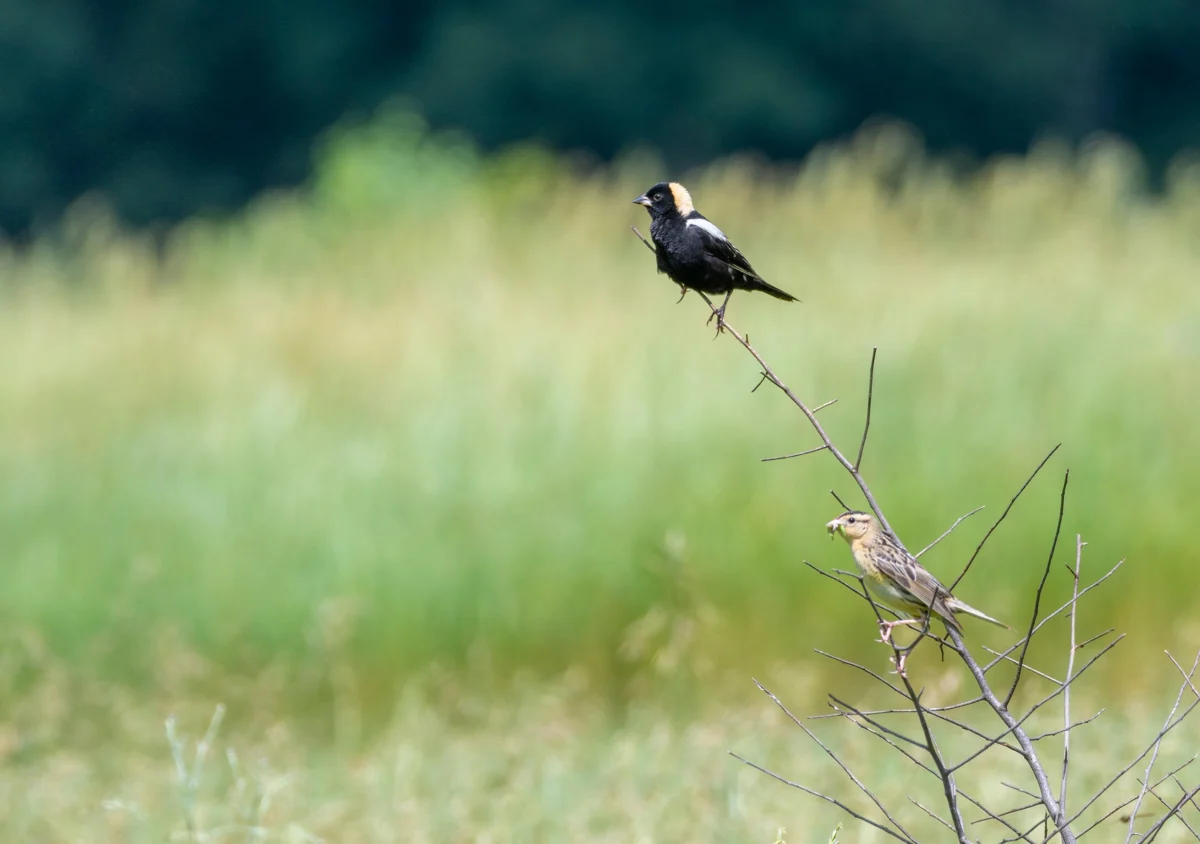
The Bouressa Family Farm in New London, Wisconsin, has officially been awarded the National Audubon Society’s Bird-Friendly Land Certification, marking a significant milestone in the state’s efforts to integrate commercial agriculture with avian conservation. Owned and operated by Rachel Bouressa, a fifth-generation farmer with a background in agronomy, the 360-acre operation has successfully transitioned from traditional dairy practices to a sophisticated model of adaptive, soil-first grazing. This certification, facilitated by the Audubon Conservation Ranching (ACR) program, recognizes the farm’s commitment to fostering biodiversity within the state’s critical Forest Transition Zone.
A Legacy of Adaptation and Resilience
The history of the Bouressa Family Farm is one of steady evolution in response to both environmental necessity and economic challenge. For 18 years, the farm operated as a conventional dairy under the management of Rachel Bouressa’s parents. The 1990s served as a pivotal decade for the property, as the family began shifting away from intensive industrial practices toward managed grazing techniques.
The trajectory of the farm underwent a forced transformation in 2014, when a catastrophic barn fire decimated the facility. Rather than abandoning the land, Rachel Bouressa returned to the property to spearhead a comprehensive redevelopment. She pivoted the business model to a cow-calf and grass-finishing operation. Today, the farm is a multi-faceted enterprise that not only produces high-quality grass-fed beef but also serves as a hub for community engagement, offering farm-store sales and agro-tourism through partnerships like Hipcamp. Her academic background at the University of Wisconsin-Madison in agronomy and environmental science has informed her "soil-first" approach, which prioritizes the health of the earth as the primary foundation for sustainable production.
The Science of Grassland Restoration
Grassland birds are currently facing an existential crisis in North America. According to data from the State of the Birds report, grassland-dependent species have suffered the most severe population declines of any terrestrial bird group since 1970. These declines are primarily attributed to the fragmentation of habitat, the encroachment of woody vegetation, and the systemic use of chemical fertilizers and pesticides.
In the Forest Transition Zone of Wisconsin, the challenge is particularly acute. Historically dominated by dense forests, the region has been modified into a patchwork of small-scale agriculture and scrubland. For species like the Bobolink, Eastern Meadowlark, Savannah Sparrow, Dickcissel, and Grasshopper Sparrow, the survival of these pockets of open grassland is essential.
The ACR certification requires a rigorous, science-based management plan. For the Bouressa farm, this has involved:
- Rotational Grazing: Utilizing livestock to mimic the natural grazing patterns of bison, which stimulates plant growth and enhances soil carbon sequestration.
- De-fragmentation: Systematically removing non-native tree rows that bisect the landscape, thereby creating larger, contiguous blocks of open grassland necessary for nesting birds.
- Wetland Restoration: Reversing the effects of historical drainage projects to restore natural hydrology, which provides vital water sources and habitat niches for a broader range of wildlife.
Official Perspectives and Third-Party Validation
The certification process is not merely a label; it requires a comprehensive third-party audit to ensure compliance with stringent standards regarding animal welfare, habitat management, and environmental stewardship.
Ashly Steinke, a Range Ecologist for the Audubon Conservation Ranching program in Wisconsin, has worked closely with Bouressa throughout this transition. "Rachel is the epitome of a rancher who makes decisions based not only on farm economics, but also pertaining to her environment and her community," Steinke stated. According to Steinke, the collaboration was designed to maximize the "mosaic effect"—ensuring that the farm maintains varied grass heights and densities throughout the year, which allows different species to find shelter and food at different stages of their life cycles.
Bouressa herself emphasizes that the certification has changed her management philosophy. "Since working with Audubon, I’ve added a wildlife lens to all my habitat management decisions," she noted. "I’ve seen the impact and success of managed grazing and tree line removal on my farm with the return of nesting Bobolinks. Now I see birds across the whole farm—my emerald oasis surrounded by cropland."
Broader Implications for the Agricultural Industry
The inclusion of the Bouressa Family Farm into the Audubon network brings the total number of certified acres in Wisconsin to 2,000 across seven distinct properties. Nationally, the ACR program now encompasses over 160 farms and ranches, covering roughly 4.7 million acres. This scale represents a significant shift in how agricultural land is valued by both producers and the public.
The economic implications for producers are equally noteworthy. By utilizing the "Audubon Certified" seal on their beef and bison products, ranchers are able to differentiate their goods in a crowded marketplace. This certification communicates a clear value proposition to the consumer: that the purchase of these products directly supports the mitigation of climate change and the preservation of biodiversity. These products are currently available in more than 2,000 retail locations across the United States.
Furthermore, Bouressa’s leadership extends beyond her own fence lines. As a member of the Wisconsin Natural Resources Board and a director-at-large for the Wisconsin Farmers Union, she is actively shaping policy and discourse regarding sustainable land use. She regularly hosts community events to demonstrate the economic viability of regenerative agriculture. Her philosophy—that "we can have productive agricultural systems while also protecting and prioritizing our natural resources"—serves as a rebuttal to the traditional view that conservation must always come at the expense of production.
Future Outlook and Ecological Monitoring
As the Bouressa Family Farm continues its operations, it will remain under the observation of the Audubon Conservation Ranching program. Monitoring efforts will focus on tracking bird population density and species richness over time. These metrics will serve as a bellwether for the health of the central Wisconsin ecosystem.
The success of this partnership suggests a potential blueprint for other agricultural operations in the Midwest. By leveraging the expertise of conservation scientists, farmers like Bouressa are transforming their properties into biological refuges. This shift from "production-at-all-costs" to "ecosystem-service-integrated production" is increasingly viewed by experts as the most viable path forward for securing the future of the American prairie and the avian populations that rely on it.
In conclusion, the recognition of the Bouressa Family Farm is a victory for both the agricultural and conservation sectors. It demonstrates that the interests of the rural producer and the environmentalist are not inherently at odds. By focusing on soil health, biodiversity, and sustainable management, the Bouressa model proves that ecological resilience is a profitable and necessary pursuit in the 21st century. As the network of certified ranches continues to grow, it is likely that this model will influence future agricultural policy and consumer behavior, providing a scalable solution to the ongoing decline of grassland ecosystems.
