
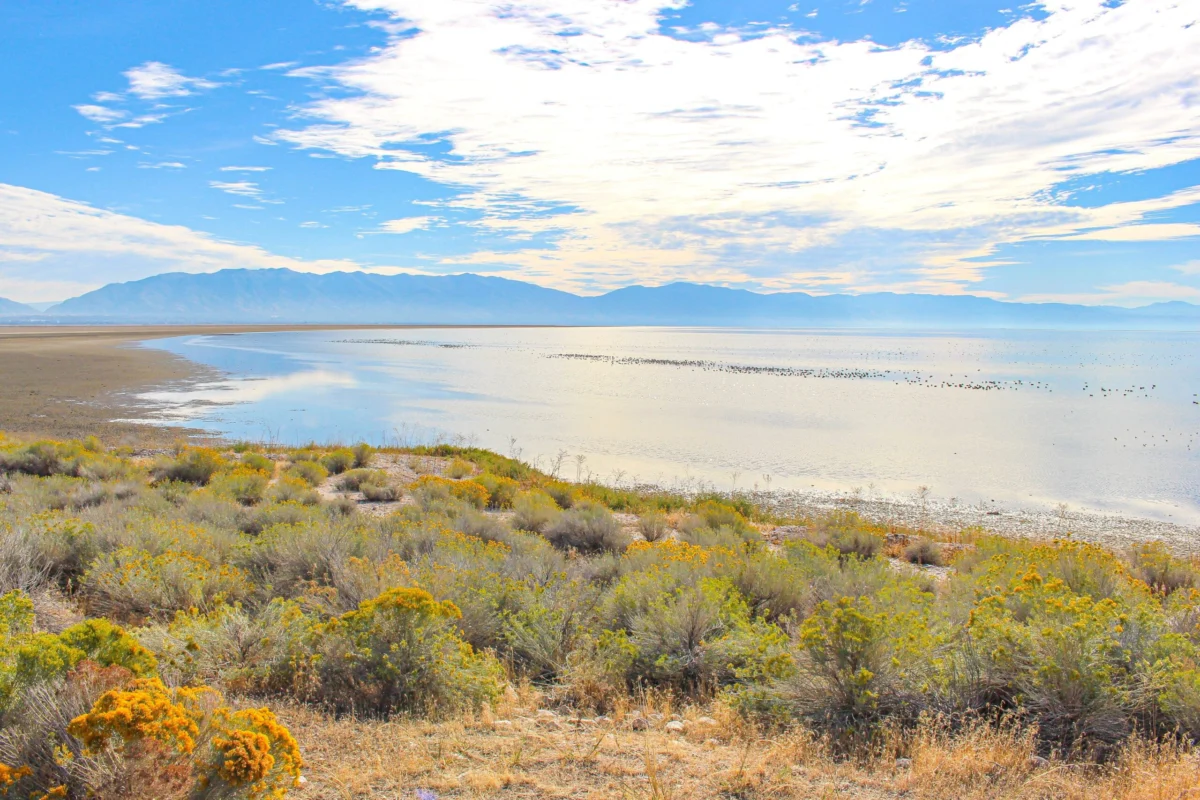
The Great Salt Lake, a terminal basin of immense ecological and economic significance, is currently the subject of an intensive data-driven conservation initiative following the release of the Audubon Great Salt Lake Birds and Habitat Assessment. Featured in the October issue of The Water Report—a preeminent monthly publication specializing in water sector analysis—the Assessment has transitioned from a standalone research document to a foundational framework for state agencies, academic institutions, and agricultural stakeholders. The report provides a granular analysis of habitat needs, conservation priorities, and the intricate hydrological requirements necessary to sustain the lake’s diverse bird populations and critical wetland ecosystems.
A Chronology of Collaboration and Release
The path to the Assessment’s current integration into policy and research began long before its formal publication in late June 2026. Recognizing that the Great Salt Lake faces unprecedented challenges due to prolonged drought, water diversion, and shifting climate patterns, Audubon initiated a comprehensive study aimed at mapping the precise ecological requirements of the basin’s migratory and nesting avian species.
In the months preceding the June 2026 release, Audubon staff engaged in a series of strategic consultations with a diverse cross-section of Utah’s water management community. These meetings were designed to ensure that the Assessment would not merely serve as an academic exercise, but as a practical tool for land and water management. Following the launch, this momentum accelerated. Throughout the summer and early autumn of 2026, the findings were presented to key governance bodies, including the Great Salt Lake Advisory Council and the Office of the Great Salt Lake Commissioner. These sessions were pivotal in aligning the Assessment’s data with the ongoing state-led efforts to restore water levels and protect the lake’s brine shrimp and macroinvertebrate populations, which serve as the foundation of the local food web.
Integrating Science into Policy: Supporting Data and Methodology
The Assessment is built upon a multi-layered approach to habitat prioritization. By categorizing the Great Salt Lake’s vast wetland areas based on their functional importance to specific species, the report allows managers to move away from "blanket" conservation efforts toward targeted interventions.
Supporting data within the Assessment emphasizes the nexus between freshwater inflow and salinity balance. The lake, which lacks an outlet, relies on a delicate equilibrium of inflows to maintain the salinity levels required by the Artemia franciscana (brine shrimp) and Ephydra cinerea (brine fly). The Audubon report identifies key riparian corridors and deltaic wetlands that act as biological filters and nesting grounds, providing a spatial roadmap for water rights acquisition and infrastructure improvement.
According to preliminary data released alongside the report, the degradation of these specific wetland zones correlates directly with a decline in nesting success for species such as the American Avocet and the Eared Grebe. By identifying "high-value" zones, the Assessment provides a quantitative basis for the Utah Department of Natural Resources to prioritize restoration funding and management resources where they will yield the highest return on biodiversity investment.
Institutional Adoption and Research Applications
The utility of the Assessment is best illustrated by its immediate adoption by prominent scientific and regulatory bodies across Utah.
Utah State University’s Water Research Laboratory has been among the first to utilize the data to refine its hydrological modeling. By overlaying the Audubon habitat maps onto their existing flow-path analysis, researchers are now able to pinpoint study sites that are most representative of the lake’s historical hydrological state. This collaboration is expected to provide critical insights into how the timing of water releases—often dictated by agricultural and municipal needs—can be adjusted to mimic natural spring runoff patterns, thereby benefiting wetland health.
Simultaneously, the Utah Geological Survey (UGS) has integrated the report’s findings into its ongoing wetland health assessment protocols. The UGS indicated that the Audubon framework offers a standardized scoring system that facilitates longitudinal comparisons of wetland conditions. This consistency is vital for the state, as it allows policymakers to track the efficacy of conservation projects over years rather than months.
Perhaps most notably, the agricultural sector has demonstrated a proactive shift toward engagement with the Assessment. Through the Utah Department of Agriculture and Food and the Utah Farm Bureau, members of the agricultural community are exploring how precision irrigation and land-management practices can contribute to downstream wetland health. There is an emerging recognition that sustainable agriculture and a healthy Great Salt Lake are not mutually exclusive, but rather interconnected components of the basin’s economic and environmental stability.
Expert Perspectives and Stakeholder Reactions
While the Assessment is technically grounded, its reception has been defined by the broad coalition of stakeholders who have embraced its findings.
"The strength of this report lies in its cross-disciplinary utility," noted an analyst familiar with the collaboration. "By speaking the language of both the hydrologist and the water manager, Audubon has bridged a gap that previously hindered integrated management."
Representatives from the Utah Department of Natural Resources and the Division of Forestry, Fire and State Lands have characterized the Assessment as a "foundational document" that supports the state’s broader strategic plan for the lake. By providing a clear hierarchy of needs, the report helps state agencies justify budget allocations for habitat protection and water rights leases. For these agencies, the Assessment provides the technical "cover" necessary to navigate the complex political landscape of water rights in the arid West, where every acre-foot of water is subject to intense competing interests.
Broader Implications for the Great Salt Lake Basin
The broader impact of the Audubon Assessment cannot be overstated. As the Great Salt Lake continues to contend with the realities of a changing climate, the reliance on reactive, short-term fixes is becoming increasingly untenable. The shift toward a framework-based, science-led management strategy marks a turning point in how the state treats its most significant terminal water body.
The implications of this shift are threefold:
- Hydrological Optimization: By understanding exactly when and where water is needed for habitat maintenance, the state can optimize its water infrastructure to deliver "environmental flows" without unnecessarily compromising agricultural production or municipal water supply.
- Resource Prioritization: The Assessment provides a clear rubric for prioritizing the limited financial and human resources available for restoration. By focusing on the most critical wetlands, the state can avoid the dilution of efforts across less impactful projects.
- Cross-Sectoral Cooperation: The adoption of a single, standardized assessment by parties as diverse as university researchers and agricultural bureaus fosters a shared lexicon and common objectives. This alignment is essential for building the political consensus required to implement long-term, potentially costly, water management reforms.
Future Outlook and Continued Research
As of late 2026, Audubon has signaled that the work is far from complete. The organization intends to maintain an active role in the Great Salt Lake Basin, working closely with the aforementioned partners to refine the habitat prioritization framework as new data becomes available. Future iterations of the research are expected to incorporate more advanced climate modeling, taking into account projected temperature increases and changes in snowpack accumulation within the Wasatch and Uinta ranges.
The focus will also expand to include the socio-economic impacts of habitat management. As stakeholders continue to digest the findings of the Assessment, the next phase of the project will likely involve testing the scalability of these conservation strategies. Can the successes observed in pilot study sites be replicated across the entire basin? How will the potential integration of market-based water transfers affect local agricultural economies? These questions are now at the center of the regional conversation.
In conclusion, the Audubon Great Salt Lake Birds and Habitat Assessment has successfully transitioned from a specialized ecological study into a vital instrument of public policy and scientific research. By providing a rigorous, transparent, and collaborative framework, it has empowered the stakeholders responsible for the Great Salt Lake’s future to move toward a more sustainable and scientifically informed approach to water management. As the state moves into the next phase of its conservation journey, the Assessment stands as a testament to the power of integrating deep ecological knowledge into the practical, often difficult, world of western water governance. The continued commitment of the Utah Department of Natural Resources, the agricultural community, and the academic sector ensures that this work will remain a cornerstone of regional efforts to preserve the ecological integrity of the Great Salt Lake for future generations.
