
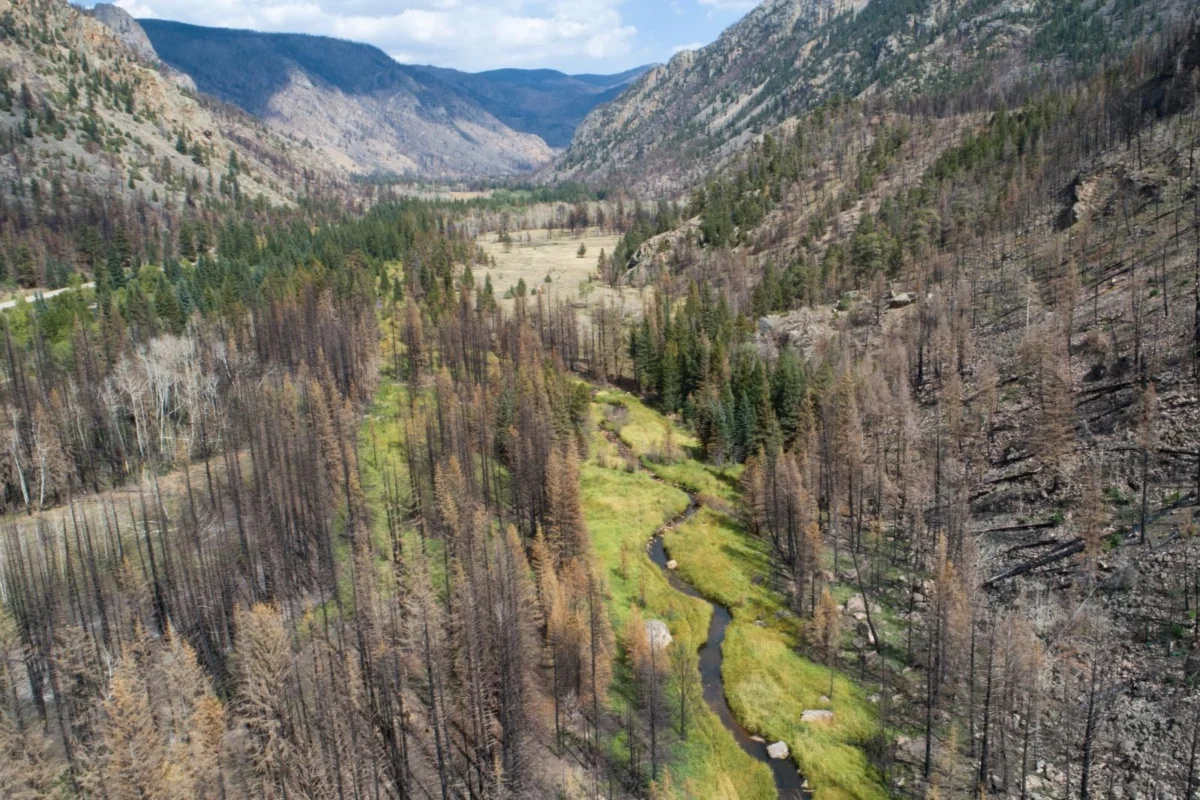
The 2025 State of the Birds report serves as a stark wake-up call for conservationists and policymakers alike, revealing that more than 50 percent of western forest bird species are currently in decline. This alarming trajectory is largely attributed to the degradation of critical habitats, driven by decades of fire suppression and industrial timber management practices that have left forests dense, uniform, and dangerously susceptible to high-intensity wildfires. As the American West faces an era of climate-driven ecological instability, the report underscores a fundamental shift in conservation philosophy: forest management must move beyond simple wildfire suppression and toward a nuanced, science-based approach that balances community protection with the restoration of complex, life-sustaining ecosystems.
A Changing Landscape: The Science of Ecological Restoration
For generations, the default response to wildfire was total suppression. While this policy was intended to protect human infrastructure, it inadvertently created "fuel ladders"—dense thickets of undergrowth and overcrowded tree stands that allow fire to climb from the forest floor to the canopy. This shift has not only increased the severity of wildfires but has also homogenized landscapes, destroying the diverse habitats that many bird species rely on to survive.
Restoration ecology, however, offers a different path. By utilizing tools such as prescribed fire, carefully managed natural wildfire, and strategic thinning, forest managers can mimic the natural disturbances that once kept western forests healthy. It is vital to distinguish between wildfire mitigation—which prioritizes the immediate safety of homes and infrastructure—and ecological restoration, which focuses on soil health, native vegetation regeneration, and the creation of diverse forest structures. When these two objectives are integrated, they create a resilient landscape that can withstand environmental pressures while providing the food and nesting grounds necessary for avian populations.
Chronology of Research and Field Observations
The current understanding of avian response to forest management is the result of years of rigorous scientific inquiry. The following timeline highlights the progression of knowledge in this field:
- 2018: The 416 Fire burns near Durango, Colorado. This event provided a natural laboratory for researchers to observe how bird communities recover after intense, high-severity burn events.
- 2020: A landmark study conducted on the Colorado Front Range confirmed that forest thinning and restoration treatments provide tangible benefits to avian communities. The study noted that while some species prefer open canopy conditions, others remain dependent on the mature forests or standing dead trees (snags) created by natural fire patterns.
- 2022: Advanced habitat modeling studies were published, allowing managers to predict how specific landscape-scale treatments would impact bird diversity, helping to move management from reactive to proactive.
- 2023: A study in Science Advances brought the connection between fire and water to the forefront, documenting how wildfire-induced erosion can impact water quality and infrastructure for years following a fire.
- 2025: The State of the Birds report officially links the decline of forest-dwelling species to the broader failure of outdated management policies, pushing for a collaborative investment strategy.
The Watershed Connection: Where Forest Health Meets Water Security
The health of western forests is intrinsically linked to the reliability of the region’s water supply. Colorado’s mountain forests function as massive, natural water towers; they capture snowfall, regulate its melting, and filter the water that flows into the rivers sustaining agriculture, municipal drinking supplies, and riparian ecosystems.
When a severe, high-intensity wildfire occurs, this natural infrastructure is compromised. The loss of vegetation destabilizes the soil, leading to massive pulses of ash, sediment, and debris during subsequent rainfall events. This "ash-loading" can overwhelm water treatment facilities and destroy aquatic habitats in streams. Moreover, the removal of the forest canopy significantly alters snowpack dynamics. Recent research from the University of Washington and The Nature Conservancy indicates that strategic thinning can actually increase snow storage—by as much as 30 percent on north-facing slopes—by allowing more snow to reach the forest floor rather than being intercepted by dense, interlocking branches.
This finding challenges the traditional view that removing trees is universally harmful to water retention. Instead, it suggests that by managing forest density, we can optimize the timing and quantity of water delivery to the watershed, serving both the needs of wildlife and the demands of downstream human populations.
Economic and Practical Implications
The push for proactive forest management is as much an economic imperative as an ecological one. In a 2026 study published in the journal Science, researchers analyzed 285 wildfires across 11 western states, finding that fuel treatments were remarkably cost-effective. The study estimated that for every dollar invested in science-based forest thinning and prescribed fire, there was a return of $3.73 in avoided damages. These damages include the high costs of property loss, emergency suppression efforts, and the long-term economic impacts of smoke-related public health crises and carbon emissions.
For local stakeholders, such as those working with the San Juan National Forest and the Weminuche Audubon Society, the goal is to create a "mosaic" of habitats. By maintaining a mix of open meadows, young growth, and old-growth stands, managers can ensure that no single event—whether a fire or a drought—wipes out an entire population of a specific species. This diversity acts as an insurance policy against the unpredictable nature of climate change.
Official Perspectives and Stakeholder Responses
Conservation organizations and federal land managers have increasingly found common ground. Audubon Rockies, through its long-term monitoring project near Pagosa Springs, has provided the data necessary to convince skeptics that forest treatments can be designed to benefit birds. By creating openings that encourage understory vegetation, management teams are effectively providing a "buffet" of food resources for migratory and breeding birds, while simultaneously reducing the risk of a catastrophic wildfire that would destroy the entire habitat.
However, challenges remain. Critics of thinning projects often worry about the loss of mature trees. The scientific consensus, however, is shifting toward the idea that we must accept short-term disturbances—such as the presence of standing dead trees (snags) or controlled burns—to prevent the long-term disaster of total ecosystem collapse. As one forest ecologist involved in the Colorado Front Range study noted, "The goal is not to keep the forest in a pristine, static state, but to manage for a dynamic, functional process that allows for natural change while protecting the core elements of the landscape."
A Holistic Future
The evidence is clear: the health of our birds, our rivers, and our communities depends on a unified management strategy. We can no longer afford to view these sectors as isolated silos. The 2025 State of the Birds report provides the data, the 2026 economic studies provide the justification, and the ongoing field research in regions like the San Juan National Forest provides the roadmap.
By investing in science-based forest restoration, we do more than just protect the bird species that signify the health of our environment; we secure the water that sustains our cities, reduce the crushing economic burden of disaster recovery, and ensure that the natural places valued by millions remain resilient in the face of a warming planet. The path forward is collaborative, requiring federal, state, and local partners to align their efforts toward the common goal of landscape-scale resilience. Only by embracing this integrated approach can we ensure that the forests of the American West continue to function as the lifeblood of the region for generations to come.
