
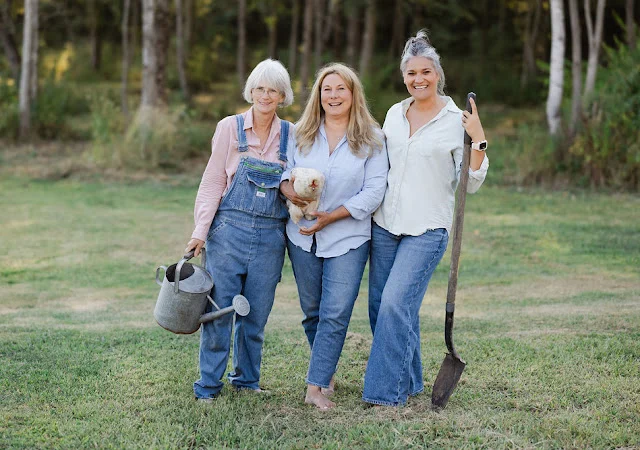
The publication of the 10th Anniversary edition of the instructional manual Gardening with Chickens, scheduled for release on March 17, serves as a significant milestone in the evolution of modern suburban and rural homesteading. Authored by Lisa Steele, a fifth-generation poultry expert and the founder of the Fresh Eggs Daily brand, this updated edition arrives ten years after the original text first introduced readers to the integration of backyard poultry with intensive vegetable cultivation. The revised book reflects a decade of significant shifts in the author’s own agricultural practices, specifically concerning climate adaptation and the diversification of livestock.

A Decade of Agricultural Evolution
The original manuscript for Gardening with Chickens was conceived in 2015, a period defined by the author’s transition from the temperate climate of Virginia (USDA Planting Zone 8b) to the significantly more rigorous environment of Maine (USDA Planting Zone 5a). This geographical shift necessitated a total reassessment of traditional gardening techniques. While the original 2015 publication provided a foundational understanding of backyard poultry management, it did not account for the extreme temperature fluctuations and shorter growing seasons characteristic of Northern New England, where winter temperatures frequently drop well below zero degrees Fahrenheit.
Following the relocation, Steele engaged in formal agricultural training through the University of Maine Cooperative Extension Service’s Master Gardener program. This educational pivot proved essential in refining the techniques featured in the updated edition. The 10th Anniversary release incorporates these refined, evidence-based methods, moving beyond basic poultry care to address advanced topics such as cold-weather garden infrastructure, the selection of hardy plant varieties for northern climates, and the development of integrated, sustainable landscapes that benefit both the poultry flock and the human cultivator.

Chronology of the Project
The timeline leading to this publication began in early 2023, when the author identified that the initial edition was approaching the end of its print cycle. Recognizing the rapid advancement of best practices in permaculture and poultry husbandry over the last ten years, the author, in coordination with the publisher, Homestead Living, decided to initiate a comprehensive revision rather than a simple reprinting.
From mid-2023 through early 2024, the editorial process involved a meticulous review of the original content. According to the author, the revision process was guided by the principle of "ditching or improving" outdated methodologies. This phase was followed by a three-day intensive photography project, which replaced all visual assets from the original book with contemporary imagery. These new photographs were designed to document the current state of the author’s homestead, featuring a broader range of livestock—including the addition of geese—and providing a modern visual guide for readers navigating current homesteading trends.

Supporting Data and Methodology
The integration of poultry into a garden ecosystem is increasingly recognized by agricultural specialists for its potential to improve soil health and pest management. Backyard chickens contribute significantly to soil nitrogen levels through their waste and serve as natural pest control agents, mitigating the need for synthetic pesticides in home gardens.
The updated text provides data-driven strategies for:

- Climate-Specific Planting: Utilizing hoop houses and cold frames to extend the growing season in zones where the frost-free window is limited.
- Landscape Integration: Designing permanent chicken runs that incorporate native, non-toxic planting schemes to enhance the aesthetics and ecological function of the homestead.
- Winter Husbandry: Implementing specialized insulation and water-management techniques for poultry in sub-zero environments, a critical addition to the original 2015 text.
The Shift Toward Sustainable Homesteading
The broader context for this book release is the sustained growth of the "backyard food movement." Data from various agricultural extension services across the United States has consistently shown an increase in home food production since 2020. According to industry reports on consumer habits, interest in self-sufficiency—specifically regarding egg production and organic vegetable gardening—has remained elevated, transcending the initial surge in interest seen during the early pandemic period.
The 10th Anniversary edition of Gardening with Chickens aligns with a growing professional consensus that homesteading must be tailored to regional realities rather than generalized advice. By contrasting the methodologies of Zone 8b (Virginia) with Zone 5a (Maine), the book serves as a case study for climate-resilient agriculture. Experts in the field of hobby farming emphasize that such comparative analysis is vital for beginners who often mistakenly apply gardening advice meant for mild climates to regions with harsh winter conditions, which often leads to crop failure and improper livestock housing.

Editorial and Industry Perspectives
The collaboration between Steele and the team at Homestead Living highlights a strategic shift in the publishing industry toward high-quality, long-form instructional content that emphasizes longevity and practical application. Representatives from the publishing sector have noted that technical manuals with a decade of proven success are increasingly being updated to maintain relevance in a market that prioritizes sustainable living and local food security.
The author’s decision to include detailed documentation of her own trial-and-error process with geese and specialized garden infrastructure provides a level of transparency that is often absent in general interest gardening books. By acknowledging the failures and the subsequent learning curves associated with transitioning to a colder climate, the new edition functions as both a technical manual and a narrative account of professional development in agriculture.

Broader Implications for the Future
The release of this updated edition underscores a critical trend in the hobbyist agricultural sector: the professionalization of the backyard gardener. As more individuals seek to reduce their reliance on industrial food chains, the demand for high-caliber, research-backed instructional materials has risen. This book positions itself not merely as a guide for beginners, but as a comprehensive reference for those looking to optimize their land for long-term sustainability.
Furthermore, the emphasis on the "integrated" aspect of gardening—where the garden and the flock are managed as a single, symbiotic system—suggests that the next generation of homesteaders is focusing on circular agricultural models. By utilizing poultry manure for compost, allowing birds to forage on seasonal garden waste, and using the garden to provide supplemental nutrition for the flock, the methodology presented in the book encourages a closed-loop system that reduces waste and inputs.

The 10th Anniversary edition of Gardening with Chickens is currently available for pre-order through major retailers and independent homesteading distributors. As the publication date of March 17 approaches, the book is expected to serve as a key resource for the upcoming spring planting season, providing both established and aspiring homesteaders with the tools necessary to manage their land in an era of unpredictable climate patterns. Whether the reader is in a high-temperature region or a sub-zero climate, the updated text provides the framework required to navigate the complexities of contemporary, small-scale agriculture.
