
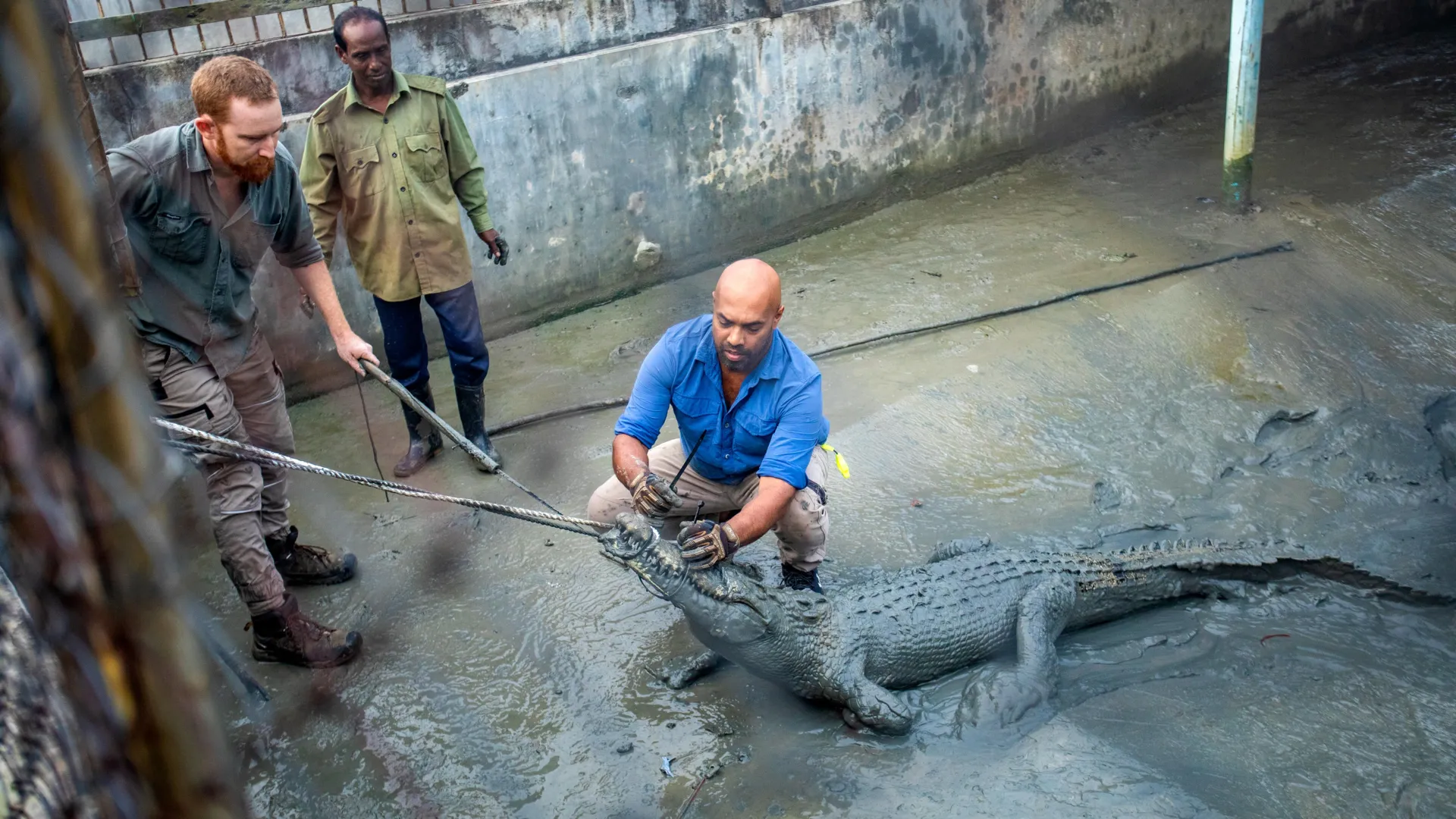
The global conservation community has received a significant boost following the publication of a landmark study revealing that saltwater crocodiles born or raised in captivity do not attempt to return to their breeding facilities upon release. This behavioral insight addresses a long-standing hurdle in wildlife management and could fundamentally transform ongoing initiatives to restore critically depleted populations of the world’s largest living reptiles. Published in the peer-reviewed journal Wildlife Research, the study titled "What is home? Post-release movements of captive-reared and translocated mature saltwater crocodiles in Bangladesh" sheds light on the post-release spatial ecology of these apex predators, offering a potential lifeline for populations struggling to recover from historical exploitation.
The research was spearheaded by a collaborative team including behavioral ecologist and Adjunct Associate Professor Ru Somaweera from Murdoch University, alongside conservationists from IUCN Bangladesh and the Bangladesh Forest Department, with funding provided by the Deutsche Gesellschaft für Internationale Zusammenarbeit (GIZ). By tracking the movements of mature saltwater crocodiles via satellite telemetry in the remote Sundarbans mangrove forest, the researchers discovered a stark behavioral contrast between captive-reared individuals and displaced wild crocodiles, opening new pathways for strategic reintroduction programs.
Understanding Homing Instincts in Apex Predators
Finding the way back home is a fundamental survival mechanism deeply embedded across the animal kingdom. For countless species, spatial memory and homing capabilities dictate foraging success, territorial defense, and reproductive viability. While some creatures execute localized daily migrations between foraging grounds and nesting burrows, others navigate vast oceanic or terrestrial expanses over extended periods.
Among reptiles, crocodilians present a uniquely complex behavioral profile. As dominant apex predators inhabiting tropical, subtropical freshwater, and brackish ecosystems, their survival strategies often involve strict site fidelity.
"Crocodilians are a unique case when it comes to homing behavior," said Associate Professor Ru Somaweera. "Crocodiles are remarkably good at finding their way home, often returning to their original capture sites and limiting the success of relocation programs. What we still don’t fully understand, though, is how this behavior plays out in individuals that have been bred or kept in captivity for long periods before being released back into the wild."
This strong homing instinct has historically undermined wildlife management interventions. When problem crocodiles or animals captured from conflict zones are relocated to distant waterways, their persistent drive to return to their home range frequently leads them through populated areas, heightening human-wildlife conflict or resulting in mortality during their arduous journeys. Conversely, conservationists attempting to bolster dwindling wild populations have faced a dilemma regarding how released animals interact with their new surroundings.
Historical Context and the Plight of the Sundarbans
The research was conducted within the Sundarbans mangrove forest in Bangladesh, a vast and complex delta region that serves as one of the country’s last remaining sanctuaries for the saltwater crocodile (Crocodylus porosus). Historically, the region supported robust populations of these formidable reptiles. However, intense commercial hunting for their valuable skins decimated populations throughout the mid-20th century, bringing the species to the brink of local extinction by the 1970s.
In response to the precipitous decline, the government of Bangladesh granted saltwater crocodiles legal protection in 1973. Despite over five decades of formal protection, the species has failed to exhibit a measurable demographic recovery. Contemporary surveys indicate that the country’s remaining wild saltwater crocodiles are largely restricted to the Sundarbans, where the population remains perilously small. The most recent comprehensive population estimates suggest that a mere 140 mature individuals survive in the region, placing the species under severe demographic and genetic strain.
The persistence of such low numbers underscores the urgent necessity for active conservation interventions, including captive breeding and reintroduction programs. Yet, historical efforts have been bottlenecked by uncertainties regarding the efficacy of releasing captive-raised animals into complex natural ecosystems.
Evaluating the Viability of Captive-Reared Releases
Traditionally, wildlife conservation programs utilizing captive-bred reptiles have relied heavily on releasing hatchlings or juveniles. The rationale was rooted in the assumption that younger animals would more readily imprint on wild environments and avoid the behavioral conditioning associated with captivity. However, this approach carries severe drawbacks. Hatchlings and small juveniles experience exceptionally high mortality rates in the wild due to predation by birds, fish, and larger reptiles, alongside environmental stressors. Furthermore, reaching reproductive maturity is a slow process for saltwater crocodiles, meaning that released hatchlings take many years to contribute to population growth.
These limitations prompted researchers to investigate whether subadult and adult crocodiles, which have higher baseline survival probabilities due to their size, could be successfully integrated into wild populations via captive-rearing facilities.
"If crocodiles who are bred and raised in captivity subsequently return to their enclosures or breeding facilities after being released, attempts to reintroduce them into the wild as part of conservation efforts will ultimately fail," Associate Professor Somaweera explained. "The traditional approach has been to use hatchlings in reintroduction programs, but their survival rates are extremely low and they take a long time to reach reproductive maturity. Understanding whether larger, captive-reared crocodiles can be used instead represents an important knowledge gap."
Methodology and Satellite Tracking
To bridge this critical knowledge gap, the research team designed a field study utilizing advanced satellite tracking technology. Five mature saltwater crocodiles were fitted with specialized tracking devices designed to monitor their spatial distribution and movement velocities over several months following their release into the Sundarbans.
The study cohort was carefully selected to compare different behavioral backgrounds. It comprised three captive-reared females that had spent between eight and 22 years housed within controlled breeding environments. To establish a baseline for natural behavior, the cohort also included two wild crocodiles: one local wild crocodile that was captured and immediately released at the same site, and a second wild crocodile named Jongra, which was translocated across a significant distance from its original home range.
By monitoring the daily trajectories, home range sizes, and directional headings of these individuals, the researchers were able to assess whether long-term captivity alters an animal’s spatial orientation or impairs its ability to establish a new territory.
Captive-Reared Individuals Seamlessly Adapt
The primary findings of the study offered encouraging empirical evidence for conservation practitioners. None of the three captive-reared females exhibited any behavioral indication of attempting to navigate back to the breeding facilities where they had spent the majority of their lives.
Instead of undertaking long-distance directional travel, the captive-reared crocodiles quickly localized their movements. They established small, well-defined home ranges and displayed movement patterns statistically comparable to those of the local wild control crocodile monitored during the same period.
"They settled into small, well-defined areas and moved in much the same way as the local wild crocodile we tracked, which tells us they are possibly able to adapt to their new environment seamlessly," Associate Professor Somaweera noted.
This behavioral plasticity suggests that adult crocodiles, despite prolonged exposure to captive environments, retain the fundamental ecological competencies required to forage, establish territories, and survive in dynamic estuarine ecosystems without experiencing the disorientation or distress that often plagues translocated wild animals.
The Behavioral Contrast of Translocated Wild Crocodiles
In sharp contrast to the seamless integration observed in captive-reared subjects, the translocated wild crocodile, Jongra, demonstrated the classic, persistent traits of strong homing behavior. Jongra had been captured and transported approximately 132 kilometers away from his native habitat before being released into the study area.
Although physical and ecological barriers prevented Jongra from successfully reaching his original capture site over the duration of the monitoring period, his trajectory and movement metrics left no doubt regarding his navigational intent.
"Unfortunately, the results weren’t as good for the wild crocodile Jongra, who was translocated about 132km from his home before being released," Associate Professor Somaweera stated. "Although Jongra didn’t make it back to his original capture site during the study, his movements were very clearly going in that direction. He traveled far more each day than any other crocodile we tracked, covered an exceptionally large area, and even recorded single-day movements of more than 30 kilometers: all typical signs of homing behavior."
Jongra’s erratic and exhaustive movements underscore the inherent risks and management challenges associated with relocating adult wild crocodiles. Animals driven by strong homing impulses expend immense metabolic energy, traverse unfamiliar and potentially hazardous territories, and frequently precipitate human-wildlife conflicts as they navigate through human-dominated landscapes or fishing communities in their quest to return home.
Implications for Global Crocodile Conservation
The divergence in post-release behavior between captive-reared and translocated wild crocodiles provides wildlife managers with a nuanced framework for future conservation policy. Rather than treating all relocated or captive crocodiles as uniform candidates for release, conservation programs can tailor their strategies based on the origin and developmental history of the animals.
"These findings suggest that releasing subadult and adult captive-reared crocodiles can be a viable strategy to strengthen wild populations," Associate Professor Somaweera concluded. By bypassing the vulnerable hatchling stage and introducing robust, older individuals into protected habitats like the Sundarbans, conservationists can accelerate demographic recovery and enhance the genetic diversity of declining wild stocks.
At the same time, the study emphasizes the need for rigorous operational protocols when managing nuisance or conflict wild crocodiles.
"For translocated crocodiles, it’s important there is careful release planning to manage their tendencies to return home," Somaweera added.
Conservation planners may need to consider remote release sites, physical barrier management, or alternative permanent sanctuaries for wild adults displaying acute homing tendencies, thereby mitigating both animal mortality and the risks posed to local human populations.
Broader Ecological Significance
As habitat fragmentation, industrial encroachment, and historical hunting pressures continue to threaten crocodilian populations across South and Southeast Asia, empirical studies of post-release behavior are increasingly critical. The successful integration of captive-reared saltwater crocodiles demonstrated in this research provides a scalable model that can be adapted for other threatened crocodilian species facing similar conservation impasses.
By combining advanced satellite telemetry with rigorous behavioral ecology, researchers and governmental agencies like the Bangladesh Forest Department are better equipped to implement evidence-based management strategies. As conservationists look toward the future of the Sundarbans, the knowledge that captive-raised saltwater adults can successfully transition into wild predators offers a tangible beacon of hope for the recovery of a species that has teetered on the precipice of extinction for generations.
