
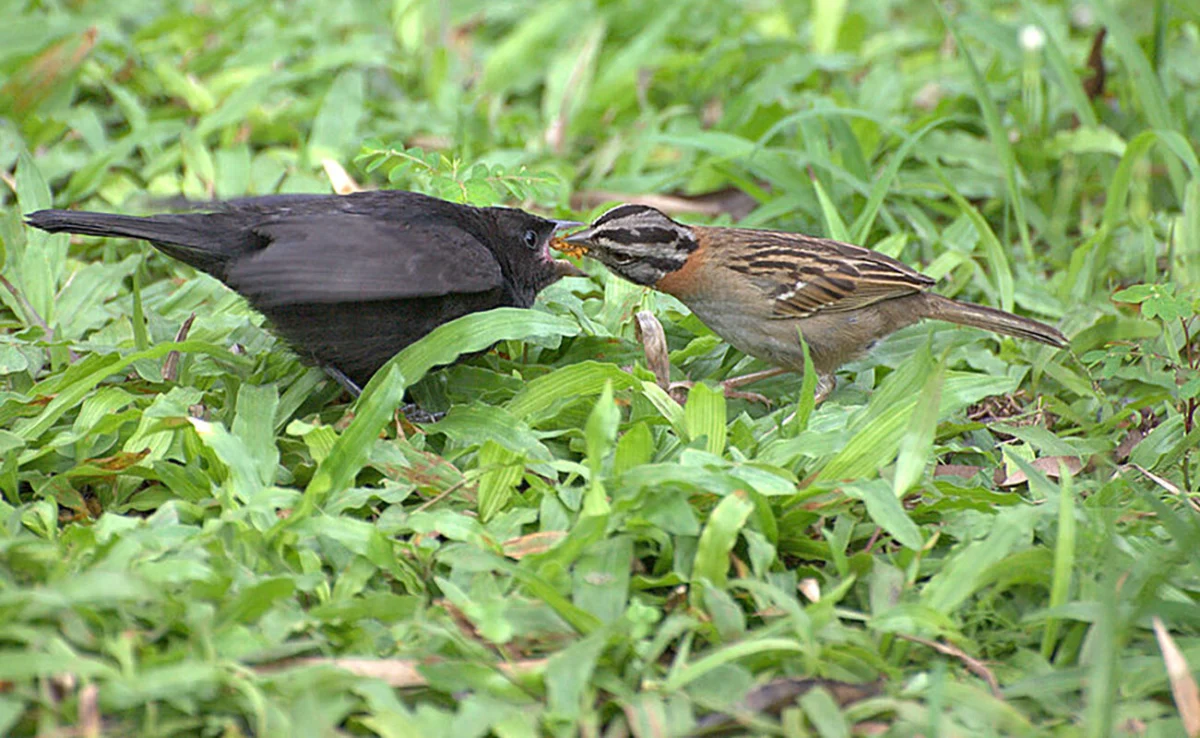
The complexity of communication is often viewed through the lens of human linguistics, where thousands of distinct tongues and regional dialects define our social structures. However, biologists have long hypothesized that nature utilizes a more fundamental, cross-species lexicon—one that bypasses learned syntax in favor of instinctual, survival-based signals. A groundbreaking 2025 multi-institutional study, featuring researchers from Cornell University and the Doñana Biological Station in Seville, Spain, has provided empirical evidence for this theory, suggesting that birds across the globe share a "universal" alarm system to detect and respond to brood parasites.
Brood parasitism—a phenomenon where one bird species lays its eggs in the nest of another—represents one of the most intense evolutionary pressures in the animal kingdom. The host bird, often coerced into raising an offspring that may kill its own biological chicks, faces a high-stakes survival challenge. This recent research indicates that evolution has equipped these host species with an innate vocalization, a "whining alarm," that acts as an interspecies distress signal, allowing birds in disparate geographic regions to communicate the threat of an intruder regardless of their lack of common ancestry or previous interaction.
The Evolutionary Context of Brood Parasitism
To understand the significance of this universal alarm, one must first appreciate the biological stakes of brood parasitism. This reproductive strategy is common among species such as cuckoos, cowbirds, and honeyguides. The parasite effectively offloads the metabolic and temporal costs of parenting—incubation, feeding, and protection—onto an unsuspecting host.
The consequences for the host are severe. In many documented instances, the parasitic chick hatches earlier or grows faster, often pushing the host’s biological eggs or nestlings out of the nest. This behavior forces the host to dedicate all its resources to the survival of a genetic stranger. Over millions of years, this parasitic relationship has driven a "co-evolutionary arms race." While parasites have evolved to produce eggs that mimic the color and pattern of their hosts, the hosts have evolved defensive mechanisms, including the ability to identify and eject foreign eggs, and, as this study highlights, the ability to broadcast acoustic warnings.
Chronology of the 2025 Investigation
The research project, which culminated in the 2025 findings, spanned several years of observation across four continents. The methodology focused on the acoustic properties of warning calls emitted by 21 distinct bird species.
- Phase I (2022–2023): Researchers cataloged the vocalizations of various host species in North America, Europe, Asia, and Australia. The focus was specifically on calls emitted in the presence of known brood parasites.
- Phase II (2024): The team performed cross-species playback experiments. They played recordings of "whining" alarm calls from a bird species in China to a host population in the United States, and vice-versa.
- Phase III (2025): The data was synthesized, revealing that the structural composition of the warning calls remained remarkably consistent across the 21 species. Statistical analysis confirmed that the "whining" frequency was not a learned behavior but an innate, genetically encoded response to parasitic threats.
Data Analysis and Acoustic Convergence
The data gathered by the research team demonstrated that the "whining" alarm is characterized by specific frequency modulations that trigger immediate defensive or vigilant behaviors in recipient birds. In the playback trials, birds that had never encountered a foreign parasite—nor a foreign bird species—exhibited the same physiological and behavioral arousal as the control groups.
The consistency of this acoustic signal is striking when considering the phylogenetic distance between the studied species. Some of the birds observed belong to evolutionary lineages that separated tens of millions of years ago. The fact that the signal has been conserved across such vast periods suggests that the pressure to communicate parasitic threats is so great that natural selection has pruned away any significant variation in the warning signal. It is a biological "fixed action pattern," similar to the reflexive way a human might gasp or scream when suddenly startled, regardless of their native language.

Comparative Perspectives and Theoretical Implications
Dr. Elena Rodriguez, a lead researcher involved in the study, noted that these findings challenge the traditional view of bird song as a purely learned or territorial tool. "We are seeing that the architecture of communication is not always a product of cultural transmission," she explained in a summary of the findings. "Instead, these warning signals appear to be hard-wired into the avian brain, likely residing in neural structures that govern basic survival instincts."
This observation brings up a compelling parallel to developmental biology. Just as human toddlers exhibit universal non-verbal cues to communicate distress or curiosity before they master language, birds appear to rely on a foundational "proto-language" for safety. The study suggests that birds may possess a cognitive template for identifying threats that is pre-programmed at birth, which is later refined by individual experience, but never fully replaced.
Broader Impact on Ornithological Science
The implications of this discovery extend far beyond the study of brood parasites. If birds possess a universal alarm system, it raises questions about other forms of interspecies communication. Are there universal "food found" signals? Do birds share a common syntax for alerting others to specific types of predators, such as hawks versus snakes?
The scientific community is currently evaluating how these findings might influence conservation efforts. Understanding the "universal language" of birds could allow researchers to better monitor the health and stress levels of wild populations. If human-made noise pollution interferes with these specific, high-frequency "whining" alarms, it could render host species defenseless against parasitic pressure, potentially leading to local extinctions.
Furthermore, the study provides a new lens through which to view Charles Darwin’s early theories on animal expression. Darwin long argued that the expression of emotions and warning signals were essential to the survival of the species, but the technology to map these acoustic signals across global species did not exist during his lifetime. The 2025 findings serve as a 21st-century validation of his foundational work, proving that communication is a biological imperative that transcends the boundaries of species.
Conclusion: The Future of Interspecies Research
As we continue to decode the acoustic landscape of the natural world, the realization that birds share a common "vocabulary" for danger underscores the interconnectedness of ecosystems. The research does not imply that birds have a complex, human-like language, but rather that they possess a sophisticated, instinctual signaling system that is robust enough to survive the test of time and distance.
This study marks a turning point in behavioral ecology. By shifting the focus from individual species-specific behaviors to the universal, shared mechanisms of survival, researchers are uncovering the hidden threads that bind the avian world together. Future investigations will likely focus on the neural pathways responsible for these signals, seeking to identify the exact regions of the avian brain that translate "whining" into "danger."
Ultimately, this research serves as a reminder that while humanity prides itself on the complexity of its spoken languages, we are merely one part of a vast, global conversation. Nature has been perfecting its own forms of communication for millions of years, creating signals that are as effective in the forests of South America as they are in the grasslands of Australia—a silent, universal code that continues to shape the survival of species every single day.
