
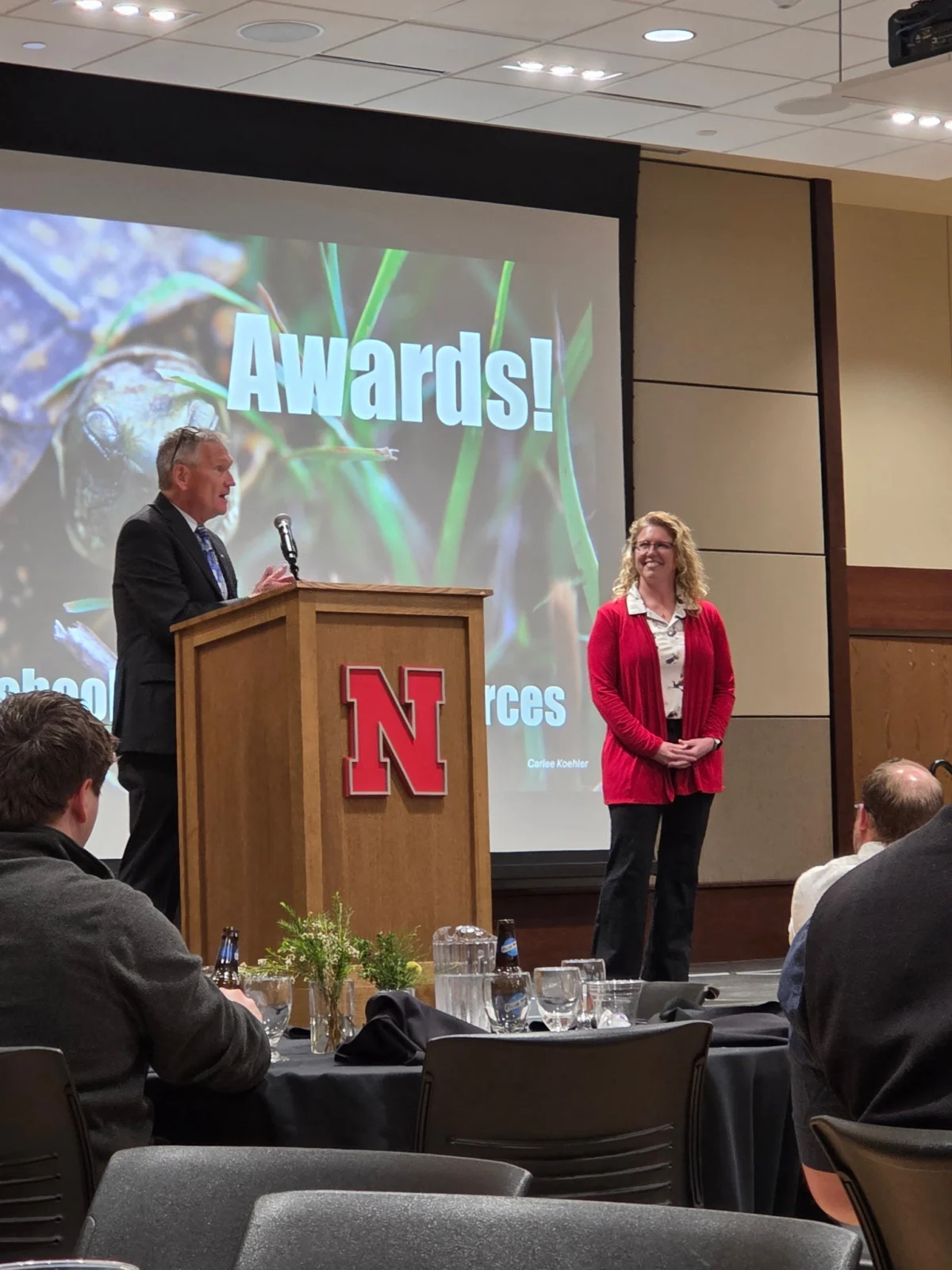
Audubon Great Plains is proud to announce that Kristal Stoner, the esteemed Vice President and Executive Director of Audubon Great Plains, has been presented with the Harold L. Wiegers Nebraska Outstanding Conservation Award. This prestigious recognition underscores Stoner’s profound commitment to wildlife conservation, her impactful leadership, and the enduring legacy of her contributions to protecting natural resources across the region. The award serves as a testament to her unwavering dedication to preserving the delicate ecosystems of the Great Plains and inspiring a new generation of environmental stewards.
Celebrating a Champion of Conservation
The Harold L. Wiegers Nebraska Outstanding Conservation Award is a distinguished accolade within the state, designed to celebrate individuals who have not only dedicated their professional lives to wildlife conservation but have also ignited passion and fostered action in others through their exemplary work and achievements. The award carries significant historical weight, named in honor of Dr. Harold L. Wiegers, a visionary and long-serving professor who was instrumental in establishing the University of Nebraska-Lincoln’s (UNL) renowned fisheries and wildlife program. Dr. Wiegers’ pioneering efforts laid the groundwork for scientific inquiry and practical application in wildlife management, setting a precedent for excellence that the award now seeks to uphold and recognize in contemporary leaders. Each spring, the UNL Wildlife Club, comprising students deeply invested in the field, diligently solicits nominations from across the Nebraska community. Following a rigorous review process, the club’s officer team meticulously selects the recipient, ensuring that the award truly reflects a legacy of leadership, education, and steadfast commitment to the protection of natural resources.
Kristal Stoner’s leadership at Audubon Great Plains has been nothing short of transformative. As Executive Director, she has emerged as a formidable advocate for habitat conservation, not just within Nebraska’s borders but throughout the broader Great Plains region, which encompasses parts of Nebraska, Kansas, South Dakota, North Dakota, and Iowa. Her tenure has been marked by a strategic vision that combines scientific rigor with community engagement, yielding tangible benefits for diverse wildlife populations and their habitats. Her accomplishments are extensive and impactful, reflecting a comprehensive approach to conservation that addresses policy, land management, and public education.
A Legacy of Impact: Stoner’s Key Achievements
One of Stoner’s most significant achievements has been her tenacious support for the protection and sustained funding of the Nebraska Environmental Trust. This critical state program, established by voters in 1992, allocates proceeds from the Nebraska Lottery to conservation projects across the state. The Trust has funded thousands of projects aimed at protecting natural habitats, improving water quality, promoting outdoor recreation, and educating the public about environmental stewardship. Stoner’s advocacy has been pivotal in safeguarding this vital funding mechanism, recognizing that consistent financial support is the bedrock upon which long-term conservation initiatives are built. Her efforts have ensured that countless projects, from wetland restoration to prairie grassland management, continue to receive the necessary resources to thrive, directly benefiting Nebraska’s unique biodiversity.
Beyond policy advocacy, Stoner has been a driving force behind numerous on-the-ground wildlife conservation efforts and habitat protection initiatives across Nebraska. The Great Plains are a globally significant region for migratory birds, including iconic species like the Sandhill Crane, Piping Plover, and various grassland birds, many of which face increasing threats from habitat loss and fragmentation. Under Stoner’s guidance, Audubon Great Plains has spearheaded projects focused on restoring and managing crucial habitats, such as tallgrass prairies, riparian zones along rivers like the Platte, and vital wetland complexes. These efforts often involve working directly with landowners, leveraging incentive programs, and implementing science-based land management practices to create healthy environments where wildlife can flourish. Her leadership has been instrumental in fostering collaborative partnerships with state agencies, private landowners, and other conservation organizations, maximizing the reach and effectiveness of these critical programs.
Furthermore, Stoner has passionately championed educational and outreach opportunities, understanding that conservation is a shared responsibility requiring an informed and engaged public. She has significantly backed wildlife programming at two of Audubon’s most prominent centers in Nebraska: the Spring Creek Prairie Audubon Center near Denton and the Iain Nicolson Audubon Center at Rowe Sanctuary near Kearney.
The Spring Creek Prairie Audubon Center spans over 800 acres of pristine tallgrass prairie, offering a living classroom where visitors can connect with one of North America’s most endangered ecosystems. Under Stoner’s leadership, the center has expanded its educational programs, reaching thousands of schoolchildren annually through field trips, summer camps, and citizen science initiatives. These programs immerse participants in the prairie environment, teaching them about grassland birds, native plants, and the intricate web of life that defines this landscape. The center also hosts public events, guided hikes, and workshops, fostering a deeper appreciation for conservation among community members of all ages.
The Iain Nicolson Audubon Center at Rowe Sanctuary is internationally recognized for its role in protecting critical habitat for Sandhill Cranes along the Platte River. Each spring, hundreds of thousands of cranes descend upon the Platte during their epic migration, drawing visitors from around the globe. Stoner’s support has enabled Rowe Sanctuary to enhance its visitor experience, offering guided viewing blinds, educational exhibits, and interpretive programs that highlight the marvel of the crane migration and the urgent need to protect the Platte River ecosystem. These centers are not merely tourist attractions; they are vital hubs for scientific research, habitat management, and public advocacy, all of which have seen significant growth and impact under Stoner’s strategic direction.
Reflections from the Recipient and Colleagues
Kristal Stoner, reflecting on the honor, articulated the profound meaning behind the award: "This recognition is especially meaningful because it reflects a shared commitment to conserving wildlife and the places they depend on, and to inspiring others to care about the natural world around us." Her statement emphasizes a core philosophy of conservation — that it is a collective endeavor, rooted in community and a common purpose. She added, "I’ve been fortunate to work alongside incredible colleagues, partners, and communities who bring passion, creativity, and determination to this work every day." This acknowledgment highlights her collaborative leadership style, recognizing that the success of Audubon Great Plains is a direct result of the collective efforts of a dedicated network of professionals, volunteers, and community stakeholders.
The UNL Wildlife Club, which plays a central role in the award selection, offered insights into their choice. "Kristal Stoner embodies the spirit of Dr. Wiegers’ legacy," stated Sarah Chen, President of the UNL Wildlife Club. "Her leadership at Audubon Great Plains demonstrates a perfect blend of scientific understanding, practical conservation, and effective public outreach. We were particularly impressed by her consistent advocacy for crucial funding mechanisms like the Nebraska Environmental Trust and her commitment to fostering conservation education, which is vital for inspiring future generations of wildlife professionals." Dr. Mark Smith, a faculty advisor to the UNL Wildlife Club and a professor in the School of Natural Resources, added, "Dr. Wiegers envisioned a program that would produce leaders capable of making real change. Kristal Stoner is a shining example of that vision realized. Her work exemplifies the dedication and impact we hope our students will aspire to achieve."
Colleagues at Audubon Great Plains also expressed their commendation. "Kristal’s vision and unwavering dedication have elevated Audubon Great Plains to new heights," commented David Johnson, Chair of the Audubon Great Plains Board of Directors. "She possesses a unique ability to translate complex conservation challenges into actionable strategies, forging strong partnerships, and inspiring our entire team to strive for excellence. This award is a well-deserved recognition of her tireless efforts and profound impact."
The Broader Significance of Conservation Leadership
The recognition of Kristal Stoner with the Harold L. Wiegers Award underscores the critical importance of strong, visionary leadership in the conservation sector. In an era marked by escalating environmental challenges—including climate change, habitat degradation, and biodiversity loss—the role of organizations like Audubon Great Plains and their leaders becomes ever more vital. Stoner’s work exemplifies how effective leadership can navigate complex political landscapes, secure essential funding, and mobilize communities towards common environmental goals.
Her focus on protecting the Nebraska Environmental Trust funding highlights the necessity of robust financial frameworks for sustained conservation. Without stable and dedicated funding, many critical projects aimed at land acquisition, habitat restoration, and species protection would simply not be possible. Her advocacy ensures that these foundational resources remain available for future generations of conservationists and for the benefit of Nebraska’s natural heritage.
Furthermore, Stoner’s emphasis on educational outreach through the Spring Creek Prairie and Rowe Sanctuary centers illustrates a fundamental truth in conservation: that long-term success hinges on public understanding and engagement. By fostering a connection between people and nature, these programs cultivate a sense of stewardship and empower individuals to become active participants in environmental protection. These centers serve as powerful reminders that conservation is not just about protecting animals and habitats, but also about enriching human lives and securing a sustainable future.
Looking Ahead: Challenges and Opportunities
While the award celebrates past achievements, it also serves as a beacon for the ongoing work that lies ahead. The Great Plains continue to face significant conservation challenges. Grassland birds, for example, are among the most imperiled avian groups in North America, having experienced steep population declines due to agricultural conversion and habitat fragmentation. The Platte River, while protected in key areas, remains vulnerable to water management issues and climate impacts, threatening the integrity of its ecosystem for migratory birds.
Kristal Stoner’s leadership at Audubon Great Plains will undoubtedly continue to be crucial in addressing these complex issues. The organization’s strategic priorities, informed by science and community needs, will likely focus on expanding resilient habitat networks, advocating for climate-smart land management practices, and strengthening partnerships with agricultural communities to promote sustainable land use. The ongoing effort to inspire and educate the public, especially young people, will remain a cornerstone of their mission, ensuring that the legacy of conservation continues to grow.
The Harold L. Wiegers Nebraska Outstanding Conservation Award is more than just an honor for Kristal Stoner; it is a reaffirmation of the enduring value of dedicated conservation work and a call to action for all who cherish the natural world. Her exemplary contributions provide a powerful model for effective environmental stewardship, reminding us that with passionate leadership and collective effort, we can make a profound difference in protecting the precious wildlife and wild places that define our planet.
