
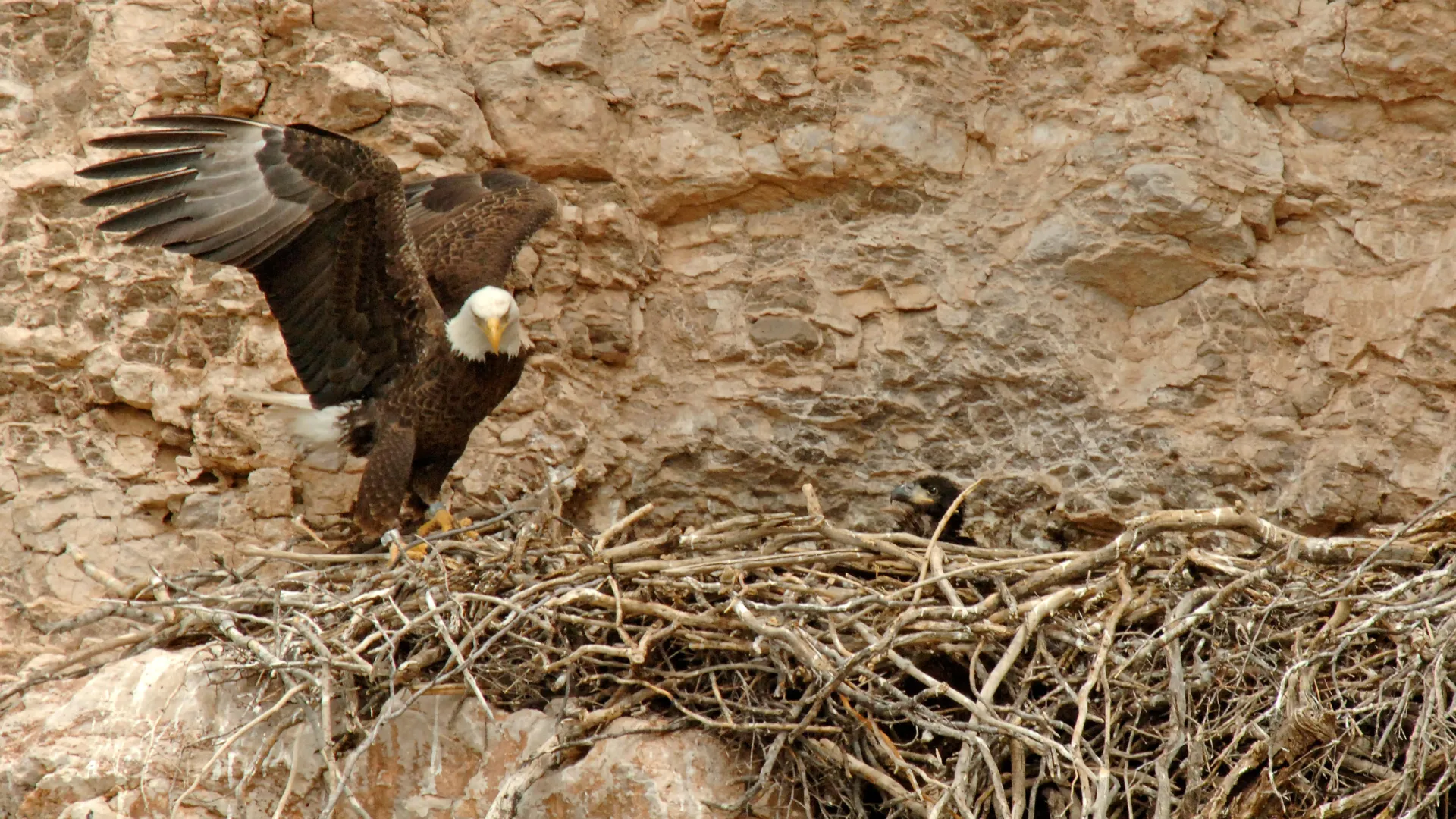
A groundbreaking study published in the Journal of Raptor Research has unveiled a fascinating deviation from established avian migratory patterns, revealing that Bald Eagles (Haliaeetus leucocephalus) originating from Arizona are embarking on unusual northward journeys during their nonbreeding season. This finding challenges the long-held assumption that most migratory birds in temperate regions exclusively head south for winter, presenting a complex new layer to our understanding of raptor ecology and population dynamics. The research, titled "Northward Migrations of Nonbreeding Bald Eagles from Arizona, USA," further documented a singular eagle that left its Arizona birthplace and ultimately settled in California, a rare observation that questions previous notions about the frequency of emigration from Bald Eagle home populations. These revelations suggest that southwestern Bald Eagles possess a highly exploratory nature, likely driven by the need to locate ephemeral food sources in dynamic landscapes. In an era marked by rapid climate and environmental shifts, studies that meticulously document wildlife movement adjustments are not merely academic exercises; they are vital tools for designing effective conservation strategies and safeguarding critical travel corridors for vulnerable species.
A Shift in Avian Understanding: Northward Bound from the Southwest
For generations, the image of migratory birds winging their way south as colder weather approaches has been etched into the collective consciousness, both scientific and popular. This new research, however, paints a different picture for a specific segment of the Bald Eagle population. Unlike their northern counterparts who typically migrate south to warmer climes for the winter, Arizona’s Bald Eagles initiate their breeding season in the winter months. Consequently, their non-breeding season falls during the summer and autumn. It is during this period that the observed northward movements occur, a phenomenon that has profoundly intrigued lead author Dr. Caroline D. Cappello. She notes that this "northward migratory behavior raises interesting questions about the recent and historical pressures that shape these movement strategies," suggesting a deep evolutionary or adaptive significance to these unexpected patterns. This counter-intuitive migration strategy underscores the adaptive flexibility of species, particularly those residing at the southern fringes of their geographical ranges where environmental conditions can be more extreme and resource availability more unpredictable.
The study’s findings necessitate a re-evaluation of general migratory paradigms, especially for species in regions with unique climatic characteristics. Arizona’s desert environment, despite its reputation for arid conditions, supports a breeding population of Bald Eagles largely due to the presence of significant river systems and reservoirs. The availability of water bodies sustains fish populations, which are the primary food source for these raptors. However, seasonal fluctuations in water levels, fish availability, and overall ecosystem productivity could be driving these eagles to seek out more abundant resources further north during their non-breeding period. This strategy might allow them to exploit rich, but transient, food sources like spawning salmon runs or abundant waterfowl nesting colonies in more northern latitudes, before returning to their breeding grounds as winter approaches.
Decades of Decline and Resurgence: The Bald Eagle’s Comeback Story
To fully appreciate the significance of this new research, it is essential to understand the Bald Eagle’s remarkable journey from the brink of extinction. Once a widespread symbol of American wilderness, the Bald Eagle population suffered catastrophic declines in the mid-20th century, primarily due to the widespread use of the pesticide DDT. DDT accumulated in the food chain, causing eagles to lay thin-shelled eggs that often broke during incubation. By the 1960s, only 417 nesting pairs remained in the lower 48 states, pushing the species to the brink.
The tide began to turn with the ban of DDT in the United States in 1972 and the subsequent listing of the Bald Eagle under the Endangered Species Act (ESA) in 1973. Through rigorous conservation efforts, including captive breeding programs, habitat protection, and public awareness campaigns, the species made a stunning recovery. By 2007, its population had rebounded sufficiently for it to be delisted from the ESA, a monumental success story in wildlife conservation. Today, Bald Eagles are protected under the Bald and Golden Eagle Protection Act and the Migratory Bird Treaty Act, ensuring their continued safeguarding. The current estimated population in the lower 48 states exceeds 300,000 individual birds, a testament to decades of dedicated work.
However, the species’ recovery does not imply an end to monitoring or research. As this Arizona study highlights, understanding regional variations in behavior, particularly in populations at the edge of the species’ range, is crucial for long-term viability. Arizona’s Bald Eagle population, for instance, has always been somewhat distinct. They are one of the few populations that nest and raise their young in a desert environment, relying heavily on perennial rivers and reservoirs. This unique ecological niche likely contributes to their distinctive migratory strategies and underscores why detailed, localized research is indispensable for adaptive management and conservation planning in a changing world.
Tracking the Explorers: Methodology and Insights (2017-2023)
Between 2017 and 2023, the Arizona-based research team embarked on an ambitious project to track the movements of these iconic raptors. Utilizing state-of-the-art satellite transmitters, they meticulously followed 24 newly fledged Bald Eagles and two nonbreeding adults. The transmitters provided invaluable data, allowing researchers to map their intricate movements both within and beyond the borders of Arizona. While much has been understood about the relatively sedentary nature of breeding Bald Eagles in Arizona, who tend to remain close to their nesting territories year-round, information regarding the movements of nonbreeding birds has historically been scarce.
The researchers were able to follow individual eagles for significant durations, with some tracking devices functioning for up to four years within the seven-year study period. This long-term data collection is critical, as it allows scientists to observe changes in movement patterns as birds mature. Because survival rates can vary significantly across different life stages, comparing the movement patterns and survival rates of nonbreeding eagles with those of breeding birds provides a more holistic and accurate view of the species’ overall health across its range. It also offers crucial insights into how population-level processes, such as recruitment and dispersal, are shaped by individual behaviors. Coauthor Dr. Javan M. Bauder, a USGS researcher, Assistant Unit Leader at the Arizona Cooperative Fish and Wildlife Research Unit, and Assistant Professor at the University of Arizona, emphasized this point, stating that "managing and conserving wildlife populations requires that we understand the movement of patterns of individuals of all age classes within those populations." This comprehensive perspective is essential for developing effective conservation strategies that account for the needs of the entire population, not just the breeding adults.
A key observation from the study was the refinement of migration pathways as eagles matured. Most birds tracked for at least two years demonstrated a pattern of returning to Arizona in the fall of their hatch year after spending the summer months exploring farther north. This suggests a learning curve, where young eagles initially undertake more extensive exploratory movements, gradually narrowing down to more precise and efficient routes as they gain experience. The researchers hypothesize that these young eagles may be capitalizing on "seasonal food bonanzas" in northern regions, such as the abundant fish available during salmon spawning runs, the concentrations of nesting waterfowl, or even the carcasses of large mammals that become more accessible during certain times of the year. While compelling, confirming the exact nature of these food sources will necessitate additional, targeted research.
The Intermountain Flyway: Enduring Corridors for Generations
The study provided critical validation for the enduring importance of specific habitats and migratory routes. The tracked eagles consistently paused at many of the same lakes and rivers that a seminal study from the 1980s had already identified as crucial stopover sites for Bald Eagles. This remarkable overlap across generations strongly supports the idea that these habitats have remained vital gathering points, serving as consistent refueling and resting stations for multiple cohorts of eagles over several decades. This continuity is a testament to the ecological resilience of these specific sites and underscores their irreplaceable value for raptor conservation.
Beyond confirming a strong and sustained use of the Intermountain Flyway, a significant migratory corridor stretching through the western United States and into Canada, and a clear dependence on the network of lakes and rivers along these routes, the study revealed that eagles of varying ages migrated to diverse locations across the northern U.S. and southern Canada. This highlights the extensive range these young birds cover and the broad geographical scope of habitats critical for their survival. The Intermountain Flyway, characterized by its series of mountain ranges and river valleys, provides a natural pathway for birds moving between breeding and non-breeding grounds. Protecting these interconnected habitats, especially the identified stopover sites, is paramount. These sites act as critical stepping stones, allowing eagles to rest and forage during their long journeys, ensuring they have the energy reserves needed to complete their migrations successfully. Any degradation or fragmentation of these key areas could have cascading negative impacts on the entire population.
Perilous Journeys: Threats to Young Raptors in a Changing World
The exploratory journeys of young Bald Eagles, while vital for finding resources and establishing new territories, are fraught with peril in an increasingly human-dominated world. The study poignantly illustrated these dangers through the tragic fate of one particular eagle. This individual, in her early life, traversed an astonishing ten U.S. states and four Canadian provinces, demonstrating an extraordinary capacity for dispersal, before seemingly settling in northern California. There, at the tender age of four years old, she appeared poised to establish her own breeding territory, a significant milestone in any raptor’s life cycle. However, her promising future was abruptly cut short by electrocution, an all too common cause of mortality for large birds of prey.
Dr. Cappello highlighted the profound impact of this loss, explaining that it "underscored the ongoing risks these birds face," and further complicated research efforts because emigration is a particularly challenging aspect of population dynamics to measure accurately. This eagle’s apparent decision to live and breed in California would have provided invaluable, rare insight into the frequency and patterns of how Bald Eagles hatched in Arizona disperse to other regions, a key factor in understanding gene flow and population connectivity.
Electrocution remains a significant threat to raptors globally. Large birds, with their wide wingspans, often perch on power poles or collide with power lines, especially during takeoff or landing. Contact with two energized wires or an energized wire and a grounded component can result in fatal electrocution. Efforts by utility companies, often in collaboration with wildlife agencies, to retrofit power poles with raptor-safe designs – such as insulating wires, increasing spacing between conductors, or installing perch deterrents – have shown success but require widespread implementation.
Beyond electrocution, young raptors face a gauntlet of other anthropogenic threats. Lead poisoning is a pervasive issue, often resulting from eagles scavenging on carcasses of animals shot with lead ammunition. Lead fragments, even microscopic ones, can be ingested, leading to severe neurological damage, organ failure, and death. Similarly, secondary poisoning from rodenticides poses a silent threat. Eagles that prey on rodents weakened or killed by anticoagulants can accumulate lethal doses of the poison themselves. Collisions with wind turbines are another growing concern, particularly as renewable energy infrastructure expands. Proper siting of wind farms, informed by detailed studies of bird migration patterns, is crucial to mitigate this risk. Habitat loss and degradation, driven by urbanization, agriculture, and deforestation, continue to diminish suitable foraging and nesting grounds. Finally, the overarching uncertainty related to a changing climate introduces new challenges, altering food availability, shifting habitats, and increasing the frequency of extreme weather events that can impact survival.
By meticulously studying raptors at every stage of their lives, including the inherently risky exploratory journeys of young birds, scientists can provide evidence-based recommendations. This research allows for the identification of critical stopover sites that are most important to protect, and pinpoints specific types of infrastructure, such as electrical systems, that could be modified to significantly improve survival rates for Bald Eagles and other large raptors.
Conservation in a New Climate Era: Adapting Strategies
The findings of this Arizona Bald Eagle study carry significant implications for the future of raptor conservation, particularly in the context of a rapidly changing global climate. The highly exploratory nature of these eagles, and their willingness to undertake long-distance northward migrations, suggests a degree of adaptability that could be crucial for species survival. However, it also highlights the expanded geographical scope that conservation efforts must consider. It is no longer sufficient to focus solely on breeding grounds; the entire migratory corridor, including distant non-breeding areas and the intervening stopover sites, must be managed and protected.
This research underscores the need for cross-jurisdictional collaboration between state wildlife agencies (such as the Arizona Game and Fish Department), federal entities (like the U.S. Fish and Wildlife Service and the U.S. Geological Survey), and Canadian wildlife authorities. Protecting habitats along the Intermountain Flyway, from Arizona through the western U.S. and into southern Canada, demands coordinated efforts and shared conservation priorities. The identification of enduring stopover sites from the 1980s to the present day provides a clear mandate for prioritizing these locations for long-term protection, possibly through land acquisition, conservation easements, or specific habitat management programs.
Furthermore, the study’s emphasis on infrastructure modification, particularly regarding electrical systems, is a practical and actionable recommendation. Investing in raptor-safe power pole designs and retrofitting existing infrastructure can directly reduce mortality rates from electrocution, a preventable cause of death for many large birds of prey. This often involves collaboration with utility companies, providing data-driven justifications for such investments.
From a broader ecological perspective, understanding the "why" behind these northward migrations in a changing climate is paramount. If these movements are indeed a response to shifting resource availability or altered seasonal conditions, then this study serves as an early warning system. It indicates that species are already adapting their behaviors in measurable ways, and conservation strategies must similarly adapt. This could involve forecasting potential shifts in critical foraging areas, identifying new corridors that might become important, and planning for climate-resilient landscapes that can continue to support these adaptable raptors.
Charting the Future: Recommendations and Unanswered Questions
The research team has outlined several critical avenues for future investigation that build upon their foundational work. One key recommendation focuses on investigating route fidelity. As Dr. Cappello notes, "if consistent patterns exist it could help focus conservation efforts on specific, high-use areas along their migratory route." Understanding whether individual eagles consistently use the same routes and stopover sites year after year, or if their exploratory nature persists, will allow for more targeted and efficient conservation resource allocation. This could involve identifying "pinch points" or bottleneck areas along the flyway that are disproportionately important for eagle survival.
Another crucial area for future research involves comparative studies. The team highlights the importance of comparing these Arizona Bald Eagles to other wildlife populations that also migrate north from the southern edge of their range. Such comparisons could shed light on the broader ecological principles driving this less common migratory strategy, helping to understand the universal tradeoffs, costs, and benefits associated with northward migration. Are these eagles benefiting from reduced competition, access to higher quality food, or avoidance of environmental stressors in their southern breeding grounds during the non-breeding season? Answering these questions will provide a more comprehensive understanding of migratory evolution and adaptation.
Finally, the study underscores the ongoing necessity for long-term monitoring programs. The ability to track individual birds over several years provides invaluable data that cannot be gleaned from shorter studies. As climate and landscapes continue to change, sustained monitoring will be essential to detect further shifts in migratory behavior, assess the effectiveness of conservation interventions, and ensure the continued resilience of iconic species like the Bald Eagle. This vital research serves as a beacon, guiding conservation efforts towards a more adaptive and informed future for wildlife management.
