
The Mississippi River, often heralded as the "lifeblood of America," stands as a globally significant ecosystem whose health underpins the vitality of a vast continent. This iconic waterway and its sprawling watershed drain an astounding 41 percent of the continental United States, touching three-fifths of the nation’s states and extending into two Canadian provinces. More profoundly, it forms the core of the Mississippi Flyway, a central migratory passageway that supports nearly 60 percent of North America’s migratory bird species, linking diverse ecosystems from the Arctic to the Gulf of Mexico and beyond. Despite its unparalleled ecological importance, the river system faces escalating pressures, a reality underscored by its recent designation as America’s most endangered river by American Rivers, an environmental advocacy organization. This alarming status highlights the urgent need for concerted conservation efforts, many of which, led by organizations like Audubon and its partners, have been underway for years, now intensified by the river’s precarious state.
Mark Twain, in his timeless work Life on the Mississippi, aptly described it: "The Mississippi is well worth reading about. It is not a commonplace river, but on the contrary is in all ways remarkable." Twain’s observation remains profoundly true today, as the river continues to captivate and sustain, yet also demands critical intervention to preserve its remarkable character.
A Hemispheric Crossroads: The Riverlands Sanctuary
Central to the ongoing restoration narrative is the Audubon Center at Riverlands, strategically located just north of St. Louis. This vital hub is situated within the 3,700-acre Riverlands Migratory Bird Sanctuary, a landscape meticulously owned and managed by the U.S. Army Corps of Engineers. This sanctuary represents a true hemispheric crossroads, serving as an indispensable stopover site for birds undertaking epic journeys between their breeding grounds in the Arctic, wintering areas in the Gulf, and distant regions across the Americas. The sheer biodiversity here is staggering, with more than 300 bird species recorded, cementing Riverlands’ status not merely as a local sanctuary but as a global lifeline for migratory avifauna.
The profound interconnectedness of Riverlands to the wider Western Hemisphere is vividly illustrated by tools like the Bird Migration Explorer. Data from this platform reveals that birds observed at Riverlands forge direct links to over 45 countries and territories, spanning from the boreal forests of northern Canada to the southern reaches of Chile and Argentina. Tracking more than 100 tagged species provides compelling evidence of these vast migratory networks. For instance, the Blackpoll Warbler, a tiny but tenacious songbird, connects Riverlands to Cuba, while the vibrant Cerulean Warbler establishes ties to Venezuela. The Common Nighthawk’s expansive range reaches into western Brazil, and the American Golden-Plover’s presence is noted as far south as Uruguay. These birds are not merely transient visitors; their presence at Riverlands underscores the region’s indispensable role as a critical gateway, offering essential resting, refueling, and breeding grounds. It is a vital nexus where diverse ecosystems across the Americas converge, allowing birds to survive and thrive throughout their arduous migratory cycles.
The Critical Role of Bottomland Hardwood Forests
At the ecological foundation of this rich landscape, particularly for numerous avian species, are the bottomland hardwood forests. These seasonally flooded woodlands, characterized by their unique hydrology and species composition, once formed extensive, continuous corridors along the Mississippi River’s banks. They are biodiversity hotspots, crucial for filtering water, attenuating floods, and providing complex structural habitats. However, this critical habitat has faced severe degradation. Over 50 percent of these forests have been lost or significantly impaired since 1989, a decline driven by a confluence of factors including aggressive agricultural expansion, urban development, altered river hydrology (through levee construction and channelization), and the relentless encroachment of invasive species. Non-native plants such as reed canary grass and Japanese hops outcompete native flora, disrupting the delicate ecological balance. Furthermore, diseases like Dutch Elm Disease and the emerald ash borer have decimated native tree populations, further fragmenting and diminishing these vital woodlands. Though now fragmented and reduced in extent, the remaining bottomland forests are more vital than ever, representing increasingly scarce resources in a landscape profoundly altered by human activity.
For many landbirds, particularly those reliant on forested wetlands, the Upper Mississippi’s bottomland forests are an irreplaceable resource. They offer crucial refuge and sustenance within an otherwise fragmented landscape, providing a steady supply of food sources—insects, seeds, and fruits—and the specific forest structure necessary for successful breeding and safe rearing of their young. Regionally significant species exemplify this dependence. The Red-shouldered Hawk, an indicator of healthy forest ecosystems, relies on these woodlands for nesting and foraging. The Warbling Vireo and American Redstart, both migratory songbirds, depend on the diverse canopy and understory for nesting, molting, and safe passage during migration. Specialized cavity excavators, such as the Red-headed Woodpecker, are keystone species that create nesting sites in standing dead trees. Once these cavities are abandoned, they become prime real estate for secondary cavity nesters like the Prothonotary Warbler, the only cavity-nesting warbler in the East, which uniquely builds its nests above shallow water. The loss and degradation of these forests directly imperil these species and disrupt the intricate food webs and ecological interactions that define the river ecosystem.
Audubon’s Strategic Conservation Initiatives
Recognizing the escalating threats and the profound ecological value of these habitats, Audubon scientists, operating from the Riverlands Center, have spearheaded long-term efforts to monitor, protect, and restore these declining forest ecosystems. This work is informed by broader regional and national trends, including data from the upcoming 2025 State of the Birds report, which indicates a sobering 27 percent decrease in eastern forest bird populations since 1970. While some species in mature, undisturbed forests exhibit greater resilience, the overall losses are widespread, underscoring the critical necessity of localized, targeted conservation actions to reverse these population declines.
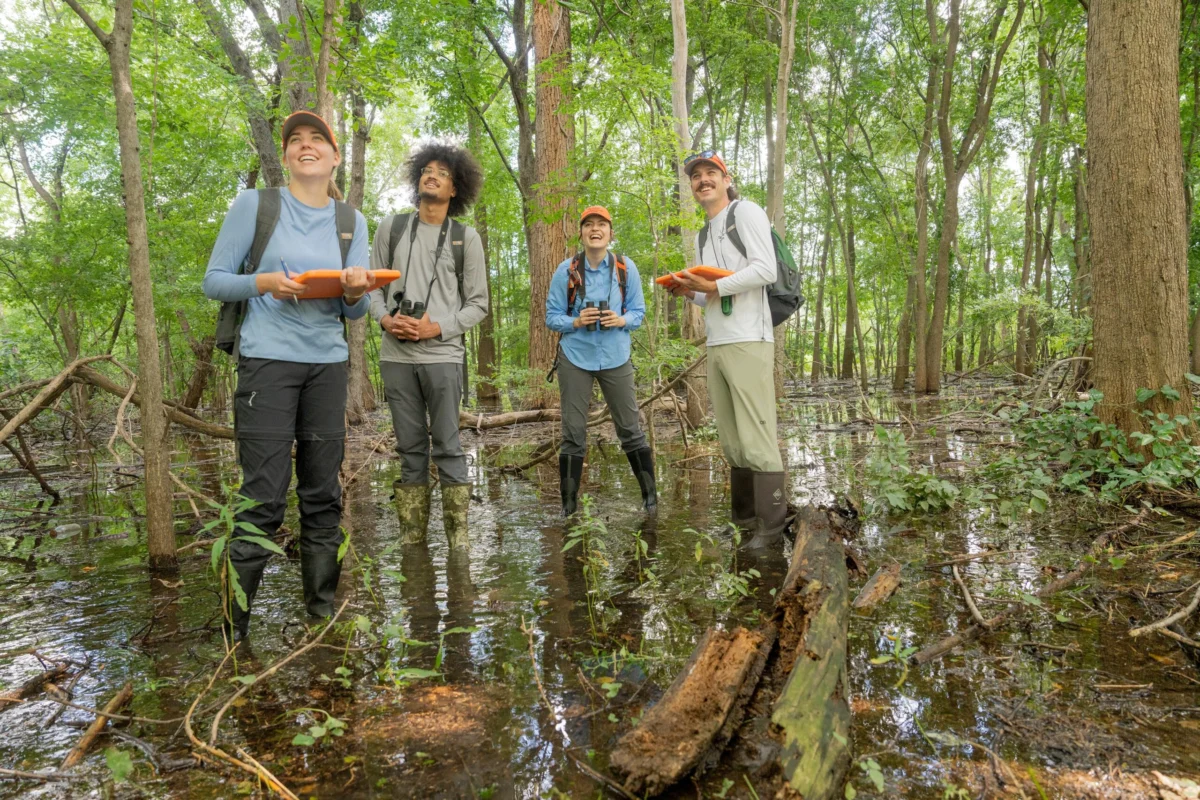
The scientific backbone of Audubon’s strategy began in 2014 with the launch of a comprehensive bird-monitoring program in the St. Louis region. This initiative has since systematically expanded northward, now encompassing a vast stretch from the confluence of the Mississippi and Missouri Rivers all the way to the Twin Cities of Minneapolis-St. Paul. Field teams meticulously conduct annual breeding bird point counts, a standardized methodology for surveying bird populations, alongside detailed habitat and vegetation surveys. These surveys are designed to build a precise, longitudinal understanding of how bird communities interact with and utilize bottomland forests over time. The data collected is invaluable, revealing which specific habitat features—such as canopy height, tree density, and the diversity and composition of tree species—are most crucial for supporting thriving and resilient bird populations.
Tara Hohman, Senior Conservation Science Manager for Missouri, underscores the foundational importance of these surveys. "The value of this work has been critical to influencing the management of these forests for wildlife, along with forest health," Hohman states. "Helping to build a system that benefits the ecology on a landscape level." Her insights highlight that the monitoring program is not merely an academic exercise but a direct conduit for informing and refining on-the-ground conservation practices, ensuring that interventions are scientifically sound and maximally effective.
Science-Driven Restoration: From Monitoring to Action
The insights garnered from this extensive monitoring program directly guide Audubon’s conservation actions. Across 70 river islands and numerous conservation areas within the study region, Audubon and its diverse network of partners are implementing practical, impactful restoration strategies. Foremost among these partners is the U.S. Army Corps of Engineers, which plays a pivotal role in land management, alongside the U.S. Fish and Wildlife Service, various Tribal Nations, and state agencies. This collaborative approach leverages shared expertise and resources to tackle complex ecological challenges.
Key restoration activities include the systematic removal of invasive species, such as the highly aggressive reed canary grass, which chokes out native vegetation and reduces habitat quality. Following invasive species control, native tree species are meticulously replanted. Priority species include swamp white oak and black willow, which are endemic to these floodplain environments and provide crucial food and shelter for native wildlife. A core objective is to restore the complex, layered forest structure—comprising diverse canopy, understory, and ground cover—that birds need for nesting, foraging, and predator avoidance. To date, these collaborative efforts have resulted in the enhancement of more than 3,000 acres of floodplain forests within the region, with an impressive total of over 160,000 native trees planted. This substantial investment in ecological restoration represents a tangible commitment to reversing decades of habitat loss and rebuilding a more resilient river ecosystem.
Broader Implications: Sustaining an Ecosystem for Future Generations
Looking ahead, Audubon aims to deepen and significantly expand this critical work. This involves not only continuing restoration and monitoring activities at existing sites but also addressing crucial data gaps in other ecologically important areas along the Mississippi River. By continually refining their understanding of what constitutes a productive bottomland forest for birds and then applying these learned lessons at an ever-increasing scale, the ambition is to effectively reverse decades of habitat loss and stem the alarming population declines of forest-dependent species.
The implications of this work extend far beyond avian conservation. Healthy bottomland forests provide essential ecosystem services that benefit human communities directly. They act as natural sponges, absorbing floodwaters and reducing flood risk for downstream communities. They filter pollutants, improving water quality, and their extensive root systems stabilize riverbanks, mitigating erosion. Furthermore, these forests sequester significant amounts of carbon, playing a vital role in climate change mitigation and enhancing regional climate resilience.
Tara Hohman emphasizes the dual importance of this work for both resident breeding birds and the vast numbers of migratory species that rely on the Mississippi Flyway. "Through this work, we strive to improve and restore bottomland forests for the health of the habitat and the birds that call it home," she explains. "While we continue to fine-tune our understanding of the needs of our breeding birds within this system, we also hope to establish an understanding of the migratory bird needs and use of this special habitat." This holistic perspective ensures that conservation strategies address the full life cycle requirements of the diverse avian communities that utilize these vital landscapes.
As the Mississippi River continues its winding journey past Riverlands, the floodplain forest pulses with renewed life. This particular stretch of the river has evolved into more than just a stopover point; it is a continental epicenter where decades of dedicated work to restore bottomland forest habitat are actively shaping a brighter, more sustainable future for countless bird species. In this critical stronghold, Audubon and its partners are embracing the profound responsibility and seizing the unique opportunity to ensure that future generations—both of birds and people—can continue to thrive in harmony with this remarkable and indispensable natural wonder. The ongoing commitment to scientific monitoring, collaborative partnerships, and strategic habitat restoration along the Mississippi River serves as a powerful testament to the enduring value of preserving one of America’s greatest natural treasures for the benefit of the entire hemisphere.
