
The Albanian coast in spring presents an awe-inspiring spectacle of natural vitality. Vibrant pink flamingos wade gracefully through pristine lagoons, while majestic Dalmatian Pelicans glide effortlessly overhead, their impressive wingspans catching the Mediterranean sun. Millions of migratory birds, undertaking their arduous journeys between Europe and Africa, find crucial respite and sustenance within the sheltered embrace of ancient pine forests. This breathtaking panorama defines Pishë Poro-Nartë, a stretch of coastline widely recognized as one of the finest remaining wild Mediterranean ecosystems and a site of profound global ecological importance. However, this irreplaceable natural heritage is currently facing an existential threat, as heavy machinery and bulldozers are tearing through its delicate fabric.
Unsanctioned Destruction in a Protected Landscape
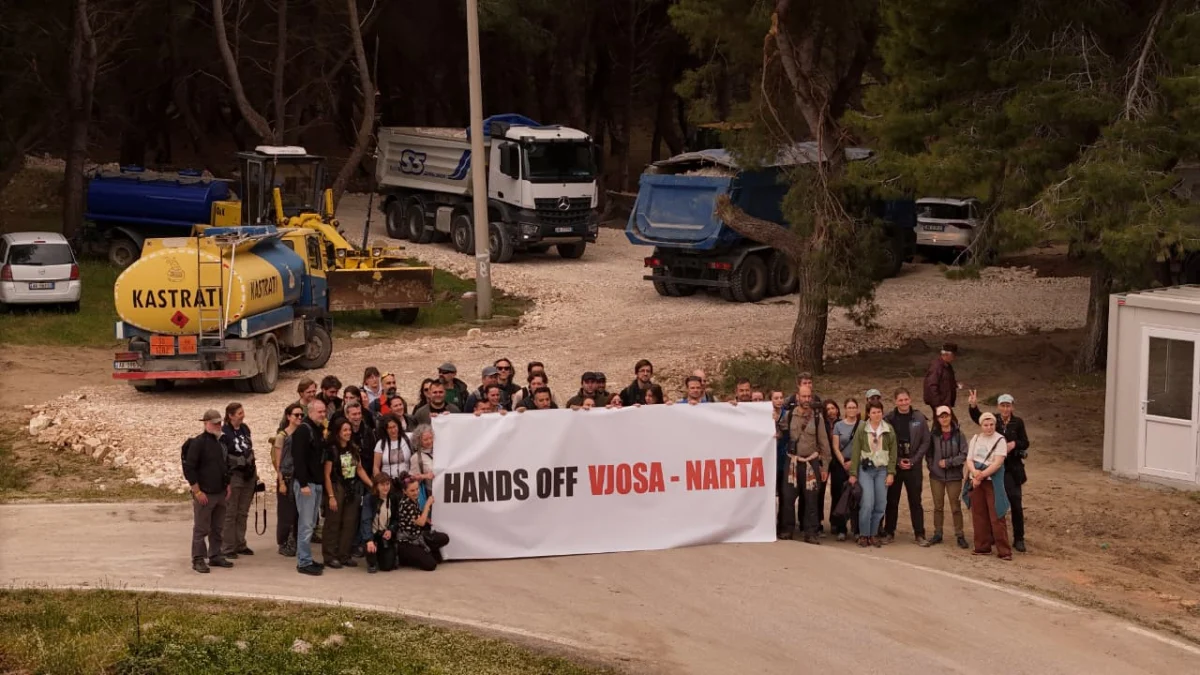
At the close of April, without any publicly approved project, environmental impact assessment, public consultation, or even a visible construction permit, heavy machinery commenced operations within this legally protected area. Reports indicate widespread felling of ancient trees, some of which have stood for centuries, and the systematic leveling of sand dunes that have been meticulously shaped by natural forces over millennia. The precise authority behind these egregious acts remains shrouded in secrecy, deepening the scandal and fueling public outrage. This clandestine destruction raises serious questions about governance, transparency, and the rule of law in Albania, particularly concerning the protection of its most valuable natural assets.
The Pishë Poro-Nartë area is an integral component of the broader Vjosë-Nartë Protected Landscape, a designation that underscores its ecological significance. This landscape forms part of the delta of the Vjosë River, celebrated as one of Europe’s last truly wild rivers, flowing unimpeded from its source to the Adriatic Sea. The Vjosë-Nartë Protected Landscape, established in 2004, encompasses approximately 19,000 hectares of diverse habitats, including lagoons, salt marshes, sand dunes, and pine forests. It is a critical biodiversity hotspot, providing sanctuary for over 70 endangered species, including the Lesser Kestrel and Egyptian Vulture, and hosting more than 200 distinct bird species throughout the year and during migration seasons. The ancient pine forest, specifically targeted by the ongoing destruction, is not merely a local amenity but a vital component of the Adriatic Flyway, one of Europe’s most critical bird migration corridors. The loss of this irreplaceable habitat would have far-reaching consequences, extending well beyond Albania’s geographical borders, impacting continental biodiversity and the delicate balance of migratory patterns.
A Deliberate Exploitation of Legal Loopholes
The current crisis unfolds against a backdrop of controversial legislative changes in Albania. The Albanian government previously amended its Law on Protected Areas, introducing provisions that permit the construction of luxury resorts within these supposedly safeguarded zones. This amendment stands in direct contradiction to established European Union nature protection standards, particularly those enshrined in the EU Birds Directive (2009/147/EC) and the Habitats Directive (92/43/EEC), which form the bedrock of Europe’s conservation efforts. Albania, a candidate country in EU accession negotiations, has been repeatedly urged by the European Commission to align its environmental legislation with the EU acquis. The government has, in principle, given assurances that this contentious law will be reformed.
However, while these legal reforms are debated and promised on paper, the pace of destructive works on the ground appears to be accelerating. Aleksandër Trajçe, the Director of the Albanian Partner PPNEA (Protection and Preservation of Natural Environment in Albania), highlighted the stark and cynical logic at play: "build now, before a stricter law makes it impossible." This strategy suggests a deliberate attempt to create irreversible facts on the ground before more robust protective legislation can be implemented, effectively circumventing future environmental safeguards.
What makes the current situation even more alarming is that the ongoing works appear to be illegal even under the existing, already controversial, legislation. The absence of environmental assessments, public consultations, transparent permitting processes, and any official explanation from authorities regarding the nature of the construction or the responsible parties constitutes a profound breach of national law. Adding another layer of complexity and concern, a major development project linked to American real estate developer Jared Kushner has previously been planned for this sensitive area. While it remains unclear whether the current unsanctioned works are directly connected to this larger proposed development, its existence underscores the immense development pressure facing Albania’s wild coastlines.
International Outcry and Calls for Immediate Action
The escalating crisis prompted a high-level intervention from BirdLife Europe, a prominent conservation organization. This week, Ariel Brunner, BirdLife Europe’s Regional Director, and Anouk Puymartin, Head of Policy, traveled to Tirana to engage with Albanian authorities. While conversations with government officials were described as constructive, yielding assurances that environmental legislation would be updated within the year, these promises ring hollow in the face of ongoing destruction. As Brunner powerfully articulated during a press conference in Tirana, "Good intentions on paper mean nothing while a protected area is being dismantled in real time. Bulldozers are operating in a completely illegal way, based on unclear decisions and a total lack of transparency – and this needs to stop."
The dire reality is that by the time a reformed, stricter law comes into force, the ancient forest and fragile ecosystems it was meant to protect may already be irrevocably lost. The conservation community, both national and international, is united in its urgent call for immediate action. BirdLife Europe and its partners are demanding that Albanian institutions halt all works at Pishë Poro-Nartë without delay. Furthermore, they insist on the immediate publication of every permit and project document related to the site, ensuring full transparency. Crucially, they are calling for a comprehensive legal investigation into what has already transpired, to identify those responsible for authorizing and carrying out these illegal activities.
Broader Implications: Ecological, Legal, and Political Ramifications
The destruction at Pishë Poro-Nartë carries severe implications across multiple fronts:
Ecological Catastrophe: The Vjosë-Nartë Protected Landscape is a cornerstone of Mediterranean biodiversity. The destruction of ancient pine forests directly impacts nesting and roosting sites for countless bird species, including those listed as endangered. The leveling of sand dunes obliterates unique microhabitats and increases coastal erosion, threatening the delicate balance of the entire lagoon ecosystem. For migratory birds utilizing the Adriatic Flyway, the loss of this vital stopover point could have cascading effects, leading to increased mortality rates and disruptions in global migratory patterns. The ecosystem services provided by this area, such as natural flood protection and carbon sequestration, are also being irreversibly damaged.
Breach of National and International Law: The absence of environmental impact assessments, public consultations, and permits constitutes a clear violation of Albania’s existing environmental laws, however flawed they may be. More broadly, it undermines Albania’s commitments under various international environmental agreements and conventions, including the Convention on Biological Diversity and the Ramsar Convention on Wetlands of International Importance, under which Vjosë-Nartë is recognized. Furthermore, it directly contradicts the spirit and letter of EU environmental acquis, jeopardizing Albania’s progress towards EU membership. The EU has consistently emphasized that environmental protection is non-negotiable for accession candidates.
Political and Reputational Damage: The clandestine nature of the destruction and the apparent disregard for legal processes severely damage Albania’s international reputation. It raises concerns about corruption, lack of transparency, and the political will to enforce environmental laws. Such actions risk alienating international partners, investors, and conservation organizations. For a nation aspiring to join the European Union, demonstrating a strong commitment to environmental protection and the rule of law is paramount. The current events send a conflicting message, potentially stalling or complicating accession negotiations.
Economic Short-sightedness: While developers often tout the economic benefits of luxury resorts, the long-term economic value of a pristine, biodiverse coastline is often underestimated. Ecotourism, sustainable fishing, and the overall ecological health of the region contribute significantly to local economies in a sustainable manner. Destroying these natural assets for short-term gains risks undermining future economic opportunities and the well-being of local communities who depend on a healthy environment. The Vjosë-Nartë area holds immense potential for sustainable tourism that respects its natural beauty, a potential that is being squandered by uncontrolled development.
A Betrayal of Public Trust and European Commitments
Albania’s wild coast represents one of its greatest national treasures, a priceless asset that defines its natural identity. The ongoing destruction at Pishë Poro-Nartë, carried out in secrecy, without proper permits, and within a designated protected area, constitutes a profound betrayal. It is a betrayal of the Albanian people, who have a right to their natural heritage and a clean environment. It is a betrayal of Albania’s commitments towards European integration and the shared values of environmental stewardship. And most tragically, it is a betrayal of the millions of migratory birds and diverse species that depend on this globally important sanctuary every single year. The international community, led by conservation groups, stands firm in its demand that Albania uphold its responsibilities and put an immediate end to this destructive assault on its natural legacy. The future of Pishë Poro-Nartë, and indeed Albania’s path towards a sustainable future within Europe, hangs precariously in the balance.
