
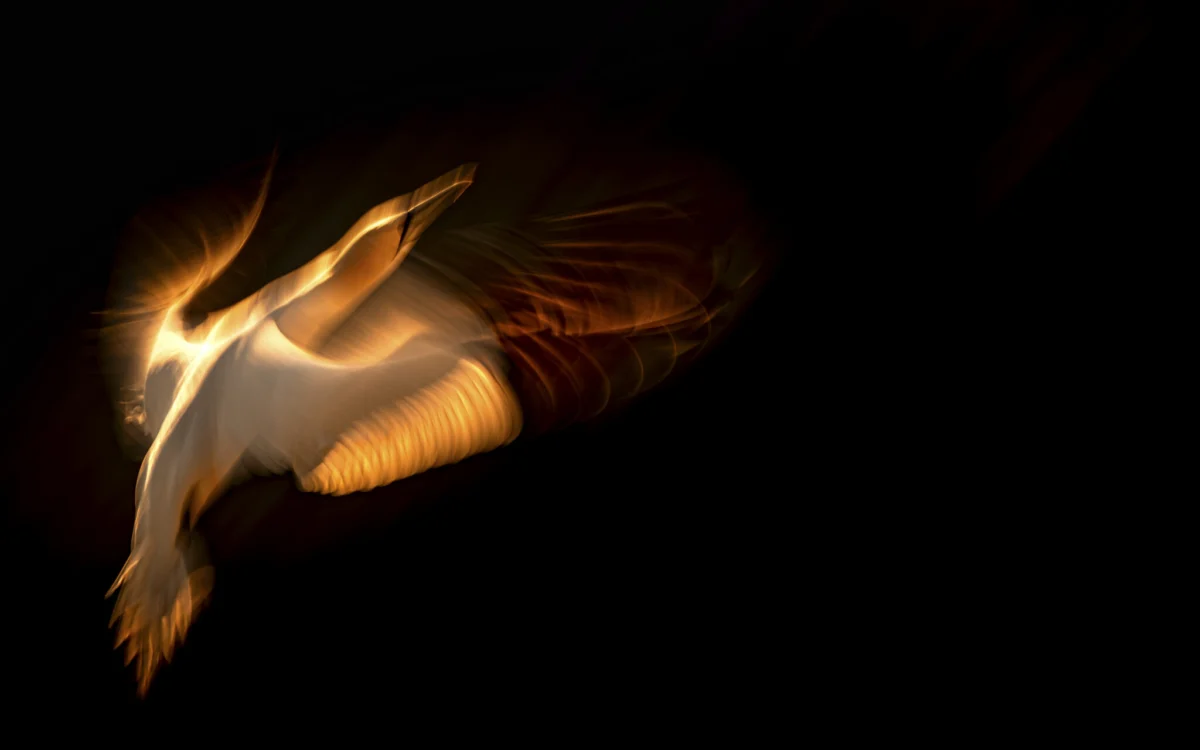
In the dynamic realm of wildlife photography, Rachel Bigsby has emerged as a distinctive voice, advocating for an approach she terms "natural artistry." Her philosophy transcends the mere act of capturing an image, positioning photography as an art of profound witnessing, an endeavor to grasp and translate the inherent grammar of nature into a visual language that resonates deeply with viewers. Bigsby’s work, particularly her captivating portrayals of seabirds, seeks to convey not merely what a subject looks like, but rather the immersive feeling of being in its presence, transforming observations into evocative narratives.
Bigsby emphasizes that the world, even in its most active moments—a seabird tilting into the airflow, the sea maintaining its restless rhythm—contains instances of suspended animation, a breath-holding quietude. It is in these fleeting seconds, when attention sharpens and distractions recede, that she finds the true essence of wildlife photography. For Bigsby, these moments are not just about technical capture but about perceiving a "sentence being written in a language older than any of us," a profound connection she repeatedly seeks to document.
The Philosophy of "Natural Artistry"
At the core of Bigsby’s photographic ethos is "natural artistry," a term she carefully defines. It is not an imposed style or an aesthetic interpretation layered onto a subject. Instead, Bigsby posits that this artistry is intrinsically present in nature, waiting to be revealed. It resides in the effortless grace of a seabird mastering the wind, the subtle interplay of light across feathers, the prelude to a dive, or the sprawling, chaotic beauty of a storm-tossed colony where myriad lives coalesce into a singular, moving landscape. This artistic vision extends beyond mere beauty; it delves into the very essence of a species, communicating its deeper story through a symphony of light, movement, texture, color, behavior, environment, and perspective.

In a field often preoccupied with technical perfection—razor-sharp focus, pristine backgrounds, and adherence to compositional rules—Bigsby consciously diverges. She argues that an overly rigid pursuit of perfection can lead to images that are competent but ultimately forgettable, depicting what a bird looks like rather than what it is. Her ambition is to photograph seabirds not as inanimate objects but to evoke the visceral experience of being near them, capturing their spirit and context.
A Deep-Rooted Connection: Bigsby’s Journey into the Wild
Rachel Bigsby’s profound relationship with the natural world predates her photographic career, tracing back to formative experiences that instilled a deep sense of reverence and observation. Her late grandfather, a dedicated naturalist and fisherman, was instrumental in teaching her to "truly see" rather than just passively look. He imparted attention and reverence for nature, framing it not as a collection of facts but as a living entity to be understood and respected.
At the tender age of six, Bigsby joined the Scout Association, an affiliation that, unbeknownst to her at the time, would shape the trajectory of her life. Weekends were spent navigating rugged trails with weathered maps, fostering an intimate, practical connection with the outdoors. Through prolonged immersion, the landscape ceased to be mere "scenery" and transformed into a constant companion, a vibrant classroom where she became an eager student.
Photography entered her life later and more subtly. Introduced by a childhood friend, Bigsby began her initial photographic experiments with an iPod camera. These early attempts focused on capturing ephemeral details: the glint of morning light on dewdrops, the intricate silhouette of a dandelion. While her friend’s interest eventually waned, Bigsby’s fascination deepened, laying the groundwork for her future vocation.

The pivotal moment arrived during an afternoon spent observing a Northern Fulmar gliding effortlessly along coastal cliffs near her home. The bird’s unyielding wings, its oceanic mastery, and its apparent defiance of gravity captivated her. This encounter sparked an urgent quest for knowledge, leading her to research the Fulmar and discover its kinship with the albatross, a bird of legend that had long populated her childhood dreams. From that day forward, seabirds ceased to be merely a photographic subject; they became her entire world.
Forging a Path: Dedication Beyond the Lens
The acquisition of her first DSLR camera marked a significant turning point, broadening her horizons to encompass new species, colonies, and photographic challenges. Bigsby’s path, however, was far from linear. Early opportunities saw her volunteering extensively, exchanging labor for unparalleled access to remote and ecologically significant locations. Her duties ranged from scrubbing compost toilets on secluded islands to scything bracken in the summer heat and undertaking repairs on weather-beaten structures with antique tools. These experiences, though arduous, provided invaluable immersion. By day, she contributed to conservation efforts; by dusk, as the seabird colonies reclaimed their natural rhythms, Bigsby became an unobtrusive observer, watching, listening, and learning.
This period of intensive fieldwork and deep engagement underscores a critical aspect of Bigsby’s credibility: her profound understanding of seabird behaviors, biology, and ecology. Unlike many photographers who might prioritize technical skills alone, Bigsby’s foundation is rooted in genuine ecological knowledge. This sustained observation and immersion allow her to anticipate movements, understand interactions, and ultimately capture images that are not just aesthetically pleasing but also biologically informed and emotionally resonant. This commitment to understanding is particularly vital given the global decline in seabird populations, with many species facing threats from climate change, pollution, and habitat loss. For instance, according to a 2015 study published in PLOS One, global seabird populations have declined by 70% since 1950, making Bigsby’s dedication to documenting their lives all the more poignant and urgent.
Challenging Conventions: Beyond Technical Perfection

Bigsby directly challenges the prevailing notion that wildlife photography must adhere to rigid technical standards to be considered "good." She recounts a pivotal experience with her first truly moving photograph—an image of an Atlantic Puffin in flight. By conventional standards, it was far from "perfect": soft focus, a slow shutter speed, and a cluttered background. Yet, the golden light piercing the puffin’s delicate wings, rendering its movement as a blur, transformed the bird from a frozen subject into a "whisper of motion, dissolving into atmosphere like breath on wind." This image, she realized, resonated because it conveyed a feeling rather than merely ticking off a checklist of technical requirements.
This revelation cemented her understanding that wildlife photography is fundamentally about storytelling, emotion, and artistry, transcending mere documentation. The natural world, with its inherent chaos, fluidity, and vibrancy, rarely presents itself in neat, controlled scenarios. Seabirds, driven by instinct, weather, tide, hunger, fear, and devotion, do not pose for pristine backdrops or ideal lighting. Bigsby’s work embraces this reality, arguing against imposing an artificial sense of order or perfection onto a world that is inherently wild.
Embracing Imperfection and Environmental Realities
Bigsby’s journey further reinforced this perspective during a week of volunteering on an island plagued by continuous rain, fog, and mist. Initially heartbroken by the absence of cinematic sunrises or glowing sunsets, she eventually recognized that her frustration stemmed from trying to impose a preconceived idea of perfection onto nature. For the birds, these conditions were not "bad weather"; they were simply "life."
This realization became a turning point. Instead of resisting the conditions, Bigsby began to collaborate with them. The fog transformed into a blank canvas, the whiteness a backdrop for minimalist compositions. This accidental foray into high-key imagery subsequently became a distinctive part of her visual signature. This experience profoundly altered her perception of light, teaching her that the most meaningful images often arise when photographers stop demanding specific conditions and instead attune themselves to what is already present. This approach is gaining traction among contemporary wildlife photographers who prioritize authentic representation and artistic expression over purely illustrative imagery, aligning with a broader artistic movement that values raw emotion and context.

The Elements of Natural Artistry: Light, Shape, Texture, Environment
For Rachel Bigsby, light is far more than a technical setting; it is the "emotional spine" of an image. It dictates how a subject is perceived, felt, and ultimately remembered. She recalls a morning in Shetland where the colony below remained in darkness, yet the highest rock peaks caught the first light, glowing against the abyss. A single Gannet, lifting from shadow into brilliant illumination, appeared like a brushstroke, its white wings stark against the black cliff. This moment taught her that light is not solely about clarity but about drama, about "mood made visible."
Colour, too, is approached with intention. Bigsby rarely seeks bold hues for their own sake, instead considering how colour contributes to the emotional tone of a scene. She notes that Northern Fulmars, with their subtle, stormy tones of slate-grey, are often overwhelmed by bright blue backgrounds. Instead, a chalk-white cliff or dark grey rock can cradle their natural palette, allowing their inherent mood to emerge. When colour becomes a distraction, she intentionally chooses monochrome, viewing black and white not as a shortcut to seriousness but as a deliberate decision to draw attention to the fundamental elements of shape, light, and texture—the very "bones of the image."
Texture, in Bigsby’s view, makes a photograph tangible, allowing the viewer to almost "feel salt in the air." Shape lends intentionality, transforming wildlife into design through curves, arcs, symmetry, and contrast. These elements, she argues, are not invented but noticed, translating nature’s inherent artistry into a still frame that vibrates with energy.
Crucially, Bigsby asserts that the environment is not merely a background; it is a character. A bird devoid of its context remains "just" an animal, but a bird authentically placed within its world becomes a story—a narrative of scale, struggle, intimacy, resilience, or fragility. This environmental context can also convey difficult truths: beauty interwoven with grief, life juxtaposed with loss. Bigsby believes photography can embrace this complexity without exploitation, provided it remains truthful, respectful, and intentional. This perspective resonates with growing calls for ethical wildlife photography that avoids staged shots or overly idealized portrayals, promoting a more honest engagement with ecological realities.

Patience and Presence: Learning the Language of Birds
Patience, for Bigsby, is not passive waiting but an active "knowing what you are waiting for." This profound understanding stems from treating animal behavior as a language to be learned. By recognizing patterns and cues, the seemingly random actions of the wild become readable, allowing for anticipation rather than mere reaction. This transforms photography from a game of chance into an exercise in intention.
Bigsby has dedicated countless hours to observing seabirds in seemingly ordinary acts: preening, shifting, calling, settling, rising. Yet, she has discovered that the subtlest changes—a tightening posture, a lifted glance, a repeated gesture—often presage significant events. This deep observational practice fosters a unique relationship between photographer and subject, shifting the dynamic from "taking" to "listening."
Through this sustained listening, Bigsby receives what she describes as gifts: intimate reunion rituals, courtship exchanges, synchronized movements between bonded birds, or moments of profound softness amidst the colony’s chaos. These are not merely "behaviors" but stories of devotion, endurance, and survival, unfolding on cliff edges perpetually swept by wind. Her profound connection to seabirds stems from seeing them as embodiments of freedom and resilience, sculpted by time and tide, belonging to the world’s untamed edges. In their presence, she finds her own sense of liberation. This approach aligns with modern ethological studies that emphasize long-term observation and non-invasive methods to understand animal cognition and social structures.
Impact and Invitation: A New Paradigm for Wildlife Photography

While acknowledging the importance of technical proficiency, Bigsby firmly asserts that camera settings are merely "scaffolding." They can construct an image, but they cannot imbue it with soul. The enduring quality of a photograph, she argues, lies not in technical dials but in the photographer’s unique vision, feeling, and connection.
Bigsby challenges the prescriptive "rules" often enforced in photography circles. The images that truly endure, that are remembered and felt, are rarely those that meticulously followed every convention. Instead, they are the ones imbued with honesty, those that evoke genuine emotion. Her work, therefore, serves as an invitation—a permission slip for others to create photographs that hold personal meaning, even if they deviate from established expectations.
In an era saturated with formulaic wildlife imagery, Bigsby contends that the world craves photographs made "by heart"—images that educate through inherent beauty and honor the wild by portraying its unvarnished truth. Her philosophy encourages photographers to approach their craft gently, observe closely, and wait longer than seems necessary. It advocates for embracing the weather as a collaborator rather than an obstacle, and for photographing the world not just as it appears, but as it profoundly feels. Ultimately, Rachel Bigsby’s work champions the irreplaceable value of individual perspective, reminding us that no two people see the world—or its wild inhabitants—in precisely the same way. This message resonates powerfully within the photographic community, inspiring a shift towards more expressive, ethically conscious, and personally resonant forms of wildlife artistry.
