
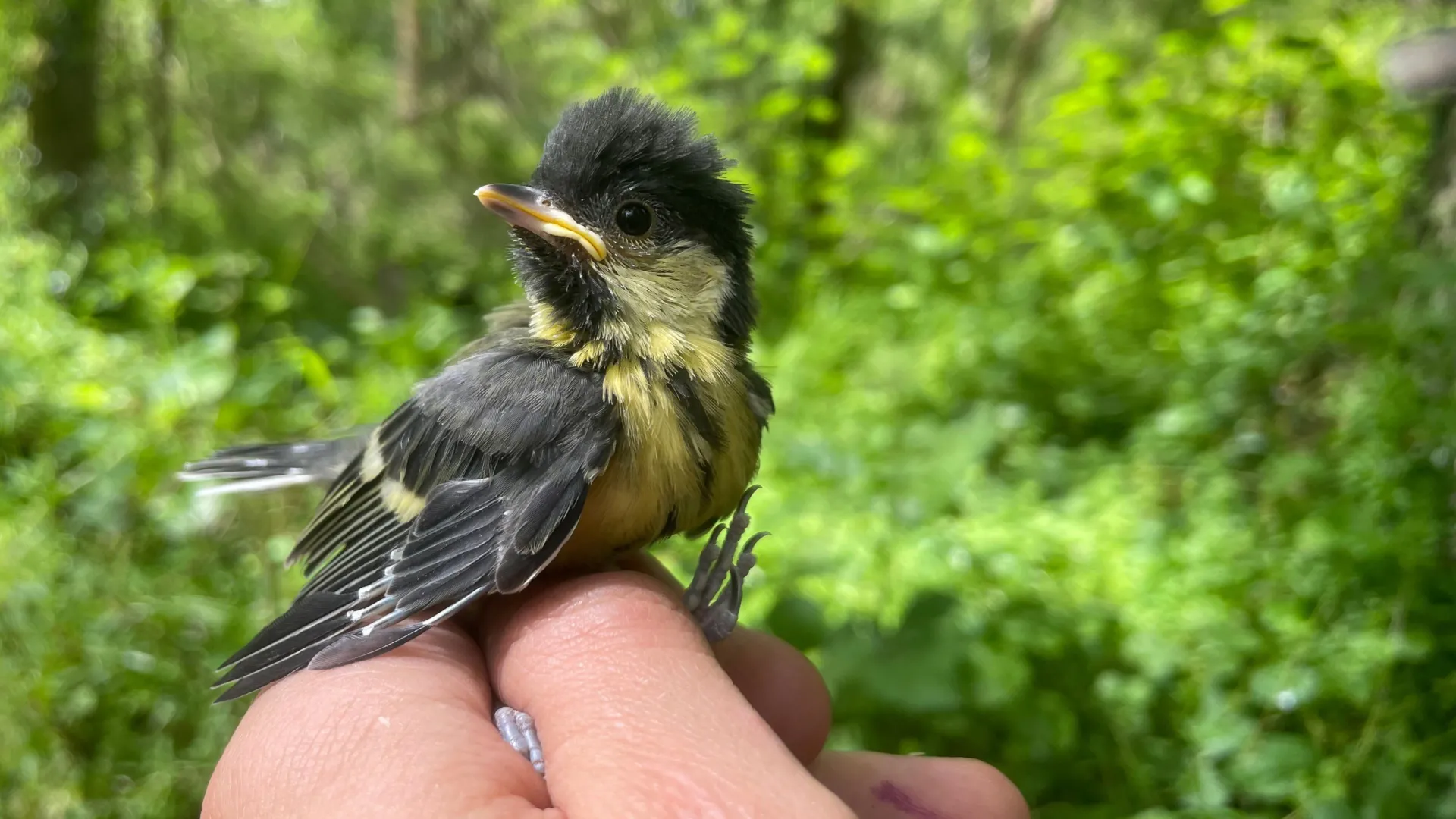
A groundbreaking study from the University of Oxford, published on March 11, has unveiled critical insights into how sudden cold spells and intense rainfall significantly impede the growth and diminish the survival prospects of young great tits (Parus major) across the UK. The comprehensive research further suggests a nuanced adaptive strategy: birds that commence their breeding cycle earlier in the season appear to circumvent many of the detrimental impacts associated with these escalating weather extremes. This finding offers a vital perspective on avian resilience in the face of a changing climate, while simultaneously underscoring the complex challenges faced by wildlife populations.
A Six-Decade Ecological Tapestry: The Wytham Woods Dataset
The robustness of these findings is anchored in an exceptionally long-term ecological dataset, a rare and invaluable resource in ornithological research. Scientists meticulously analyzed an astonishing 60 years of continuous records, encompassing detailed life histories of over 80,000 individual wild great tits inhabiting Oxford’s renowned Wytham Woods. This unparalleled depth of data, tracking generations of birds, allowed researchers to observe subtle and long-term trends that would be invisible in shorter studies. Each individual bird’s journey – from hatching to fledging and beyond – was chronicled, providing a rich tapestry of ecological information. This biological data was then synergistically paired with an equally granular record of daily weather conditions, enabling a precise correlation between specific climatic events and their biological consequences.
Wytham Woods, a diverse woodland estate owned by the University of Oxford, has served as a crucible for ecological research for over seven decades, establishing itself as one of the most intensively studied woodlands globally. Its consistent monitoring programs, particularly the long-running great tit study initiated in 1947 by David Lack, provide an invaluable baseline for understanding ecological responses to environmental change. The sheer scale and continuity of this project represent a triumph of long-term scientific dedication, offering an unparalleled "natural experiment" to explore population dynamics, evolutionary processes, and the intricate dance between species and their environment. By identifying the coldest, wettest, and hottest days within each annual breeding season over this extensive period, researchers were able to quantify the frequency and intensity of these extreme events during the critical stages of chick development. This allowed for a direct measurement of how such weather phenomena influenced key indicators of fitness, such as body mass at the point of fledging – a universally recognized and crucial predictor of a young bird’s subsequent survival chances into adulthood.
The Perilous Dance of Cold and Rain for Nestling Survival
The study’s revelations paint a clear picture of the specific vulnerabilities of great tit nestlings to different forms of extreme weather. It was found that severe cold snaps, particularly those occurring within the crucial first week after hatching, inflict the most significant harm. During this nascent stage, chicks are highly dependent on parental brooding for warmth and are physiologically ill-equipped to regulate their own body temperature. As the chicks mature, their vulnerability shifts; heavy rainfall emerges as the predominant threat. Both extreme cold and heavy rainfall were shown to have tangible, negative impacts, capable of reducing the body mass of fledglings by as much as 3%. While seemingly modest, such a deficit in mass can translate into significant disadvantages in the wild, affecting a fledgling’s ability to forage efficiently, evade predators, and ultimately survive its perilous first year.
The cumulative impact of concurrent extreme events presents an even more dire scenario. The research highlighted that when intense heat coincides with heavy rainfall – a combination that may become more frequent under future climate change scenarios – the repercussions become dramatically more severe. In these instances, the fledging mass can plummet by an alarming 27%, particularly affecting broods that hatch later in the breeding season. This severe reduction in body mass indicates a profound physiological stressor and significantly diminishes the likelihood of these late-hatching chicks surviving to reproductive age. The great tit breeding season in the UK typically spans from April to July, with peak activity in May. A typical clutch size ranges from 6 to 12 eggs, incubated for around 12-15 days, followed by a nestling period of 16-22 days before fledging. Any disruption during these sensitive periods can have cascading effects on the reproductive success of a pair.
Phenological Mismatch and the Climate Conundrum
Devi Satarkar, the lead researcher from the Department of Biology at the University of Oxford, elaborated on the study’s implications, stating, "In the Wytham population, great tits have demonstrated an adaptive response to warmer springs by shifting their breeding schedule earlier. This strategy is primarily aimed at synchronizing their hatching with the peak abundance of their main prey, caterpillars, which themselves respond to temperature cues." This phenomenon, known as phenological tracking, is a vital survival mechanism for many species in seasonal environments. Satarkar continued, "This overall earlier laying is indeed beneficial, acting as a buffer against many of the impacts of extreme weather later in the season. However, this adaptation also inadvertently exposes them to the risk of cold spells that can still occur early in the spring. Even small early-life deficits can have large implications for long-term survival and recruitment into the breeding population. It will only get tougher for birds to keep up with these shifts as extreme weather events increase in both frequency and intensity with ongoing climate change."
The great tit’s reliance on caterpillars, particularly those of winter moths (Operophtera brumata), is well-documented. These caterpillars are an essential protein and fat source for growing chicks. The emergence of caterpillars is highly dependent on the "spring flush" of oak leaves, which in turn is driven by ambient temperatures. Climate change, however, is causing these phenological events to become desynchronized. While great tits have shown some capacity to adjust their breeding timing, the pace of environmental change, coupled with unpredictable weather extremes, may eventually outstrip their adaptive capacity, leading to a "phenological mismatch" that could have dire consequences for their populations.
Understanding the Mechanisms: Why Extreme Weather Hurts
The study delved into the underlying physiological and ecological reasons why cold and rain exert such a detrimental effect on developing great tit chicks. Newly hatched chicks are altricial, meaning they are born relatively undeveloped and entirely dependent on their parents. Critically, they lack sufficient feathers to regulate their own body temperature effectively, making them highly susceptible to hypothermia. During cold spells, a significant portion of their metabolic energy, which would otherwise be directed towards growth and development, must be diverted simply to maintain core body temperature. This energy drain directly impacts their growth rate, leading to smaller, less robust fledglings.
Beyond direct physiological stress, adverse weather conditions profoundly impact the availability of food, a critical factor for the rapid growth of nestlings. Extreme cold and persistent heavy rain can severely limit the foraging opportunities for parent birds. When conditions are harsh, adults must spend more time brooding their young to keep them warm, reducing the frequency and duration of their foraging trips. Simultaneously, heavy rainfall can physically dislodge caterpillars from their host plants, rendering them less accessible or even washing them away. This double whammy – reduced parental foraging effort and decreased prey availability – creates a severe energy deficit for the rapidly growing chicks, which have extraordinarily high energy demands during their nestling period. A single great tit brood can require thousands of caterpillars over the course of the nestling phase.
A Surprising Twist: Mild Heat’s Beneficial Side
One of the more unexpected and intriguing findings of the study was the observation that certain warmer extremes were actually correlated with heavier fledging weights during the nestling stage. This runs counter to the general assumption that high temperatures universally lead to heat stress in birds. However, the researchers clarified that the "warmer periods" observed in Oxfordshire, while extreme relative to historical norms for the region, appear to be relatively mild when compared to the scorching heatwaves experienced in southern Europe. Temperatures in Oxfordshire during these beneficial warm spells were typically around 16-17°C, which, while above average, is far from the lethal thresholds for most bird species.
Devi Satarkar elucidated this nuance: "Extreme weather events are affecting wild bird populations in incredibly complex ways. The level of warmth we observed during these specific heat extremes in Oxfordshire might actually boost chick growth. This is likely due to several factors: increased insect activity and visibility, making caterpillars easier for parents to find and catch; parents being able to forage more efficiently without needing to constantly brood their chicks; and a reduction in the nestlings’ own thermoregulatory costs, freeing up energy for growth." She further added a crucial ecological detail: "The high water content in caterpillars also provides a natural hydration source for the chicks, which is beneficial during warmer periods. This contrasts sharply with hotter regions like the Mediterranean, where similar events can exceed 35°C, leading to severe heat stress, dehydration, and ultimately harming nestlings." This finding underscores the importance of regional context and temperature thresholds when assessing the impact of climate change.
Early Breeding: A Timely Adaptive Shield
The study provided compelling evidence that the timing of breeding within a season plays a pivotal role in determining a brood’s success amidst unpredictable weather. Broods that hatch earlier in the spring demonstrated a tendency to benefit from occasional warm spells. During these periods, caterpillar populations are often abundant, and ambient temperatures remain within safe, even advantageous, limits for chick development. These early-hatched fledglings are generally more robust and have a higher probability of survival.
Conversely, great tits that breed later in the season face increasingly tougher conditions. Their fledglings were observed to be approximately one-third lighter on average, even when the warmest days they experienced reached similar temperatures of around 16-17°C. This suggests that the cumulative effect of prolonged exposure to less optimal conditions, or the increased likelihood of encountering a detrimental combination of heat and rain later in the season, severely impacts their development.
Over the long term, the cumulative data revealed that sustained periods of extreme cold and heavy rainfall slightly reduce the overall odds that young great tits will survive to adulthood and join the breeding population. In stark contrast, the warmer extremes, within the specific temperature range observed in Oxfordshire, exhibited small but discernible positive effects on survival. This complex interplay of factors solidifies the conclusion that, overall, breeding earlier within a given season acts as a significant protective mechanism, shielding many birds from the most severe consequences of increasingly unpredictable weather patterns. This adaptive strategy, however, is a delicate balance, as it pushes birds towards earlier risks of cold snaps.
Broader Implications for Wildlife Conservation in a Changing Climate
As global climate change continues to intensify the frequency and severity of weather extremes, the scientists involved in the Wytham Woods study emphasize the growing importance of monitoring environmental conditions at a highly localized scale. Understanding microclimates – the distinct atmospheric conditions near the ground or within small, confined spaces – and subtle habitat differences will become increasingly crucial. For instance, the orientation of a nest box or the density of the surrounding tree canopy can create vastly different thermal environments for chicks, potentially buffering them from extreme heat or cold.
This detailed, micro-scale research is not merely academic; it has direct and profound implications for guiding effective conservation strategies. Knowledge derived from such studies can inform practical interventions, including the strategic placement of nest boxes in areas less exposed to harsh winds or direct sun, or specific woodland management practices that promote diverse canopy structures and undergrowth, creating more stable microclimates. These targeted approaches can better protect vulnerable chicks during their key developmental stages, enhancing their chances of survival and bolstering local populations.
Looking ahead, researchers plan to continue their meticulous monitoring of the great tit population in Wytham Woods. A key question for future inquiry is how the observed weather effects may evolve as global temperatures continue their upward trajectory. Specifically, there is a pressing need to understand whether the heatwaves that are currently moderate and even beneficial in Oxfordshire could eventually cross critical thresholds, becoming harmful to nestlings as temperatures continue to rise. This long-term vigilance is essential not only for the great tit but also as a model for understanding how countless other avian species might adapt, or fail to adapt, to the relentless pressures of a rapidly changing climate. The study serves as a potent reminder that conservation efforts must be dynamic, responsive, and grounded in detailed, long-term ecological data to effectively safeguard biodiversity in the 21st century.
