
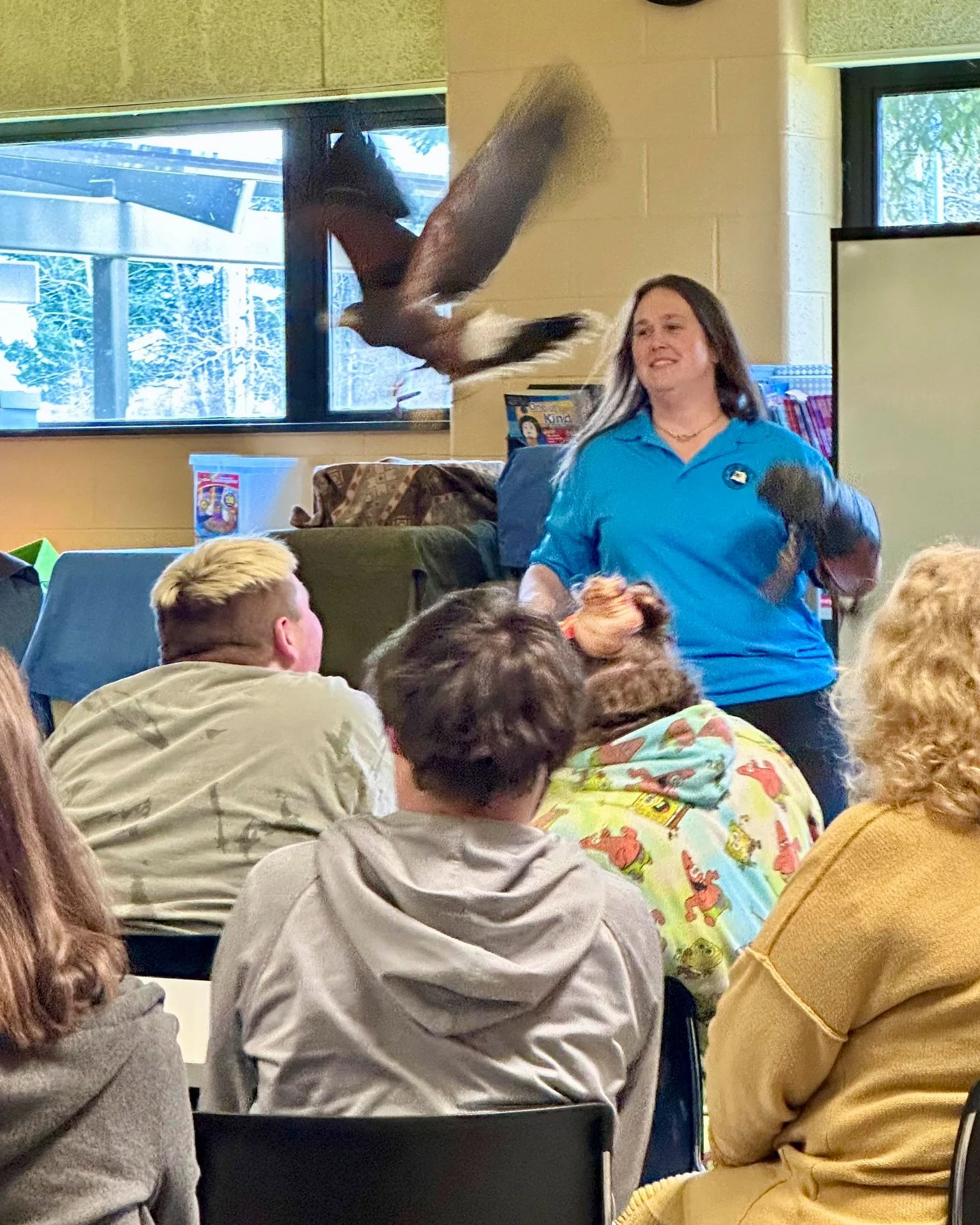
Students at the Hewes Educational Center recently experienced an immersive and exciting educational program brought to them by the Hawk Creek Wildlife Center Inc. This initiative, designed to connect young learners with the natural world, provided an engaging platform for understanding wildlife, their habitats, and crucial conservation messages. The visit, which featured a diverse array of animals including raptors, mammals, and snakes, aimed to foster compassion and a deeper appreciation for the delicate balance of ecosystems.
The core of the program involved two seasoned wildlife naturalists from Hawk Creek. These educators skillfully presented a fascinating lineup of creatures, meticulously detailing each species’ natural habitat, unique behaviors, and ecological roles. The interactive nature of the presentations allowed students to observe these animals up close, transforming abstract concepts about wildlife into tangible, memorable experiences. A particularly awe-inspiring moment for the students occurred when a raptor, showcasing its magnificent flight capabilities, soared directly overhead, a vivid demonstration of avian power and grace that left a lasting impression.
Background and Context of the Visit
The Hawk Creek Wildlife Center, a non-profit organization dedicated to wildlife rehabilitation, education, and conservation, has a long-standing commitment to bringing the wonders of the natural world to communities. Their educational programs are meticulously crafted to align with educational standards, offering students a unique opportunity to learn about local and regional wildlife in a safe and controlled environment. These visits are not merely about entertainment; they are strategic educational interventions designed to cultivate a sense of environmental stewardship from an early age.
The Hewes Educational Center, as an institution focused on providing comprehensive learning experiences, recognized the value of such hands-on educational opportunities. Integrating external expertise like that of the Hawk Creek Wildlife Center allows for a more dynamic and multi-faceted curriculum, enriching students’ understanding beyond traditional classroom settings. The timing of such visits often coincides with specific curriculum modules related to biology, ecology, or environmental science, providing a practical, real-world application of learned theories.

Chronology of the Educational Experience
While a precise timeline of the day’s events is not provided in the initial report, the structure of such educational visits typically follows a well-defined pattern. The day likely commenced with an introduction by the Hawk Creek naturalists, setting the stage for the animal presentations and outlining the educational objectives. This would be followed by the introduction of various animal ambassadors, each presented with detailed information about its species, conservation status, and ecological significance.
The program would likely involve distinct segments dedicated to different animal groups – raptors, mammals, and reptiles – allowing for focused learning on each. The raptor demonstration, noted as a highlight, probably involved showcasing the bird’s flight, hunting adaptations, and its role as an apex predator. For mammals, discussions might have revolved around their dietary habits, social structures, and adaptations to their environments. Reptiles would likely have offered insights into their unique thermoregulation, camouflage, and their often-misunderstood roles in the ecosystem.
Throughout the presentations, opportunities for student interaction, such as asking questions and observing the animals’ natural behaviors, would have been integral. The visit would have concluded with a summary of key takeaways, reinforcing the importance of conservation and responsible human interaction with wildlife. A follow-up activity or discussion back in the classroom could further solidify the learning experience.
Supporting Data and Educational Impact
Educational programs that incorporate live animal encounters have demonstrated significant positive impacts on student learning and engagement. Research in environmental education consistently highlights that direct experiences with nature, even through intermediaries like wildlife centers, can lead to:
- Increased Knowledge Retention: Visual and interactive learning experiences are far more memorable than purely theoretical instruction. Students are more likely to recall information about animals they have seen and interacted with.
- Development of Empathy and Compassion: Witnessing animals firsthand, and learning about their needs and challenges, can foster a deeper sense of empathy and a desire to protect them. This is particularly true for species that may be perceived as less charismatic.
- Enhanced Interest in STEM Fields: Such programs can spark an early interest in science, technology, engineering, and mathematics (STEM) disciplines, inspiring future scientists, veterinarians, and conservationists.
- Understanding of Interconnectedness: Learning about the natural habitat and behaviors of various species helps students grasp the complex web of life and the importance of maintaining ecological balance.
- Behavioral Change: Educational outreach programs are crucial in promoting responsible environmental behaviors, such as reducing waste, conserving water, and avoiding the disturbance of local wildlife.
While specific data on the number of students reached or the direct impact on conservation efforts stemming from this particular visit are not detailed, Hawk Creek Wildlife Center’s broader mission suggests a significant cumulative effect. Organizations like Hawk Creek often track metrics such as the number of educational programs delivered, the total audience reached, and the number of animals rehabilitated, all of which contribute to their overall impact.

Official Responses and Broader Implications
The collaboration between Hawk Creek Wildlife Center and the Hewes Educational Center exemplifies a successful partnership between educational institutions and conservation organizations. Such alliances are vital for extending the reach of conservation messages and providing enriching learning opportunities that might otherwise be inaccessible.
A spokesperson for the Hawk Creek Wildlife Center, while not directly quoted in the provided text, would likely express satisfaction with the engagement observed during the visit. Their typical statements would emphasize the importance of early education in shaping future environmental stewards. They would likely highlight that each program aims to create "ambassadors for wildlife," individuals who carry the message of conservation into their communities.
From the perspective of the Hewes Educational Center, the visit represents a commitment to providing a holistic education that extends beyond traditional academics. It demonstrates an understanding that real-world experiences are crucial for developing well-rounded, informed, and responsible citizens. The center’s administration would likely view this as a valuable addition to their curriculum, contributing to the students’ overall development and fostering a positive attitude towards learning.
The broader implications of such educational initiatives are significant for conservation efforts. By educating the next generation, organizations like Hawk Creek are investing in the long-term protection of species and habitats. These programs contribute to a societal shift towards greater environmental awareness and a willingness to support conservation policies and practices. Furthermore, by debunking myths and fostering understanding about often-feared animals like snakes and raptors, these visits can help reduce human-wildlife conflict, encouraging coexistence rather than animosity.
The success of this particular visit underscores the ongoing need for accessible and engaging environmental education. As human populations grow and natural habitats face increasing pressures, the role of organizations like Hawk Creek Wildlife Center, and the educational institutions they partner with, becomes ever more critical in shaping a future where both humans and wildlife can thrive. The memories and lessons imparted to the students at Hewes Educational Center are likely to resonate for years to come, potentially influencing their future choices and fostering a lifelong commitment to the natural world.
